
In today’s fast-paced world, where work and life pressures escalate alongside rapid knowledge evolution, parents often struggle to provide adequate early education for their children. The rise of artificial intelligence, emphasized repeatedly in government reports, has catalyzed the growth of intelligent industries, including the burgeoning market for children’s companion robots. With recent policies encouraging larger families, the educational technology sector is expanding swiftly. Unlike conventional toys, companion robots offer enhanced interactivity, mimicking human-like engagement to support child development. The market has witnessed an explosive influx of such products, making it crucial to objectively evaluate and select optimal designs that stand out in a competitive landscape. Design evaluation is a pivotal phase in product development, significantly influencing subsequent manufacturing and design iterations. This study explores the correlation between perceptual imagery and design elements of companion robots, alongside the mutual influence of evaluation indicators in scheme assessment. I propose an integrated approach combining the Analytic Hierarchy Process (AHP) and the PUGH decision matrix to achieve a comprehensive, quantitative evaluation of companion robot designs, providing a theoretical foundation for design systems and effective decision-making tools.
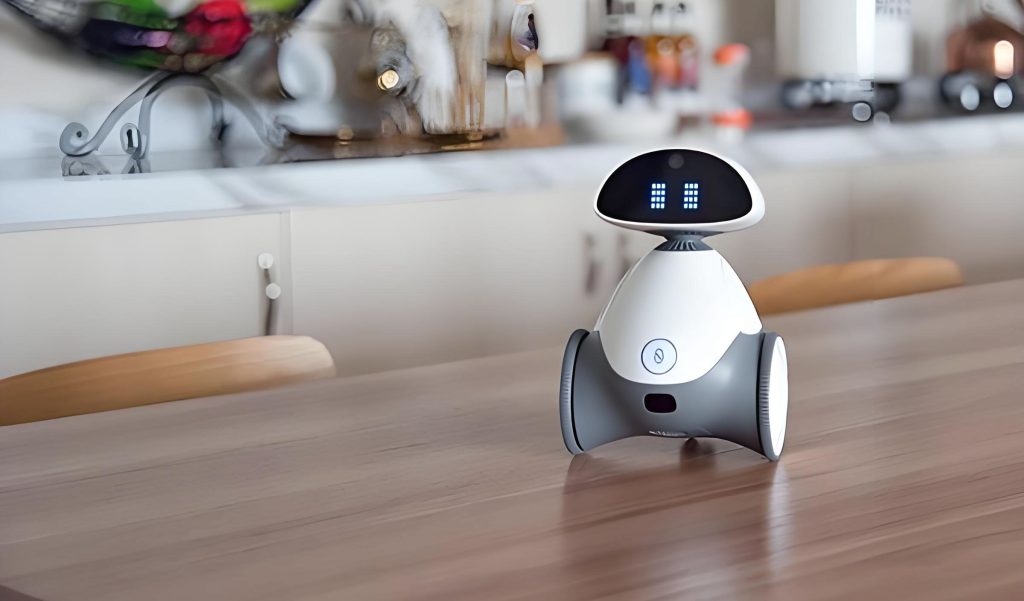
The companion robot, a subset of service robots, emerges in the internet era with functionalities centered on voice interaction, video calling, monitoring, educational content, and emotional companionship. These robots emphasize accompanying children’s growth and interactive learning, garnering enthusiasm from parents and markets alike. Primarily designed for preschoolers aged 3 to 7—a critical period for neurological development, language acquisition, and emotional-moral growth—companion robots hold immense market potential. Structurally, they can be categorized into four types: immobile robots (low-cost, stationary on flat surfaces), wheeled mobile robots (simple, stable, but limited to indoor smooth floors), tracked robots (good off-road mobility but heavy and complex), and bipedal humanoid robots (capable of obstacle traversal but costly and complex in control systems). Understanding these variations is essential for design evaluation, as structural choices impact functionality, usability, and appeal.
To address the challenge of selecting the best companion robot design, I employ a two-stage methodology: AHP for determining evaluation indicator weights and PUGH matrix for scheme screening and scoring. This integrated AHP-PUGH framework ensures a balanced consideration of subjective and objective factors, enhancing the reliability of design decisions. The process begins with constructing a hierarchical evaluation index system for companion robots. Through extensive research involving product advertisements, brochures, literature, online surveys, and user interviews, I gathered 50 potential evaluation indicators. Using the KJ method and expert discussions with industry professionals, designers, sales personnel, and parents, I refined these to 13 typical descriptors that best represent user perceptions. The hierarchical structure comprises three primary criteria: functional indicators (B1), color indicators (B2), and form indicators (B3), each with sub-criteria as follows: B1 includes English-Chinese translation (C1), flexible actions (C2), microphone singing (C3), human-machine voice interaction (C4), remote parent-child dialogue (C5), and stories/songs/poems (C6); B2 covers integration (C7), harmony (C8), legibility (C9), and symbolism (C10); B3 encompasses originality (C11), balance (C12), and variability (C13). This system forms the basis for quantitative analysis, capturing key aspects that influence user preference and market success for companion robots.
The AHP method, developed by Thomas Saaty in the 1970s, is a multi-criteria decision-making tool that combines qualitative and quantitative analysis. It decomposes complex problems into a hierarchy of goals, criteria, and alternatives, facilitating structured comparisons. I apply AHP to determine the relative weights of the evaluation indicators for companion robots. First, I construct pairwise comparison matrices for the criteria and sub-criteria, using a scale from 1 to 9 as defined in Table 1. For example, a score of 1 indicates equal importance, while 9 signifies extreme importance of one element over another. Experts and stakeholders provided judgments to populate these matrices, ensuring diverse perspectives. Let matrix \( A = (a_{ij})_{n \times n} \) represent the pairwise comparisons, where \( a_{ij} \) denotes the relative importance of element \( i \) to element \( j \), with \( a_{ji} = 1 / a_{ij} \). The geometric mean method is used to compute weight vectors. For each row \( i \) in matrix \( A \), the geometric mean \( g_i \) is calculated as:
$$ g_i = \left( \prod_{j=1}^{n} a_{ij} \right)^{1/n} \quad \text{for } i = 1, 2, \dots, n $$
These values are normalized to obtain the weight vector \( W = (w_1, w_2, \dots, w_n) \), where:
$$ w_i = \frac{g_i}{\sum_{k=1}^{n} g_k} $$
The maximum eigenvalue \( \lambda_{\text{max}} \) of the matrix is derived for consistency checking:
$$ \lambda_{\text{max}} = \frac{1}{n} \sum_{i=1}^{n} \frac{(AW)_i}{w_i} $$
where \( (AW)_i \) is the \( i \)-th element of the vector resulting from multiplying matrix \( A \) by weight vector \( W \). Consistency is verified using the consistency ratio \( CR = CI / RI \), with the consistency index \( CI \) given by:
$$ CI = \frac{\lambda_{\text{max}} – n}{n – 1} $$
and \( RI \) being the random consistency index from Table 2. A \( CR < 0.1 \) indicates acceptable consistency; otherwise, matrices are revised. For the companion robot evaluation, I constructed matrices for the goal layer (companion robot design evaluation) and sub-criteria layers, ensuring all \( CR \) values meet this threshold. The computed weights are synthesized to reflect the overall importance of each indicator in the design of companion robots.
| Scale \( a_{ij} \) | Interpretation |
|---|---|
| 1 | Equal importance of i and j |
| 3 | Moderate importance of i over j |
| 5 | Strong importance of i over j |
| 7 | Very strong importance of i over j |
| 9 | Extreme importance of i over j |
| 2, 4, 6, 8 | Intermediate values |
| Reciprocal | If i to j is \( a_{ij} \), j to i is \( 1/a_{ij} \) |
| Matrix Order (n) | RI |
|---|---|
| 1 | 0.00 |
| 2 | 0.00 |
| 3 | 0.58 |
| 4 | 0.90 |
| 5 | 1.12 |
| 6 | 1.24 |
| 7 | 1.32 |
| 8 | 1.41 |
| 9 | 1.45 |
The AHP results for the companion robot evaluation hierarchy are summarized in Table 3. The weights reveal that functional indicators (B1) dominate with a weight of 0.595, followed by form indicators (B3) at 0.276, and color indicators (B2) at 0.128. This suggests that users prioritize functionality—especially human-machine voice interaction (C4, weight 0.286) and remote parent-child dialogue (C5, weight 0.258)—when selecting a companion robot. Form aspects like originality (C11, weight 0.5 under B3) are also significant, while color plays a lesser but still relevant role, with integration (C7) being most weighted within B2. These insights align with user调研 feedback, underscoring that interactive capabilities and innovative design are critical for companion robots to engage children effectively. The consistency checks confirmed validity: for the goal layer matrix, \( \lambda_{\text{max}} = 3.009 \), \( CI = 0.005 \), \( RI = 0.58 \), yielding \( CR = 0.009 < 0.1 \); for sub-criteria matrices, all \( CR \) values were below 0.1 (e.g., B1: \( CR = 0.054 \), B2: \( CR = 0.017 \), B3: \( CR = 0 \)). Thus, the weight assignments are reliable for subsequent analysis.
| Goal | Primary Indicator | Weight \( \omega_i \) | Secondary Indicator | Weight \( \omega_i \) |
|---|---|---|---|---|
| Companion Robot Design Evaluation | Functional Indicators (B1) | 0.595 | C1: English-Chinese Translation | 0.091 |
| C2: Flexible Actions | 0.162 | |||
| C3: Microphone Singing | 0.046 | |||
| C4: Human-Machine Voice Interaction | 0.286 | |||
| C5: Remote Parent-Child Dialogue | 0.258 | |||
| C6: Stories/Songs/Poems | 0.157 | |||
| Color Indicators (B2) | 0.128 | C7: Integration | 0.418 | |
| C8: Harmony | 0.225 | |||
| C9: Legibility | 0.249 | |||
| C10: Symbolism | 0.109 | |||
| Form Indicators (B3) | 0.276 | C11: Originality | 0.500 | |
| C12: Balance | 0.250 | |||
| C13: Variability | 0.250 |
With the AHP weights established, I proceed to the PUGH decision matrix phase for scheme selection. The PUGH matrix, proposed by Stuart Pugh, is a multi-criteria decision tool that simplifies complex comparisons by evaluating alternatives against a baseline. This method is particularly useful for screening and scoring design concepts for companion robots. First, I generate multiple companion robot design concepts through brainstorming and market research, resulting in six initial schemes labeled A through F. A preliminary PUGH matrix is constructed with evaluation criteria (B1, B2, B3) as rows and schemes as columns. A baseline scheme is chosen—here, scheme E serves as the reference due to its balanced attributes. Each alternative is compared to the baseline for each criterion using symbols: “+” indicates superiority, “S” denotes similarity, and “-” indicates inferiority. The counts of “+”, “S”, and “-” are tallied, and net scores are computed as (number of “+”) minus (number of “-“). Schemes are ranked based on net scores to filter top candidates. As shown in Table 4, scheme B achieves the highest net score (+2), followed by schemes D and E, while others perform poorly. Thus, schemes B, D, and E are selected for detailed scoring, ensuring the evaluation focuses on promising companion robot designs.
| Evaluation Indicator | Scheme A | Scheme B | Scheme C | Scheme D | Scheme E (Baseline) | Scheme F |
|---|---|---|---|---|---|---|
| B1: Functional | – | + | S | + | S | – |
| B2: Color | – | + | S | – | S | – |
| B3: Form | + | S | – | + | S | S |
| + Count | 1 | 2 | 0 | 2 | 0 | 0 |
| – Count | 2 | 0 | 1 | 1 | 0 | 2 |
| S Count | 0 | 1 | 2 | 0 | 3 | 1 |
| Net Score | -1 | +2 | -1 | +1 | 0 | -2 |
| Rank | 4 | 1 | 4 | 2 | 3 | 6 |
Next, I conduct a detailed scoring of the filtered companion robot schemes (B, D, E) using a refined PUGH matrix. Each scheme is assessed against the 13 sub-criteria (C1 to C13) with ratings on a 1–5 scale: 1 for “much worse than baseline,” 2 for “worse,” 3 for “equal,” 4 for “better,” and 5 for “much better.” The baseline is scheme E, as in the screening stage. These ratings are combined with the AHP-derived weights to compute weighted scores. For each scheme \( j \), the comprehensive score \( S_j \) is calculated as:
$$ S_j = \sum_{i=1}^{n} D_{ij} \cdot W_i $$
where \( D_{ij} \) is the rating of scheme \( j \) on sub-criterion \( i \), \( W_i \) is the overall weight of sub-criterion \( i \) (obtained by multiplying primary and secondary weights), and \( n = 13 \). The weights \( W_i \) are normalized from Table 3 to sum to 1 across all sub-criteria. I gathered data through user surveys involving 100 children aged 3–7 (98 valid responses) to assign ratings based on perceived performance of each companion robot. The results are presented in Table 5, showing ratings, weighted calculations, and final scores. Scheme B emerges with the highest comprehensive score of 16.41, significantly outperforming scheme D (9.39) and scheme E (9.094). This indicates that scheme B offers superior overall design in terms of functionality, color, and form for a companion robot. Analysis of sub-criteria reveals that scheme B excels in human-machine voice interaction (C4) and remote parent-child dialogue (C5), key functional aspects that resonate with users. Its form originality (C11) also scores highly, contributing to its appeal. In contrast, schemes D and E show relative weaknesses in these areas, though they perform adequately in color harmony and legibility. This scoring phase quantitatively validates the preliminary screening and highlights the strengths of the top-ranked companion robot design.
| Evaluation Indicator | Sub-Criterion | Weight \( W_i \) | Scheme B Rating | Scheme B Weighted Score | Scheme D Rating | Scheme D Weighted Score | Scheme E Rating | Scheme E Weighted Score |
|---|---|---|---|---|---|---|---|---|
| B1: Functional | C1 | 0.054 | 4 | 0.216 | 3 | 0.162 | 2 | 0.108 |
| C2 | 0.096 | 4 | 0.384 | 3 | 0.288 | 2 | 0.192 | |
| C3 | 0.027 | 3 | 0.081 | 4 | 0.108 | 3 | 0.081 | |
| C4 | 0.170 | 5 | 0.850 | 4 | 0.680 | 2 | 0.340 | |
| C5 | 0.154 | 4 | 0.616 | 3 | 0.462 | 2 | 0.308 | |
| C6 | 0.094 | 4 | 0.376 | 3 | 0.282 | 2 | 0.188 | |
| B2: Color | C7 | 0.054 | 5 | 0.270 | 3 | 0.162 | 2 | 0.108 |
| C8 | 0.029 | 2 | 0.058 | 2 | 0.058 | 4 | 0.116 | |
| C9 | 0.032 | 3 | 0.096 | 3 | 0.096 | 4 | 0.128 | |
| C10 | 0.014 | 2 | 0.028 | 2 | 0.028 | 3 | 0.042 | |
| B3: Form | C11 | 0.138 | 4 | 0.552 | 2 | 0.276 | 4 | 0.552 |
| C12 | 0.069 | 2 | 0.138 | 2 | 0.138 | 3 | 0.207 | |
| C13 | 0.069 | 4 | 0.276 | 3 | 0.207 | 2 | 0.138 | |
| Total Comprehensive Score \( S_j \) | 16.41 | 9.39 | 9.094 | |||||
To validate the AHP-PUGH evaluation results, I compare them with real-world market data, specifically sales rankings and user reviews from e-commerce platforms. Since the companion robot market is dynamic, actual consumer behavior serves as a reliable benchmark. I collected data from a major online retailer, focusing on flagship store sales and positive review rates for three products corresponding to schemes B, D, and E. Scheme B represents a high-end companion robot with advanced voice interaction and remote features; scheme D is a mid-range robot with balanced functionalities; and scheme E is an affordable option with basic capabilities. The sales rankings, based on recent monthly data, are summarized in Table 6. Scheme B tops the sales chart, followed by scheme D and then scheme E. This order directly matches the AHP-PUGH ranking, where scheme B scored highest, scheme D second, and scheme E third. Furthermore, positive review rates from the same platform show scheme B at 99%, scheme D at 98%, and scheme E at 97%, aligning closely with the comprehensive scores. These correlations confirm that the AHP-PUGH method effectively predicts market performance and user satisfaction for companion robots. Such validation underscores the practicality of this integrated approach, demonstrating its utility in guiding design decisions and product development in the competitive landscape of companion robots.
| Scheme | Product Name | Sales Ranking | Positive Review Rate |
|---|---|---|---|
| B | High-End Companion Robot (e.g., Alpha Egg) | 1 | 99% |
| D | Mid-Range Companion Robot (e.g., WuKong Robot) | 2 | 98% |
| E | Budget Companion Robot (e.g., Smart Chariot) | 3 | 97% |
The findings from this study offer several insights into companion robot design and evaluation. First, the dominance of functional indicators, particularly human-machine voice interaction and remote parent-child dialogue, highlights that users seek immersive, interactive experiences from companion robots. These features foster emotional bonds and educational value, making them critical for sustained child engagement. Second, form originality plays a significant role, as innovative designs capture attention and enhance appeal. Color aspects, while less weighted, still contribute to usability through integration and legibility. The AHP-PUGH integration proved effective in handling multiple influencing factors, providing a structured, quantitative framework that reduces subjective bias. By combining expert judgments with user ratings, the method balances theoretical rigor and practical relevance. Moreover, the validation with market data reinforces that this approach can serve as a reliable decision tool for designers and manufacturers aiming to optimize companion robot designs. It enables systematic comparison of alternatives, identification of strengths and weaknesses, and prediction of market success, ultimately aiding in the development of companion robots that better meet user needs.
In conclusion, evaluating companion robot designs involves complex, multi-faceted considerations that defy simple analysis. The AHP-PUGH method addresses this by decomposing the problem into hierarchical criteria, assigning weights through pairwise comparisons, and scoring schemes via a decision matrix. This study applies the framework to companion robots, establishing a 13-indicator system covering functionality, color, and form. The results show that scheme B outperforms others, consistent with sales and review data, validating the method’s accuracy. This integrated approach offers a robust tool for design evaluation, facilitating objective decision-making in product development. Future work could expand the indicator set to include cost, safety, or durability factors, or adapt the method to other robotic products. As AI technology advances and costs decline, companion robots are poised to become household staples, making effective design evaluation ever more crucial. The AHP-PUGH methodology provides a scalable, adaptable foundation for such efforts, contributing to the creation of companion robots that enrich children’s lives through intelligent, engaging companionship.