
With the rapid advancement of artificial intelligence and IoT technologies, products for the elderly are undergoing a significant shift towards intelligence. The companion robot, as a novel household product, is gradually entering more homes, altering traditional lifestyles. However, many existing elderly companion robot models suffer from shortcomings in usability, practicality, and often feature-limited functionality. To address this gap, it is crucial to focus on the genuine needs of the elderly to guide the improvement of companion robot design. This article employs the Fuzzy Analytic Hierarchy Process (FAHP) to establish a design evaluation model. This model serves as a reference standard for conducting a fuzzy comprehensive assessment of design proposals, aiming to provide a scientific foundation for the innovative design of elderly companion robots.
The Analytic Hierarchy Process (AHP) is a multi-criteria decision-making method that simplifies complex decisions by structuring a problem into a hierarchy and using pairwise comparisons. It allows for the quantification of subjective judgments, providing a clear and systematic framework for decision-making. The Fuzzy Analytic Hierarchy Process extends this by integrating fuzzy set theory, which is adept at handling the inherent vagueness and uncertainty in human judgment. FAHP translates the strength of human perception into fuzzy numbers, enhancing the applicability and robustness of AHP. This hybrid method facilitates the conversion of qualitative design indicators into quantitative data, thereby improving the scientific rigor and objectivity of design evaluation and decision-making.
In recent years, FAHP has been increasingly applied in product design and evaluation. Researchers have utilized it to construct user experience evaluation models, improving assessment efficiency. Others have applied FAHP to comprehensive evaluations of smart home appliances, enhancing the scientific basis of design critiques. Studies on home furniture redesign and children’s product design have also leveraged FAHP to derive clearer design requirements and assess feasibility. The method’s strength lies in its ability to quantify matrix elements and synthesize judgments on various design factors and indicator data. Through comprehensive evaluation, it enables a holistic analysis of a product, thereby improving its feasibility and usability.
The development of intelligent companion robots for the elderly has gained considerable traction globally. For instance, care facilities in some countries employ compact, agile robots that assist with mobility and daily routines. Other commercially available companion robots are designed to proactively engage in conversation, suggest activities, facilitate communication with family, and provide easy access to online entertainment. Further innovations include robots capable of health monitoring, medication reminders, and checking in on the user’s well-being. Domestically, developed companion robots feature multi-modal interaction through voice, touch, and electronic skin, along with autonomous indoor navigation. They offer services spanning daily assistance, entertainment guidance, and emotional interaction, aiming to deliver an intelligent and efficient user experience.
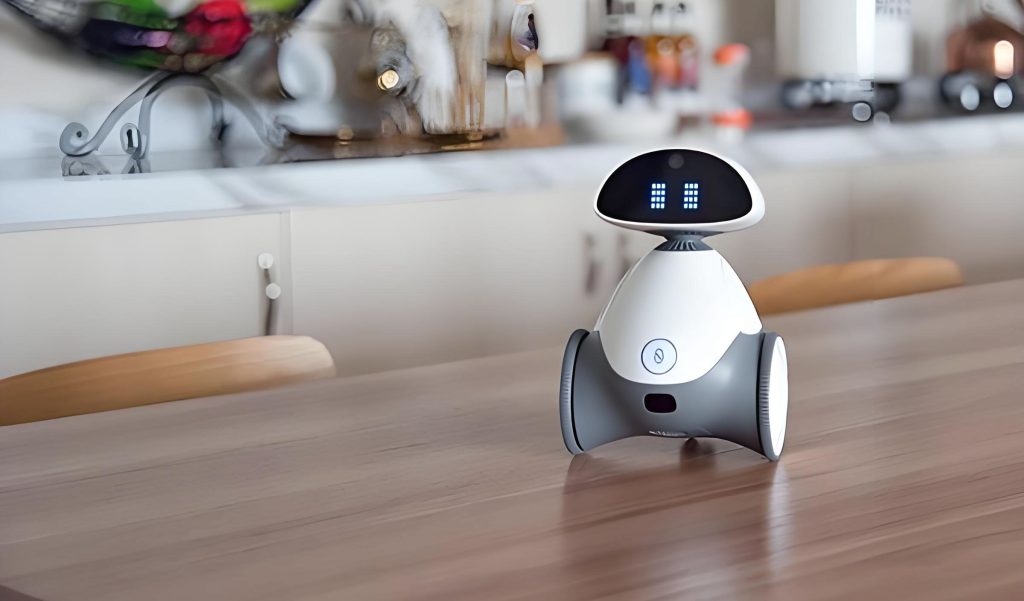
The core design thinking based on FAHP for an elderly companion robot focuses on users aged 60-74. The evaluation analysis treats user needs as the fundamental design evaluation indicators. This user needs analysis must encompass not only the elderly users but also their family members. Integrating human-centered design principles requires anticipating potential difficulties and user expectations. These needs are summarized and decomposed into a three-level hierarchy: the Goal Level, the Criterion Level, and the Sub-criterion Level, allowing for a detailed, layered discussion to enhance the user experience.
Constructing the Evaluation Model
Through reviewing literature on elderly product design and investigating existing companion robots, and by synthesizing opinions from designers and experts, key design points are filtered and categorized using AHP. The elderly companion robot is set as the Goal Level (A). The identified criteria are归纳ed into the Criterion Level (N), which is further subdivided into the Sub-criterion Level (P). The final hierarchy is established as follows:
| Goal Level (A) | Criterion Level (N) | Sub-criterion Level (P) |
|---|---|---|
| Elderly Companion Robot | N1: Operational Needs | P1: Ease of Operation |
| P2: Human-Robot Interaction | ||
| P3: Size Rationality | ||
| N2: Safety Needs | P4: Healthy Materials | |
| P5: Stable Structure | ||
| P6: Safety Monitoring | ||
| N3: Aesthetic Needs | P7: Aesthetic Form | |
| P8: Color Coordination | ||
| N4: Care Needs | P9: Family Companionship | |
| P10: Social Interaction Facilitation | ||
| P11: Health Monitoring |
Constructing Pairwise Comparison Matrices
The next step involves constructing judgment matrices through pairwise comparisons of elements within the same hierarchy level. The importance of one element relative to another is assigned a numerical value based on the Saaty’s 1-9 scale, where 1 indicates equal importance and 9 indicates extreme importance of one over the other. For a matrix comparing \(n\) elements, the entry \(a_{ij}\) represents the importance of element \(i\) relative to element \(j\). The fundamental scale is applied:
$$A = (a_{ij})_{n \times n} = \begin{bmatrix}
a_{11} & a_{12} & \cdots & a_{1n} \\
a_{21} & a_{22} & \cdots & a_{2n} \\
\vdots & \vdots & \ddots & \vdots \\
a_{n1} & a_{n2} & \cdots & a_{nn}
\end{bmatrix}, \quad \text{where } a_{ii}=1, \quad a_{ji} = \frac{1}{a_{ij}}$$
Based on the established evaluation model, a questionnaire was distributed to 20 experts, including instructors, senior product designers, engineers, and gerontology researchers. After multiple rounds of scoring, the following pairwise comparison matrices were constructed for the Goal and Criterion levels, as well as for the sub-criteria under each criterion.
| A | N1 | N2 | N3 | N4 |
|---|---|---|---|---|
| N1 | 1 | 1/5 | 3 | 1/3 |
| N2 | 5 | 1 | 7 | 3 |
| N3 | 1/3 | 1/7 | 1 | 1/5 |
| N4 | 3 | 1/3 | 5 | 1 |
The matrices for the Sub-criterion Level under each criterion are constructed similarly. For example, the matrix for Operational Needs (N1) and Safety Needs (N2) would be:
| N1 | P1 | P2 | P3 |
|---|---|---|---|
| P1 | 1 | 3 | 5 |
| P2 | 1/3 | 1 | 3 |
| P3 | 1/5 | 1/3 | 1 |
Consistency Check and Weight Calculation
To ensure the logical consistency of the pairwise comparisons, a consistency check is mandatory. This involves calculating the Consistency Index (CI) and the Consistency Ratio (CR). First, the principal eigenvalue \(\lambda_{max}\) of the judgment matrix is computed. The CI is then given by:
$$CI = \frac{\lambda_{max} – n}{n – 1}$$
where \(n\) is the order of the matrix. The Consistency Ratio (CR) is calculated as:
$$CR = \frac{CI}{RI}$$
where RI is the Random Index, a known value dependent on \(n\). A CR value less than 0.1 indicates acceptable consistency. The standard RI values are:
| n | 1 | 2 | 3 | 4 | 5 | 6 | 7 | 8 | 9 |
|---|---|---|---|---|---|---|---|---|---|
| RI | 0 | 0 | 0.58 | 0.90 | 1.12 | 1.24 | 1.32 | 1.41 | 1.45 |
Using the Eigenvector Method (or other suitable methods like the Geometric Mean), the local weight vectors for each matrix are calculated. After verifying that all CR values are below 0.1, the global weights for the entire hierarchy are synthesized. The final weight results and consistency checks for the proposed model are summarized below.
| Criterion (Weight) | Sub-criterion | Local Weight | Global Weight | Consistency Check (λ_max, CI, CR) |
|---|---|---|---|---|
| N1: Operational Needs (0.1219) | P1: Ease of Operation | 0.6333 | 0.0772 | λ_max=3.039, CI=0.019, CR=0.037 |
| P2: Human-Robot Interaction | 0.2605 | 0.0318 | ||
| P3: Size Rationality | 0.1062 | 0.0129 | ||
| N2: Safety Needs (0.5579) | P4: Healthy Materials | 0.2299 | 0.1282 | λ_max=3.004, CI=0.002, CR=0.004 |
| P5: Stable Structure | 0.1222 | 0.0682 | ||
| P6: Safety Monitoring | 0.6480 | 0.3615 | ||
| N3: Aesthetic Needs (0.0569) | P7: Aesthetic Form | 0.6667 | 0.0379 | λ_max=2, CI=0, CR=0 |
| P8: Color Coordination | 0.3333 | 0.0190 | ||
| N4: Care Needs (0.2634) | P9: Family Companionship | 0.6687 | 0.1761 | λ_max=3.007, CI=0.004, CR=0.007 |
| P10: Social Interaction | 0.0882 | 0.0232 | ||
| P11: Health Monitoring | 0.2431 | 0.0640 |
Fuzzy Comprehensive Evaluation
Fuzzy Comprehensive Evaluation (FCE) is then applied to assess a specific design scheme. FCE converts qualitative evaluations into quantitative scores. First, an evaluation factor set \(U\) and a comment set \(V\) are established. For this case, a 5-level Likert scale is used: \(V = \{\text{Poor, Fair, Medium, Good, Excellent}\} = \{1, 2, 3, 4, 5\}\).
The same panel of 20 experts is invited to rate the specific design scheme against each sub-criterion in \(P\). Their ratings are aggregated to form fuzzy evaluation matrices \(R_i\) for each criterion \(N_i\). Each row in \(R_i\) represents the membership degree of a sub-criterion to the various comment grades.
For example, the fuzzy evaluation matrix for the Operational Needs (N1) criterion might be constructed as follows based on expert ratings:
| Sub-criterion | Poor | Fair | Medium | Good | Excellent |
|---|---|---|---|---|---|
| P1 | 0.0 | 0.1 | 0.5 | 0.3 | 0.1 |
| P2 | 0.0 | 0.2 | 0.4 | 0.3 | 0.1 |
| P3 | 0.1 | 0.2 | 0.4 | 0.2 | 0.1 |
(Note: Values are illustrative examples)
The First-level Fuzzy Comprehensive Evaluation is performed for each criterion. The evaluation vector \(B_i\) for criterion \(N_i\) is obtained by synthesizing its weight vector \(W_{N_i}\) with its fuzzy evaluation matrix \(R_i\), typically using a fuzzy operator such as the weighted average model \(M(\cdot,+)\):
$$B_i = W_{N_i} \circ R_i = (w_{i1}, w_{i2}, …, w_{in}) \circ \begin{bmatrix}
r_{11} & r_{12} & \dots & r_{1m} \\
r_{21} & r_{22} & \dots & r_{2m} \\
\vdots & \vdots & \ddots & \vdots \\
r_{n1} & r_{n2} & \dots & r_{nm}
\end{bmatrix} = (b_{i1}, b_{i2}, …, b_{im})$$
All the first-level evaluation vectors \(B_i\) are then combined to form the fuzzy evaluation matrix \(R\) for the Goal Level. The Second-level Fuzzy Comprehensive Evaluation is conducted using the criterion weights \(W_N\):
$$B = W_N \circ R = (w_{N1}, w_{N2}, w_{N3}, w_{N4}) \circ \begin{bmatrix}
B_1 \\
B_2 \\
B_3 \\
B_4
\end{bmatrix} = (b_1, b_2, b_3, b_4, b_5)$$
The final comprehensive evaluation score \(S\) is calculated by assigning numerical values to the comment set (e.g., 1,2,3,4,5) and computing the weighted sum:
$$S = B \cdot V^T = (b_1, b_2, b_3, b_4, b_5) \cdot (1, 2, 3, 4, 5)^T$$
Design Practice and Evaluation of a Companion Robot
Based on the analysis of user needs and the calculated weights for operation, safety, aesthetics, and care, a specific elderly companion robot was designed. The proposed companion robot features a rounded, friendly form with warm, soft colors to create a welcoming atmosphere and reduce potential technophobia. It incorporates a front display for showing expressive faces and a multi-functional touch screen, alongside a voice interaction module, to satisfy diverse interaction needs. For autonomous mobility within a home, it is equipped with a differential steering system, laser radar obstacle avoidance sensors, and intelligent perception devices to ensure safe navigation.
The companion robot addresses safety through the use of healthy materials and a stable mechanical structure. It features health monitoring capabilities via integrated infrared sensors to detect potential falls or abnormal states, allowing family members to check in remotely. A storage compartment is provided for medicines and personal items, and the robot includes functions for medication reminders, schedule management, and facilitating social connections to provide comprehensive companionship and care.
Applying the FCE method, the expert panel evaluated this specific companion robot design. The fuzzy evaluation matrices for each criterion were constructed from their ratings. After performing the two-level fuzzy synthesis, the final comprehensive evaluation vector \(B\) for the design was obtained. For instance, a possible result might be:
$$B = (0.014, 0.111, 0.328, 0.423, 0.124)$$
This indicates that the design is rated as 1.4% Poor, 11.1% Fair, 32.8% Medium, 42.3% Good, and 12.4% Excellent by the aggregated expert judgment. The final composite score \(S\) is then calculated:
$$S = 0.014*1 + 0.111*2 + 0.328*3 + 0.423*4 + 0.124*5 = 3.532$$
A score of 3.532, on a scale of 1 to 5, indicates that the overall design quality lies between “Medium” and “Good.” This suggests the proposed companion robot scheme can fundamentally meet user needs and possesses reasonable scientific validity. However, the gap between this score and the “Excellent” level also highlights specific areas for improvement. By analyzing the lower-rated sub-criteria within the model, designers can gain clear insights into priority areas for refinement, such as enhancing a particular aspect of interaction or safety monitoring for this companion robot.
Conclusion
The design of intelligent products for the elderly involves specific constraints and particularities. To ensure design proposals better align with user needs, this article employed the Analytic Hierarchy Process to establish an evaluation model centered on four key criteria: Operational Needs, Safety Needs, Aesthetic Needs, and Care Needs. This model quantifies collected design indicators and calculates their respective weights. The subsequent application of Fuzzy Comprehensive Evaluation allows for the objective assessment of a specific companion robot design scheme. By establishing this indicator evaluation system and synthesizing expert ratings, the method yields both an overall evaluation score and detailed insights into the performance of individual design factors.
The final composite score effectively reflects the relative strengths and weaknesses of the product, clearly indicating directions for targeted improvement. Utilizing the Fuzzy Analytic Hierarchy Process in elderly product design, particularly for complex products like a companion robot, assists designers in more accurately extracting and prioritizing user needs. It provides a structured, semi-quantitative framework for evaluating competing design concepts or iterating on a single prototype. This methodology ultimately supports the development of companion robots and other assistive products that are more suitable, acceptable, and beneficial for the elderly population.