
The global demographic shift towards an aging population presents significant social and economic challenges. In many societies, the traditional family support structure is straining under the pressures of modern life, often leaving older adults experiencing social isolation, loneliness, and anxiety regarding their daily well-being and safety. This context has catalyzed the development and adoption of intelligent assistive technologies, with the companion robot emerging as a promising solution. These robots are designed not merely for functional task assistance but to provide meaningful companionship, emotional support, and seamless integration into the daily lives of the elderly.
However, the current landscape of companion robot development often exhibits a disconnect between technological capability and genuine user experience. Research and development efforts frequently prioritize mechanical engineering, sensor integration, and algorithmic efficiency, while the holistic user experience—encompassing intuitive interaction, emotional resonance, and practical utility—remains secondary. Design approaches that focus solely on aesthetics or isolated interaction modalities fail to capture the complex, multifaceted needs of elderly users. Consequently, many products on the market suffer from poor usability, low adoption rates, and ultimately fail to deliver the intended emotional and practical benefits. There is a pressing need for a structured, user-driven design methodology that systematically translates latent and expressed user needs into coherent product features and form.
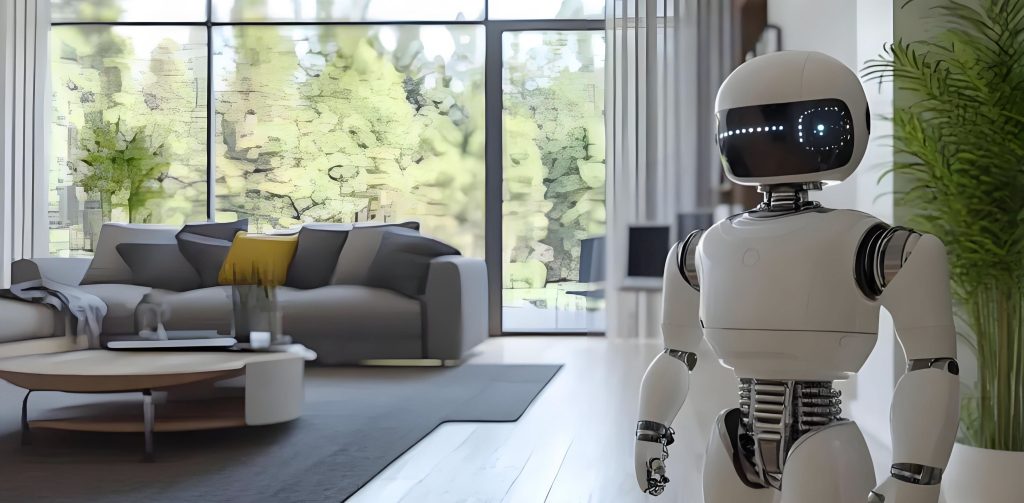
This article proposes an integrated design framework that synergistically combines the Function Analysis System Technique (FAST) and Quality Function Deployment (QFD), augmented by the Kano model, to guide the user experience design of elderly companion robots. The core premise is that superior design must be anchored in a deep, structured understanding of user requirements, which are then meticulously transformed into a functional architecture and, subsequently, into specific design characteristics. The Kano model provides the lens to categorize and prioritize user needs based on their impact on satisfaction. FAST offers the logical engine to decompose high-level goals into a detailed, hierarchical functional tree. Finally, QFD’s House of Quality provides the transformation matrix to objectively link these prioritized needs to actionable technical design characteristics. This end-to-end process ensures that the resulting companion robot is not only functionally robust but also emotionally engaging and experientially satisfying for its elderly users.
1. Theoretical Foundations of the Integrated Framework
The proposed framework is built upon three established methodologies, each addressing a critical phase in the design process:需求理解 (Need Understanding), 功能分解 (Function Decomposition), and 需求转化 (Need Translation).
1.1 The Kano Model: Categorizing User Needs
Effectively prioritizing a long list of user needs is crucial. The Kano model classifies attributes based on how they influence customer satisfaction, providing a qualitative and quantitative basis for prioritization beyond simple importance ratings. User reactions to a product feature (both its presence and absence) are mapped onto a two-dimensional model, resulting in five distinct categories:
- Basic Needs (M): These are fundamental, unspoken expectations. Their fulfillment does not increase satisfaction, but their absence causes significant dissatisfaction. For a companion robot, reliable operation and safety are typical basic needs.
- Performance Needs (O): Also called one-dimensional needs, these are explicitly demanded by users. Satisfaction is proportional to the level of fulfillment. Examples include the speed of task completion or the clarity of the robot’s speech.
- Attractive Needs (A): These are delightful, unexpected features that significantly boost satisfaction when present but do not cause dissatisfaction when absent. A companion robot that can recognize a user’s emotional state and offer comforting words might be an attractive need.
- Indifferent Needs (I): Features toward which users are neutral. Their presence or absence has minimal effect on satisfaction.
- Reverse Needs (R): Features that, when present, actually cause dissatisfaction. These must be identified and eliminated.
The classification is typically done via a paired questionnaire for each need. To move from qualitative classification to quantitative weighting, Satisfaction Increment (SI) and Dissatisfaction Decrement (DI) indices are calculated:
$$
SI = \frac{(A + O)}{(A + O + M + I)}
$$
$$
DI = \frac{(O + M)}{(A + O + M + I)} \times (-1)
$$
Where A, O, M, I are the counts of user responses for each category. A final adjusted weight \( W_i \) for a need \( i \) is then computed by applying a coefficient \( k_i \) (e.g., 1.5 for Attractive, 1.0 for Performance, 0.5 for Basic, 0 for Indifferent) to the normalized frequency, ensuring that need types with greater impact on delight or necessity receive higher priority in the design process.
1.2 Function Analysis System Technique (FAST): Building the Functional Architecture
Once key user needs are identified and prioritized, the next step is to define how the product will fulfill them. FAST is a systematic graphical technique for decomposing a product’s high-level purpose into its constituent functions, organized in a logical “how-why” hierarchy. The primary outcome is a function tree or FAST diagram.
The process begins by stating the basic function of the product using a verb-noun pair (e.g., “Provide companionship”). The central logic asks “HOW is this function achieved?” to move to the right (more specific means), and “WHY is this function needed?” to move to the left (higher-level goals). This creates a critical path of linked functions. Simultaneously, supporting (or secondary) functions that are necessary but not on the critical path are identified as parallel branches. The FAST diagram establishes clear dependencies, helps avoid functional omissions or redundancies, and provides a comprehensive blueprint of what the companion robot must do before deciding how it will be implemented physically or digitally.
1.3 Quality Function Deployment (QFD): Translating Needs into Specifications
QFD is the bridge that connects the “what” (user needs) with the “how” (design specifications). Its core tool is the House of Quality (HoQ), a matrix that facilitates the translation of subjective customer requirements into objective, actionable design characteristics.
The structure of the HoQ is as follows:
- Left Wall: Contains the prioritized list of user needs (\( T_j \)) and their adjusted importance weights (\( W_i \)) obtained from the Kano analysis.
- Ceiling: Lists the design characteristics (\( K_j \)) or technical features, often derived from the functional elements of the FAST diagram.
- Relationship Matrix (Room): The central body of the house, where the correlation between each user need and each design characteristic is assessed, typically on a scale (e.g., 0-5: No relationship to Strong relationship).
- Floor: Contains the calculated absolute and relative importance for each design characteristic.
The importance of a design characteristic \( H_j \) is calculated by summing the product of the user need weight and its relationship score for all needs:
$$
H_j = \sum_{i=1}^{n} W_i \cdot R_{ij}
$$
Where \( R_{ij} \) is the relationship score between user need \( i \) and design characteristic \( j \), and \( n \) is the total number of needs. This calculation provides a data-driven ranking of which design characteristics are most critical to fulfilling the totality of user needs, directly guiding engineering and design resource allocation.
2. The Integrated Design Methodology Framework
The proposed framework sequentially integrates Kano, FAST, and QFD into a cohesive, user-centered design process for elderly companion robots. The workflow consists of three main phases:需求分析 (Demand Analysis), 功能分析 (Functional Analysis), and 设计分析 (Design Analysis).
| Phase | Primary Activity | Key Input | Key Output | Primary Method |
|---|---|---|---|---|
| 1. Demand Analysis | Elicit, categorize, and prioritize user needs. | User interviews, surveys, observations. | List of user needs with Kano categories and adjusted importance weights (\( W_i \)). | Kano Model |
| 2. Functional Analysis | Decompose the product’s purpose into a hierarchical function structure. | High-level product goal, prioritized user needs. | FAST Diagram (Functional Tree). List of derived Design Characteristics (\( K_j \)). | FAST |
| 3. Design Analysis | Link needs to design characteristics and determine their critical importance. | Prioritized needs (\( W_i \)), Design characteristics (\( K_j \)). | House of Quality (HoQ). Ranked list of Design Characteristic Importance (\( H_j \)). Final design specifications. | QFD |
2.1 Phase 1: Demand Analysis for the Companion Robot
The process begins with a deep dive into the needs of the elderly target users. Semi-structured interviews and focus groups are conducted to gather rich, qualitative data on their daily challenges, desires, fears, and attitudes toward technology. Transcripts are analyzed using affinity diagramming (KJ method) to group related statements, eventually synthesizing them into a hierarchical list of user needs. This list forms the basis for a Kano questionnaire.
For instance, initial interviews might yield statements like “I wish it could remind me to take my pills,” “It shouldn’t look too scary or technical,” or “It would be nice if it could tell me a joke sometimes.” Through affinity grouping, these are synthesized into need categories such as “Health Monitoring,” “Aesthetic Appeal,” and “Entertainment & Engagement.”
A survey is then administered where respondents answer paired questions (functional/dysfunctional) for each need. The responses are tallied and classified according to the Kano evaluation table. Finally, SI and DI indices are computed, and adjusted weights \( W_i \) are assigned using the coefficient method. This process filters out indifferent and reverse needs while strategically weighting attractive, performance, and basic needs to guide the subsequent design focus.
| User Need (Tj) | Kano Category | Adjusted Weight (Wi) | Design Implication |
|---|---|---|---|
| Intuitive, simple operation | Basic (M) | High | Mandatory; failure causes high dissatisfaction. |
| Reliable health monitoring (e.g., fall detection) | Performance (O) | High | Invest in accurate sensors and algorithms. |
| Friendly, non-threatening appearance | Performance (O) | High | Prioritize soft forms, warm colors, approachable scale. |
| Proactive emotional interaction (e.g., initiating conversation) | Attractive (A) | Medium-High | A key differentiator for delight; include if feasible. |
| Ability to control smart home devices | Performance (O) | Medium | Include but not at the cost of core functions. |
| Advanced gaming features | Indifferent (I) / Reverse (R) | Low / Zero | Deprioritize or exclude. |
2.2 Phase 2: Functional Analysis via FAST
With a clear set of prioritized needs, the next step is to answer: “What functions must the companion robot perform to meet these needs?” A high-level basic function is defined, such as “Enhance elderly well-being.” Using the FAST logic, this is decomposed.
Starting with the basic function, the team repeatedly asks “HOW?” For example:
- HOW to “Enhance elderly well-being”? By “Providing safety monitoring” AND “Offering companionship” AND “Assisting with daily tasks.”
- HOW to “Provide safety monitoring”? By “Detecting falls” AND “Monitoring vital signs” AND “Alerting caregivers.”
- HOW to “Detect falls”? By “Analyzing accelerometer and gyroscope data” AND “Using computer vision algorithms.”
Concurrently, supporting functions like “Maintain system power” or “Facilitate user input” are added. The result is a comprehensive function tree that visually maps out all necessary capabilities of the companion robot. From the lowest-level functions in this tree, specific design characteristics (\( K_j \)) are extracted. For instance, “Analyze accelerometer data” translates to design characteristics like “Integrated 9-axis IMU sensor” and “Low-power processing unit for sensor fusion.”
2.3 Phase 3: Design Analysis with QFD’s House of Quality
This is the synthesis phase. The prioritized user needs (\( T_j \) with weights \( W_i \)) form the rows of the HoQ. The design characteristics (\( K_j \)) extracted from the FAST diagram form the columns. A cross-functional team (designers, engineers, gerontologists) then populates the relationship matrix \( R_{ij} \), scoring the impact of each design characteristic on fulfilling each user need on a defined scale (e.g., 0-5).
The importance of each design characteristic \( H_j \) is calculated using the formula \( H_j = \sum W_i \cdot R_{ij} \). This yields a ranked list of technical features. Characteristics with the highest \( H_j \) are deemed most critical for satisfying user needs and become the non-negotiable core of the product specification. This objective ranking helps resolve design trade-offs and ensures development effort is focused on what matters most to the user.
| User Needs (Weight Wi) | Design Characteristics (Kj) | Large Touchscreen UI (K1) | Voice Interaction Engine (K2) | Multi-modal Fall Detection (K3) | Remotely Accessible Interface (K4) | Importance (Hj) |
|---|---|---|---|---|---|---|
| Simple Operation (0.25) | Relationships (Rij) | 5 | 4 | 1 | 2 | Calculated: H1= 3.05 H2= 2.80 H3= 2.45 H4= 1.90 |
| Reliable Safety (0.30) | 1 | 2 | 5 | 4 | ||
| Emotional Connection (0.20) | 3 | 5 | 0 | 3 | ||
| Family Connectivity (0.15) | 2 | 1 | 3 | 5 | ||
| …Other Needs | … | … | … | … | Rank: #1, #2, #3, #4 |
3. Case Study: Applying the Framework to an Elderly Companion Robot Design
To demonstrate the practical application of this framework, a design project for a next-generation home-based elderly companion robot was conducted.
3.1 Demand Analysis & Prioritization
Through interviews with elderly individuals and caregivers, over 50 initial need statements were collected. These were synthesized into a list of 20 specific needs across three domains: Appearance & Form, Interaction & Interface, and Functionality. A Kano survey was distributed, and the results were analyzed. Key findings included:
- Basic Needs (M): “Stable and durable operation,” “Clear audio feedback.”
- Performance Needs (O): “Easy-to-use touch interface,” “Effective health reminder system,” “Ability for video calls with family.”
- Attractive Needs (A): “Robot expressing simple emotions through lights/sounds,” “Proactive suggestion of leisure activities.”
- Indifferent/Reverse Needs (I/R): “Complex gaming capabilities” was largely indifferent, and an “overly human-like, uncanny facial appearance” showed tendencies of a reverse need for some.
Adjusted weights \( W_i \) were calculated, clearly highlighting the priority of intuitive interaction and core assistive functions over advanced entertainment.
3.2 Functional Decomposition with FAST
The overarching goal was defined as “Provide holistic in-home support and companionship.” The FAST diagram was developed, branching into key areas like “Manage Health & Safety,” “Facilitate Social Connection,” and “Provide Daily Assistance.” The “how-why” logic was rigorously applied. For example, the function “Alert caregiver” was decomposed into sub-functions: “Detect emergency event,” “Identify contact person,” “Establish communication channel,” and “Transmit alert message.” This process generated a detailed functional blueprint. From the terminal nodes of the FAST tree, 18 key design characteristics (\( K_1 \) to \( K_{18} \)) were derived, such as:
- K1: Large-format, high-contrast touchscreen display.
- K4: Simplified icon-based graphical user interface (GUI).
- K5: Robust far-field microphone array for voice commands.
- K9: Integrated 4G/Wi-Fi module for connectivity.
- K11: Combination of radar and visual sensors for fall detection.
- K16: Dedicated remote monitoring mobile app for family members.
3.3 Constructing the House of Quality and Deriving Specifications
A full HoQ was constructed. The 20 prioritized user needs (with \( W_i \)) formed the rows. The 18 design characteristics (\( K_j \)) formed the columns. Expert ratings populated the relationship matrix \( R_{ij} \). The importance \( H_j \) for each \( K_j \) was computed.
The results provided unambiguous guidance. The highest-ranked design characteristics were:
- K4 (Simplified GUI) & K1 (Large Touchscreen): Directly linked to the high-weight need for simple operation.
- K16 (Family Mobile App): Critical for fulfilling the high-priority need for family connectivity and peace of mind.
- K11 (Multi-sensor Fall Detection): Paramount for addressing the fundamental safety need.
- K5 (Advanced Voice Interaction): Key for hands-free operation and creating a natural interaction flow.
These top-ranked characteristics became the pillars of the final design specification. Resources were allocated to ensure excellence in these areas. Lower-ranked features, such as highly articulated robotic limbs for complex fetching tasks, were simplified or implemented through alternative means to control cost and complexity, as the HoQ objectively showed they had less overall impact on user satisfaction relative to the core set.
3.4 Final Design Direction
Guided by the framework’s output, the final companion robot concept emphasized:
- Interface: A large, slightly angled touchscreen with extra-large, high-contrast icons (per K1, K4). The interface was organized into clear zones for communication, health, and entertainment.
- Interaction: Voice-first interaction supplemented by touch (per K5). The robot used warm, calm vocal tones and provided clear audio confirmations.
- Form Factor: A soft, rounded, non-humanoid form factor that was approachable and stable, avoiding the “uncanny valley” effect indicated by the Kano analysis.
- Core Functionality: Seamless integration of fall detection (K11) and one-touch video calling to a dedicated, simple family app (K16) were highlighted as primary features.
The design was no longer a collection of possible features but a coherent system focused on delivering the most important user values as identified and quantified through the Kano-FAST-QFD process.
4. Conclusion and Future Directions
Designing for the elderly population requires empathy, precision, and a rigorous methodological approach to ensure technology enhances life rather than complicating it. The integrated framework combining the Kano model, FAST, and QFD provides a powerful, structured pathway for achieving this goal in the development of companion robots. This user-centric methodology offers several key advantages:
- Deep User Understanding: It moves beyond superficial feature lists to uncover the emotional and experiential underpinnings of user needs, categorizing them strategically to maximize satisfaction.
- Systematic Functional Planning: It ensures the product’s functional architecture is comprehensive, logical, and directly traceable to user requirements, preventing feature gaps or bloat.
- Objective Decision-Making: It transforms subjective design choices into data-driven priorities, using the HoQ to clearly identify which design characteristics have the greatest leverage on overall user satisfaction.
- Cross-Disciplinary Alignment: It creates a common, visual language (FAST diagrams, HoQ) that aligns designers, engineers, and business stakeholders around user value.
The case study demonstrates the practical efficacy of this framework in defining a focused, user-validated specification for an elderly companion robot. Future work will involve building high-fidelity prototypes based on these specifications and conducting longitudinal user studies to validate the actual improvement in user experience, engagement, and perceived value compared to robots designed using less structured methods. Furthermore, the framework is adaptable and can be extended by integrating other tools, such as usability heuristics for interface evaluation or scenario-based testing for the derived functions, creating an even more robust pipeline for designing compassionate and effective assistive technologies. In an era of rapid technological advancement, such methodological rigor is essential to ensure that the companion robots of tomorrow truly serve and enrich the lives of their elderly users.