
In the face of a rapidly aging society with declining birthrates, the question of how to ensure a dignified, meaningful, and well-supported later life has become a pressing concern. Within this context, smart aging technologies, particularly companion robots, are increasingly entering family homes, presented as a potential solution to loneliness and a source of engagement. My extensive involvement in this field, through longitudinal observation and dialogue, has led me to a profound realization: the successful integration of a companion robot into an elder’s life is not merely a function of its technical capabilities. Instead, it is deeply entangled in the complex, dynamic web of family relationships. The inner social support—or lack thereof—from spouses, children, and grandchildren critically shapes the entire journey, from initial curiosity to eventual abandonment. This narrative synthesizes my perspective on this intricate dance between human support and human-robot interaction.
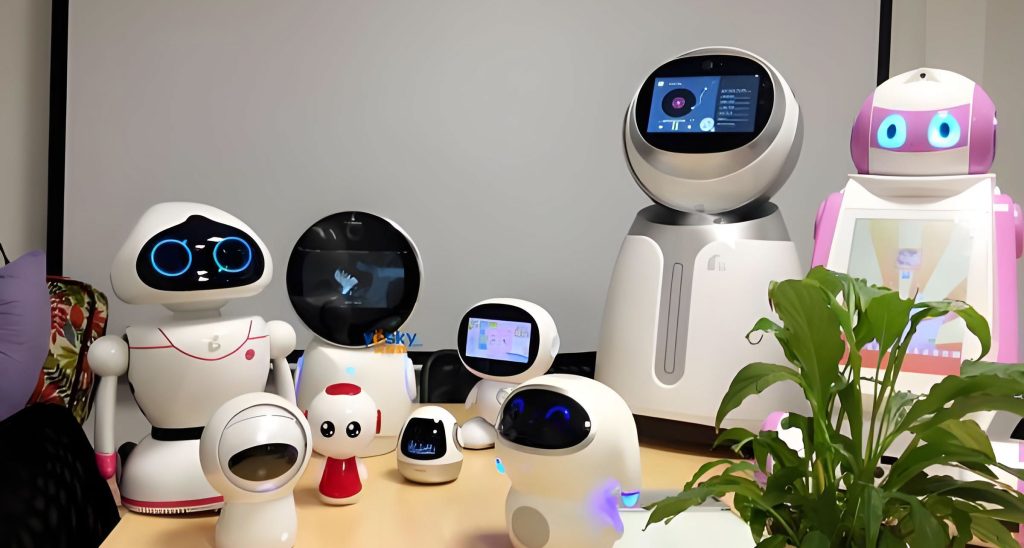
My inquiry was structured around a nine-month participatory observation with 47 elder-led households. A key component was the placement of a specific domestically developed companion robot, designed with cultural nuances in mind. Its presence in the living environment became the focal point for studying real-world adoption.
To systematically capture the evolution of use and support, I engaged in a four-phase interview process with both the primary elder user and a key family member. The phases were strategically timed: at the robot’s introduction (T1), after three months (T2), after six months (T3), and upon its retrieval after nine months (T4). This design allowed me to move beyond a snapshot view and trace the dynamic, often non-linear, pathways of engagement. The analytical framework centered on the tripartite model of social support—instrumental, informational, and emotional—and examined its flow from different family layers: spouse (conjugal) and offspring (intergenerational).
The journey of the companion robot within the home followed a remarkably common, yet poignant, trajectory. A pattern emerged that can be broadly visualized as a decay curve of engagement, where initial enthusiasm invariably waned. The data revealed a clear clustering of use duration, as summarized below.
| Duration of Active Use | Number of Elder Users |
|---|---|
| Minimal to no use | 5 |
| 1 to 2 months | 15 |
| 2 to 3 months | 19 |
| 3 to 6 months | 8 |
| Over 6 months | 0 |
This attrition cannot be understood in isolation from the social ecosystem of the home. The overarching finding was that inner social support was multifaceted and multidirectional. A majority of elders received some form of support, primarily from their children. However, the type and quality of this support varied dramatically and evolved over time. The following table breaks down the prevalence of different support types from different sources across the study period.
| Source of Support | Instrumental Support | Informational Support | Emotional Support |
|---|---|---|---|
| Children | 4 | 10 | 27 |
| Grandchildren | 1 | 5 | 5 |
| Spouse | 0 | 1 | 16 |
A more nuanced analysis revealed that intergenerational support was not a static “on” or “off” switch. It manifested as a dynamic spectrum, often oscillating within a single household over the nine months. I conceptualize this spectrum as a continuum with four distinct, yet interrelated, modalities: Non-support, Limited Support, Moderate Support, and Excessive Support.
Each point on this spectrum had profound implications. Non-support often stemmed from genuine concern—children worrying about privacy (“The robot has a camera, don’t enable it”), safety, or viewing the companion robot as a trivial distraction. Limited Support involved verbal encouragement without substantive follow-through (“They said to use it, but when I had a problem, they were too busy”). Both effectively stifled sustained engagement. Excessive Support was perhaps the most insidious; it involved children or grandchildren taking over operation of the companion robot. This “let me do it for you” approach, while efficient, fundamentally disempowered the elder, robbing them of agency and reinforcing a sense of technological incompetence. It frequently led to the companion robot being physically relocated to a younger family member’s space, resulting in the elder’s passive or active relinquishment of use.
In contrast, Moderate Support was the golden mean. It was characterized by patient, on-demand assistance that respected the elder’s autonomy. This included helping with connectivity issues, suggesting new functions (“Did you know it can tell the weather?”), and, most importantly, providing emotional encouragement and companionship. This type of support transformed the companion robot from a solitary object into a nexus for shared family activity and conversation, briefly bridging generational divides.
A fascinating and counter-narrative finding was the phenomenon of reverse support. In several cases, after gaining familiarity, elders became the local experts on the companion robot. They would then instruct their children or, more commonly, guide their grandchildren in its use. This role reversal—this moment of being the knowledgeable one—provided a significant boost to self-esteem and a sense of continued contribution within the family hierarchy. The dynamic could be modeled as a two-way flow of support, challenging the unidirectional notion of “digital feeding.”
$$ S_{total}(t) = S_{from}(t) + S_{to}(t) + \epsilon $$
Where $S_{total}(t)$ is the elder’s overall perceived support at time $t$, $S_{from}(t)$ is support received from family, $S_{to}(t)$ is the reverse support given by the elder, and $\epsilon$ represents external factors. A positive $S_{to}(t)$ significantly correlated with reported satisfaction.
Conjugal support presented a different pattern, one heavily marked by gender. Spousal support was overwhelmingly emotional in nature—a companionable presence, a shared moment of listening to the companion robot sing, or a gentle nudge to “use it or it’s a waste.” However, practical instrumental support was nearly absent, as both partners often shared similar levels of (non-)technical proficiency. The critical observation was a distinct gender asymmetry. Male elders were frequently less supportive of their wives’ use, framing it as a distraction from domestic duties or inadvertently monopolizing the device. Female elders, socialized into more accommodating roles, often reported depending on their husband’s encouragement yet were more likely to cede use. This revealed how traditional household power dynamics and gender roles permeated and could constrain interaction with even the most novel technologies like a companion robot.
The interplay of these support dynamics leads to a central theoretical tension: inner social support can be both a catalyst and an inhibitor. Moderate Support is empowering, fostering a sense of love, respect, and shared exploration. However, the unstable, shifting nature of support—moving from encouragement to neglect, or from help to takeover—inflicts a subtle form of harm. It can confirm an elder’s fears of being a burden, underscore their marginalization in the digital age, and amplify feelings of helplessness. The relationship between support quality and sustained use is not linear but rather follows a pattern of diminishing returns and negative outcomes at both extremes.
$$ U(t) = \beta_0 + \beta_1 M(t) – \beta_2 L(t) – \beta_3 E(t) + \beta_4 R(t) $$
Where $U(t)$ is the sustained use of the companion robot at time $t$. $M(t)$ represents Moderate Support, $L(t)$ represents Limited/Non-support, $E(t)$ represents Excessive Support, and $R(t)$ represents the elder’s provision of Reverse Support. The coefficients $\beta_1$ and $\beta_4$ are positive, while $\beta_2$ and $\beta_3$ are negative, illustrating the complex positive and negative influences.
Ultimately, the presence of the companion robot acted as a diagnostic tool, revealing and sometimes recalibrating existing family relationships. It highlighted the “child-centered” family structure, where elders would voluntarily “step aside” for their grandchildren, deriving joy from the child’s pleasure rather than their own use—a poignant act of altruism. It also became a medium for connection, a shared focal point that could, in its best moments, facilitate “co-presence” and meaningful intergenerational exchange. This observation forces a critical reconsideration of the companion robot‘s role. Is it truly a companion in a human sense?
My conclusion is that it is not, at least not in the depth that human relationships require. Elders, through their interactions, demonstrated a sophisticated understanding of this limit. They enjoyed the “robotic moment”—the illusion of companionship without demand—but soon recognized its hollowness. The companion robot lacked shared history, genuine empathy, and the capacity for bidirectional emotional growth. It could simulate care but not provide the “situated, personal, culturally rich, memory-laden” companionship that defines human bonds. What elders truly sought and valued was the activation of human attention and care that the robot sometimes triggered in their family members. The machine’s greatest value, ironically, was often as a catalyst for human connection, not as a substitute for it.
Therefore, integrating a companion robot into elder care is not a simple matter of deploying technology. It is an intervention into the family system. Success depends on cultivating an ecology of Moderate Support—patient, respectful, and empowering—while being acutely aware of the risks of both neglectful and overbearing help. It requires sensitivity to gendered dynamics within the home and an openness to the empowering potential of reverse knowledge flows. The goal for designers, caregivers, and families should not be to create the perfect simulated companion, but to create technologies that fit seamlessly into, and gently enhance, the irreplaceable web of human relationships that constitute true support in later life. The companion robot is not the end point of care; it is one potential mediator in the ongoing, complex, and essential project of familial solidarity across generations.