
In the field of precision mechanical transmission, the planetary roller screw mechanism has garnered significant attention due to its high load capacity, long service life, and efficiency in converting rotational motion into linear motion. Compared to planetary ball screws, the planetary roller screw offers superior performance in demanding applications such as aerospace, where reliability and durability are paramount. However, the load distribution within the planetary roller screw is complex, primarily due to the eccentric axial forces acting on the roller threads, which induce bending deformation. This bending deformation has often been overlooked in previous studies, leading to inaccuracies in predicting the true load distribution. In this article, I aim to address this gap by developing a comprehensive analytical method that incorporates roller bending deformation into the load distribution analysis of planetary roller screw systems. The goal is to provide a more accurate understanding of how loads are distributed across the threads, which is crucial for optimizing design, improving performance, and enhancing the lifespan of these mechanisms.
The planetary roller screw consists of three main components: the screw, the rollers, and the nut. The screw and nut have multiple-start threads, while the rollers typically have single-start threads, allowing for efficient motion transmission. When an axial load is applied, the threads of the rollers engage with those of the screw and nut, creating contact forces. However, due to axial clearances and geometric asymmetries, the contact points on the roller are not symmetric about its central axis. This results in eccentric axial forces that cause the roller to bend, in addition to undergoing axial deformation. Ignoring this bending effect can lead to underestimated stress concentrations and uneven load distribution, potentially causing premature failure. Therefore, I propose a novel approach that integrates roller bending deformation into the load distribution model, considering factors such as axial deformation, contact deformation, and bending-induced displacements. This method is based on elastic deformation theory, Hertzian contact mechanics, and beam bending principles, ensuring a holistic analysis of the planetary roller screw system.
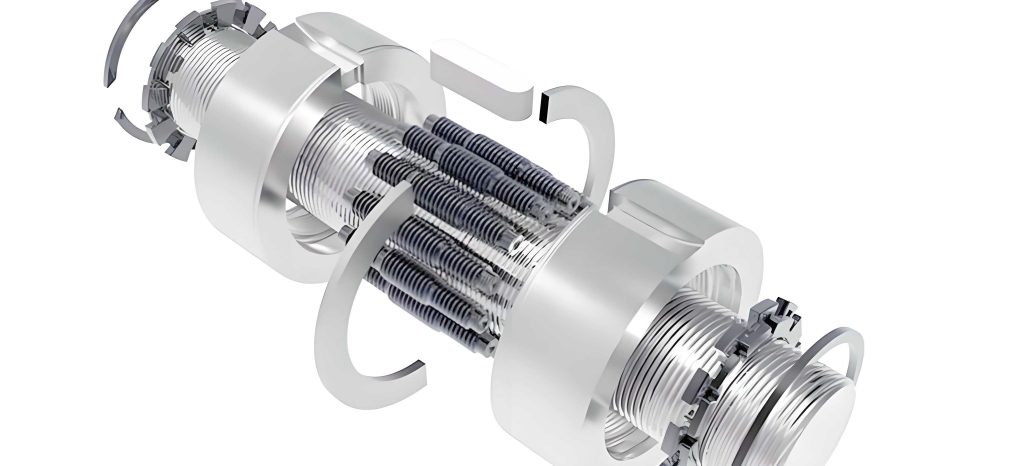
To begin, I analyze the bending moments acting on the roller. The roller is subjected to axial forces from both the screw and nut sides at the thread engagement points. Due to the offset of these points from the roller’s central axis, these forces create bending moments. Let’s denote the axial force on the roller from the screw side at the i-th thread as \( F_{asi} \), and from the nut side as \( F_{aNi} \). The distances from the roller center to the contact points on the screw and nut sides are \( r_{sr} \) and \( r_{Nr} \), respectively. The bending moments induced by these forces are given by:
$$ M_{si} = F_{asi} \cdot r_{sr} $$
$$ M_{Ni} = F_{aNi} \cdot r_{Nr} $$
These moments cause the roller to bend, leading to angular displacements at the contact points. By modeling the roller as a simply supported beam with movable supports at the contact points, I can derive the rotation angles at these points. For the i-th thread engagement, the rotation angles at the screw side (\( \theta_{si} \)) and nut side (\( \theta_{Ni} \)) are calculated using superposition and beam deflection formulas:
$$ \theta_{si} = \frac{M_{si} \cdot L}{3EI} – \frac{M_{Ni} \cdot L}{6EI} $$
$$ \theta_{Ni} = \frac{M_{Ni} \cdot L}{3EI} – \frac{M_{si} \cdot L}{6EI} $$
Here, \( L \) represents the effective length between contact points, \( E \) is the elastic modulus of the roller material, and \( I \) is the area moment of inertia of the roller cross-section. These rotation angles are critical for determining the axial displacements due to bending, as they relate to the curvature of the roller.
Next, I develop a detailed load model for the planetary roller screw. The roller experiences combined axial tension and bending, which complicates the deformation analysis. Consider a segment of the roller between two adjacent thread contact points on the same side, separated by an axial distance of \( P/2 \), where \( P \) is the pitch of the planetary roller screw. In this segment, the internal axial force is \( F_i \), and the bending moments vary along the length. By resolving the eccentric axial forces into components along the roller’s coordinate axes, I can express the bending moments in two perpendicular planes. For a cross-section at position \( z = a \), the moments \( M_x \) and \( M_y \) in the yz and xz planes are:
$$ M_x = \frac{(F_{asiy} \cdot y_{sr} – F_{aNi} \cdot y_{Nr}) \cdot a}{P/2} + F_{asiy} \cdot y_{sr} $$
$$ M_y = \frac{F_{asix} \cdot x_{sr} \cdot a}{P/2} + F_{asix} \cdot x_{sr} $$
In these equations, \( F_{asiy} \) and \( F_{asix} \) are the components of \( F_{asi} \) along the y and x axes, respectively, and \( (x_{sr}, y_{sr}) \) are the coordinates of the screw-side contact point in the roller coordinate system. The normal stress at any point \( (x, y) \) on the cross-section is the sum of stresses due to axial force and bending:
$$ \sigma = \sigma_1 + \sigma_2 + \sigma_3 = \frac{F_i}{A_r} + \frac{M_x \cdot y}{I_x} + \frac{M_y \cdot x}{I_y} $$
Where \( A_r \) is the cross-sectional area of the roller, and \( I_x \) and \( I_y \) are the moments of inertia. The neutral axis, where the stress is zero, is a line that does not pass through the centroid of the cross-section. Its equation can be derived by setting \( \sigma = 0 \). For the cross-sections at the contact points, the neutral axis divides the area into tensile and compressive regions. Since the contact points undergo compressive stress due to bending, the axial displacement at these points can be related to the rotation angle and the distance from the neutral axis. If \( t_{si} \) and \( t_{Ni} \) are the distances from the contact points to the neutral axis on the screw and nut sides, respectively, the axial displacements due to bending are:
$$ \Delta_{si} = t_{si} \cdot \theta_{si} $$
$$ \Delta_{Ni} = t_{Ni} \cdot \theta_{Ni} $$
Note that for small angles, \( \sin \theta \approx \theta \). These displacements contribute to the total deformation between adjacent threads.
Now, considering all deformation components, the total axial deformation between the i-th and (i+1)-th contact points on the roller includes axial stretching, bending displacements, and thread contact deformation. For the screw side, the deformation is:
$$ \Delta L_{si} = \frac{(F_{asi} + F_{as(i+1)}) P}{2EA_r} – \Delta_{si} – \Delta_{s(i+1)} $$
And for the nut side:
$$ \Delta L_{Ni} = \frac{(F_{aN(i+1)} + F_{aN(i+2)}) P}{2EA_r} – \Delta_{Ni} – \Delta_{N(i+1)} $$
The thread contact deformation is based on Hertzian theory. For the planetary roller screw, the normal contact deformation at the engagement point can be expressed as:
$$ \delta_a = C F_a^{2/3} $$
Where \( C \) is a contact parameter dependent on the geometry and material properties of the planetary roller screw components. Additionally, thread bending deformation occurs due to the load acting on the thread tooth. By modeling the thread as a cantilever beam, the axial displacement at the contact point can be derived. If \( w \) is the load component in the plane of the thread, \( a \) is the thread thickness, \( b \) is the tooth thickness at the contact point, \( c \) is the height, and \( \alpha \) is the thread angle, the displacement \( dx \) is given by:
$$ dx = \frac{3w \cos \alpha}{4E} \left[ \left(1 – 2 – \left(\frac{b}{a}\right)^2 + 2 \ln \left(\frac{a}{b}\right) \right) c \tan^3 \alpha \right] $$
This accounts for the flexibility of the threads in the planetary roller screw.
With these deformation equations, I establish the deformation compatibility conditions for the planetary roller screw system. For adjacent threads on the screw or nut, the total deformation between engagement points must be consistent. Assuming the screw is fixed and the nut moves axially, the compatibility equation for the i-th and (i+1)-th threads is:
$$ L + \Delta L_{Ni} + \delta_{i+1} = L + \Delta L_{si} + \delta_i $$
Here, \( L \) is the nominal distance equal to the pitch \( P \). Combined with the static equilibrium condition that the sum of axial forces on the roller equals the total applied load \( T \), I form a system of equations. For a planetary roller screw with \( n \) threads engaged per roller, the equations are:
$$ \sum_{i=1}^{n} F_{asi} = \sum_{i=1}^{n} F_{aNi} = T $$
And for each pair of adjacent threads, the compatibility equation holds. This system can be solved numerically to obtain the load distribution \( F_{asi} \) and \( F_{aNi} \) across the threads. To facilitate this, I use iterative methods such as the Newton-Raphson technique, implemented in software like MATLAB, to handle the nonlinearities from contact deformation and bending.
To validate the analytical model, I consider a specific example of a planetary roller screw with geometric parameters as listed in Table 1. This planetary roller screw is designed for a rated load capacity of 2 tons, with components made of GCr15 steel, which has an elastic modulus of \( 2.12 \times 10^{12} \) Pa and a Poisson’s ratio of 0.29. The parameters are typical for high-precision applications, ensuring the relevance of the analysis.
| Geometric Parameter | Screw | Roller | Nut |
|---|---|---|---|
| Pitch Diameter (mm) | 19.5 | 6.5 | 32.5 |
| Pitch (mm) | 0.4 | 0.4 | 0.4 |
| Number of Thread Starts | 5 | 1 | 5 |
| Number of Thread Teeth | – | 30 | – |
| Lead (mm) | 2 | 0.4 | 2 |
| Thread Angle (degrees) | 45 | 45 | 45 |
Using these parameters, I compute the load distribution for a single roller under an axial load of 20 kN. The results, plotted in Figure 1, show that the loads on both the screw and nut sides vary monotonically along the thread engagement length. The highest load occurs at the thread closest to the fixed end (screw side) and the moving end (nut side), indicating stress concentrations. This uneven distribution is exacerbated by roller bending, as the bending deformation increases the disparity in axial displacements between threads.
To verify the analytical results, I perform a finite element analysis (FEA) using Abaqus software. The planetary roller screw model is meshed with C3D8M elements, totaling over 2 million elements and 1 million nodes. Contact interactions are defined with a tolerance of 0.2, and boundary conditions are set to simulate the actual loading: the screw end is fully fixed, the nut is allowed only axial movement, and the rollers are constrained from rotating. A concentrated force of 20 kN is applied to the nut via a coupling constraint. The FEA results for thread load distribution are compared with the analytical predictions in Figure 2. The close agreement between the two sets of data confirms the accuracy of my analytical model that incorporates roller bending. The minor discrepancies are attributed to simplifications in the analytical approach, such as assuming uniform material properties and idealized contact conditions, but overall, the model captures the essential behavior of the planetary roller screw system.
To further illustrate the impact of roller bending, I compare the load distribution with and without considering bending deformation. As shown in Figure 3, the general trend of load distribution remains similar—loads decrease from the fixed ends toward the center—but the inclusion of bending significantly increases the non-uniformity. For instance, the maximum load on the screw side is about 15% higher when bending is considered, highlighting the importance of this factor in design analyses. This effect stems from the additional axial displacements due to bending, which alter the compatibility between threads and redistribute loads.
I now investigate how various parameters influence the load distribution in the planetary roller screw, focusing on the difference in load ratios between the bending-included and bending-excluded cases. Let \( y_{xi} \) be the ratio of the load on the i-th thread to the average load when bending is considered, and \( y’_{xi} \) be the same ratio without bending. The difference \( \Delta y = y_{xi} – y’_{xi} \) measures the impact of bending on load distribution uniformity. A larger \( \Delta y \) indicates greater non-uniformity due to bending.
First, I examine the effect of axial load. For axial loads ranging from 15 kN to 70 kN, the results are summarized in Table 2. As the load increases, \( \Delta y \) grows, meaning that bending deformation causes more uneven load distribution. This is expected because higher loads produce larger bending moments, leading to greater roller curvature and displacement. For example, at 70 kN, \( \Delta y \) can exceed 0.1 for the end threads, suggesting that ignoring bending could underestimate peak stresses by over 10%.
| Axial Load (kN) | Δy for Screw Side (Max) | Δy for Nut Side (Max) |
|---|---|---|
| 15 | 0.03 | 0.02 |
| 25 | 0.05 | 0.04 |
| 35 | 0.07 | 0.06 |
| 50 | 0.09 | 0.08 |
| 70 | 0.12 | 0.10 |
Next, I vary the pitch of the planetary roller screw from 0.6 mm to 1.4 mm. The pitch directly affects the spacing between thread engagements, which influences the bending span. The results in Table 3 show that larger pitches lead to higher \( \Delta y \) values. This is because the bending deflection of a beam is proportional to the cube of the span length ( \( \propto (P/2)^3 \) ), so increasing the pitch reduces the roller’s resistance to bending, amplifying the deformation and its impact on load distribution. For a pitch of 1.4 mm, \( \Delta y \) reaches up to 0.15, indicating severe non-uniformity that could compromise the planetary roller screw’s performance.
| Pitch (mm) | Δy for Screw Side (Max) | Δy for Nut Side (Max) |
|---|---|---|
| 0.6 | 0.04 | 0.03 |
| 0.8 | 0.06 | 0.05 |
| 1.0 | 0.09 | 0.07 |
| 1.2 | 0.12 | 0.10 |
| 1.4 | 0.15 | 0.13 |
Finally, I explore the role of the roller’s elastic modulus. By using materials with higher stiffness, such as advanced alloys or ceramics, the bending deformation can be mitigated. Table 4 presents \( \Delta y \) for elastic moduli ranging from \( 1.5 \times 10^{12} \) Pa to \( 3.0 \times 10^{12} \) Pa. As the modulus increases, \( \Delta y \) decreases, meaning the load distribution becomes more uniform and closer to the case without bending. For instance, at \( E = 3.0 \times 10^{12} \) Pa, \( \Delta y \) drops below 0.02, suggesting that stiffer rollers can effectively reduce the adverse effects of bending. This insight is valuable for material selection in planetary roller screw design, especially for high-load applications where minimizing deformation is critical.
| Elastic Modulus (×10¹² Pa) | Δy for Screw Side (Max) | Δy for Nut Side (Max) |
|---|---|---|
| 1.5 | 0.10 | 0.08 |
| 2.0 | 0.06 | 0.05 |
| 2.5 | 0.03 | 0.02 |
| 3.0 | 0.01 | 0.01 |
In conclusion, my study demonstrates that roller bending deformation plays a significant role in the load distribution of planetary roller screw systems. By developing an analytical model that integrates bending with axial and contact deformations, I provide a more accurate method for predicting thread loads. The key findings are: (1) Roller bending increases the non-uniformity of load distribution compared to models that ignore it, with higher loads and larger pitches exacerbating this effect. (2) Increasing the roller’s elastic modulus can mitigate bending-induced non-uniformity, offering a practical design strategy. (3) The analytical results align well with finite element simulations, validating the proposed approach. This work enhances the understanding of planetary roller screw mechanics and supports the optimization of these components for improved reliability and performance in precision applications. Future research could extend this model to dynamic loading conditions or explore the effects of manufacturing tolerances on bending behavior.
To further elaborate on the methodology, the derivation of the neutral axis equation is crucial. For a cross-section of the roller under combined loading, the neutral axis is defined by setting the total normal stress to zero. From the stress equation:
$$ \sigma = \frac{F_i}{A_r} + \frac{M_x y}{I_x} + \frac{M_y x}{I_y} = 0 $$
Rearranging, I obtain the linear equation:
$$ \frac{M_x}{I_x} y + \frac{M_y}{I_y} x + \frac{F_i}{A_r} = 0 $$
This represents a line in the cross-sectional plane, with slope and intercept dependent on the loading conditions. For the planetary roller screw, since \( M_x \) and \( M_y \) vary along the roller length, the neutral axis shifts at different sections, affecting the distances \( t_{si} \) and \( t_{Ni} \). These distances can be computed geometrically once the neutral axis is known, enabling the calculation of bending displacements.
Moreover, the contact parameter \( C \) in the Hertzian deformation formula depends on the curvatures and material properties of the engaging surfaces. For a planetary roller screw, the contact between roller threads and screw/nut threads is akin to cylindrical contact. The parameter \( C \) can be expressed as:
$$ C = \frac{2K(e)}{\pi E’} \left( \frac{3}{2R’} \right)^{1/3} $$
Where \( K(e) \) is the complete elliptic integral of the first kind, \( E’ \) is the equivalent elastic modulus, and \( R’ \) is the equivalent radius of curvature. These parameters are derived from the geometry of the planetary roller screw threads, and their values are essential for accurate deformation calculations.
In terms of computational implementation, solving the system of nonlinear equations requires careful iteration. I use an initial guess for the load distribution, typically a uniform distribution, and then update it based on the deformation compatibility equations. The process converges when the differences between successive iterations are below a tolerance, say \( 10^{-6} \). This approach ensures that the solution accounts for all coupling effects between bending, axial, and contact deformations in the planetary roller screw.
Another aspect to consider is the assumption of identical load distribution across all rollers in the planetary roller screw. In reality, manufacturing variations might cause slight differences, but for symmetry and simplification, this assumption holds well in analytical models. However, in future work, statistical methods could be incorporated to account for such variations.
The implications of this research are substantial for the design and application of planetary roller screws. By accurately predicting load distribution, engineers can optimize thread profiles, select appropriate materials, and determine safe operating loads to prevent overloading and fatigue failure. For instance, in aerospace actuators, where planetary roller screws are used for precise control surfaces, ensuring even load distribution can enhance longevity and reduce maintenance costs.
Additionally, the methodology presented here can be adapted to other screw mechanisms, such as ball screws or lead screws, where bending deformation might be relevant. The principles of combining beam theory with contact mechanics are broadly applicable in mechanical design.
In summary, this article provides a comprehensive framework for analyzing load distribution in planetary roller screw systems with roller bending deformation. Through detailed mathematical modeling, numerical examples, and validation, I highlight the importance of considering bending effects for accurate performance assessment. The planetary roller screw, as a high-performance transmission component, benefits from such advanced analyses to meet the demands of modern engineering applications.