
The precise and reliable transmission of motion and force is a cornerstone of modern high-performance mechatronic systems. Among the various precision mechanical actuators, the planetary roller screw mechanism has emerged as a superior alternative to the traditional ball screw in applications demanding exceptionally high load capacity, stiffness, and operational life. This mechanical marvel functions by converting rotary motion into linear motion, or vice versa, through the rolling contact between a central threaded shaft (the screw), multiple orbiting threaded rollers, and an internally threaded nut. The multi-contact, load-sharing design of the planetary roller screw is fundamental to its performance advantages. However, this performance is critically dependent on how the applied axial load is distributed among the numerous engaged threads of the screw, rollers, and nut. An uneven load distribution leads to premature wear, reduced fatigue life, and potential failure of the most heavily loaded threads, negating the mechanism’s inherent advantages. Therefore, a profound understanding and accurate modeling of the load distribution within a planetary roller screw is essential for optimal design and reliable operation.
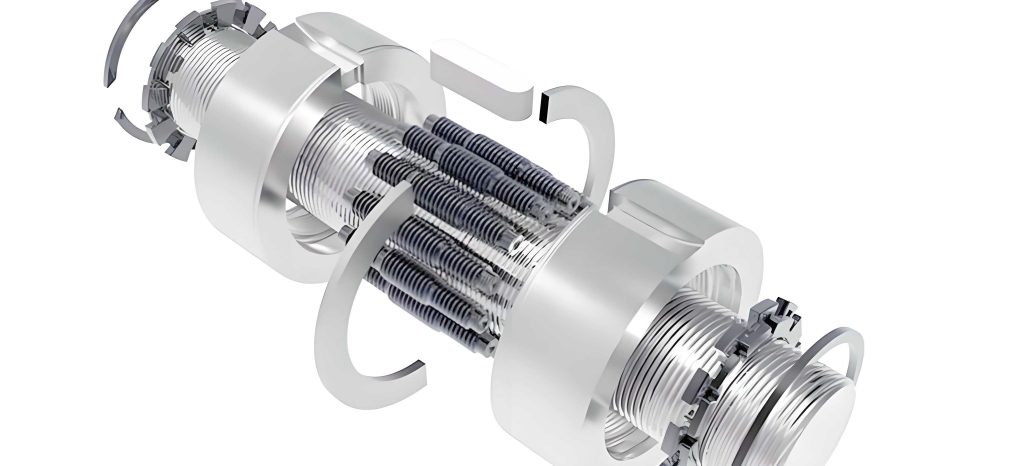
Initial research into the load distribution of planetary roller screw assemblies often relies on idealized models, assuming perfect geometry and isothermal conditions. While valuable for establishing baseline behavior, these models fall short of predicting real-world performance. In practice, three primary factors interact to drastically alter the load distribution profile from the ideal case: inevitable manufacturing errors (such as pitch deviation and thread profile inaccuracies), progressive thread wear due to rolling and sliding contact under load, and thermal expansion resulting from frictional heat generation or environmental temperature changes. These factors do not act in isolation but are intrinsically coupled. For instance, wear patterns are dictated by the initial load distribution caused by errors, and the resulting change in geometry then further redistributes the load. Simultaneously, temperature changes cause differential expansion of the screw, rollers, and nut, modifying contact conditions and preload. This paper aims to develop and present a comprehensive analytical model for the load distribution in a planetary roller screw that explicitly accounts for this coupled influence of geometric error, thread wear, and thermal effects. The model is grounded in deformation coordination relationships and Hertzian contact theory.
1. Fundamentals and Model Development
1.1. Basic Load Distribution Model
The modeling begins with several standard assumptions: all components behave linear-elastically; contacts between the screw-roller and nut-roller interfaces are treated as Hertzian point contacts; the load is purely axial; and each of the M rollers carries an identical load share. The geometry of contact at a single thread interface is defined by the thread lead angle $\lambda$ and the contact angle $\beta$. When an axial force $F$ is applied, it is resolved into normal forces $P_i$ at each engaged thread i.
The fundamental relationship between the axial load and the individual thread normal loads is given by force equilibrium:
$$F = M \sum_{j=1}^{N} P_j \sin\beta \cos\lambda$$
where $N$ is the number of engaged threads per roller.
The classic model for load distribution along the engagement length, considering the axial compliance of the screw and nut structures, is derived from deformation coordination. The change in normal load between adjacent threads is related to the axial deformation of the screw and nut segments between those threads. This leads to a recursive equation of the form:
$$P_{i-1}^{2/3} = P_i^{2/3} + \left( \frac{1}{E_s’ A_s} + \frac{1}{E_n’ A_n} \right) \frac{M p}{(C_s + C_n)} \sum_{j=i}^{N} P_j \sin^2\beta \cos^2\lambda$$
where:
$E_s’, E_n’$ are the equivalent Young’s moduli for screw and nut contacts,
$A_s, A_n$ are the effective cross-sectional areas of the screw and nut,
$p$ is the thread pitch,
$C_s, C_n$ are the contact compliance coefficients for the screw-roller and nut-roller interfaces, derived from Hertzian theory.
The contact compliance coefficients are calculated as:
$$C_s = \left( \frac{2K(e)}{\pi m_a} \right) \sqrt[3]{\frac{9}{8} \left( \frac{\sum \rho}{E_s’} \right)^2 }, \quad C_n = \left( \frac{2K(e)}{\pi m_a} \right) \sqrt[3]{\frac{9}{8} \left( \frac{\sum \rho}{E_n’} \right)^2 }$$
Here, $K(e)$ is the complete elliptic integral of the first kind, $m_a$ is a dimensionless elliptic parameter, and $\sum \rho$ is the sum of principal curvatures at the contact point. The geometric and material parameters for a typical planetary roller screw are summarized in Table 1.
| Parameter | Symbol | Value | Unit |
|---|---|---|---|
| Screw Pitch Diameter | $d_s$ | 24.0 | mm |
| Number of Thread Starts | $n$ | 5 | – |
| Pitch | $p$ | 2.0 | mm |
| Lead Angle | $\lambda$ | 7.555 | ° |
| Contact Angle | $\beta$ | 45.0 | ° |
| Roller Pitch Diameter | $d_r$ | 8.0 | mm |
| Number of Rollers | $M$ | 10 | – |
| Threads per Roller | $N$ | 20 | – |
| Young’s Modulus (Screw/Nut) | $E_s, E_n$ | 210 | GPa |
| Poisson’s Ratio | $\mu$ | 0.3 | – |
1.2. Comprehensive Model with Error, Wear, and Thermal Effects
To model real-world conditions, the deviation in the initial position of each thread contact point must be considered. This deviation, denoted $h_i$, aggregates the effects of geometric error and wear depth at the i-th thread. Furthermore, thermal expansion introduces an additional positional shift. The fundamental deformation coordination equation is modified to include these terms. For two adjacent threads i-1 and i, the relationship between axial structural deformation and contact deformation, adjusted for deviations, is enforced. This derivation yields the core equation for the coupled load distribution model:
$$P_{i-1}^{2/3} = P_i^{2/3} + \frac{2}{(C_s + C_n)} \left[ (h_{i-1} + \gamma_{i-1}) – (h_i + \gamma_i) \right] + \left( \frac{1}{E_s’ A_s} + \frac{1}{E_n’ A_n} \right) \frac{M p}{(C_s + C_n)} \sum_{j=i}^{N} P_j \sin^2\beta \cos^2\lambda$$
The term $(h_{i-1} – h_i)$ represents the net effect of geometric error and wear depth between threads. The term $\gamma_i$ represents the axial component of thermal expansion at thread i.
1.2.1. Modeling Geometric Error ($h_i^{error}$)
Manufacturing imperfections such as pitch error, lead error, and thread profile error can be equivalently represented as an effective pitch deviation. For modeling purposes, this error is often assumed to follow a statistical distribution. A normal distribution with a mean of zero and a standard deviation characteristic of precision machining is commonly used:
$$h_i^{error} \sim \mathcal{N}(0, \sigma^2)$$
where $\sigma$ is on the order of $2.0 \times 10^{-4}$ mm for high-precision components. This stochastic error is the primary source of initial load distribution irregularity and fluctuation in a new planetary roller screw.
1.2.2. Modeling Thread Wear ($h_i^{wear}$)
During operation, adhesive and abrasive wear occur at the contacting threads, particularly where sliding is present. The relative sliding is most significant at the screw-roller interface. Using the Archard wear model, the wear volume $W_i$ for a contact point i over a sliding distance $L$ is:
$$W_i = K \frac{L P_i}{H}$$
where $K$ is the dimensionless wear coefficient and $H$ is the hardness of the softer material. The sliding distance $L$ for a screw rotating at speed $n_s$ (RPM) over time $t$ is:
$$L = \frac{2 \pi r_s n_s t}{\cos \lambda}$$
The wear depth $\chi_i$ (axial component) at the contact ellipse with semi-axes $a_i$ and $b_i$ is then:
$$\chi_i = \frac{W_i}{\pi a_i b_i \cos \lambda} = K \frac{2 r_s n_s t P_i}{H \pi a_i b_i \cos^2 \lambda}$$
This wear depth $\chi_i$ contributes directly to the total deviation $h_i$ for that thread in subsequent load cycles, creating a feedback loop where load influences wear, and wear redistributes load.
1.2.3. Modeling Thermal Effects ($\gamma_i$)
Differential thermal expansion arises from frictional heating or ambient temperature changes when the screw, rollers, and nut are made of different materials (e.g., steel screw, bronze nut). If the coefficient of thermal expansion (CTE) of the roller $\alpha_r$ differs from that of the screw $\alpha_s$, a temperature change $\Delta T = T – T_{ref}$ causes a relative axial displacement at the i-th thread pair:
$$\gamma_i = (i-1) \cdot p \cdot (\alpha_r – \alpha_s) \cdot \Delta T$$
If $\alpha_r > \alpha_s$, $\gamma_i$ is positive, effectively reducing the initial gap or interference at threads farther from the origin, and vice versa. This term can significantly alter the load distribution pattern, potentially making it more uniform or more severe depending on the sign and magnitude of $\Delta T$.
2. Model Validation and Analysis of Individual Factors
2.1. Validation of the Basic Model
Prior to analyzing coupled effects, the foundational model (with $h_i = \gamma_i = 0$) must be validated. Under an axial load $F = 30,000$ N and using the parameters from Table 1, the calculated load distribution is compared against results from a detailed finite element analysis (FEA) and a discrete spring-model from established literature. The comparison, shown in Table 2, confirms excellent agreement.
| Model/Method | Maximum Thread Load (N) | Deviation from Present Model |
|---|---|---|
| Present Analytical Model | 366.1 | Reference |
| Literature Spring Model [Ref] | 355.7 | -2.84% |
| Finite Element Model [Ref] | 396.7 | +8.36% |
The mean load per thread is virtually identical across all three methods (approximately 250 N). The minor deviations in peak load are within acceptable limits for engineering analysis, verifying the correctness of the developed analytical framework for the planetary roller screw.
2.2. Impact of Geometric Error
Introducing the stochastic pitch error ($\sigma = 2.0 \times 10^{-4}$ mm) into the model for a 50,000 N load immediately disrupts the smooth load gradient predicted by the ideal model. The results, plotted conceptually, show that error is the dominant factor causing significant load unevenness and random fluctuation among threads. Some threads become underloaded, while others experience loads well above the ideal average, creating localized stress concentrations.
2.3. Combined Impact of Error and Wear
Simulating operation over 1,200 minutes at 500 RPM incorporates the wear model. The initial error-induced uneven load causes non-uniform wear; threads with higher initial loads wear more. This wear depth $h_i^{wear}$ modifies the local geometry, which, when fed back into the load distribution model, further exacerbates the load imbalance. The load profile becomes even more irregular and unpredictable compared to the error-only case. This demonstrates the coupled, degenerative cycle of error and wear in a planetary roller screw, leading to accelerated performance degradation.
3. Coupled Effects and the Role of Temperature
3.1. Transformation of Load Distribution by Thermal Effects
Introducing a temperature change $\Delta T$ into the system containing errors and wear produces a remarkable effect. For a given $\Delta T = 40^\circ$C, with $\alpha_r > \alpha_s$, the load distribution pattern undergoes a fundamental transformation. While fluctuations due to errors persist, the overall trend shifts. The load on threads near the leading end decreases, while the load on threads near the trailing end increases. The distribution becomes more symmetric about the mid-point of engagement. This occurs because the differential thermal expansion $\gamma_i$ applies a systematic, linearly-increasing positional correction along the engagement length, partially counteracting the stiffness-driven load decay from one end to the other.
3.2. Quantitative Influence of Temperature Change Magnitude
The magnitude of $\Delta T$ is critical. Analysis is performed for $\Delta T = 0^\circ$C, $20^\circ$C, $40^\circ$C, and $80^\circ$C, with constant error and wear profiles. The key results are summarized in Table 3 and described below.
| $\Delta T$ (°C) | Load Distribution Trend | Max Thread Load (N) | Increase vs. $\Delta T=0^\circ$C | Uniformity |
|---|---|---|---|---|
| 0 | Steady decay from front to rear | ~ (at front) | Reference | Poor (Error-dominated) |
| 20 | Transition to symmetric profile | ~ (near middle) | +~3% | Improving |
| 40 | Approximately symmetric | ~ (near rear) | +~5% | Best among cases |
| 80 | Strongly biased to rear | ~ (at rear) | +9.2% | Poor (Overloaded rear) |
The findings reveal several crucial insights:
- Pattern Shift: As $\Delta T$ increases, the load distribution pattern rotates from a front-loaded profile ($\Delta T=0$) to a nearly symmetric one ($\Delta T=40$), and finally to a rear-loaded profile ($\Delta T=80$). The curves for $\Delta T=0$ and $\Delta T=80$ are approximately mirror images about the center thread.
- Peak Load Growth: The maximum single-thread load increases with $\Delta T$. At $\Delta T=80^\circ$C, the peak load is 9.2% higher than the peak load in the $\Delta T=0^\circ$C case. This is a significant increase that directly elevates the risk of contact fatigue, plastic deformation, or accelerated wear on the most loaded threads.
- Existence of an Optimal Range: The case with $\Delta T=40^\circ$C results in the most uniform load distribution across the engagement length, despite the presence of errors. This suggests that controlled thermal management could be used as an active or passive method to improve load sharing in a planetary roller screw, counteracting the negative effects of manufacturing errors.
- Risk of High Temperatures: Excessive temperature rise ($\Delta T=80^\circ$C) not only increases the peak load but also concentrates it on the threads at the trailing end of the nut. This could lead to a failure mode that initiates at the rear, which is a direct consequence of the thermal coupling.
The governing equation makes clear that the final load on any thread i is determined by the algebraic sum of the compounded deviations: $ (h_i^{error} + h_i^{wear} + \gamma_i) $. The sign and magnitude of this sum relative to neighboring threads dictate whether the thread carries more or less load, or in extreme cases, whether it disengages entirely.
4. Implications for Design and Operation
The developed model provides a powerful tool for understanding and managing the performance of planetary roller screw mechanisms. The key practical implications are:
- Tolerance Specification: Minimizing geometric error ($h_i^{error}$) remains paramount to prevent initial load concentration and the initiation of uneven wear.
- Life Prediction: Accurate fatigue life estimation must use a load distribution model that incorporates the progressive change due to wear ($h_i^{wear}$), moving beyond a simple, static analysis.
- Thermal Management as a Design Parameter: The discovery that a specific temperature change can optimize load distribution is profound. Designers could:
- Select material pairings ($\alpha_r, \alpha_s$) to achieve a beneficial $\gamma_i$ under expected operating temperatures.
- Implement active cooling or heating systems to maintain the assembly within a temperature window that promotes load uniformity.
- Consider the thermal preload effect in the system’s overall stiffness and backlash compensation strategy.
- Condition Monitoring: Monitoring the temperature profile of a planetary roller screw in service could provide indirect insight into its internal load state and wear progression.
5. Conclusion
This work establishes a comprehensive analytical model for predicting the thread load distribution in a planetary roller screw mechanism under realistic operating conditions. The model successfully couples the effects of geometric manufacturing errors, progressive thread wear, and differential thermal expansion into a single deformation coordination framework. Validation confirms the model’s fidelity.
The analysis leads to several critical conclusions: Geometric error is the primary initiator of load unevenness and fluctuation. Wear acts as a coupling factor, intensifying this unevenness over time in a degenerative feedback loop. Thermal effects possess the unique capability to fundamentally alter the load distribution pattern. A specific temperature change can counteract structural stiffness effects to produce a more uniform distribution, while excessive temperature change can dangerously elevate peak loads on trailing threads.
Ultimately, the load borne by each thread in a planetary roller screw is determined by the complex interplay of the net deviation $ (h_i^{error} + h_i^{wear} + \gamma_i) $. This model provides the necessary analytical foundation to quantify this interplay, enabling the design of more robust, reliable, and high-performance planetary roller screw systems for advanced mechanical and aerospace applications. Future work will focus on experimental validation of the coupled model and the development of integrated design optimization strategies that leverage thermal effects for performance enhancement.