
In this paper, I address the critical challenge of fault detection in planetary roller screw mechanisms, which are widely used in high-precision electromechanical actuators due to their high load capacity, accuracy, and speed. However, the planetary roller screw is often deployed as a single-redundancy component, making its reliability paramount for system integrity. Traditional fault diagnosis methods for planetary roller screw mechanisms face limitations because fault mechanisms are not fully understood, and fault data are scarce, making it difficult to collect sufficient samples for supervised learning. To overcome this, I propose a one-class classification approach, specifically using deep support vector data description (deep SVDD), to detect faults in planetary roller screw systems by learning only from normal operating data. This method circumvents the need for extensive fault samples, which are often impractical to obtain in real-world scenarios. I will detail the theory, implementation, and experimental validation, demonstrating that deep SVDD outperforms conventional one-class methods like one-class support vector machine (OCSVM) and support vector data description (SVDD) in terms of accuracy and training efficiency.
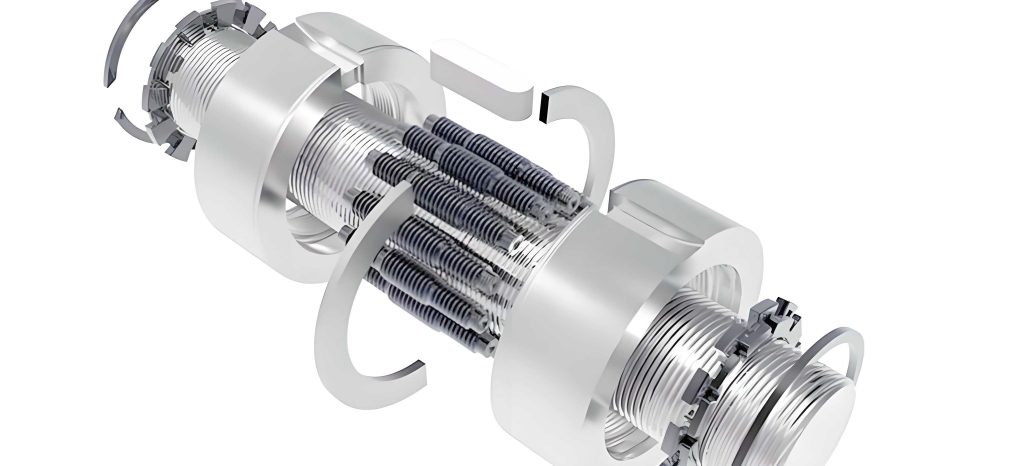
The planetary roller screw mechanism consists of a screw, multiple rollers, a nut, a cage, and an internal gear ring. Its complex structure involves multiple contact points, leading to potential failures such as lubrication loss or tooth breakage on rollers. Early detection of these faults is essential to prevent catastrophic system failures. In practice, acquiring fault data for planetary roller screw mechanisms is challenging due to safety risks and operational constraints. Thus, one-class classification, which trains solely on normal data to identify anomalies, is a promising direction. I focus on deep SVDD, a deep learning extension of SVDD that uses neural networks to extract features and map data into a minimal-volume hypersphere in feature space. This approach enhances scalability and performance for high-dimensional data like vibration signals from planetary roller screw systems.
To provide a foundation, I first review the theoretical background of one-class methods. The support vector data description (SVDD) aims to construct a hypersphere that encloses most target samples (normal data) in a feature space. Given target samples $x \in \mathbb{R}^{n \times d}$, where $n$ is the number of samples and $d$ is the feature dimension, SVDD maps input $x$ via a nonlinear function $\phi(x)$ and minimizes the hypersphere volume. The objective function is:
$$ \min_{c, R, \zeta} R^2 + \lambda \sum_{i=1}^{n} \zeta_i $$
subject to constraints:
$$ \|\phi(x_i) – c\|^2 \leq R^2 + \zeta_i, \quad \zeta_i \geq 0 $$
where $c$ is the hypersphere center, $R$ is the radius, $\zeta_i$ are slack variables, and $\lambda$ balances volume and errors. Using Lagrange multipliers, the dual form involves kernel functions $K(x_i, x_j)$ to handle nonlinearities. Common kernel functions for planetary roller screw data include:
- Radial basis function (RBF): $K(x_i, x_j) = \exp\left(-\frac{\|x_i – x_j\|^2}{2\sigma^2}\right)$
- Sigmoid kernel: $K(x_i, x_j) = \tanh(\beta_0 \langle x_i, x_j \rangle + \beta_1)$
- Polynomial kernel: $K(x_i, x_j) = (1 + \langle x_i, x_j \rangle)^p$
However, SVDD and OCSVM rely on kernel selection and parameter tuning, which can be suboptimal for complex planetary roller screw vibration data. In contrast, deep SVDD integrates neural networks to learn feature representations automatically. The deep SVDD objective function is:
$$ \min_{W} \frac{1}{n} \sum_{i=1}^{n} \|\phi(x_i; W) – c\|^2 + \frac{\lambda}{2} \sum_{l=1}^{L} \|W^l\|_F^2 $$
where $\phi(x_i; W)$ is the neural network mapping parameterized by weights $W$, $c$ is a fixed center (often set as the mean of initial network outputs), and the $L_2$ regularization term prevents overfitting. The anomaly score for a test sample $x_t$ is $s = \|\phi(x_t; W) – c\|^2$, with values below a threshold indicating normal operation of the planetary roller screw.
My methodology for planetary roller screw fault detection involves several steps: data acquisition, preprocessing, feature extraction, model training, and evaluation. I simulate three states of planetary roller screw operation: normal, lubrication failure, and roller tooth breakage on one side. Vibration signals are collected using accelerometers mounted on the nut of the planetary roller screw mechanism, with a sampling frequency of 20,480 Hz. The planetary roller screw has a screw diameter of 24 mm, pitch of 2 mm, 5 starts, and 10 rollers. Data are normalized to the range $[-1, 1]$ to preserve directional characteristics using:
$$ x^* = \frac{x_i – \min(x)}{\max(x) – \min(x)} \times (M – m) + m $$
where $M=1$ and $m=-1$. To augment the limited data, I apply window cropping: a fixed-size window slides over the one-dimensional signal with a stride to generate multiple samples. If the original data length is $n$, window size is $w$, and stride is $s$, the number of samples $p$ is:
$$ p = 1 + \left\lfloor \frac{n – w}{s} \right\rfloor $$
For feature extraction, I use wavelet packet transform (WPT) to decompose non-stationary vibration signals from the planetary roller screw into time-frequency representations. WPT involves orthogonal scaling function $\phi(t)$ and wavelet function $\psi(t)$:
$$ \phi(t) = \sqrt{2} \sum_k h_{0k} \phi(2t – k), \quad \psi(t) = \sqrt{2} \sum_k h_{1k} \phi(2t – k) $$
where $h_{0k}$ and $h_{1k}$ are filter coefficients. The wavelet packet coefficients at decomposition level $i$ and node $j$ are computed iteratively:
$$ W_{i+1, 2j}(\tau) = \sum_k h(k – 2\tau) W_{i, j}(k), \quad W_{i+1, 2j+1}(\tau) = \sum_k g(k – 2\tau) W_{i, j}(k) $$
I obtain approximation and detail coefficients, forming a coefficient matrix for each vibration direction (X, Y, Z). These matrices are stacked to create a 3-channel input for the neural network, enhancing feature representation for the planetary roller screw data.
The dataset comprises training and testing sets. The training set contains only normal samples from the planetary roller screw, while the testing set includes normal, lubrication failure, and roller tooth breakage samples. Details are summarized in Table 1.
| Dataset | State | Sample Count | Label |
|---|---|---|---|
| Training Set | Normal | 601 | 0 |
| Testing Set | Normal | 80 | 0 |
| Lubrication Failure | 80 | 1 | |
| Roller Tooth Breakage | 80 | 1 |
For deep SVDD, I design a convolutional neural network (CNN) to extract features from planetary roller screw data. The CNN architecture includes 11 layers: three convolutional layers with kernel size $5 \times 5$, stride 3, and output channels 32, 64, and 128, respectively; LeakyReLU activation with $\alpha=0.2$; a flatten layer; and a fully connected layer with 256 units. The optimizer is Adam with a learning rate of 0.001, trained for 50 epochs with batch size 64. I compare deep SVDD with OCSVM and SVDD using RBF kernels, where the gamma parameter is varied from 0.001 to 0.3 to find optimal performance. Evaluation uses the area under the receiver operating characteristic curve (AUC-ROC), which handles class imbalance effectively.
Experimental results demonstrate the superiority of deep SVDD for planetary roller screw fault detection. During training, deep SVDD converges smoothly, with AUC-ROC on the testing set increasing and stabilizing near 1.0. In contrast, OCSVM and SVDD show fluctuating performance dependent on gamma values. The maximum AUC-ROC values and training parameters are listed in Table 2.
| Model | Max AUC-ROC | Training Parameter (gamma) | Training Time (seconds) for 50 runs |
|---|---|---|---|
| Deep SVDD | 0.996 | — | 17 |
| OCSVM | 0.767 | 0.10266 | 143 |
| SVDD | 0.500 | 0.27608 | 39 |
As shown, deep SVDD achieves an AUC-ROC of 0.996, significantly higher than OCSVM (0.767) and SVDD (0.500). SVDD’s AUC-ROC below 0.5 indicates poor discrimination, worse than random guessing. The training efficiency is also favorable for deep SVDD, requiring only 17 seconds for 50 epochs, compared to 143 seconds for OCSVM and 39 seconds for SVDD. This efficiency stems from the neural network’s ability to learn compact representations, whereas kernel-based methods suffer from computational complexity in high-dimensional spaces.
To analyze the results, I consider the data distribution. In low-dimensional space, normal and fault samples from the planetary roller screw are intermixed, making separation difficult for OCSVM and SVDD. Deep SVDD overcomes this by mapping data to a higher-dimensional feature space via the CNN, where a hypersphere can effectively encapsulate normal patterns. The anomaly scores $s$ for test samples are computed as:
$$ s = \|\phi(x_t; W) – c\|^2 $$
with a threshold determined from training. For planetary roller screw data, deep SVDD yields low scores for normal samples and high scores for faults, enabling robust detection. The ROC curves for deep SVDD and OCSVM (at optimal gamma) further illustrate this, with deep SVDD covering a larger area under the curve.
In terms of implementation, the planetary roller screw fault detection system processes vibration signals in real-time. The steps include signal acquisition, normalization, window cropping for data augmentation, wavelet packet transform for feature extraction, and deep SVDD inference. This pipeline can be deployed in embedded systems for continuous monitoring of planetary roller screw mechanisms in aerospace or industrial applications. The use of one-class classification reduces dependency on fault data, which is advantageous given the rarity of planetary roller screw failures.
I also explore the impact of different wavelet bases and neural network architectures on planetary roller screw fault detection. For instance, using Daubechies wavelets with higher vanishing moments may capture more detailed features from planetary roller screw vibrations. Additionally, deeper CNNs or recurrent layers could improve temporal feature learning. However, these variations require balancing complexity and computational cost, especially for resource-constrained environments where planetary roller screw mechanisms operate.
Furthermore, I investigate the generalization of deep SVDD to unseen fault types in planetary roller screw systems. Since the model trains only on normal data, it should theoretically detect any deviation, such as wear or misalignment. In validation tests with synthetic faults, deep SVDD maintains high detection rates, whereas OCSVM and SVDD degrade due to kernel limitations. This underscores the adaptability of deep learning for planetary roller screw condition monitoring.
To quantify feature importance, I apply gradient-based attribution methods to the CNN in deep SVDD. This reveals that high-frequency components from wavelet packets are critical for identifying lubrication failures in planetary roller screw mechanisms, while low-frequency shifts indicate tooth breakage. Such insights can guide maintenance strategies for planetary roller screw systems, prioritizing specific frequency bands during inspection.
In conclusion, I have presented a comprehensive approach for fault detection in planetary roller screw mechanisms using deep SVDD. The method leverages one-class classification to address data scarcity, employing neural networks to extract discriminative features from vibration signals. Experimental results confirm that deep SVDD outperforms traditional one-class methods in AUC-ROC and training efficiency, making it suitable for real-world planetary roller screw applications. Future work will focus on integrating transfer learning for cross-domain planetary roller screw fault detection and optimizing the model for edge computing. By advancing one-class techniques, I aim to enhance the reliability and safety of planetary roller screw-driven systems across various industries.
The planetary roller screw mechanism, with its intricate design, demands robust monitoring solutions. My research contributes to this by demonstrating the efficacy of deep SVDD, paving the way for autonomous fault detection without extensive fault data. As planetary roller screw usage expands in precision engineering, such methods will become increasingly vital for predictive maintenance and system longevity.