
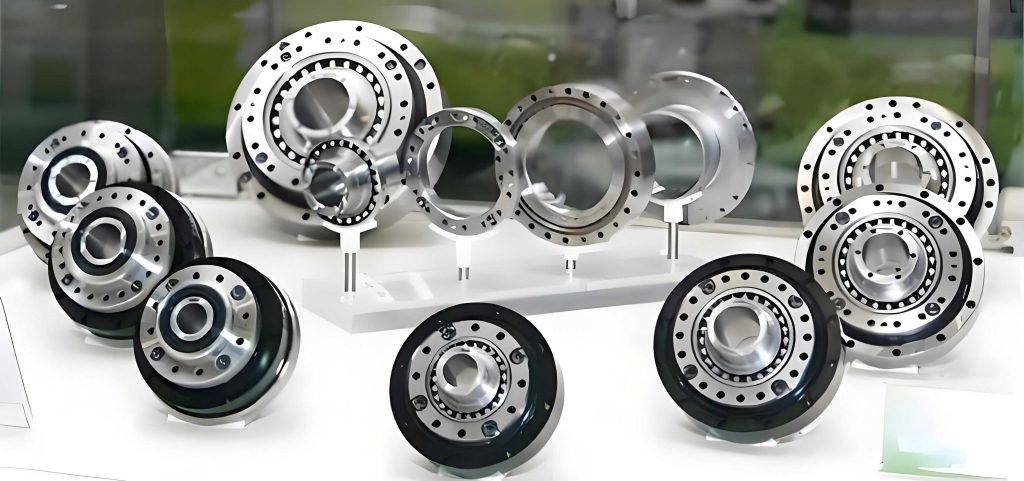
The rotary vector reducer, often abbreviated as RV reducer, represents a pivotal advancement in precision power transmission technology. Its unique two-stage architecture, combining a primary planetary gear stage with a secondary cycloidal pin-wheel stage, delivers exceptional performance metrics. Characterized by high torsional stiffness, substantial reduction ratios within compact envelopes, excellent load-bearing capacity, and high transmission efficiency, this reducer has become indispensable in fields demanding precision motion control. Its applications span industrial robotics, aerospace actuation systems, medical imaging equipment, and satellite tracking mechanisms. The core of its performance and longevity lies in the complex internal force interactions, particularly the contact forces between critical components like the crank shaft and the rolling bearings within the cycloidal stage. Accurately predicting these forces is paramount for structural integrity, fatigue life estimation, and overall design optimization. This analysis delves into a detailed investigation of these contact phenomena using a combined virtual prototyping and finite element methodology.
Traditional analytical methods for stress analysis in cycloidal drives often rely on simplified Hertzian contact models or static load distributions. While valuable, these approaches may not fully capture the dynamic, time-varying nature of the contact forces arising from the concurrent rotational and eccentric motions inherent to the rotary vector reducer’s operation. The parallel arrangement of crank shafts and the multi-tooth engagement of the cycloidal disc present a kinematically complex system. This complexity makes pure analytical solutions for dynamic contact forces challenging. Consequently, computational simulation techniques have emerged as powerful tools. This study employs a synergistic simulation platform, integrating multi-body dynamics (MBD) for system-level motion and forces with detailed nonlinear finite element analysis (FEA) for localized stress and deformation. The primary objective is to construct a validated virtual model of an RV-40E type rotary vector reducer, simulate its operational dynamics, extract the time-varying contact loads on the crank shaft bearings, and perform a subsequent static structural analysis to ascertain the stress distribution within the crank shaft under the most critical loading condition identified.
Theoretical Framework and Methodology
The foundation of contact mechanics in this analysis rests on the classical Hertz theory for non-conformal contacts, supplemented by numerical algorithms for broader applicability. For two elastic bodies in point or line contact, the Hertz theory provides closed-form solutions for contact pressure, contact area dimensions, and subsurface stresses. The maximum contact pressure \( p_0 \) for a point contact between two spheres, or a sphere and a plane, is given by:
$$ p_0 = \frac{3F}{2\pi a b} $$
where \( F \) is the normal contact force, and \( a \) and \( b \) are the semi-major and semi-minor axes of the elliptical contact area. The half-width \( b \) for a line contact, relevant for cylindrical rollers, is:
$$ b = \sqrt{\frac{4 F R_{eff}}{\pi L E_{eff}}} $$
Here, \( L \) is the effective contact length, and \( R_{eff} \) and \( E_{eff} \) are the effective radius and modulus of the contacting pair, respectively. While these formulas are crucial for validation and initial estimates, the complex geometry and dynamic loading in a rotary vector reducer necessitate a more comprehensive numerical approach.
The methodology follows a sequential co-simulation workflow. The process begins with the creation of a detailed, yet functionally simplified, three-dimensional solid model of the entire rotary vector reducer. This model is then transferred to a multi-body dynamics environment to simulate the system’s operational kinematics and kinetics, treating components as rigid bodies connected by kinematic joints and force elements. The contact forces between the crank shaft and its supporting rolling bearings are calculated during this dynamic simulation using a penalty-based or impact function method. The critical instant of maximum loading is identified from these time-history results. Finally, the force data from this critical instant is applied as boundary conditions in a nonlinear static finite element analysis of the crank shaft, modeled as a deformable body, to obtain detailed stress and strain fields. This two-step approach efficiently bridges system dynamics with component-level structural analysis.
Model Development and Dynamic Simulation
The first phase involves constructing a virtual prototype suitable for dynamic analysis. A 3D CAD model of the RV-40E rotary vector reducer is developed, focusing on the main load-bearing components: the input sun gear, planetary gears, crank shafts, cycloidal discs, needle pins, and the output flange. Secondary components like seals, retainers, and housing details are omitted to reduce computational complexity without sacrificing the primary load paths. Small fillets and chamfers not critical for global force transmission are also suppressed. After assembly and a thorough interference check in the static state, the model is exported in a neutral format for dynamics software.
In the multi-body dynamics environment, material properties (density, Young’s modulus) are assigned to all parts. The model is then constrained according to the kinematic chain of the rotary vector reducer. The sun gear is connected to the ground via a revolute joint and given a rotational velocity drive of 2000 RPM, simulating the motor input. Each planetary gear meshes with the sun gear and is connected to its corresponding crank shaft via a fixed joint. The crank shafts are assembled with their respective sets of rolling bearings (rollers), which in turn engage with the cycloidal disc. A critical modeling step involves defining the contact forces. The contacts between the needle pins and cycloidal disc teeth, and between the crank shaft rollers and the cycloidal disc’s inner bore, are modeled using a force-based contact algorithm. A common approach is the IMPACT function, which models the normal contact force \( F_n \) as a combination of a nonlinear spring and a damper:
$$ F_n = k \cdot \delta^e + c \cdot \dot{\delta} \cdot step(\delta, 0, 0, d_{max}, 1) $$
where:
- \( k \) is the contact stiffness (N/mme),
- \( \delta \) is the penetration depth (mm),
- \( e \) is the force exponent (typically 1.5 for Hertzian contact),
- \( c \) is the damping coefficient (N·s/mm),
- \( \dot{\delta} \) is the penetration velocity, and
- \( step() \) is a function that activates damping only when penetration occurs within a specified range \( d_{max} \).
The output flange is connected to ground with a revolute joint and a resistive torque of 600 N·m is applied, representing the rated output load. A dynamic simulation is run for several seconds to achieve steady-state periodic motion. The solver integrates the equations of motion, calculating the time-varying contact forces at all defined interfaces.
The dynamic results reveal the complex, periodic loading on the crank shaft bearings. Each roller’s contact force with the crank shaft oscillates significantly within a single revolution of the cycloidal disc. This oscillation correlates directly with the changing engagement condition of the cycloidal disc and the needle pins; forces are higher when the roller is positioned near the major axis of the eccentric crank shaft path where load transmission is highest. The translational motion of a representative roller’s center over time and its Fast Fourier Transform (FFT) confirm a dominant periodic component corresponding to the cycloidal disc’s rotation speed relative to the crank shaft. To identify the worst-case loading scenario for the subsequent static analysis, the contact forces from all 15 rollers around one crank shaft are examined. The maximum resultant force experienced by each roller over the simulated period is extracted. The global maximum across all rollers and all time steps is pinpointed. The corresponding time instant is then selected, and the force vectors for all rollers at that precise moment are recorded. This snapshot represents the most severe static load case for the crank shaft.
| Roller ID | Force X (N) | Force Z (N) | Resultant Force (N) |
|---|---|---|---|
| 1 | -2587 | 140 | 2591 |
| 2 | -532 | -2432 | 2490 |
| 3 | 2301 | 2654 | 3513 |
| 4 | 2511 | 1275 | 2816 |
| 5 | -1962 | -1774 | 2645 |
| 6 | -262 | 2571 | 2584 |
| 7 | -1934 | -1706 | 2579 |
| 8 | 654 | -2394 | 2482 |
| 9 | -1139 | -2304 | 2570 |
| 10 | -363 | -2468 | 2495 |
| 11 | 1520 | 1989 | 2503 |
| 12 | -2354 | 1018 | 2565 |
| 13 | 93 | 2559 | 2560 |
| 14 | 2313 | -1231 | 2620 |
| 15 | 311 | 2555 | 2574 |
The data clearly shows that Roller 3 experiences the highest resultant force of 3513 N at this critical instant. The distribution is not uniform, with forces varying in both magnitude and direction around the crank shaft’s circumference, creating a complex combined bending and torsional load state.
Static Finite Element Analysis of the Crank Shaft
With the critical load case defined from the dynamics of the rotary vector reducer, the focus shifts to a detailed structural assessment of the crank shaft. The crank shaft geometry is isolated and imported into a finite element pre-processor. For an accurate stress calculation, a high-quality hexahedral (brick) mesh is generated with an element size of approximately 1 mm, ensuring sufficient resolution in the fillet regions and bearing journal areas where stress concentrations are expected. The material is defined as a high-strength alloy steel with typical properties: Young’s Modulus \( E = 210 \) GPa and Poisson’s ratio \( \nu = 0.3 \).
Boundary conditions are carefully applied to mimic the static load transfer scenario. The surfaces of the crank shaft that interface with the supporting tapered roller bearings on the main axis are fully constrained, simulating a fixed support. The challenge lies in applying the contact forces from the 15 rollers, which act on the eccentric journal. Simply applying nodal forces can lead to artificial stress concentrations. A more robust technique involves distributing the force over a small area. In this analysis, beam elements are created linking pairs of nodes across the nominal contact width on the journal surface for each roller. The force components (Fx, Fz) for each roller from the critical instant table are then applied as concentrated forces at the mid-points of these beam elements, effectively simulating a distributed load patch. The six force components with the highest magnitude (from Rollers 1-5 and 14) are considered significant for this analysis, while smaller forces are neglected for clarity. The applied loads are summarized below:
| Roller ID | Applied Force X (N) | Applied Force Z (N) |
|---|---|---|
| 1 | -129 | 940 |
| 2 | 780 | 2027 |
| 3 | 2301 | 2654 |
| 4 | 2511 | 1275 |
| 5 | 2461 | 312 |
| 14 | 2313 | -1231 |
The model is then solved using a nonlinear static solver capable of handling the potential small-displacement contact effects. The primary output of interest is the von Mises stress distribution, which is used to evaluate yield criteria for ductile metals. The analysis reveals that the maximum von Mises stress on the crank shaft under this peak operating load is approximately 463 MPa. This maximum stress location is critically important—it occurs precisely at the fillet region connecting the main shaft to the eccentric journal, specifically on the side opposite to where the largest roller force (Roller 3) is applied. This is consistent with a bending stress concentration. The stress contour plot shows a symmetric pattern emanating from the loaded eccentric journal, with stress levels decaying towards the supported ends. The value of 463 MPa, when compared to the yield strength of high-grade bearing steel (often exceeding 1000 MPa), indicates a significant safety factor under this static peak load. However, this stress level is highly relevant for fatigue life calculations, as the cyclic nature of the loading in a rotary vector reducer makes this region susceptible to fatigue crack initiation over millions of cycles.
Discussion and Implications for Rotary Vector Reducer Design
The integrated virtual prototyping and FEA approach successfully elucidates the complex mechanical behavior inside a rotary vector reducer. The dynamic simulation validates the kinematic correctness of the model, demonstrating the expected motion transfer from the high-speed input to the low-speed, high-torque output. More importantly, it quantifies the inherently dynamic and uneven load sharing among the crank shaft rollers, a factor difficult to assess with traditional static analysis. The identification of a specific roller experiencing the peak force (over 3500 N in this case) and the specific crank shaft orientation where this occurs provides invaluable data for targeted design improvements.
The subsequent static FEA translates these system-level forces into component-level stress metrics. The finding that the maximum stress is located at the crank shaft fillet, not directly at the point of force application on the journal, underscores the importance of considering stress concentrations and global bending moments. The magnitude of this stress (463 MPa) serves as a direct input for durability analysis. To estimate the contact stress on the rollers themselves, one could use the Hertzian line contact formula with the maximum roller force \( F_{max} \), the roller length \( L \), and the effective radius \( R_{eff} \) between the roller and the crank shaft journal:
$$ \sigma_{H, max} = \sqrt{\frac{F_{max} E_{eff}}{\pi R_{eff} L}} $$
This stress, along with the subsurface shear stresses it generates, is a primary driver for rolling contact fatigue (pitting) on both the roller and the crank shaft journal surface.
The methodology presented offers a robust framework for the analysis and optimization of rotary vector reducers. Design parameters can be systematically varied in the virtual model to assess their impact on peak contact forces and stresses. For instance, the influence of the cycloidal disc tooth profile modification, the crank shaft eccentricity, the number and diameter of rollers, or the bearing preload can be investigated efficiently. Reducing the peak contact force directly contributes to enhanced bearing life (governed by the basic dynamic load rating formula \( L_{10} = (C/P)^p \), where \( C \) is the load rating, \( P \) is the equivalent dynamic load, and \( p \) is an exponent) and reduced crank shaft stress. Furthermore, optimizing the fillet radius and surface finish at the identified high-stress region can significantly improve the crank shaft’s fatigue strength, directly increasing the operational lifespan and reliability of the entire rotary vector reducer assembly.
Conclusion
This investigation employed a synergistic simulation strategy combining multi-body dynamics and nonlinear finite element analysis to comprehensively analyze the contact forces and structural response within a rotary vector reducer. The study confirmed the time-varying and non-uniform distribution of loads on the crank shaft rollers, driven by the engaging kinematics of the cycloidal drive. A critical load case was extracted from dynamic simulation, revealing a maximum roller contact force exceeding 3500 N. Applying this load case in a static FEA of the crank shaft identified the fillet radius adjacent to the eccentric journal as the location of maximum von Mises stress, reaching 463 MPa. These results provide critical quantitative insights that move beyond simplified analytical models. The established workflow serves as a powerful virtual design and validation tool, enabling more precise, efficient, and reliable development of rotary vector reducers. It facilitates the exploration of design modifications aimed at load equalization, stress reduction, and ultimately, the enhancement of power density, longevity, and performance of this essential precision transmission component.