
In recent years, robotics technology has seen tremendous advancements, with a significant focus on the development of dexterous robotic hands capable of performing intricate and complex tasks. As manufacturing and control technologies evolve, simple grippers are transitioning towards more sophisticated dexterous robotic hands. Our research, supported by the National Key Laboratory of Intelligent Technology and Systems at Tsinghua University, involves the development and investigation of a sensor-actuator integrated novel robotic hand. This dexterous robotic hand is designed to simplify the degrees of freedom compared to a human hand while maintaining functionality and anthropomorphism, enabling automatic grasping of objects with varying stiffness. This paper details our work on the control system for this two-fingered dexterous robotic hand, presented from a first-person perspective as we conducted the research.
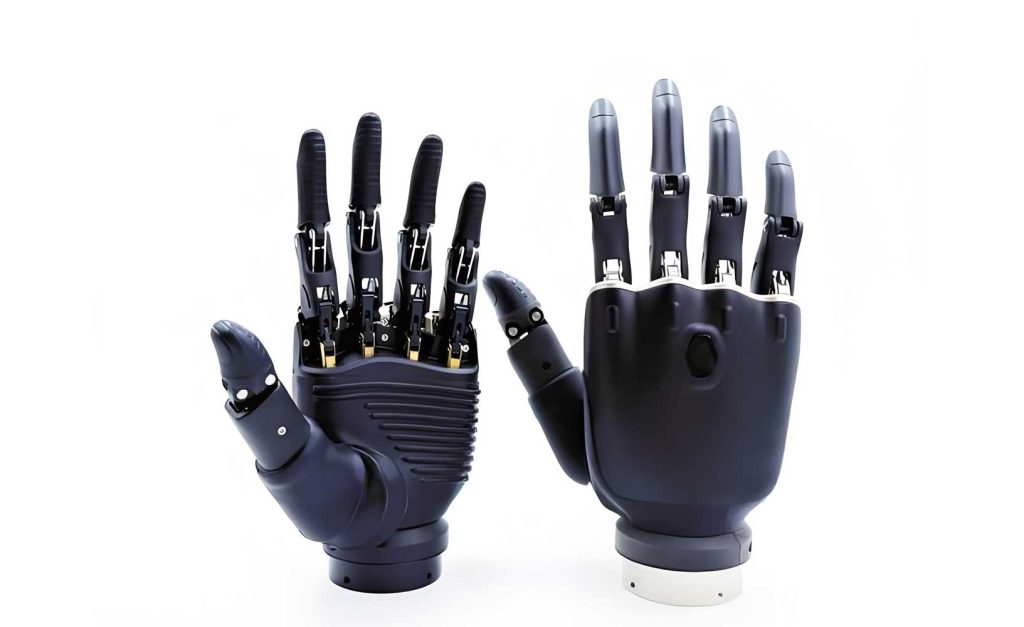
The fundamental goal of our dexterous robotic hand is to achieve precise manipulation and adaptive grasping. Unlike industrial grippers with simple open-close functions, our dexterous robotic hand incorporates sensing capabilities, making it an intelligent system. The design philosophy centers on balancing complexity and performance, ensuring that the dexterous robotic hand can handle diverse objects efficiently. We begin by outlining the basic structure of our two-fingered dexterous robotic hand, which consists of four key components: the actuator mechanism, drive system, control system, and measurement unit. This integration is crucial for the functionality of the dexterous robotic hand.
The actuator mechanism comprises two mechanical fingers, each with three joints, allowing for flexion, extension, and gripping motions. These fingers are the primary moving parts of the dexterous robotic hand. The drive system includes stepper motors and their driver circuits, which translate control signals into mechanical motion. The control system is built around a personal computer equipped with a commercial 1–4 axis motion control card, providing interfaces for force and position sensors. The measurement unit, serving as the sensory part, captures output torque from the stepper motors and gripping force, feeding this data back to the control system for precise manipulation. The synergy of these components enables the dexterous robotic hand to perform delicate tasks.
To formalize the structure, we summarize the components and their functions in Table 1. This table highlights how each part contributes to the overall operation of the dexterous robotic hand.
| Component | Function | Key Features |
|---|---|---|
| Actuator Mechanism | Executes gripping and manipulation | Two fingers with three joints each |
| Drive System | Converts electrical signals to motion | Stepper motors with driver circuits |
| Control System | Processes commands and sensor data | PC-based with motion control card |
| Measurement Unit | Senses force and torque | Integrated force sensors |
Control of the dexterous robotic hand is paramount for its performance. Before any manipulation, trajectory planning must be conducted to define the path each finger’s tip or joint should follow. This involves generating smooth, continuous motions that allow the dexterous robotic hand to approach and grasp objects accurately. Once trajectories are planned, control strategies must ensure that the dexterous robotic hand follows these paths while managing interactions with objects. We address this through a combination of position control and force control, tailored to the needs of the dexterous robotic hand.
Position control for the dexterous robotic hand is implemented using an open-loop system. In open-loop control, signals flow unidirectionally from input to output without feedback, making it simple and easy to adjust. However, it lacks robustness against disturbances. For our dexterous robotic hand, we employ open-loop position control for free-space motions where high precision is not critical, leveraging the reliable performance of stepper motors. The joint angles of the dexterous robotic hand are controlled by rotating the stepper motors, with motion trajectories generated by software that sends pulse signals to the control card. The relationship between motor rotation and finger movement can be described by kinematic equations. For a single joint, the position $\theta_i$ (in radians) is proportional to the number of steps $N_i$ taken by the stepper motor:
$$ \theta_i = k_i \cdot N_i $$
where $k_i$ is a constant factor determined by the motor’s step angle and gear ratio. For the entire dexterous robotic hand, the forward kinematics define the fingertip position $\mathbf{x} = [x, y, z]^T$ in Cartesian space as a function of joint angles $\boldsymbol{\theta} = [\theta_1, \theta_2, \theta_3]^T$ for each finger. Using the Denavit-Hartenberg (D-H) convention, the transformation matrix for each link can be expressed. For instance, for joint $j$, the homogeneous transformation matrix $A_j$ is:
$$ A_j = \begin{bmatrix} \cos\theta_j & -\sin\theta_j \cos\alpha_j & \sin\theta_j \sin\alpha_j & a_j \cos\theta_j \\ \sin\theta_j & \cos\theta_j \cos\alpha_j & -\cos\theta_j \sin\alpha_j & a_j \sin\theta_j \\ 0 & \sin\alpha_j & \cos\alpha_j & d_j \\ 0 & 0 & 0 & 1 \end{bmatrix} $$
where $a_j$, $\alpha_j$, $d_j$, and $\theta_j$ are D-H parameters. The overall transformation for a finger is $T = A_1 A_2 A_3$, and the fingertip position is extracted from $T$. This kinematic model allows us to plan trajectories for the dexterous robotic hand by computing desired joint angles over time.
While position control suffices for non-contact motions, force control becomes essential when the dexterous robotic hand interacts with objects. Improper force management can damage either the object or the dexterous robotic hand itself. Therefore, we incorporate force feedback into a closed-loop control system. In closed-loop control, output signals are fed back to the input, enabling automatic correction of deviations. This enhances accuracy and adaptability, which are critical for the dexterous robotic hand when handling objects of different materials.
We adopt a direct force control method, where force sensors measure the interaction forces between the dexterous robotic hand and the object. This signal is used in a feedback loop to regulate the force. The force sensor output $F_{\text{sensor}}$ is compared to a desired force $F_{\text{desired}}$, generating an error $e_F = F_{\text{desired}} – F_{\text{sensor}}$. A controller, such as a proportional-integral (PI) controller, computes a correction signal $u_F$:
$$ u_F = K_{pF} e_F + K_{iF} \int e_F \, dt $$
where $K_{pF}$ and $K_{iF}$ are proportional and integral gains, respectively. This signal adjusts the motor commands to maintain the desired force. The integration of force control imbues the dexterous robotic hand with intelligent characteristics, allowing it to perform complex tasks like grasping fragile items without crushing them.
In many scenarios, the dexterous robotic hand must simultaneously control position and force, especially during constrained motions. We implement a hybrid position-force control strategy. This approach decomposes the task space into force-controlled and position-controlled directions. For example, when grasping an object, the direction normal to the contact surface may be force-controlled to avoid excessive pressure, while tangential directions are position-controlled to slide or adjust grip. Mathematically, we define a selection matrix $S$ that partitions the Cartesian space. The control law combines both modes:
$$ \mathbf{u} = S \mathbf{u}_{\text{position}} + (I – S) \mathbf{u}_{\text{force}} $$
where $\mathbf{u}$ is the overall control input, $\mathbf{u}_{\text{position}}$ is the position control signal derived from trajectory tracking, and $\mathbf{u}_{\text{force}}$ is the force control signal. $S$ is a diagonal matrix with ones for position-controlled axes and zeros for force-controlled axes. This hybrid method ensures that the dexterous robotic hand can handle tasks requiring both precise movement and gentle contact.
To illustrate the control parameters, we provide Table 2, which summarizes key variables and their roles in the dexterous robotic hand control system.
| Parameter | Symbol | Role in Control |
|---|---|---|
| Joint Angle | $\theta_i$ | Controlled variable for position |
| Desired Force | $F_d$ | Setpoint for force control |
| Proportional Gain | $K_p$ | Amplifies error in position control |
| Integral Gain | $K_i$ | Eliminates steady-state error |
| Selection Matrix | $S$ | Partitions task space for hybrid control |
The implementation of our control system for the dexterous robotic hand involves both hardware and software components. We use a PC with a commercial motion control card as the hardware platform. The software is developed in Visual Basic (VB), providing a user-friendly interface to command the dexterous robotic hand. The control software allows users to input object properties, such as size and material, which influence the control strategy. For instance, larger objects require slower approach speeds, while softer materials need lower force thresholds. The interface includes options for automatic and manual control, with emergency stop functionality for safety.
In automatic mode, the user specifies object size in millimeters, material type (soft, medium, or hard), and hazard level (for hard objects). Based on these inputs, the software adjusts control parameters. For example, the desired force $F_d$ is set according to material stiffness: higher for hard objects, lower for soft ones. The trajectory planning algorithm then computes joint angles to approach the object. During grasping, force feedback ensures that the dexterous robotic hand applies just enough force to hold the object securely. The control loop runs at a high frequency to achieve smooth motion.
We conducted extensive experiments to validate the performance of the dexterous robotic hand. Various objects, such as sponges, apples, and glass cups, were used to test grasping under different conditions. The dexterous robotic hand demonstrated successful adaptive grasping, with force control preventing damage to fragile items. We measured accuracy in terms of position error and force regulation. The results show that the dexterous robotic hand can achieve position errors within ±0.5 mm in free space and force errors within ±0.2 N during contact. These metrics highlight the effectiveness of our control approach for the dexterous robotic hand.
To further analyze the system, we derived a dynamic model for the dexterous robotic hand. The dynamics of each finger can be expressed using the Euler-Lagrange equations:
$$ M(\boldsymbol{\theta}) \ddot{\boldsymbol{\theta}} + C(\boldsymbol{\theta}, \dot{\boldsymbol{\theta}}) \dot{\boldsymbol{\theta}} + G(\boldsymbol{\theta}) = \boldsymbol{\tau} $$
where $M(\boldsymbol{\theta})$ is the inertia matrix, $C(\boldsymbol{\theta}, \dot{\boldsymbol{\theta}})$ represents Coriolis and centrifugal terms, $G(\boldsymbol{\theta})$ is the gravitational vector, and $\boldsymbol{\tau}$ is the torque applied by the motors. For control design, we linearized this model around operating points and implemented a computed-torque controller for simulation. The controller uses feedback linearization to cancel nonlinearities:
$$ \boldsymbol{\tau} = M(\boldsymbol{\theta}) \mathbf{u} + C(\boldsymbol{\theta}, \dot{\boldsymbol{\theta}}) \dot{\boldsymbol{\theta}} + G(\boldsymbol{\theta}) $$
where $\mathbf{u}$ is a new control input designed for tracking. In practice, due to computational constraints, we rely on simpler PID controllers for real-time operation of the dexterous robotic hand, but the dynamic model informs gain tuning.
Another critical aspect is the sensory integration in the dexterous robotic hand. The force sensors provide data that is filtered and calibrated to remove noise. We use a low-pass filter with transfer function $H(s)$ to smooth the force signal:
$$ H(s) = \frac{\omega_c}{s + \omega_c} $$
where $\omega_c$ is the cutoff frequency. This ensures stable force control without oscillations. Additionally, we implemented sensor fusion techniques to combine force and position data, improving the reliability of the dexterous robotic hand during complex manipulations.
Table 3 presents a comparison of our dexterous robotic hand with other notable designs, emphasizing control features. This showcases the advancements in our approach to dexterous robotic hand development.
| Dexterous Robotic Hand Model | Control Type | Key Advantages |
|---|---|---|
| Our Two-Fingered Design | Hybrid Position-Force | Simplified DOF, adaptive grasping |
| Stanford/JPL Hand | Multi-modal Control | High dexterity, complex tasks |
| Barrett Hand | Proprioceptive Sensing | Robust gripping, industrial use |
| Shadow Hand | Anthropomorphic Control | Human-like motion, many actuators |
The software architecture for the dexterous robotic hand is modular, allowing easy updates and expansions. The main modules include trajectory generation, motor control, sensor processing, and user interface. We used VB to create a responsive GUI that displays real-time data, such as current position and force values. This aids in debugging and performance monitoring of the dexterous robotic hand. The code implements state machines to manage different phases of operation: approach, contact, grasp, and release.
For trajectory generation, we employ polynomial interpolation to ensure smooth motion. The joint angle $\theta(t)$ as a function of time $t$ is given by a cubic polynomial:
$$ \theta(t) = a_0 + a_1 t + a_2 t^2 + a_3 t^3 $$
where coefficients $a_i$ are determined from boundary conditions (initial and final positions, velocities). This minimizes jerk, reducing wear on the dexterous robotic hand mechanisms. The trajectories are computed in real-time based on object size input, allowing the dexterous robotic hand to adjust its approach speed and path.
In terms of hardware, the stepper motors are driven by microstepping drivers to achieve fine resolution. The step resolution $\Delta \theta$ per microstep is:
$$ \Delta \theta = \frac{\theta_{\text{full step}}}{N_{\text{microsteps}}} $$
where $\theta_{\text{full step}}$ is the motor’s full step angle (e.g., 1.8°), and $N_{\text{microsteps}}$ is the microstepping factor (e.g., 16). This enables precise positioning of the dexterous robotic hand fingers, essential for delicate tasks.
We also explored adaptive control techniques to handle uncertainties in object properties. For example, when material stiffness is unknown, the dexterous robotic hand can estimate it online using force-displacement relationships. The stiffness $k$ is approximated as:
$$ k = \frac{\Delta F}{\Delta x} $$
where $\Delta F$ is the change in force and $\Delta x$ is the displacement upon contact. This estimate then adjusts the force control gains, making the dexterous robotic hand more versatile.
Safety features are integral to the dexterous robotic hand design. The emergency stop function halts all motor commands instantly, preventing accidents. Additionally, force limits are set based on hazard levels; for dangerous objects like explosives, the force is kept minimal. The dexterous robotic hand also includes self-diagnostic routines to check sensor and motor health before operation.
Future work on the dexterous robotic hand will focus on enhancing autonomy. We plan to integrate vision sensors to allow the dexterous robotic hand to perceive object pose and size automatically, eliminating manual input. Machine learning algorithms could be employed to improve grasping strategies based on past experiences. Furthermore, we aim to reduce the size and weight of the dexterous robotic hand for mobile robotics applications.
In conclusion, our research presents a comprehensive control system for a novel two-fingered dexterous robotic hand. By combining open-loop position control and closed-loop force control in a hybrid framework, we enable the dexterous robotic hand to perform adaptive and precise manipulations. The implementation using PC-based hardware and VB software provides a flexible platform for further development. Experimental results validate the effectiveness of our approach, demonstrating that the dexterous robotic hand can handle a variety of objects safely and efficiently. This work contributes to the ongoing advancement of dexterous robotic hands, paving the way for more intelligent and capable robotic systems.
The development of such dexterous robotic hands holds promise for applications in manufacturing, healthcare, and service robotics. As technology progresses, we anticipate that dexterous robotic hands will become even more sophisticated, blurring the lines between human and machine manipulation capabilities. Our study on this dexterous robotic hand is a step toward that future, emphasizing the importance of integrated control strategies in robotic design.