
The ability for a robot to reliably grasp and manipulate a vast array of objects in unstructured environments remains a fundamental challenge in robotics. The efficiency of such operations is often hampered by limitations in perception and adaptive control. A critical pathway to overcoming these limitations lies in the acquisition of high-quality, multimodal sensory data—particularly vision and tactile information—during the act of grasping. To address this need, I designed and implemented a fully automated, intelligent data acquisition platform centered around a dexterous robotic hand. This platform integrates a Kinect 2.0 camera, a UR5 six-degree-of-freedom robotic arm, and a BarrettHand BH8-282 three-fingered dexterous robotic hand. Its primary function is to autonomously identify, locate, plan motion towards, and execute grasps on diverse objects, simultaneously capturing both visual snapshots and high-dimensional tactile sensor readings. This process generates a rich dataset where each grasp attempt is automatically annotated with a stability label. The automation of this pipeline allows for unsupervised, large-scale data collection, which is indispensable for training and validating data-driven models in robotic manipulation. This article details the design rationale, system integration, operational workflow, and a comprehensive analysis of the data collected from thousands of automated grasp trials.
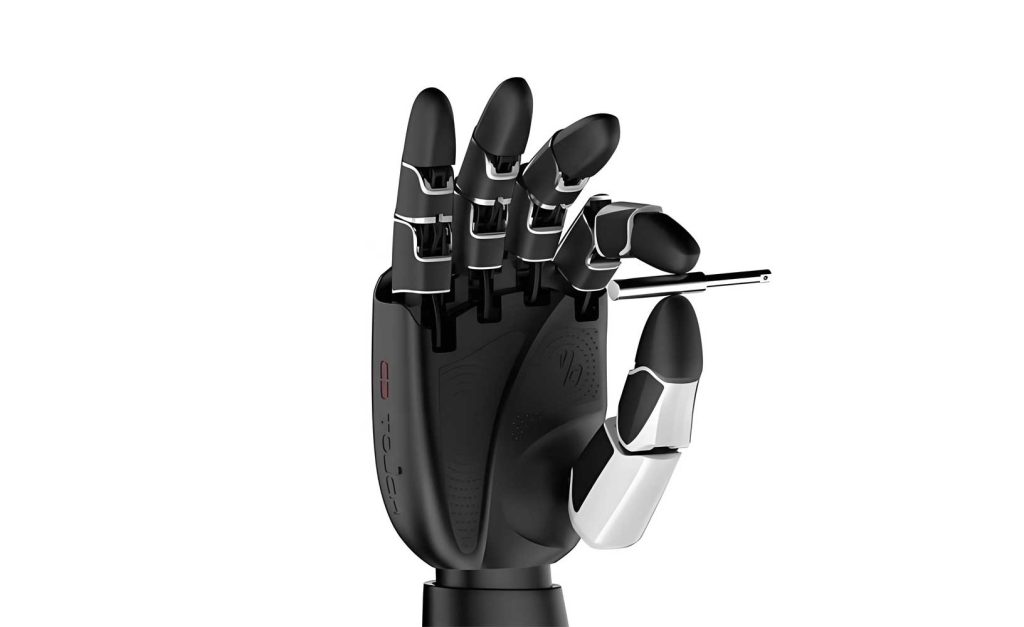
The core objective of this work was to create a system that moves beyond single-object or human-supervised data collection. Traditional setups often require manual intervention for object placement, grasp initiation, or data labeling, which severely limits scalability. My platform, built upon the Robot Operating System (ROS), achieves full automation by orchestrating communication between perception, planning, and actuation modules. The Kinect 2.0 provides the necessary 3D visual perception for object detection and localization. The UR5 arm offers the flexible, precise movement required to position the end-effector. The star of the system, the dexterous robotic hand, is not merely an actuator but a sophisticated sensor array. Its embedded tactile sensors on the three fingers and palm provide the direct physical interaction data that is crucial for understanding contact dynamics, slippage, and force distribution—information largely absent from pure vision systems. The integration of these components into a coherent, self-contained unit represents a significant step towards amassing the large-scale, real-world interaction data needed to advance the intelligence of robotic grasping systems.
System Architecture and Component Design
The intelligent data acquisition platform is composed of three primary hardware modules: the Vision Module, the Manipulation Module, and the Workspace Module. Each module was selected and configured to fulfill specific roles within the automated pipeline, ensuring robustness, repeatability, and high-fidelity data capture.
Vision Module: Kinect 2.0 3D Sensor
Perception is the first critical step. The Kinect 2.0 camera serves as the system’s eyes. Mounted on an adjustable tripod overlooking the workspace, it was chosen for its integrated RGB-D (Red-Green-Blue-Depth) sensing capabilities. Unlike a standard 2D camera, it simultaneously captures high-resolution (1080p) color images and corresponding per-pixel depth information. This allows the system to not only see what an object looks like but also precisely where it is in 3D space relative to the camera. The depth sensor uses an active infrared projection to work effectively in varied lighting conditions, enhancing the platform’s operational robustness. The intrinsic and extrinsic parameters of the camera are calibrated so that a point in the camera’s coordinate frame can be accurately transformed into the robot’s base coordinate frame, a process essential for guiding the arm. The visual data serves a dual purpose: first, to compute the 3D position and approximate orientation of the target object for motion planning; second, to record an RGB image at the moment of grasp execution, which becomes a key visual datapoint paired with the concurrent tactile readings.
Manipulation Module: UR5 Arm and BH8-282 Dexterous Robotic Hand
This module executes the physical interaction. The UR5 collaborative robotic arm provides six degrees of freedom, offering the dexterity needed to position its end-effector at arbitrary positions and orientations within an 850mm radius. Its lightweight design and built-in safety features make it suitable for a research environment where frequent automated movements occur. The arm’s repeatability and precision are vital for consistently reaching the computed grasp locations.
The end-effector is the BarrettHand BH8-282, a three-fingered dexterous robotic hand. Its design is anthropomorphically inspired, featuring one fixed finger and two fingers that can spread symmetrically up to 180 degrees, enabling both precision (pinch) and power (enveloping) grasps. More importantly, each of the three fingers and the palm is equipped with a custom tactile sensor array. These arrays measure pressure distribution across their surface during contact. For this work, I primarily utilize the data streams from the three finger sensors. The hand integrates its own controllers and motors, communicating via a high-speed CAN bus interface. The combination of the UR5’s gross motion and the BarrettHand’s fine manipulation and sensing capabilities creates a powerful platform for studying complex grasps. The system is mounted on a mobile, hollow aluminum base for stability and portability.
Workspace Module: Adaptive Platform
The environment for interaction is a height-adjustable table topped with a cloth-covered container. This design serves several purposes: the soft, slightly compliant surface protects the delicate dexterous robotic hand fingers from damage during unexpected collisions or when releasing objects; it provides a consistent, uncluttered background that simplifies visual segmentation for the Kinect; and its bounded area ensures that dropped objects remain within reach for subsequent automated grasp attempts, which is crucial for continuous, unattended operation.
The synergy between these modules is summarized in the following table:
| Module | Primary Component | Key Function in Pipeline | Data Output |
|---|---|---|---|
| Vision | Kinect 2.0 Camera | Object detection, 3D localization, grasp-moment snapshot | RGB image, Depth map, 3D point cloud |
| Manipulation | UR5 Robotic Arm | Gross motion, end-effector positioning | Joint angles, end-effector pose |
| Manipulation | BH8-282 Dexterous Robotic Hand | Fine manipulation, tactile sensing, grasp execution | Motor currents, finger positions, tactile array data (24+ channels) |
| Workspace | Soft-top Table | Provides a safe, consistent interaction environment | N/A |
System Integration and Software Implementation
The hardware components are integrated and controlled through the Robot Operating System (ROS), which provides the necessary middleware for distributed communication and modular software development. In the ROS paradigm, each significant piece of software or hardware driver runs as an independent node. These nodes communicate asynchronously by publishing messages to or subscribing to messages from named topics. This publish-subscribe architecture decouples the perception, planning, and actuation processes, making the system robust and easily modifiable.
ROS Node Graph and Communication
For this platform, I established several core nodes:
- kinect2_node: Acquires and publishes synchronized RGB and depth image streams, as well as a registered point cloud.
- object_detector_node: Subscribes to the point cloud topic, segments the workspace, identifies the top-most object, and calculates its 3D centroid and approximate bounding box. It then publishes this pose information on a topic like
/target_object_pose. - motion_planner_node: Subscribes to the target pose. Using the robot’s kinematic model and motion planning libraries (e.g., MoveIt!), it computes collision-free trajectories for the UR5 arm to move from its current state to a pre-grasp position above the target, and finally to the grasp position. It also generates a random roll angle for the dexterous robotic hand’s approach to introduce variability in grasps.
- grasp_controller_node: Controls the dexterous robotic hand. It subscribes to a topic indicating the arm has reached the grasp pose, then executes a closing command on the fingers. It continuously monitors the tactile sensor arrays and finger motor currents. A grasp is considered complete when the sensed values exceed a preset threshold $\tau$, indicating contact and some degree of force application. The tactile data from the period just before, during, and after contact is logged. This node also publishes a “grasp completed” signal.
- data_logger_node: Subscribes to multiple topics. It saves the RGB image from the moment the grasp is signaled as complete, the time-synchronized tactile data stream, the object’s initial pose, and the final grasp stability label.
The flow of information can be described by a simplified sequential model. Let $S$ represent the system state, $V$ the visual processing function, $P$ the motion planning function, $G$ the grasping function, and $D$ the data logging function. One cycle of the autonomous process is a composition of these functions:
$$ S_{final} = D(G(P(V(S_{initial})))) $$
Where $S_{initial}$ is the state with the arm at home and an object on the table, and $S_{final}$ is the state after data logging, ready for the next cycle.
Automated Grasp Stability Labeling
A key feature of this system is its ability to autonomously label the quality of each grasp attempt without human intervention. After the dexterous robotic hand closes and lifts the object a small distance, the UR5 arm executes a predefined “shaking” motion—a series of lateral swings. During this shaking phase, the grasp_controller_node monitors the tactile sensors for sudden changes or loss of contact, and a camera can optionally verify if the object falls.
- Label 0 (Grasp Failure): Assigned if the dexterous robotic hand’s closing routine completes without the tactile signals ever reaching the threshold $\tau$, or if the object is visibly dropped during the initial lift-off. This indicates a complete miss or loss of contact.
- Label 1 (Stable Grasp): Assigned if the object is successfully lifted and remains securely in the grasp throughout the entire shaking routine, with tactile signals remaining active and relatively stable.
- Label 2 (Unstable Grasp): Assigned if the object is lifted but shows significant movement, slippage (detected as specific high-frequency patterns in the tactile data), or is dropped during the shaking routine. This indicates a precarious but not immediately failed grasp.
This automatic labeling, while not perfect, provides a scalable and consistent method for annotating large datasets, forming a crucial ground-truth signal for subsequent machine learning tasks.
The Automated Data Acquisition Pipeline
The operational sequence of the platform is a tightly orchestrated loop. The following steps detail one complete iteration, which runs continuously without supervision:
- Initialization: All components are powered and nodes are launched. The UR5 moves to a predefined “home” position, and the dexterous robotic hand opens its fingers fully. The Kinect begins streaming.
- Object Detection & Localization: The
object_detector_nodeprocesses the latest point cloud. It filters the background (the table surface) and isolates point clusters. The cluster highest above the table plane is selected as the target. Its 3D centroid $(x, y, z)$ and principal axes are computed, defining its pose $T_{object}^{camera}$ in the camera frame. This is transformed via a known static transformation $T_{camera}^{robot}$ to get the target pose in the robot’s base frame: $T_{object}^{robot} = T_{camera}^{robot} \cdot T_{object}^{camera}$. - Motion Planning and Approach: The
motion_planner_nodereceives $T_{object}^{robot}$. It calculates a pre-grasp pose offset by $-\Delta z$ in the robot’s end-effector frame. It plans and executes a trajectory to this pre-grasp pose, then a linear approach to the final grasp pose. A random rotation $\theta_{roll} \in [0, 2\pi)$ is applied to the dexterous robotic hand’s wrist to ensure grasp diversity. - Grasp Execution and Tactile Data Capture: Upon reaching the grasp pose, the
grasp_controller_nodesends a close command to the dexterous robotic hand. The fingers close until the aggregate tactile reading $F_{tactile}$ from the primary sensors satisfies:
$$ F_{tactile} > \tau $$
where $\tau$ is an empirically determined threshold. The time-series data from all tactile elements, $ \mathbf{T}(t) = [T_1(t), T_2(t), …, T_N(t)] $, for the interval $t_{start}$ to $t_{end}$ around the grasp event, is buffered. - Lift and Stability Test: The UR5 arm lifts the object vertically by a small distance (e.g., 5 cm). It then executes the lateral shaking trajectory. The
grasp_controller_nodemonitors $ \mathbf{T}(t) $ during this phase for signatures of instability. - Label Assignment and Data Logging: Based on the outcome of the stability test, a label $L \in \{0, 1, 2\}$ is assigned. The
data_logger_nodepackages and saves the dataset for this trial: $\{ \text{RGB Image}, \mathbf{T}(t), T_{object}^{robot}, \theta_{roll}, L \}$. - Object Release and Reset: The dexterous robotic hand opens fully, releasing the object onto the workspace. The UR5 arm returns to its home position. The system is now ready for the next iteration, starting again at Step 2.
Experimental Methodology and Data Analysis
To validate the platform and generate a substantial dataset, I conducted a long-duration, unsupervised experiment. A diverse set of 37 common household objects was used, encompassing a wide range of shapes, sizes, weights, textures, and compliance. The categories included rectangular boxes (cardboard, soft foam), cylindrical bottles (plastic, glass), spherical balls, conical items, deformable bags, and plush toys. To increase intra-class variation, some objects like drink cans and bottles were presented in full, half-full, and empty states. Over multiple days, the system continuously cycled through these objects as they were randomly placed in the workspace, executing the automated pipeline described above.
Dataset Composition
The system successfully completed 3,589 grasp trials. The distribution of trials per object was not perfectly uniform but was broadly distributed, with most objects being grasped between 80 and 120 times. The key outcome of each trial is the stability label $L$. The overall distribution of these labels across the entire dataset is the primary metric for evaluating the basic performance of the autonomous grasping system.
| Stability Label (L) | Description | Number of Trials | Percentage of Total |
|---|---|---|---|
| 0 | Grasp Failure (Missed or dropped on lift) | 553 | 15.41% |
| 1 | Stable Grasp | 1,540 | 42.91% |
| 2 | Unstable Grasp (Slippage/drop during shake) | 1,496 | 41.68% |
The results indicate that the platform successfully made contact and lifted the object in the vast majority of cases (84.59%, combining stable and unstable grasps). The near-equal split between stable (42.91%) and unstable (41.68%) grasps is particularly informative. It suggests that while the system’s simple “close until threshold” grasping policy and fixed shake test are effective at making contact, there is significant room for improvement in achieving robust grasps that can withstand disturbances. This large pool of “unstable” grasps provides a valuable training signal for algorithms aimed at predicting grasp stability or modulating grip force.
Analysis of Tactile Signatures
The high-dimensional tactile data $ \mathbf{T}(t) $ offers a window into the physical interaction. By analyzing this data, distinct patterns emerge for different labels and object types. For a stable grasp, the tactile signals typically show a sharp rise as contact is made, followed by a plateau with low variance during the holding and shaking phases. The force distribution across the three fingers of the dexterous robotic hand tends to be more balanced. For an unstable grasp, one can often observe:
1. Asymmetric loading, where one finger bears significantly more force than others.
2. Oscillatory patterns or abrupt shifts in the signal during the shake phase, indicative of slipping.
3. A declining trend in the signal magnitude, suggesting gradual loss of contact.
Let $ \mu_i $ and $ \sigma_i $ represent the mean and standard deviation of the tactile reading from finger $i$ during the stable hold period post-lift. A simple metric for grip balance $B$ can be defined as:
$$ B = 1 – \frac{\max(\mu_1, \mu_2, \mu_3) – \min(\mu_1, \mu_2, \mu_3)}{\max(\mu_1, \mu_2, \mu_3)} $$
A value of $B$ closer to 1 indicates more balanced force distribution. In my preliminary analysis, trials labeled as ‘1’ (Stable) had a significantly higher average $B$ value compared to those labeled ‘2’ (Unstable). Furthermore, the spectral energy in a higher frequency band (e.g., 10-50 Hz) of $ \mathbf{T}(t) $ during the shake test, denoted $E_{high}$, was consistently greater for unstable grasps, correlating with micro-slip events:
$$ E_{high} = \int_{10}^{50} |\mathcal{F}\{T_i(t)\}|^2 \, df $$
where $\mathcal{F}$ denotes the Fourier transform. These quantitative differences in the tactile domain validate the automatic labeling heuristic and highlight the richness of the captured data for learning tasks.
Discussion: Performance and Implications
The developed platform successfully meets its design goal of fully automated, multimodal data acquisition. The 15.41% overall failure rate is reasonable for an open-loop vision-based grasping system without complex grasp planning or tactile servoing. The significant proportion of unstable grasps (41.68%) is not a failure of the system but rather a reflection of the inherent difficulty of the problem and a testament to the system’s ability to expose and record these challenging cases. Each unstable grasp data point, containing both the visual context of the object and the tactile signature of failure, is arguably as valuable as a stable grasp for training predictive models.
The platform’s performance is influenced by several factors:
- Object Properties: Hard, textured, non-deformable objects with regular geometry (e.g., full bottles) yielded higher stable grasp rates. Soft, smooth, or highly deformable objects (e.g., bags, plush toys) were more challenging, often resulting in unstable grasps or failures.
- Initial Pose and Hand Orientation: The random roll angle $\theta_{roll}$ introduced valuable variability but also meant that some approaches were inherently poor for a given object pose. A more intelligent grasp pose selection algorithm, possibly trained on this very dataset, could improve success rates.
- Grasp Policy Simplicity: The fixed threshold $\tau$ for stopping finger closure is a major limitation. An optimal grasp requires modulating force based on object weight, friction, and compliance. The data collected here is ideal for learning such adaptive closure policies.
- Environmental Consistency: The controlled workspace (consistent lighting, uncluttered background) was essential for reliable vision-based localization. Performance would degrade in a highly cluttered or dynamic environment.
The primary contribution of this work is the provision of a large-scale, real-robot dataset pairing vision, robot kinematics, and high-resolution tactile sensing from a dexterous robotic hand. Such datasets are scarce but desperately needed to bridge the gap between simulation and reality and to develop models that understand the physics of manipulation. The automated labeling, while heuristic, provides a crucial supervisory signal. Future work will involve using this dataset to train deep learning models for tasks such as:
- Grasp Stability Prediction: Using the initial tactile signal in the first 100-200ms post-contact to predict the eventual stability label $L$.
- Tactile Servoing: Learning control policies that use the tactile stream $ \mathbf{T}(t) $ to actively adjust finger positions or forces to prevent slippage.
- Cross-Modal Representation Learning: Learning joint embeddings of visual (RGB) and tactile data that can improve grasp planning from vision alone.
Conclusion
I have presented the design, implementation, and empirical analysis of an intelligent data acquisition system built around a dexterous robotic hand. The platform integrates 3D vision, a collaborative robotic arm, and a sensor-rich end-effector into a cohesive unit capable of unsupervised, continuous operation. By implementing an automated pipeline encompassing detection, planning, execution, and stability assessment, the system collected a substantial dataset of 3,589 real-world grasp interactions across 37 diverse objects. The analysis of this data reveals a grasp success rate of 84.59%, with a detailed breakdown into stable and unstable categories. The automated labeling and the rich, synchronized multimodal data (especially the tactile streams from the dexterous robotic hand) make this dataset a powerful resource. The system itself stands as a testbed for future research, enabling the rapid prototyping and evaluation of algorithms for tactile perception, adaptive grasping, and manipulation learning. The work underscores the critical role of embodied data collection and the integration of sophisticated sensing, like that provided by a modern dexterous robotic hand, in advancing the frontier of autonomous robotic manipulation.