
As a researcher in robotics, I have long been fascinated by the evolution and capabilities of dexterous robotic hands. These end-effectors are pivotal for enabling robots to interact with complex environments, mimicking human-like manipulation. In this article, I will delve into the historical progression, classifications, and technological features of dexterous robotic hands, emphasizing their design principles and future directions. My aim is to provide a thorough analysis that underscores the significance of dexterous robotic hands in advancing robotics, from industrial applications to humanoid systems. Throughout this discussion, I will frequently reference the term “dexterous robotic hand” to maintain focus on this key technology.
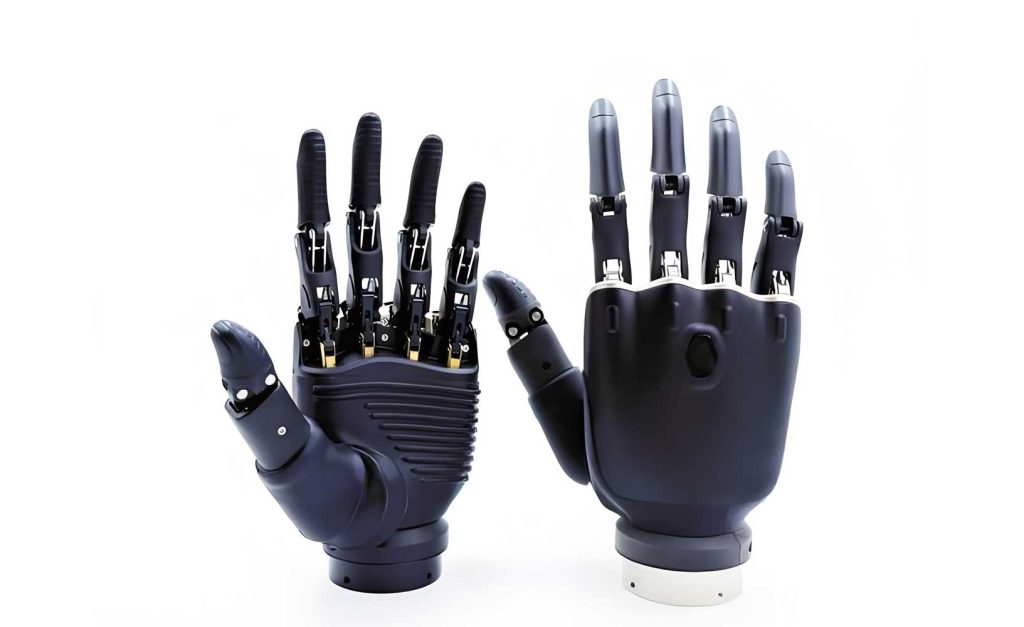
The journey of dexterous robotic hands began in the 1970s, with early prototypes like the Okada hand, which featured three fingers and 11 degrees of freedom (DOF). Since then, the field has expanded rapidly, driven by advancements in materials, actuation, and control systems. I will explore how dexterous robotic hands have evolved from simple grippers to sophisticated systems capable of fine manipulation. The development of dexterous robotic hands is not just about mechanical design; it involves integrating sensors, algorithms, and biomimetic principles to achieve human-level dexterity. In the following sections, I will categorize dexterous robotic hands based on various criteria, such as DOF, actuation methods, and transmission mechanisms, using tables and mathematical models to summarize key points. Additionally, I will insert a relevant image to illustrate the diversity of dexterous robotic hands, as shown below.
To quantify the progress in dexterous robotic hands, I often use mathematical formulations. For instance, the kinematics of a dexterous robotic hand can be described using transformation matrices. Let the position of a fingertip be represented by a vector $\mathbf{p} \in \mathbb{R}^3$, and the joint angles by $\boldsymbol{\theta} \in \mathbb{R}^n$, where $n$ is the number of DOF. The forward kinematics equation is given by:
$$\mathbf{p} = f(\boldsymbol{\theta})$$
where $f$ is a nonlinear function mapping joint space to Cartesian space. For dexterous robotic hands, the Jacobian matrix $\mathbf{J}(\boldsymbol{\theta})$ relates joint velocities to fingertip velocities:
$$\dot{\mathbf{p}} = \mathbf{J}(\boldsymbol{\theta}) \dot{\boldsymbol{\theta}}$$
This is crucial for control and manipulation tasks in dexterous robotic hands. Moreover, the grasp stability can be analyzed using the grasp matrix $\mathbf{G}$, which maps contact forces to net wrench on the object. For a dexterous robotic hand with $m$ contact points, the equilibrium condition is:
$$\mathbf{G} \mathbf{f} = \mathbf{w}_{ext}$$
where $\mathbf{f}$ is the vector of contact forces, and $\mathbf{w}_{ext}$ is the external wrench. These equations highlight the complexity involved in designing dexterous robotic hands for robust grasping.
Research and Development Status of Dexterous Robotic Hands
In my review of dexterous robotic hands, I have observed that their development can be traced through several key milestones globally. The early dexterous robotic hands, such as the Stanford Hand, introduced in the 1980s, utilized tendon-pulley systems with 9 DOF. This set the stage for subsequent innovations. By the 1990s, dexterous robotic hands like the UB Hand series incorporated modular designs and integrated sensors, enhancing their functionality. I note that the evolution of dexterous robotic hands has been marked by a shift from rigid structures to more compliant and biomimetic approaches. For example, recent dexterous robotic hands, such as the Washington Hand, employ tendon-driven mechanisms with artificial ligaments to replicate human hand features. This progression underscores the ongoing quest to improve the dexterity and adaptability of dexterous robotic hands.
In terms of global contributions, I have compiled a table summarizing notable dexterous robotic hands and their specifications. This table encapsulates the diversity in design and performance metrics of dexterous robotic hands over the years.
| Dexterous Robotic Hand | Key Research Institution | Year | Number of Fingers | Number of Joints | Degrees of Freedom | Transmission Method |
|---|---|---|---|---|---|---|
| Okada Hand | Japanese Electrical Laboratory | 1974 | 3 | 11 | 11 | Tendon-Pulley |
| Stanford Hand | Stanford University | 1983 | 3 | 9 | 9 | Tendon-Pulley |
| UB Hand II | University of Bologna | 1992 | 3 | 13 | 11 | Tendon-Pulley |
| DLR Hand II | German Aerospace Center | 2001 | 4 | 17 | 13 | Tendon-Pulley |
| BH-985 Hand | Beihang University | 2005 | 5 | 20 | 11 | Gear-Linkage |
| Shadow Hand | Shadow Robot Company | 2019 | 5 | 24 | 20 | Tendon-Pulley |
| ILDA Hand | Korean Research Institute | 2021 | 5 | 20 | 15 | Linkage |
| Soft Anthropomorphic Hand | Shanghai Jiao Tong University | 2020 | 5 | 15 | 11 | Soft Actuation |
From my analysis, the number of dexterous robotic hands has surged since 2010, reflecting increased interest in humanoid robotics and AI. I attribute this growth to advancements in materials science, such as the use of silicone and textiles for soft dexterous robotic hands, and in control algorithms, like machine learning for grasp planning. The dexterous robotic hand is no longer just a tool for industrial automation; it is becoming integral to service robots, prosthetics, and exploration missions. I believe that the future of dexterous robotic hands lies in further integration of sensing and actuation, making them more autonomous and capable of handling unstructured environments.
Classification and Characteristics of Dexterous Robotic Hands
Based on my studies, I classify dexterous robotic hands along several dimensions. Each category highlights distinct design choices that impact the performance of dexterous robotic hands. I will discuss these in detail, using mathematical models and tables to elucidate key points.
Degrees of Freedom and Actuation
In my view, the DOF configuration is fundamental to the functionality of a dexterous robotic hand. I categorize dexterous robotic hands into fully actuated and underactuated systems. A fully actuated dexterous robotic hand has an equal number of actuators and DOF, allowing independent control of each joint. This enables precise manipulation, as seen in dexterous robotic hands like the Shadow Hand. Conversely, an underactuated dexterous robotic hand has fewer actuators than DOF, often using mechanical couplings to simplify control. I model this using constraint equations. For an underactuated dexterous robotic hand with $n$ DOF and $m$ actuators ($m < n$), the joint angles $\boldsymbol{\theta}$ are related by:
$$\mathbf{C}(\boldsymbol{\theta}) = \mathbf{0}$$
where $\mathbf{C}$ represents coupling constraints. This design reduces complexity but may limit dexterity. I have summarized the pros and cons in the table below.
| Type of Dexterous Robotic Hand | Actuator-to-DOF Ratio | Advantages | Disadvantages | Example Dexterous Robotic Hand |
|---|---|---|---|---|
| Fully Actuated | 1:1 | High precision, independent joint control | Complex, bulky, high cost | Stanford Hand |
| Underactuated | <1:1 | Compact, lightweight, adaptive grasping | Reduced dexterity, coupled motions | Pisa/IIT Soft Hand |
From my perspective, the choice between these types depends on the application. For instance, industrial dexterous robotic hands may prioritize speed and force, while prosthetic dexterous robotic hands focus on natural movement and comfort.
Actuation Methods
I have identified four primary actuation methods for dexterous robotic hands: hydraulic, electric, pneumatic, and shape memory alloy (SMA) based. Each method influences the performance of the dexterous robotic hand in terms of force, speed, and compliance. To compare them, I use a quantitative framework. Let $F$ be the output force, $v$ be the speed, and $\eta$ be the efficiency. For electric actuators, commonly used in dexterous robotic hands, the torque $\tau$ can be expressed as:
$$\tau = K_t I$$
where $K_t$ is the torque constant and $I$ is the current. In contrast, pneumatic actuators in dexterous robotic hands, like those in soft hands, follow the pressure-force relation:
$$F = P A$$
where $P$ is pressure and $A$ is the effective area. I have tabulated the characteristics below.
| Actuation Method for Dexterous Robotic Hand | Typical Force Output | Speed | Efficiency | Suitability for Dexterous Robotic Hand |
|---|---|---|---|---|
| Hydraulic | High (e.g., 500 N) | Moderate | 0.7-0.9 | Industrial heavy-duty tasks |
| Electric | Medium (e.g., 50 N) | High | 0.8-0.95 | Precision manipulation, prosthetics |
| Pneumatic | Low to Medium (e.g., 20 N) | High | 0.6-0.8 | Soft and compliant hands |
| SMA | Low (e.g., 10 N) | Low | 0.1-0.3 | Miniaturized, biomedical applications |
In my experience, electric actuation dominates in dexterous robotic hands due to its controllability and integration with sensors. However, pneumatic systems are gaining traction for soft dexterous robotic hands that require safe human-robot interaction.
Mechanical Transmission Forms
The transmission mechanism in a dexterous robotic hand dictates how motion and force are transferred from actuators to joints. I analyze four common forms: linkage, gear, belt, and tendon (cable) drives. Each has implications for the dexterity and reliability of the dexterous robotic hand. For a tendon-driven dexterous robotic hand, the tension $T$ in a tendon relates to joint torque $\tau$ via:
$$\tau = r T$$
where $r$ is the pulley radius. This allows compact design but introduces friction losses. In linkage-driven dexterous robotic hands, the kinematics can be modeled using Denavit-Hartenberg parameters. I compare these transmission methods in the table below.
| Transmission Method in Dexterous Robotic Hand | Mechanical Efficiency | Backlash | Compactness | Typical Use in Dexterous Robotic Hand |
|---|---|---|---|---|
| Linkage | High (0.9-0.95) | Low | Moderate | Heavy-duty grasping, industrial hands |
| Gear | High (0.85-0.95) | Moderate | Low | Precision joints, high-torque applications |
| Belt | Medium (0.8-0.9) | Low | High | Lightweight, high-speed hands |
| Tendon (Cable) | Low to Medium (0.7-0.85) | High | High | Biomimetic, multi-DOF hands |
From my observations, tendon drives are prevalent in advanced dexterous robotic hands due to their flexibility and ability to remote actuators, reducing hand mass. However, I recommend considering hybrid transmission for future dexterous robotic hands to balance efficiency and dexterity.
Control and Sensing Technologies
Control and sensing are critical for the operation of dexterous robotic hands. I delve into the algorithms and sensor types that enable fine manipulation. For control, I often use proportional-derivative (PD) controllers for joint positioning in dexterous robotic hands:
$$\mathbf{u} = \mathbf{K}_p (\boldsymbol{\theta}_d – \boldsymbol{\theta}) + \mathbf{K}_d (\dot{\boldsymbol{\theta}}_d – \dot{\boldsymbol{\theta}})$$
where $\mathbf{u}$ is the control input, $\boldsymbol{\theta}_d$ is the desired joint angle, and $\mathbf{K}_p$, $\mathbf{K}_d$ are gain matrices. More advanced dexterous robotic hands employ impedance control to manage contact forces:
$$\mathbf{F} = \mathbf{M} \ddot{\mathbf{x}} + \mathbf{D} \dot{\mathbf{x}} + \mathbf{K} (\mathbf{x} – \mathbf{x}_0)$$
where $\mathbf{F}$ is the force, $\mathbf{x}$ is position, and $\mathbf{M}$, $\mathbf{D}$, $\mathbf{K}$ are inertia, damping, and stiffness matrices, respectively. This is essential for dexterous robotic hands interacting with fragile objects.
In terms of sensing, dexterous robotic hands integrate internal sensors (e.g., encoders for position) and external sensors (e.g., tactile sensors for force). I model tactile sensing using a pressure distribution $p(x,y)$ over a sensor array. The total force $F_{total}$ is:
$$F_{total} = \iint_A p(x,y) \, dx \, dy$$
where $A$ is the sensor area. For dexterous robotic hands, multi-modal sensing—combining vision, force, and temperature—enhances perception. I summarize key sensor types in the table below.
| Sensor Type in Dexterous Robotic Hand | Measured Quantity | Accuracy | Integration Complexity | Impact on Dexterous Robotic Hand Performance |
|---|---|---|---|---|
| Encoder | Joint Position | ±0.1° | Low | Enables precise motion control |
| Force/Tactile Sensor | Contact Force | ±3% full scale | High | Facilitates gentle grasping and manipulation |
| Vision Camera | Object Pose | ±1 mm | Moderate | Aids in grasp planning and object recognition |
| Inertial Measurement Unit (IMU) | Orientation | ±0.5° | Moderate | Improves hand-eye coordination |
I believe that future dexterous robotic hands will leverage artificial intelligence to fuse sensor data, enabling adaptive behaviors. For example, deep learning can be used to predict grasp stability based on tactile feedback, making dexterous robotic hands more autonomous.
Future Trends in Dexterous Robotic Hands
Looking ahead, I foresee several trends shaping the development of dexterous robotic hands. Firstly, I expect an increase in the DOF of dexterous robotic hands, making them more anthropomorphic and capable of complex tasks like in-hand manipulation. This can be quantified by the dexterity index $D$, which I define as:
$$D = \frac{\text{Number of Controllable DOF}}{\text{Hand Volume}}$$
Higher $D$ indicates greater dexterity per unit size, a goal for next-generation dexterous robotic hands. Secondly, I anticipate tighter integration of actuation and sensing, with embedded electronics reducing the bulk of dexterous robotic hands. Soft robotics will play a key role, as soft dexterous robotic hands offer inherent safety and adaptability. I model the compliance of a soft dexterous robotic hand using a spring-damper system:
$$F = k \delta + c \dot{\delta}$$
where $k$ is stiffness, $c$ is damping, and $\delta$ is deformation. This allows dexterous robotic hands to handle uncertain environments without complex control.
Thirdly, AI and machine learning will revolutionize the control of dexterous robotic hands. I envision dexterous robotic hands that learn manipulation skills through reinforcement learning, optimizing policies $\pi(\mathbf{s})$ that map states $\mathbf{s}$ to actions $\mathbf{a}$. The objective is to maximize cumulative reward $R$:
$$R = \sum_{t=0}^{T} \gamma^t r_t$$
where $\gamma$ is a discount factor and $r_t$ is the reward at time $t$. This approach could enable dexterous robotic hands to master tasks like tool use or assembly autonomously.
Lastly, applications of dexterous robotic hands will expand beyond traditional domains. I predict widespread use of dexterous robotic hands in healthcare for surgery, in space for maintenance, and in homes for assistance. The modularity of dexterous robotic hands will allow customization for specific needs. To summarize these trends, I provide a table below.
| Future Trend for Dexterous Robotic Hand | Key Technology Enabler | Expected Impact on Dexterous Robotic Hand | Potential Challenge |
|---|---|---|---|
| Increased DOF and Anthropomorphism | Miniature Actuators, 3D Printing | Enhanced manipulation capabilities, human-like motion | Control complexity, power consumption |
| Integrated Sensing and Actuation | Flexible Electronics, Smart Materials | Real-time feedback, improved adaptability | Cost, durability in harsh environments |
| AI-Driven Control | Deep Learning, Reinforcement Learning | Autonomous skill acquisition, robust performance | Data requirements, computational load |
| Soft and Compliant Designs | Pneumatic Networks, Silicone Elastomers | Safe human-robot interaction, versatile grasping | Limited force output, modeling difficulties |
| Modular and Customizable Architectures | Reconfigurable Mechanisms, Open-Source Platforms | Rapid prototyping, application-specific optimization | Standardization issues, interoperability |
In my opinion, the convergence of these trends will lead to dexterous robotic hands that are not only tools but partners in human endeavors. I emphasize that continuous innovation in dexterous robotic hands is essential for advancing robotics as a whole.
Conclusion
In this comprehensive review, I have explored the multifaceted world of dexterous robotic hands. From their historical origins to current state-of-the-art designs, dexterous robotic hands have evolved significantly, driven by interdisciplinary research. I have classified dexterous robotic hands based on degrees of freedom, actuation methods, transmission forms, and sensing technologies, using mathematical models and tables to clarify key concepts. The dexterous robotic hand is a testament to human ingenuity, blending mechanics, electronics, and computer science to create systems that mimic and even surpass human hand capabilities. As I look to the future, I am optimistic that advances in materials, AI, and biomimetics will further enhance the dexterity and utility of dexterous robotic hands. Whether in industrial settings, medical applications, or daily life, dexterous robotic hands will continue to play a pivotal role in shaping the future of robotics. I encourage researchers and engineers to focus on holistic design approaches that balance performance, cost, and safety in developing the next generation of dexterous robotic hands.
To encapsulate the core principles, I often refer to a unified framework for dexterous robotic hand design. Let the overall performance metric $P$ of a dexterous robotic hand be a function of dexterity $D$, force $F$, speed $v$, and compliance $C$:
$$P = \alpha D + \beta F + \gamma v + \delta C$$
where $\alpha, \beta, \gamma, \delta$ are weighting coefficients based on application needs. Optimizing $P$ requires trade-offs, which I have discussed throughout this article. Ultimately, the goal is to create dexterous robotic hands that are versatile, reliable, and accessible, pushing the boundaries of what robots can achieve in our world.