
With the global advancement of intelligent manufacturing strategies, the development and application of industrial robots have been significantly propelled. Among the three core components of an industrial robot, the rotary vector reducer plays a pivotal role due to its high transmission accuracy and technical complexity. The performance and reliability of the industrial robot are directly dependent on the precision and durability of its rotary vector reducer. However, the domestic development of rotary vector reducers has been relatively brief. While extensive research exists on their meshing theory, studies focusing on testing and evaluation technologies are still limited. Conventional test benches designed for generic gearboxes or reducers often fail to meet the specific and stringent requirements for evaluating high-precision rotary vector reducers, particularly under conditions simulating real robotic operations such as frequent bidirectional oscillating motion with inertial loads. This gap underscores the necessity for specialized test equipment. Our research team has developed a comprehensive performance test bench specifically tailored for rotary vector reducers. This system integrates advanced optical, mechanical, and electrical measurement technologies to achieve high-precision, multi-parameter testing, fulfilling the critical need for rigorous performance validation in both R&D and quality control phases of rotary vector reducer manufacturing.
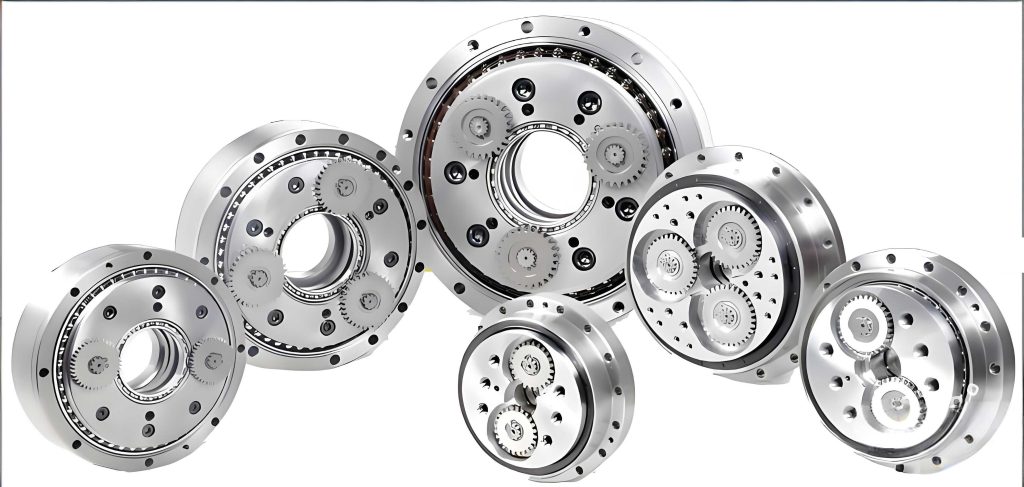
The core objective of this test system is to provide a unified platform capable of executing a full suite of performance evaluations as mandated by industry standards and practical application demands for rotary vector reducers. The development was driven by the need to move beyond traditional static or single-parameter tests and towards a dynamic, integrated assessment that mirrors real-world operating scenarios for a rotary vector reducer within a robot joint.
1. Experimental Specifications and Functional Requirements
Based on the analysis of robotic application cycles and relevant standards, the comprehensive test bench for the rotary vector reducer is designed to perform the following critical measurements:
- Transmission Accuracy (Transmission Error): This is the most critical parameter, defined as the difference between the actual output rotation angle and the theoretically expected output angle for a given input. It directly impacts the positioning precision and trajectory repeatability of the robot arm. High-resolution measurement of this error, often required to be within arc-seconds, is essential.
- Torsional Stiffness and Backlash (Hysteresis Curve): Torsional stiffness quantifies the resistance of the rotary vector reducer to elastic deformation under load, affecting the system’s rigidity and dynamic response. Backlash, the lost motion during direction reversal, influences control stability and precision. The system must measure these under simulated operating conditions, typically by fixing the input and applying bidirectional torque to the output.
- Starting and Stopping Torque: The torque required to initiate movement from standstill in both forward and reverse directions. This parameter is crucial for sizing the servo motor and understanding the rotary vector reducer’s internal friction characteristics at low speeds.
- No-Load Running Torque (Friction Torque): The torque consumed solely to overcome internal friction during operation without external load. It is a key indicator of manufacturing and assembly quality, affecting the rotary vector reducer’s efficiency and heat generation.
- Mechanical Efficiency: The ratio of output power to input power under load. While related to friction, it provides a holistic measure of the rotary vector reducer’s energy conversion performance.
A significant departure from traditional reducer test benches using passive brake loading is the adoption of an active bidirectional loading system. This design accurately simulates the frequent start-stop and oscillating inertial loads experienced by a rotary vector reducer in a robotic joint, providing more relevant test data.
| Test Parameter | Simulated Condition | Key Measurement | Typical Unit |
|---|---|---|---|
| Transmission Error | Constant speed, loaded/unloaded | Angular deviation between input and output | arc-seconds (″) |
| Torsional Stiffness | Input fixed, bidirectional torque on output | Slope of torque vs. angular deflection curve | N·m/arcmin or N·m/rad |
| Backlash | Torque reversal at near-zero speed | Angular dead zone from hysteresis loop | arc-minutes (′) or arc-seconds (″) |
| Starting Torque | Breakaway from standstill | Peak torque at the instant of motion | N·m |
| No-Load Torque | Running at various speeds without load | Average torque required to maintain motion | N·m |
2. Key Technological Innovations
The development of this high-precision test bench for the rotary vector reducer involved overcoming several technical challenges, leading to the implementation of proprietary technologies.
2.1 High-Precision Angular Measurement with Signal Subdivision
The measurement of transmission error and backlash for a rotary vector reducer demands exceptional angular resolution, often down to 0.1 arc-seconds. While high-grade optical encoders (e.g., with 1″ accuracy) provide a solid foundation, their native resolution is insufficient. To achieve the required resolution, a high-frequency electronic signal subdivision technique is employed. The sinusoidal signals from the encoder are interpolated at a very high rate, effectively multiplying the number of detectable positions per revolution. This process can be conceptually represented by enhancing the resolution from a base signal count. If an encoder has \(N\) lines per revolution, the basic electrical period is \(\theta_{base} = \frac{360^\circ}{N}\). Subdivision by a factor of \(S\) yields an effective resolution of:
$$\theta_{res} = \frac{360^\circ}{N \cdot S}$$
For instance, an encoder with 36,000 lines/revolution (\(\theta_{base} \approx 36″\)) combined with a 360x subdivision achieves \(\theta_{res} \approx 0.1″\). This high resolution is fundamental for capturing the minute angular variations inherent in testing a precision rotary vector reducer.
2.2 Short-Span Precision Mounting Structure
Conventional long-shaft mounting of encoders introduces errors from shaft bending, torsion, and coupling misalignment, which can be on the same order of magnitude as the transmission error of the rotary vector reducer itself. To mitigate this, a novel short-span direct mounting structure was developed. The high-resolution rotary encoder is mounted directly onto, or in extremely close proximity to, the test shaft using a precision-machined interface. This minimizes the lever arm for any bending moment and reduces the torsional deflection path between the measurement point and the actual shaft rotation of the rotary vector reducer. The effective torsional error \(\phi_{torsion}\) introduced by a shaft segment of length \(L\), radius \(r\), under torque \(T\), with shear modulus \(G\) is:
$$\phi_{torsion} = \frac{T \cdot L}{J \cdot G}$$
where \(J = \frac{\pi r^4}{2}\) is the polar moment of inertia. By minimizing \(L\), \(\phi_{torsion}\) is drastically reduced, preserving measurement fidelity.
2.3 Dual-Readhead Error Compensation
Even with precision mounting, residual eccentricity and installation errors of the encoder disk relative to the shaft axis can cause once-per-revolution errors (often called “installation eccentricity error”). To eliminate this systematic error, a dual-readhead configuration is implemented. Two readheads are installed diametrically opposite (180° apart) on the encoder housing. Any eccentricity-induced error is a sinusoidal function of the rotation angle. When the signals from the two readheads are averaged, the opposing-phase eccentricity errors cancel out.
Let the true angle be \(\theta\). The error due to eccentricity for a single readhead can be modeled as \(E(\theta) = e \cdot \sin(\theta + \phi)\), where \(e\) is the error amplitude and \(\phi\) a phase offset. For two readheads separated by 180°, their readings are:
$$\theta_1 = \theta + e \cdot \sin(\theta + \phi)$$
$$\theta_2 = \theta + e \cdot \sin(\theta + \phi + \pi) = \theta – e \cdot \sin(\theta + \phi)$$
Averaging gives the compensated angle:
$$\theta_{comp} = \frac{\theta_1 + \theta_2}{2} = \theta$$
This technique effectively isolates and removes the first-order installation error, ensuring that the measured angle reflects the true shaft rotation of the rotary vector reducer.
2.4 Series Design Optimization with Multi-Range Sensors
The torque and speed ranges for robotic rotary vector reducers are vast, spanning from small collaborative robots to heavy-duty industrial arms. Covering this spectrum with a single test bench sensor configuration would force a compromise on measurement accuracy, as a sensor’s relative error is typically a percentage of its full scale. A naive approach might require 4-5 different test bench models. Through systematic analysis, this was optimized to a 3-model series by employing two strategies:
- Wide-Speed-Range Motors: Utilizing servo motors and drives capable of stable, precise control from very low speeds (fractions of an RPM) to high speeds, covering the operational spectrum of multiple rotary vector reducer sizes with one drive unit.
- Dual-Range Torque Sensors: Integrating torque sensors with two selectable measurement ranges (e.g., a high-sensitivity low-range and a high-capacity full-range). This expands the accuracy-guaranteed range for a single test station. The selection is automated based on the commanded test load.
The selection logic for sensor range \(R\) based on test torque \(T_{test}\) and rated sensor capacity \(C\) can be defined as:
$$
R =
\begin{cases}
\text{Low Range} & \text{if } T_{test} \le 0.2C \\
\text{High Range} & \text{if } T_{test} > 0.2C
\end{cases}
$$
This optimization ensures high signal-to-noise ratio and accuracy across a wider torque spectrum, reducing the need for multiple test benches and eliminating the consistency issues from testing a single rotary vector reducer on different machines.
3. System Architecture and Mechanical Design
The mechanical architecture of the rotary vector reducer test bench is designed for rigidity, precision alignment, and operational flexibility. Its main subsystems are outlined below and summarized in the accompanying table.
| Subsystem | Key Components | Primary Function |
|---|---|---|
| Drive System | High-performance servo motor, vector drive controller, precision torque sensor, input-side high-resolution encoder, coupling. | Provides precise, stable rotational input to the reducer under test. Measures input torque and angle. |
| Loading System | Active servo motor, high-precision gearbox (to handle high reaction torque), output-side high-resolution encoder, coupling. | Applies programmable bidirectional torque loads to simulate robotic joint loads. Measures output angle and reaction torque. |
| Alignment & Fixturing System | Linear guideways with ball screws (for transverse/axial drive adjustment), axial adjustment stage for loading side, modular reducer mounting platens, quick-clamp fixtures. | Facilitates precise, repeatable alignment of the test reducer between drive and load units for different reducer sizes and models. |
| Structural Bed | Monolithic cast iron base, stress-relieved, precision machined. | Provides a massive, vibration-damping, and thermally stable foundation to maintain alignment integrity under load. |
| Safety & Enclosure | Interlocked safety guards, emergency stop buttons, protective covers. | Ensures operator safety during automated and high-torque testing procedures. |
The monolithic cast iron bed is crucial. Its high damping coefficient absorbs vibrations from motors and gear meshing within the rotary vector reducer, while its thermal mass and stability minimize drift caused by ambient temperature changes, which is critical for long-duration tests like life-cycle evaluation.
4. Electrical Control and Software Architecture
The test bench’s control and data acquisition (DAQ) system is built for high-speed, deterministic, and precise operation, necessary for capturing the dynamic behavior of the rotary vector reducer.
4.1 Control System Hardware
The core is a National Instruments PXI platform equipped with a real-time controller and a high-speed FPGA (Field-Programmable Gate Array) card. This architecture separates tasks: the real-time controller handles high-level sequencing, user interface (UI) communication, and data logging, while the FPGA executes time-critical I/O operations, such as high-frequency encoder counter reading, analog input sampling for torque sensors, and deterministic pulse generation for motor control at rates exceeding 1 MHz. This ensures loop latencies in the microsecond range, vital for stable control and accurate event capture.
4.2 Drive and Loading Control Strategy
- Drive Side (Speed Control): The input servo motor operates in a high-precision speed control mode. A cascade control loop is implemented. The outer loop uses the high-resolution encoder feedback for position/speed PID control within the FPGA, ensuring exceptional low-speed smoothness and minimal ripple—a must for accurate friction and start-stop torque measurement on the rotary vector reducer.
- Loading Side (Torque Control): The loading servo motor operates primarily in torque control mode. A sophisticated vector control algorithm allows it to apply a precise, stable torque load in either direction, even at near-zero speeds, enabling stiffness and backlash testing. During many tests (like efficiency or loaded transmission error), the loading motor operates as a generator. The system employs a regenerative power loop, where this generated power is fed back to the DC bus of the drive system, significantly reducing net energy consumption—a feature known as “electrical back-to-back” or “four-quadrant” testing.
The fundamental control relationship for the loading side during stiffness testing (input fixed) is maintaining a torque profile \(T_{load}(t)\) while measuring the resulting output angular deflection \(\theta_{out}(t)\). The stiffness \(K\) at a specific torque \(T\) is calculated from the slope of the quasi-static curve:
$$K = \frac{dT}{d\theta_{out}}$$
4.3 Test Management and Data Analysis Software
The upper-level software, developed in LabVIEW, provides a complete environment for test management, execution, visualization, and analysis. Its layered structure includes:
- Test Configuration Panel: Users input parameters such as rotary vector reducer model, reduction ratio, rated torque/speed, and select the test sequence (e.g., Backlash -> Stiffness -> Transmission Error -> Efficiency).
- Real-Time Monitoring Dashboard: Displays live plots of input/output angles, torque, speed, and calculated parameters like instantaneous transmission error or power. It shows the system status and allows for interactive control during setup.
- Automated Test Sequencer: Executes predefined test procedures (e.g., ISO or GB standards) for consistency and repeatability. It controls ramp rates, dwell times, and data acquisition triggers.
- Advanced Data Analysis Module: Post-processes acquired data to generate key results and reports. This includes:
- FFT (Fast Fourier Transform) analysis of transmission error to identify specific harmonic components related to planetary gear stages, cycloid gear meshing, or bearing frequencies in the rotary vector reducer.
- Automatic calculation of hysteresis loop parameters: backlash (total lost motion), nonlinear stiffness zones, and hysteresis loss area.
- Statistical analysis of repeated measurements to determine repeatability and uncertainty of the test bench itself.
For transmission error (\(\Delta \theta\)) measurement, the software continuously computes:
$$\Delta \theta(t) = \theta_{out}(t) – \frac{\theta_{in}(t)}{i}$$
where \(i\) is the rated reduction ratio of the rotary vector reducer. This error is plotted over one or more revolutions of the input shaft, revealing the cyclic error pattern characteristic of the gear train.
5. System Applications and Verification
The developed test benches, covering a torque capacity series from 100 N·m to 3000 N·m, have been deployed and validated by multiple research institutes and leading manufacturers of rotary vector reducers. The verification process involves testing precision master reducers, comparing results against other methods, and assessing repeatability.
5.1 Testing Procedure and Results
A standardized procedure for a newly assembled rotary vector reducer typically follows this order on the test bench:
- Run-in & No-Load Friction Test: The reducer is run at low speed without load to allow initial wear-in and stabilization. The no-load running torque is monitored until it stabilizes, indicating proper lubrication distribution.
- Backlash Measurement: With the input shaft clamped, a bidirectional torque cycle (e.g., from +25% to -25% of rated torque) is applied slowly to the output. The angular displacement is recorded, generating a hysteresis loop. The total backlash is calculated as the width of the loop at zero torque crossing. A typical result for a mid-range rotary vector reducer might be below 1 arc-minute.
- Torsional Stiffness Test: Using the same data from the backlash test, the slope of the linear portion of the torque-angle curve is calculated, yielding the torsional stiffness, often in the range of several hundred to thousands of N·m/arcmin depending on the size of the rotary vector reducer.
- Transmission Accuracy Test: The reducer is driven at a constant input speed (e.g., 125 RPM) while under a constant load (e.g., 25% of rated torque). The input and output angles are sampled simultaneously at high frequency over many input revolutions. The transmission error is computed and plotted.
The following table summarizes typical benchmark results for a validated test bench configuration:
| Performance Metric of Test Bench | Capability / Result | Comment |
|---|---|---|
| Angular Measurement Resolution | ≤ 0.1 arc-seconds | Enabled by high-frequency subdivision of encoder signals. |
| Transmission Error Measurement Accuracy | ± 1 arc-second | Verified using a precision reference reducer and laser interferometer. |
| Torque Measurement Accuracy | ± 0.1% of reading (selected range) | Using calibrated, temperature-compensated torque sensors. |
| Speed Control Stability (Low Speed) | < ±0.05% of set speed | Critical for smooth testing and accurate friction measurement. |
| Test Repeatability (Transmission Error) | Standard deviation < 0.5 arc-seconds | For the same rotary vector reducer under identical conditions. |
5.2 Analysis of Test Results
Figure X (conceptual) below illustrates a transmission error curve obtained from testing an 81:1 ratio rotary vector reducer at 125 RPM input speed under 25 N·m load, after proper run-in.
[A detailed, multi-period sinusoidal curve would be plotted here showing Δθ vs. Input Angle. The caption would read: “Transmission error curve of a tested rotary vector reducer (i=81). The peak-to-peak error is approximately 50 arc-seconds, with a dominant 1st order (input revolution) harmonic modulated by higher order harmonics from the cycloid stage.]
Key observations from such results consistently show:
- The measured transmission error curves exhibit characteristic periodic patterns that align with theoretical models of the two-stage (planetary + cycloid) architecture of the rotary vector reducer.
- Post-run-in measurements show reduced error magnitude and smoother curves compared to initial tests, indicating the settling of components and improved lubrication film.
- Excellent repeatability is observed across multiple consecutive test runs on the same unit, confirming the stability and reliability of the test bench’s mechanical, sensing, and control systems.
The system’s ability to perform these integrated tests on a single platform without re-fixturing provides a comprehensive and consistent performance fingerprint for each rotary vector reducer, accelerating development cycles and ensuring outgoing quality.
6. Conclusion and Future Outlook
The development and implementation of this comprehensive performance test system represent a significant advancement in the evaluation technology for high-precision rotary vector reducers. By integrating advanced optical subdivision, innovative mechanical design for error minimization, active bidirectional loading, and a high-speed deterministic control system, the bench successfully meets the stringent requirements for testing robotic reducers. It achieves arc-second level measurement accuracy and provides a unified platform for assessing transmission error, stiffness, backlash, and efficiency—parameters critical to the performance of an industrial robot.
The successful deployment and validation of a series of these test systems have filled a technological gap in the domestic robotics industry chain. They serve as essential tools not only for quality inspection but also for fundamental research, such as analyzing the impact of component tolerances, lubrication regimes, and assembly processes on the final performance of the rotary vector reducer. Future development directions may include integrating thermographic cameras for thermal performance mapping, adding vibration and acoustic emission sensors for condition monitoring and life prediction, and further enhancing the software with AI-based diagnostic tools to automatically classify performance and identify potential manufacturing defects from the test data patterns. This will continue to support the evolution towards higher precision, greater reliability, and more intelligent manufacturing of core robotic components like the rotary vector reducer.