
In a pioneering event for robotics development, the 2025 Beijing Yizhuang Half Marathon and Humanoid Robot Half Marathon recently commenced, marking the world’s first half-marathon where humanoid robots competed alongside human athletes. Both groups simultaneously tackled the demanding 21-kilometer course, with the 1.8-meter-tall “Tiangong Ultra” humanoid robot emerging as the champion in the humanoid robot category.
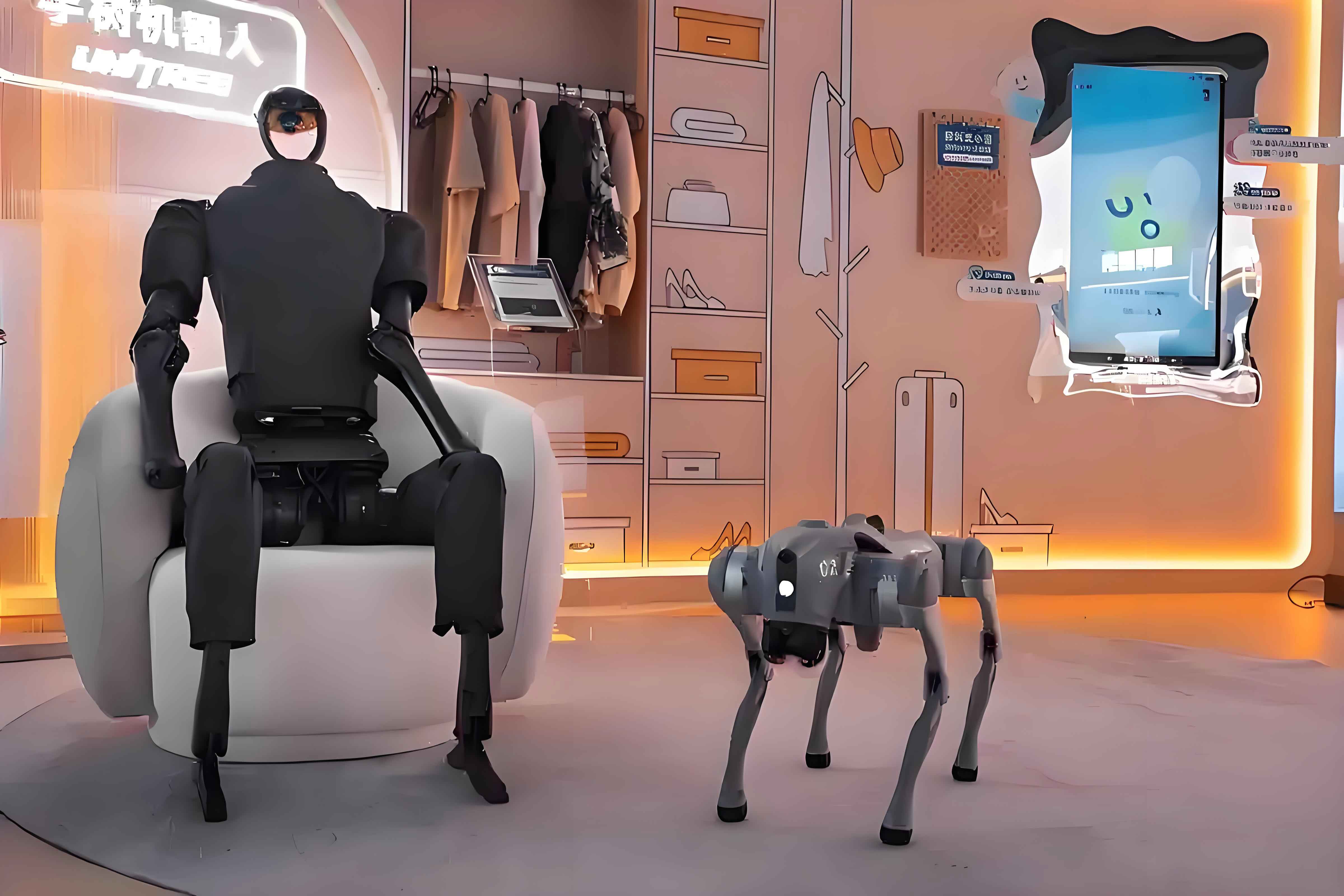
This milestone follows several high-profile appearances of humanoid robots throughout the year, including Unitree robots performing Yangko dances during the Spring Festival Gala, the “Kuafu” humanoid robot at the Asian Winter Games, and now this groundbreaking “human-robot co-running” competition – each event generating significant social media buzz and public excitement about humanoid robot advancements.
1. Humanoid Robots Navigate Real-World Endurance Challenge
Dr. Tu Wenxuan, associate researcher at Hainan University’s School of Computer Science and Technology, emphasized that this marathon represents a critical transition for humanoid robots: “The first long-distance endurance test in an open environment signifies a landmark moment for humanoid robots leaving laboratory confines.” He highlighted three major breakthroughs demonstrated by the humanoid robot competitors:
- Enhanced Coordination: “Compared to earlier models that executed isolated movements like jumping or kicking, today’s humanoid robots integrate AI to perform complex, continuous actions – from festival dances to sustained running.”
- Environmental Adaptability: “Unlike controlled lab settings, the marathon introduced crowds, noise, and unexpected obstacles. Humanoid robots successfully filtered interference while maintaining motion stability – a substantial technical achievement.”
- Cross-Disciplinary Integration: “This performance proves successful convergence of mechanical engineering, control systems, automation, and AI. The victory of China’s ‘Tiangong Ultra’ humanoid robot indicates domestic breakthroughs in core technologies like control algorithms and energy management.”
The global humanoid robot community continues to push boundaries, with Beijing scheduled to host the inaugural World Humanoid Robot Games in August 2025. This Olympics-style competition will expand testing scenarios to include material handling, medical sorting, and specialized technical demonstrations beyond athletic contests.
2. From Prototype to Production: The Humanoid Robot Evolution
The journey began in 1973 when Waseda University developed WABOT-1 – the world’s first functional humanoid robot with basic limbs but limited mobility. Recent years have witnessed accelerated development across China’s humanoid robot industry, with over 10 regional governments establishing specialized industrial funds targeting robot manufacturing, component supply chains, and innovative applications. Companies across Beijing, Shenzhen, and Shanghai have subsequently launched commercial humanoid robot products.
Industry analysts identify two technological catalysts for this progress:
- AI Learning Advancements: Reinforcement learning and imitation learning techniques have shifted development paradigms from mechanical programming to deep learning systems.
- General-Purpose AI Models: The 2022 emergence of large language models like ChatGPT introduced adaptable cognitive architectures. “Unlike specialized AI, general models handle multiple domains simultaneously – translation, recognition, decision-making – which aligns perfectly with future humanoid robot requirements,” explained Dr. Tu.
Government policy now actively supports this transition. The 2025 Government Work Report established mechanisms to cultivate future industries including embodied intelligence – defined as intelligent systems with physical forms that interact with environments to complete tasks. Humanoid robots represent a primary embodiment of this concept.
“Embodied intelligence merges AI with robotics,” Dr. Tu elaborated. “A humanoid robot placed in any environment can autonomously learn through physical interactions, continuously improving its behavioral and cognitive capabilities.”
| Category | Market Size (billion RMB) | Global Context |
|---|---|---|
| Humanoid Robots | 82.39 | 50% of global humanoid robot market |
| Embodied Intelligence | 52 | Core enabling technology sector |
3. The Path to Household Integration for Humanoid Robots
While service robots currently operate in restaurants (delivery bots), homes (cleaning units), banks (reception assistants), and hospitals (surgical systems), true humanoid robots remain absent from domestic settings. Researchers emphasize their unique potential: humanoid forms facilitate social acceptance while enabling operation in human-designed environments using existing tools like scissors, wrenches, or keyboards.
Nevertheless, significant challenges persist before humanoid robots enter households:
- Intelligence Limitations: “Most humanoid robots still require human guidance and exhibit weak rather than strong autonomous intelligence,” noted Dr. Tu, highlighting needs for continued research in general AI models, advanced chips, and manufacturing techniques.
- Environmental Complexity: Zhang Rui, founder of Beijing Iron Man Technology, cautioned: “Homes present greater challenges than industrial settings. Humanoid robots must navigate variable surfaces (carpets, tiles), avoid collisions with residents/pets, and ensure safety – a 50kg metal structure falling could cause serious injury. Current mechanical designs require fundamental rethinking using new materials that mimic biological muscles and bones.”
Industry projections suggest humanoid robots may enter specialized commercial applications within 3-5 years, though achieving reliable household utility could require 7-10 years of additional development.
4. The Marathon as Metaphor for Future Progress
Despite implementation hurdles, Dr. Tu emphasized the marathon’s symbolic importance: “This event remains a vital marker in humanoid robots’ practical development trajectory. As these technologies mature, humanoid robots will inevitably transform numerous aspects of society.” The convergence of sustained physical endurance, environmental adaptation, and cross-disciplinary innovation positions humanoid robots at the forefront of next-generation intelligent systems – steadily progressing from controlled demonstrations toward real-world utility.