
Shanghai-based innovators are accelerating the deployment of humanoid robots across diverse real-world scenarios, shifting the industry’s focus from core technologies to ecosystem development. Companies like Fourier Intelligence and Zhiyuan Robotics are leading this transformation through strategic collaborations, open-source initiatives, and global competitions aimed at solving practical challenges in healthcare, elderly care, and industrial services.
- Fourier Intelligence’s Ecosystem Expansion
Fourier Intelligence, a prominent player in the humanoid robot sector, has executed three key initiatives to advance embodied intelligence applications. The company partnered with Shanghai International Medical Center to establish China’s first embodied intelligence rehabilitation demonstration base, focusing on integrating humanoid robots into clinical settings. Additionally, Fourier signed agreements with Tongji University for joint research, talent development, and scenario co-creation, emphasizing the role of humanoid robots in educational and practical environments. A collaboration with the National-Local Joint Humanoid Robot Innovation Center aims to innovate applications in rehabilitation medicine and industrial services, underscoring the push for scalable humanoid robot solutions. These efforts highlight the company’s strategy to build a comprehensive ecosystem around humanoid robots, moving beyond isolated technological advancements to address real-world needs.
- Zhiyuan Robotics’ Global Challenge Initiative
Zhiyuan Robotics announced the launch of a premier global robotics challenge this month, designed to foster algorithm innovation for humanoid robots. The competition, based on Zhiyuan’s self-developed G1 humanoid robot platform and the AgiBot World dataset, will test capabilities in complex environments. With a cash prize pool of $60,000 and procurement vouchers worth $500,000 for top performers, the event targets global talent to accelerate progress in humanoid robot intelligence. This initiative reflects the industry’s emphasis on community-driven growth, as humanoid robot developers seek to attract expertise through competitive platforms.
- Industry Shift: From Technology to Ecosystem
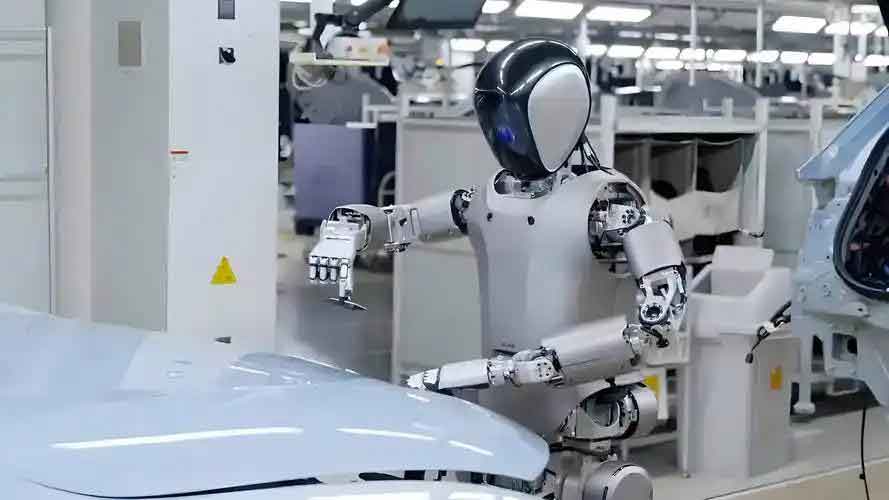
The humanoid robot landscape is evolving rapidly, with competition shifting from hardware components like joint motors and motion control to ecosystem elements such as operating systems, developer platforms, and scenario penetration. Jiang Lei, Chief Scientist at the National-Local Joint Humanoid Robot Innovation Center, projects that China will produce approximately 15,000 humanoid robots this year for deployment across various sectors, outpacing the early growth of the new energy vehicle industry. Humanoid robots are increasingly moving from industrial and hazardous roles to interactive applications, exemplified by their use as guides at events like the Shanghai Auto Show. The ultimate battleground for humanoid robots lies not in labs but in real-world scenarios across industries; achieving 100 scenario solutions could establish de facto standards, while a developer community exceeding 10,000 members may trigger technology lock-in effects, solidifying the “ecosystem-first” future.
| Key Metric | Value | Context |
|---|---|---|
| Projected humanoid robot production in China (2025) | 15,000 units | Deployment across multiple industries, including healthcare and services |
| Global hospital deployments by Fourier | Over 3,000 hospitals | Covering rehabilitation applications for humanoid robots |
| Patients served by Fourier’s humanoid robots | Over 1 million | Demonstrating impact in medical scenarios |
| Open-sourced training data entries by Fourier | Over 30,000 entries | Part of efforts to lower barriers for humanoid robot development |
| Zhiyuan challenge prize pool | $60,000 cash | Incentivizing innovation in humanoid robot algorithms |
| Vouchers for top teams in Zhiyuan challenge | $500,000 worth | Supporting adoption of Zhiyuan humanoid robots |
- Focus on Elderly Care: Challenges and Innovations
Elderly care represents a high-potential yet demanding application for humanoid robots, with companies like Fourier targeting this sector for long-term growth. Gu Jie, founder and CEO of Fourier, emphasized that humanoid robots in care settings must first master “perception” to interpret environments, language, expressions, actions, and emotions. Building on expertise from exoskeleton robots, Fourier developed the “Smart Rehabilitation Port” model, featuring over 30 rehabilitation humanoid robot products for full-body, lifecycle care. These humanoid robots are already active in roles such as guided tours and academic research, with plans to enter rehabilitation and industrial services soon. Li Jing, Deputy Director of the Robotics Institute at Shanghai University, outlined three major hurdles for humanoid robots in elderly care: distinct operational models requiring environmental perception, decision-making, and execution; limitations in motion control necessitating enhanced “cerebellum” functions; and the need for emotional companionship beyond basic tasks like serving drinks. To address this, Fourier prioritizes warm interactions, deeper understanding, and proactive execution in its humanoid robot innovations, supported by a broader ecosystem network that integrates algorithm development, hardware manufacturing, and commercial applications.
- Collaborative Efforts for Humanoid Robot Integration
Fourier is forging partnerships to accelerate humanoid robot adoption in real-world settings. Collaborations include a project with Shandong Public Utility Elderly Care Group to create embodied intelligence care benchmarks, and deployments of the Galileo System—a human motion quantification and rehabilitation tool—at institutions like Shanghai Yangzhi Rehabilitation Hospital and Tongji University, with international deliveries in Malaysia. The recent agreement with Shanghai International Medical Center focuses on co-developing standards for humanoid robots in rehabilitation scenarios. Gu Jie stated these are initial steps, with plans to engage global research institutions to foster an open innovation ecosystem for humanoid robots. This approach aligns with industry calls for multi-stakeholder synergy; Shang Tang Healthcare CEO Zhang Shaoting described a “three-stage rocket” for embodied intelligence: building systems, cultivating professionals, and commercializing applications. Li Jing added that humanoid robot advancement requires coordinated efforts from industry, academia, and research, alongside government support in talent development, product registration, and scenario access to speed up industrial implementation.
- Open-Source Strategies and Talent Recruitment
Attracting talent is critical for the humanoid robot industry’s expansion, prompting open-source initiatives and competitive events. In March, Fourier open-sourced a full-size humanoid robot dataset, releasing over 30,000 high-quality training entries to lower development barriers. This was followed by the open-sourcing of the humanoid robot N1 platform in April, aimed at inviting developers and researchers into the field. Zhiyuan’s challenge, starting on the 26th of this month, features manipulation and world model tracks to test humanoid robot capabilities in fine operations and embodied scenario generation. These moves highlight a sector-wide push to build a robust talent pool, as humanoid robot companies recognize that ecosystem growth hinges on community engagement and accessible innovation.
As the humanoid robot industry accelerates, the emphasis on ecosystems—encompassing platforms, collaborations, and talent—signals a mature phase where real-world impact drives progress. With humanoid robots poised to transform sectors from healthcare to daily services, Shanghai’s innovators are setting the pace for global adoption.