
Virtually every robotics company shares a common vision: humanoid robots seamlessly integrated into human households, coexisting with families in daily life. This once-distant dream now appears increasingly tangible through technological leaps. Recent innovations from American and European robotics firms demonstrate significant potential for home applications, while Chinese humanoid robots have captivated global audiences with multiple high-profile appearances, triggering overwhelming demand. Supply shortages have even spawned a secondary rental market for these advanced machines.
1. Multiple Scenarios Showcasing Capabilities
On February 20, Silicon Valley’s Figure AI released a groundbreaking video showcasing two Figure humanoid robots collaboratively sorting unfamiliar food items into refrigerators, trays, and drawers within a kitchen setting. Industry experts highlight these humanoid robots’ unprecedented adaptability, performing tasks without specific pre-training – a critical advancement for household integration. The following day, Norway’s 1X Technologies unveiled Neo Gamma, a domestic humanoid robot clad in nylon. Demonstration videos reveal its capabilities: operating vacuum cleaners, serving champagne, carrying laundry baskets, straightening wall art, and retrieving groceries.
Interviews with robotics engineers confirm humanoid robots’ vast potential in domestic environments. Primary applications include household chores – with current models already demonstrating basic interaction abilities – and future iterations could manage complex tasks like cleaning, laundry, and cooking. Equally significant is their role in family care: humanoid robots could monitor seniors’ health, administer medication reminders, alert during falls, while also serving as interactive educational companions for children. “Unlike static electronic devices, humanoid robots offer dynamic engagement that sparks children’s curiosity,” noted one specialist. As interactive capabilities advance, these machines will develop increasingly sophisticated functionalities.
2. Chinese Humanoid Robots Leading the Way in Home Applications
Chinese enterprises are pioneering practical implementations of humanoid robots. Companies are rigorously testing and refining models for education, eldercare, and cultural tourism scenarios. Tianlian Robotics’ Marketing Manager Fan Yiwen described ongoing collaborations with senior care facilities where humanoid robots assist with medication delivery and vital sign monitoring. Shanghai Qingbao Engine Robotics Chairman Wang Lei emphasized eldercare as a primary future application, acknowledging current limitations: “For specialized home scenarios, humanoid robots still require iterative improvements through trial and error.”
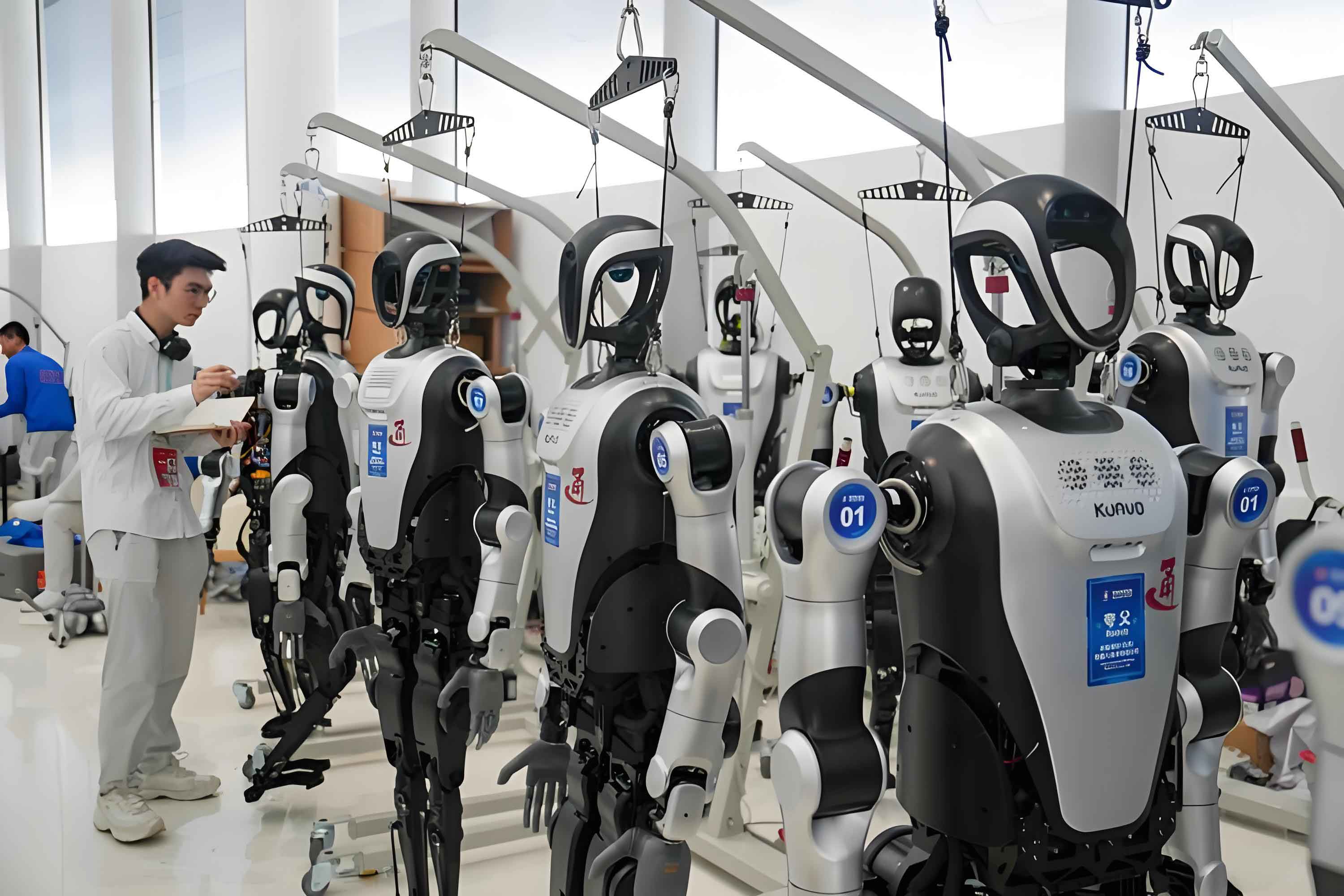
Industry assessments confirm China’s global leadership in home-oriented humanoid robot development, recently highlighted by the International Electrotechnical Commission’s adoption of elderly-care robotics standards drafted under Chinese leadership. “While not immediately imminent, the domestic integration of humanoid robots is no longer a distant prospect,” stated an AI expert. Current deployments in industrial, logistics, and medical sectors demonstrate foundational capabilities, but home environments present unique challenges: “Homes contain children, elderly, pets, and complex obstacles – humanoid robots must safely navigate these dynamic spaces while ensuring reliable human interaction.” Additional barriers include safety certification and ethical considerations. Despite strong governmental support through favorable policies and robust capital investment, widespread household adoption remains a long-term endeavor, though inevitable as technology progresses. Experts project potential mainstream home integration within 5-10 years.
3. Supply Shortages and the Rise of Rental Services
Following Unitree Robotics’ appearance in China’s Spring Festival Gala, global interest in Chinese humanoid robots has surged. When an international tech influencer purchased Unitree’s $68,000 humanoid robot, his unboxing video featuring handshakes and sparring sessions went viral. Despite intense consumer curiosity, limited production capacity and premium pricing create accessibility barriers. E-commerce platforms list humanoid robots ranging from $150 toys to $100,000 professional models. Unitree’s recent product launch featured humanoid robots priced at $13,600 and $90,000 with 45-60 day delivery windows, while high-end models face month-long backorders.
This scarcity has birthed a rental market. Secondary platforms now host humanoid robot lessors offering daily rates from $140 to $1,400, primarily serving commercial events, exhibitions, and performances. CloudMinds Robotics founder Huang Xiaoqing envisions rentals dominating home services: “Humanoid robots represent labor substitution – their compensation model naturally aligns with leasing structures, similar to mobile carriers’ ‘free phone with plan’ approach.”
Simultaneously, manufacturers are developing affordable versions. Tianlian’s humanoid robots for home services enter limited production at $41,500-$69,300, targeting $6,900-$13,800 within three years. Fan Yiwen confirmed customized production for diverse household needs: “We’re tailoring humanoid robots to individual requirements while optimizing functionality.”
4. Driving Down Costs: Learning from the Automotive Industry
The Wall Street Journal identifies commercialization as humanoid robotics’ central challenge – translating lab innovations into economically viable products. MIT Technology Review contrasts approaches: China leverages manufacturing advantages, hosting 65% of global humanoid robot supply chains, while U.S. counterparts focus on venture-funded startups. Chinese confidence stems from demographic pressures – aging populations and labor shortages boost interest in medical and caregiving applications for humanoid robots.
Addressing cost barriers, companies implement customization strategies. Fan Yiwen explained: “By reducing unnecessary flexibility while maintaining core functions, we can lower production expenses and accelerate mass adoption.” High manufacturing costs originate from precision components – sensors, servo motors, and chips – with critical elements like roller screws still dominated by European, American, and Japanese firms, constraining China’s mass-production capacity. However, domestic manufacturers are advancing rapidly, with one company establishing China’s first mass-production line for roller screws already deployed in automotive and humanoid robotics.
China Machinery Industry Federation’s Robotics Deputy Secretary-General Chen Dan emphasized scale as the ultimate solution: “Cost reduction hinges on mass production. Domestic supply chains already support core components for humanoid robots – volume manufacturing will drastically decrease prices.” AI experts recommend multipronged strategies: core component localization, scaled production through automotive-industry-inspired methods, enhanced supply-chain coordination, policy advocacy, and intelligent upgrades through interdisciplinary R&D. These measures could create a “flywheel effect” – significantly reducing costs while accelerating industry growth.