
In the field of precision robotics, the RV reducer plays a critical role due to its high accuracy, low backlash, and excellent rigidity. As a key component of the RV reducer, the cycloidal gear directly influences the overall transmission performance. Surface roughness, as an essential aspect of surface integrity, affects the wear resistance, fatigue life, and operational efficiency of the gear. Therefore, understanding and optimizing the grinding parameters for cycloidal gears is vital for enhancing the quality of RV reducers. In this study, I investigate the effects of various grinding parameters on the surface roughness of cycloidal gears made from 20CrMnTi steel, using an orthogonal experimental approach. The goal is to establish a predictive model and provide insights for practical applications in manufacturing RV reducers.
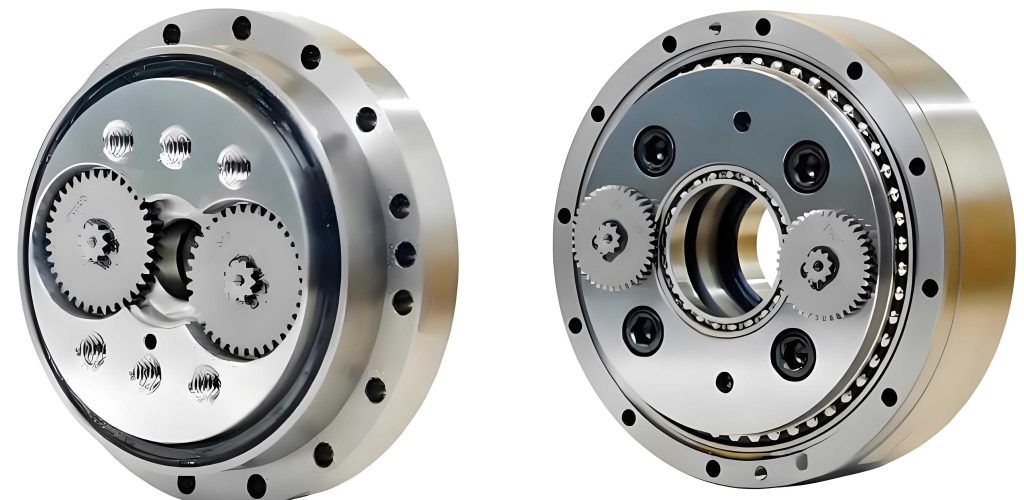
The RV reducer is widely used in robotic joints, and its performance hinges on the precision of the cycloidal gear. Grinding is a common finishing process for gears, and surface roughness is a key metric for evaluating quality. Previous research has focused on gear profiling and optimization, but detailed studies on grinding parameters for cycloidal gears in RV reducers are limited. This study aims to fill that gap by analyzing factors such as wheel speed, feed rate, grinding depth, and wheel grit size. I employ a forming grinding method, which is known for achieving high accuracy, and conduct experiments using a universal cylindrical grinding machine. The results will contribute to better manufacturing practices for RV reducers.
The material used for the cycloidal gear is 20CrMnTi steel, a common choice for high-strength applications. Its chemical composition and mechanical properties are summarized in Table 1. The gear has specific geometric parameters, as shown in Table 2, which are typical for RV reducers. The grinding experiments are performed on a M1432B-1000 grinding machine, with a single-crystal alumina wheel. The grinding mode is inverse grinding, and a water-based emulsion is used for cooling. To systematically study the effects, I design an orthogonal experiment using an L16 array, with four factors at four levels each: grinding depth (a_p), wheel rotational speed (n), feed rate (v_f), and wheel grit size (M). The factors and levels are detailed in Table 3.
| Element | Content | Element | Content |
|---|---|---|---|
| C | 0.17–0.23 | S | ≤0.035 |
| Mn | 0.80–1.10 | P | ≤0.035 |
| Ti | 0.04–0.10 | Ni | ≤0.030 |
| Si | 0.17–0.37 | Cu | ≤0.030 |
| Cr | 1.00–1.30 |
| Property | Value | Property | Value |
|---|---|---|---|
| Tensile Strength (MPa) | 1080 | Hardness (HB) | 217 |
| Yield Strength (MPa) | 835 | Impact Energy (J) | ≥55 |
| Elongation (%) | ≥10 | Impact Toughness (J/cm²) | ≥69 |
| Reduction of Area (%) | ≥45 |
| Level | Grinding Depth a_p (mm) | Wheel Speed n (r/min) | Feed Rate v_f (m/min) | Wheel Grit M (mesh) |
|---|---|---|---|---|
| 1 | 0.02 | 2000 | 1.2 | 60 |
| 2 | 0.05 | 2500 | 1.8 | 100 |
| 3 | 0.08 | 2800 | 2.4 | 150 |
| 4 | 0.12 | 3200 | 2.8 | 220 |
The experimental setup involves grinding the cycloidal gear teeth using the forming method. After each trial, surface roughness (R_a) is measured using a high-precision surface structure measuring instrument. Five locations along the axial direction are sampled, with a sampling length of 1.0 mm and an evaluation length of 5.0 mm. The orthogonal experiment design and results are shown in Table 4, which includes 16 trials with the measured R_a values. From this data, I analyze the influence of each factor on surface roughness. The range analysis indicates that wheel grit size has the most significant effect, followed by wheel speed, grinding depth, and feed rate. This highlights the importance of wheel selection in grinding processes for RV reducers.
| Trial No. | a_p (mm) | n (r/min) | v_f (m/min) | M (mesh) | R_a (μm) |
|---|---|---|---|---|---|
| 1 | 0.02 | 2000 | 1.2 | 60 | 0.55 |
| 2 | 0.02 | 2500 | 1.8 | 100 | 0.38 |
| 3 | 0.02 | 2800 | 2.4 | 150 | 0.24 |
| 4 | 0.02 | 3200 | 2.8 | 220 | 0.29 |
| 5 | 0.05 | 2000 | 1.8 | 150 | 0.233 |
| 6 | 0.05 | 2500 | 1.2 | 220 | 0.31 |
| 7 | 0.05 | 2800 | 2.8 | 60 | 0.512 |
| 8 | 0.05 | 3200 | 2.4 | 100 | 0.38 |
| 9 | 0.08 | 2000 | 2.4 | 220 | 0.315 |
| 10 | 0.08 | 2500 | 2.8 | 150 | 0.24 |
| 11 | 0.08 | 2800 | 1.2 | 100 | 0.36 |
| 12 | 0.08 | 3200 | 1.8 | 60 | 0.51 |
| 13 | 0.12 | 2000 | 2.8 | 100 | 0.395 |
| 14 | 0.12 | 2500 | 2.4 | 60 | 0.53 |
| 15 | 0.12 | 2800 | 1.8 | 220 | 0.33 |
| 16 | 0.12 | 3200 | 1.2 | 150 | 0.23 |
To quantify the effects, I calculate the mean values (k) and ranges (R) for each factor, as shown in Table 5. The range analysis confirms that wheel grit size (M) has the largest range (0.2905 μm), indicating its dominant influence on surface roughness in RV reducer gears. Wheel speed (n) has a range of 0.02 μm, grinding depth (a_p) 0.016 μm, and feed rate (v_f) 0.007 μm. This suggests that optimizing wheel grit is crucial for achieving low surface roughness in cycloidal gears for RV reducers.
| Factor | k1 | k2 | k3 | k4 | Range R |
|---|---|---|---|---|---|
| a_p (mm) | 0.365 | 0.358 | 0.356 | 0.372 | 0.016 |
| n (r/min) | 0.3725 | 0.365 | 0.3605 | 0.3525 | 0.02 |
| v_f (m/min) | 0.3625 | 0.3625 | 0.3662 | 0.3592 | 0.007 |
| M (mesh) | 0.5255 | 0.3787 | 0.235 | 0.3112 | 0.2905 |
Based on the orthogonal results, I analyze the individual effects of each factor on surface roughness. For wheel speed, as n increases from 2000 to 3200 r/min, R_a generally decreases. This is because higher wheel speed reduces the friction between the wheel and gear surface, leading to finer grinding marks. The relationship can be expressed as: $$R_a \propto n^{-\beta}$$ where β is a positive constant. For feed rate, an increase in v_f tends to increase R_a slightly, due to fewer grinding grains per unit area and increased machine vibration. The effect is minimal, as shown by the small range. For grinding depth, a larger a_p increases R_a, as it raises the cutting thickness and plastic deformation. However, the impact is moderate in practical grinding where depth is applied incrementally. For wheel grit size, finer grits (higher mesh numbers) significantly reduce R_a, because more grains participate in grinding, resulting in smoother surfaces. This is critical for RV reducers requiring high precision.
To model the surface roughness, I assume a power-law relationship: $$R_a = K v_f^\alpha n^\beta a_p^\gamma$$ where K, α, β, and γ are constants determined through regression analysis. Using the data from trials with a wheel grit of 150 mesh (which showed the best performance), I perform a multiple linear regression on the logarithmic form of the equation. The resulting predictive model for surface roughness in cycloidal gears of RV reducers is: $$R_a = 0.4892 v_f^{0.0087} n^{-0.0276} a_p^{0.0251}$$ This model is valid within the experimental range of factors. The low exponents for v_f and a_p indicate their weak influence, while the negative exponent for n confirms its beneficial effect. The constant K reflects the baseline roughness for the given wheel grit.
To validate the model, I compare predicted R_a values with measured ones from additional tests, as shown in Table 6. The relative errors are within 5.1%, demonstrating the model’s accuracy. For instance, at n=3200 r/min, v_f=1.2 m/min, and a_p=0.12 mm, the predicted R_a is 0.23 μm, matching the experimental value. This confirms that the model can guide parameter selection for grinding cycloidal gears in RV reducers.
| Test No. | Predicted R_a (μm) | Measured R_a (μm) | Relative Error (%) |
|---|---|---|---|
| 1 | 0.4691 | 0.4567 | 2.7 |
| 2 | 0.4259 | 0.4155 | 2.45 |
| 3 | 0.3879 | 0.3988 | 2.73 |
| 4 | 0.5162 | 0.5063 | 1.95 |
| 5 | 0.4877 | 0.4982 | 2.1 |
| 6 | 0.3698 | 0.3897 | 5.1 |
The discussion delves into the mechanisms behind these effects. In grinding for RV reducers, wheel grit size is paramount because it determines the number of active cutting edges. Finer grits, such as 150 mesh, produce lower roughness by reducing the groove depth on the gear surface. Wheel speed enhances cutting efficiency and heat dissipation, which minimizes thermal damage and improves finish. Feed rate has a negligible impact, as the grinding process compensates for variations. Grinding depth should be controlled to avoid excessive force and deformation. These insights align with grinding theory, where material removal and surface generation are influenced by kinematic and dynamic factors. For RV reducers, achieving low surface roughness on cycloidal gears can enhance meshing performance and reduce noise, contributing to the overall reliability of the system.
Furthermore, the predictive model offers a practical tool for optimizing grinding parameters. By setting desired R_a values, manufacturers can solve for n, v_f, and a_p within constraints. For example, to achieve R_a below 0.25 μm for high-precision RV reducers, using a 150-mesh wheel at n=3200 r/min, v_f=1.2 m/min, and a_p=0.12 mm is recommended. This combination balances productivity and quality. The model’s robustness is supported by the low errors, making it applicable in industrial settings for RV reducer production.
In conclusion, this experimental study on grinding surface roughness of cycloidal gears in RV reducers reveals that wheel grit size is the most influential factor, followed by wheel speed, grinding depth, and feed rate. The orthogonal experiment provides a systematic analysis, and the derived predictive model, $$R_a = 0.4892 v_f^{0.0087} n^{-0.0276} a_p^{0.0251}$$, accurately estimates roughness for a 150-mesh wheel. The findings emphasize the importance of selecting fine-grit wheels and higher wheel speeds to improve surface quality. For RV reducers used in robotics, these optimizations can lead to better performance and longevity. Future work could explore other materials or advanced grinding techniques for further enhancements in RV reducer manufacturing.
The implications of this research extend to the broader context of precision engineering. As demand for high-performance RV reducers grows, understanding grinding processes becomes essential. This study contributes to that knowledge by quantifying parameter effects and offering a validated model. By implementing the recommended parameters, manufacturers can produce cycloidal gears with superior surface integrity, ultimately advancing the quality of RV reducers in robotic applications. The integration of experimental data and analytical models serves as a foundation for continuous improvement in gear grinding technology.