
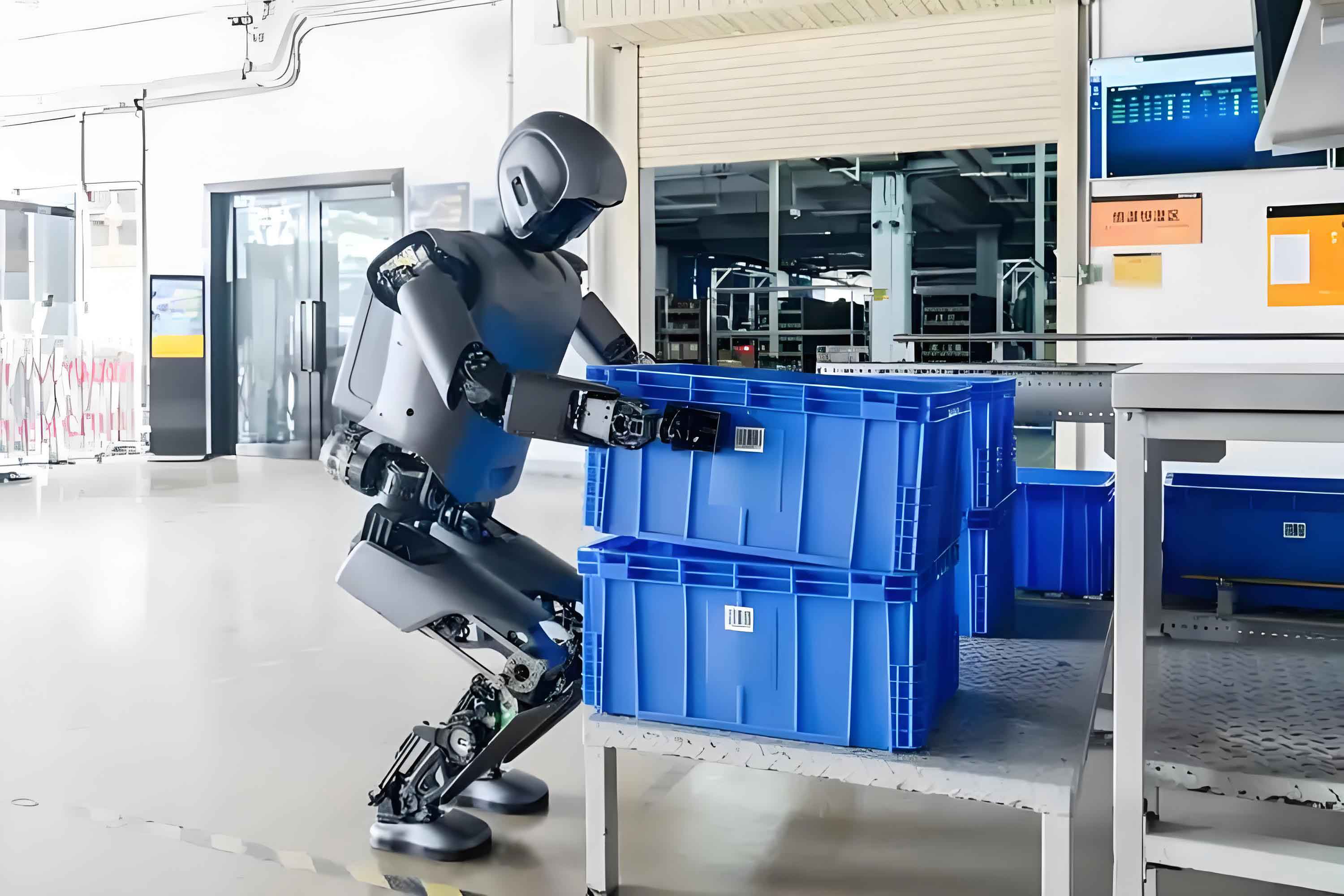
Humanoid robots from Unitree Technology danced gracefully on the Spring Festival Gala stage, while Tesla’s Optimus demonstrated a complete car factory screw assembly process. These agile performances have not only captured global attention but also positioned humanoid robots as prime targets for industrial investment. Automotive parts enterprises, leveraging their inherent technical advantages, are rapidly securing strategic positions to capture market opportunities in this emerging field.
1. Strategic Positioning: Auto Parts Manufacturers Seize Opportunities
According to industry data, over 20 A-share auto parts companies have announced entries into the robot Industry through strategic partnerships, project investments, or technology licensing agreements, with cumulative investments exceeding ¥10 billion. This surge reflects a strategic push to establish early dominance before the anticipated industrial boom. Fuling Precision exemplifies this trend: after signing a humanoid robot application agreement with Zhiyuan Robotics in October 2023, it accelerated its robot Industry initiatives. By February 2024, the company had established a joint venture for humanoid robotics and announced a ¥110 million investment in Mianyang to build a research and production base for robotic smart electric joint modules.
Further consolidating its position, Fuling Precision and subsidiary Jiangxi Sheng Hua partnered with CATL on March 10, 2025, expanding collaboration into robotics joints and incremental components. Similarly, Zhongding Sealing Parts disclosed plans on March 12 to invest ¥1 billion in a smart robot R&D center, following earlier collaborations with Effort and Zhongqing Robotics for embodied intelligence and joint production. Wuzhou Xinchun Group announced a ¥1.5 billion project on February 28 to manufacture planetary roller screws, micro ball screws, and specialized bearings for robots, having already delivered roller screw samples to key clients in 2023.
2. Core Advantages: Shared Technologies and Enhanced Reliability
Auto parts suppliers bring three critical strengths to the robot Industry: precision manufacturing expertise, robust supply chain capabilities, and proven technology adaptability. A Shandong-based auto parts executive emphasized that automotive-grade manufacturing standards for components like reducers and screws seamlessly meet robotic requirements. This cross-industry compatibility accelerates development cycles while ensuring product durability.
The established supply chain networks of auto parts firms provide another strategic edge. Long-term collaborations with automotive OEMs have honed their ability to manage mass production and supply chain synchronization—a vital advantage for scaling robot component manufacturing. Industry analysts cite Sanhua Intelligent Controls as a prime example: its position in Tesla’s automotive supply chain enabled rapid entry into the humanoid robot actuator market. The integration of these capabilities signals a transformative phase for the global robot Industry landscape.
Technology migration further amplifies their competitiveness. Wuzhou Xinchun’s planetary roller screws, originally designed for automotive parking and steering systems, now target robotic linear joints. Leveraging its bearing manufacturing expertise, the company aims to supply complete actuator systems for robotic limbs. Such adaptations highlight how automotive precision engineering can reduce costs and accelerate innovation in the robot Industry.
3. Industrialization Pathway: Scaling Production and Application Validation
The auto parts sector’s scale and efficiency are poised to overcome the robot Industry’s industrialization hurdles. “All products must eventually address cost efficiency. Auto parts manufacturers can achieve economies of scale to make robots commercially viable,” noted an executive at an A-share auto parts firm. This industrialization drive is particularly relevant for manufacturing, where demand for advanced robotic capabilities is surging.
Industrial environments serve as critical testing grounds for refining robotic reliability before domestic deployment. A Sichuan-based equipment manufacturer observed: “If conventional robots handle ‘dirty and laborious’ tasks, AI-powered robots will execute ‘precision work.’” Complex factory scenarios allow iterative improvements in stability and safety—essential for future consumer applications. The fusion of automotive methodologies with robotic innovation is resolving core challenges like functional inconsistency, potentially establishing China’s leadership in “precision hardware + intelligent software” for the global robot Industry.
Fuling Precision Vice Chairman Li Pengcheng summarized the synergy: “Our confidence stems from decades of validated expertise in precision manufacturing, electromechanical integration, and customer ecosystems. This foundation provides indispensable support for humanoid robot industrialization.” As auto parts giants continue redirecting capital and capabilities toward robotics, their cross-industry convergence may redefine production benchmarks and cost structures across the robot Industry.