
As an observer deeply embedded in the field of advanced robotics, I am witnessing a transformative period where the development and deployment of humanoid robot systems are accelerating at an unprecedented pace. The convergence of policy support, technological innovation, and market demand is creating a fertile ground for the evolution of humanoid robot platforms. This article delves into the recent pivotal developments in standardization and application pilots, which are set to fundamentally shape the trajectory of the humanoid robot industry. The core thesis is that robust, forward-looking standards and targeted application validation are the twin pillars upon which the reliable and widespread adoption of humanoid robot technology will be built.
The imperative for comprehensive standards in humanoid robot technology cannot be overstated. A humanoid robot, by its very design aiming to operate in human-centric environments, presents unparalleled challenges in perception, decision-making, locomotion, and manipulation. The absence of unified technical and management standards creates fragmentation, hinders interoperability, increases development costs, and poses risks to safety and reliability. Therefore, the recent strategic push to establish a layered standards ecosystem—encompassing national standards, industry standards, and application-specific specifications—marks a critical inflection point. This framework is essential for ensuring that every humanoid robot developed meets baseline requirements for performance, safety, and quality, thereby fostering trust and enabling scalable commercialization.
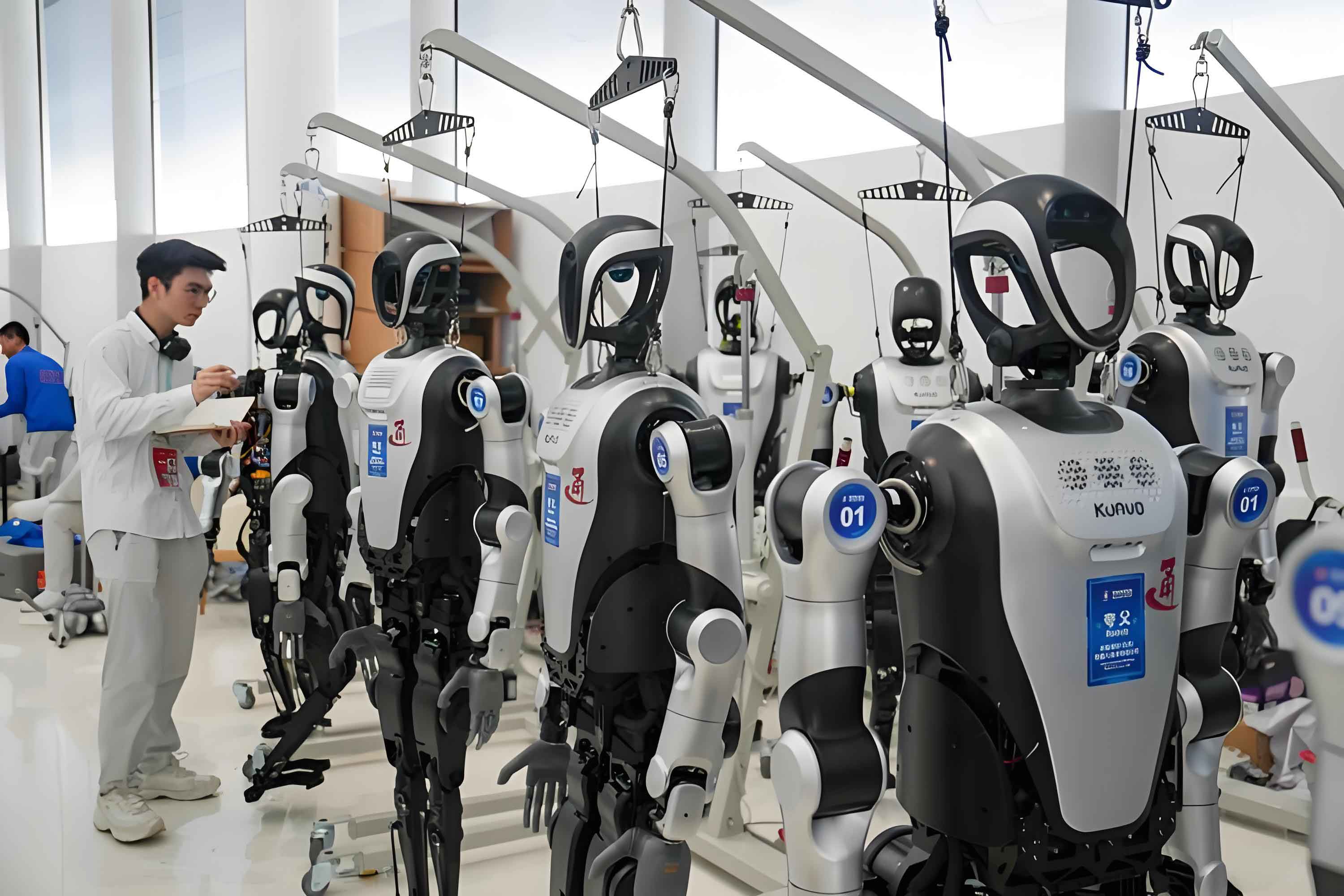
Let us first examine the landscape of foundational standards currently under development. The focus is on creating a coherent architecture that addresses the humanoid robot as a complete cyber-physical system. This involves standards for the robot’s “brain” (perception, planning) and its “body” (control, actuation). A series of national standards, which serve as the highest-level technical guidelines, have been formally initiated. These standards provide the fundamental technical requirements for humanoid robot systems. The table below summarizes these key national standard projects currently in the drafting phase.
| Standard Project Code | Approval Date | Standard Title | Nature | Category |
|---|---|---|---|---|
| 20251070-T-604 | 2025-04-30 | Humanoid Robot Technical Requirements – Part 1: General | Recommended | Basic |
| 20250856-T-604 | 2025-03-27 | Humanoid Robot Technical Requirements – Part 2: Environmental Perception | Recommended | Basic |
| 20250860-T-604 | 2025-03-27 | Humanoid Robot Technical Requirements – Part 3: Decision Planning | Recommended | Basic |
| 20250858-T-604 | 2025-03-27 | Humanoid Robot Technical Requirements – Part 4: Motion Control | Recommended | Basic |
| 20250863-T-604 | 2025-03-27 | Humanoid Robot Technical Requirements – Part 5: Operational Tasks | Recommended | Basic |
| 20250862-T-604 | 2025-03-27 | Humanoid Robot – Technical Specification for Simulation Testing Platforms | Recommended | Basic |
This suite of standards forms the backbone for evaluating any humanoid robot’s core competencies. For instance, the environmental perception standard for a humanoid robot will define metrics for sensor fusion, object recognition accuracy in cluttered spaces, and real-time mapping capabilities. The motion control standard will establish benchmarks for stability, gait efficiency, and dynamic response. We can conceptualize the overall performance score (P) of a humanoid robot as a weighted function of its compliance with these foundational standards:
$$ P = \alpha_p \cdot S_p + \alpha_c \cdot S_c + \alpha_m \cdot S_m + \alpha_o \cdot S_o + \alpha_g \cdot S_g $$
Where:
$S_p$ = Score for Environmental Perception (from Part 2)
$S_c$ = Score for Decision Planning (from Part 3)
$S_m$ = Score for Motion Control (from Part 4)
$S_o$ = Score for Operational Tasks (from Part 5)
$S_g$ = Score for General requirements (from Part 1)
$\alpha_i$ = Weight coefficients representing the relative importance of each capability domain for a specific application of the humanoid robot, with $\sum \alpha_i = 1$.
Complementing these high-level national standards is a more immediate layer of industry standards focused on critical infrastructure and components. A recent industry standards plan specifically targets the future industry of humanoid robotics. It outlines five key industry standard development projects, split between management and product standards. This proactive move aims to address the urgent needs for industrialization. The management standards will govern the ecosystem necessary to develop a capable humanoid robot, such as specifications for constructing standardized training grounds and requirements for managing the vast training datasets essential for AI development. The product standards zoom in on core hardware, targeting the electromechanical actuator units (electric drive integrated joints) and dexterous hands (end-effectors) that are the fundamental building blocks of a humanoid robot’s physical embodiment.
The importance of component-level standards cannot be understated for the humanoid robot supply chain. For example, the performance of an electric drive integrated joint, which combines motor, reducer, and controller, directly dictates the torque, speed, and efficiency of a humanoid robot’s limb movements. A standard technical specification ensures interoperability and defines key performance indicators (KPIs). We can model the ideal torque-speed characteristic of such a joint for a humanoid robot as:
$$ \tau(\omega) = \tau_{stall} – \frac{\tau_{stall} – \tau_{nom}}{\omega_{nom}} \cdot \omega \quad \text{for } 0 \le \omega \le \omega_{nom} $$
Where $\tau$ is the output torque, $\omega$ is the rotational speed, $\tau_{stall}$ is the stall torque, $\tau_{nom}$ is the nominal continuous torque, and $\omega_{nom}$ is the nominal speed. Standardization would define acceptable ranges and testing methods for these parameters across different payload classes of humanoid robot.
Perhaps the most innovative among these new industry standards is the one dedicated to “Intelligent Capability Grading” for humanoid robots. This management standard moves beyond pure hardware specs to evaluate the integrated AI and cognitive abilities of a humanoid robot system. I propose a multi-dimensional grading framework that could be encapsulated in a formula. The Intelligent Capability Index (ICI) for a humanoid robot could be computed as:
$$ ICI = \frac{1}{N} \sum_{j=1}^{N} \left( \beta_j \cdot \tanh\left(\frac{C_j}{C_{j}^{max}}\right) \right) $$
Where:
$N$ = Number of capability dimensions (e.g., adaptive learning, human-robot interaction complexity, task autonomy level).
$C_j$ = Measured performance of the humanoid robot in dimension $j$.
$C_{j}^{max}$ = Benchmark maximum performance for dimension $j$.
$\beta_j$ = Normalized weight for dimension $j$, with $\sum \beta_j = N$.
The hyperbolic tangent function ($\tanh$) normalizes scores between -1 and 1, representing a saturation effect where extreme performance gains yield diminishing returns to the overall grade. This formula highlights the need for a balanced, holistic assessment of a humanoid robot’s intelligence.
While foundational and component standards are crucial, the true test of any humanoid robot technology lies in its real-world application and societal benefit. This brings us to the second major development: the launch of a focused pilot program for intelligent eldercare service robots. This initiative represents a strategic and empathetic application of robotics technology, targeting one of the most pressing societal challenges globally. The pilot, spanning three years, is designed to bridge the gap between research prototypes and commercially viable products through a “pairing and tackling” model that teams developers with end-user organizations.
The core objective is to develop and validate humanoid robot and other robotic solutions that can genuinely augment elderly care. The target scenarios are meticulously chosen to address critical gaps: care for individuals with disabilities or dementia, emotional companionship, health monitoring and promotion, smart environment interaction, and daily living assistance. A successful humanoid robot in this domain must be more than a tool; it must be a safe, reliable, and easy-to-use companion or assistant. The pilot mandates an application verification cycle of no less than six months, ensuring that products undergo rigorous, long-term testing in authentic settings like private homes, community centers, and residential care facilities. This iterative process of deployment, feedback, and upgrade is vital for refining the humanoid robot’s design and software.
To systematize the evaluation within this pilot, we can define a Product-Scenario Fit Matrix. The table below maps key eldercare scenarios against the required capabilities of a service robot, with a particular focus on the potential role of a humanoid robot form factor due to its inherent adaptability in human spaces.
| Application Scenario | Primary Tasks | Critical Capabilities for a Humanoid Robot | Key Performance Metrics |
|---|---|---|---|
| Disability & Dementia Care | Mobility support, medication reminder, anomaly detection (e.g., falls), routine guidance. | Gentle physical interaction, robust obstacle avoidance, persistent patient-specific memory, intuitive alarm systems. | Assistance success rate, false alarm rate, user comfort score, response time to anomalies. |
| Emotional Companionship | Conversational engagement, reminiscence therapy, entertainment provision (music, games). | Natural language processing, affective computing (emotion recognition & response), personalized interaction models. | Conversation coherence score, user mood improvement index, daily engagement duration. |
| Health Promotion | Guiding light exercises, monitoring vital signs (via non-contact sensors), encouraging healthy habits. | Demonstration of complex motions, sensor fusion for health data, persuasive dialogue algorithms. | Exercise adherence rate, accuracy of vital sign estimation, habit change correlation. |
| Daily Living Assistance | Fetching objects, preparing simple meals, basic housekeeping, environment control. | Dexterous manipulation, navigation in confined spaces, task planning for compound activities. | Task completion rate, time per task, object handling success rate, spatial efficiency. |
A fundamental challenge in deploying a humanoid robot for such sensitive tasks is ensuring safety and economic viability. Therefore, the pilot explicitly includes the development of evaluation standards focusing on safety, reliability, age-friendly design (adaptability), and cost-effectiveness. We can formulate a comprehensive Suitability Score (SS) for an eldercare humanoid robot as a constrained optimization problem. The goal is to maximize functionality while adhering to strict safety and cost boundaries:
$$ \text{Maximize: } F(\mathbf{x}) = \sum_{s \in S} \gamma_s \cdot f_s(\mathbf{x}) $$
$$ \text{Subject to: } G_{safe}(\mathbf{x}) \ge \Theta_{safe}, \quad G_{rel}(\mathbf{x}) \ge \Theta_{rel}, \quad C_{total}(\mathbf{x}) \le \Theta_{cost} $$
Where:
$\mathbf{x}$ is a vector representing the design and operational parameters of the humanoid robot.
$S$ is the set of service scenarios (from Table 2).
$f_s(\mathbf{x})$ is the performance function of the humanoid robot in scenario $s$.
$\gamma_s$ is the importance weight for scenario $s$.
$G_{safe}$ and $G_{rel}$ are aggregate safety and reliability functions, which must exceed thresholds $\Theta_{safe}$ and $\Theta_{rel}$.
$C_{total}$ is the total lifecycle cost, which must not exceed the threshold $\Theta_{cost}$.
The synergy between the broad technical standardization for humanoid robots and this focused eldercare pilot is profound. The national standards on perception, planning, and control provide the technical bedrock that ensures any humanoid robot platform entering the pilot has a baseline level of competence. The industry standards on training data management and intelligent grading ensure these robots can be effectively developed and fairly compared. The pilot then serves as a demanding crucible, testing these standardized platforms in the complex, unpredictable, and ethically sensitive real world. Feedback from the pilot will inevitably flow back into the standard development process, leading to revisions and new standards that are more attuned to practical, humane applications. This creates a virtuous cycle of innovation, validation, and standardization.
Looking forward, the implications of these developments are vast. For the industry, a clear and comprehensive standard system reduces market uncertainty, attracts investment, and accelerates innovation by providing common technical targets. It lowers barriers for new entrants specializing in components like the all-important dexterous hand for a humanoid robot, knowing there are defined interfaces and performance benchmarks. For end-users, particularly in sectors like eldercare, it promises the arrival of assistive technology that is safer, more reliable, and ultimately more trustworthy. The vision is a future where a humanoid robot can seamlessly integrate into domestic and professional environments, performing a spectrum of tasks from the logistical to the companionable.
In conclusion, we are at the dawn of a new era for humanoid robotics. The concurrent advancement of a multi-layered standards framework and purpose-driven application pilots represents a mature, systemic approach to technology governance and deployment. The development of every humanoid robot will increasingly be guided by these technical and evaluative benchmarks. The ultimate success of the humanoid robot as a transformative technology hinges not just on brilliant engineering in isolation, but on this coordinated ecosystem of standards that ensure quality, safety, and interoperability, coupled with empathetic application testing that grounds innovation in genuine human need. The journey of the humanoid robot from laboratory marvel to societal asset is being paved by these critical, collaborative efforts in standardization and validation.