
As someone who has dedicated decades to the advancement of robotics, I find myself at a fascinating crossroads. The world is awakening to the potential of humanoid robots, not as mere figments of imagination, but as tangible entities stepping into our reality. The recent surge of public interest, sparked by viral demonstrations, is just the surface ripple of a deep technological current. However, amidst this excitement, a critical question persists for industry insiders like myself: are humanoid robots the vanguard of a new era, or a fleeting spectacle? The core challenge is not merely bridging a technological gap, but navigating the profound complexities of safety, ethics, and practical integration into the fabric of society.
My perspective on the future of humanoid robots is fundamentally optimistic. The trajectory mirrors that of other transformative technologies, such as electric vehicles, evolving from non-existence to functional prototypes and now striving for refinement and widespread adoption. The convergence of artificial intelligence, big data, and advanced sensor technologies has been the catalyst. The humanoid robot is no longer confined to laboratories; it is beginning to find preliminary roles in various sectors, attracting significant global investment and innovation. Yet, this very progress is accompanied by a deep-seated concern. The three formidable “hard nuts to crack” for the humanoid robot industry—safety, ethics, and morality—demand urgent and collective attention.
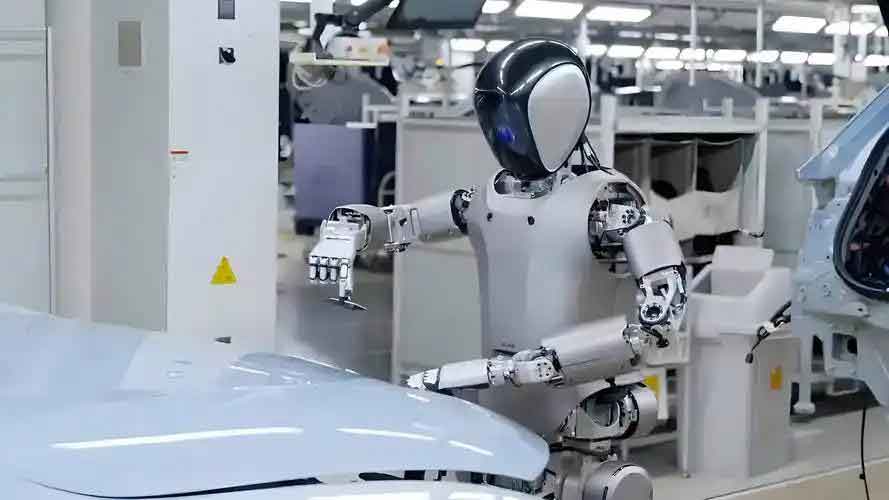
The imperative for safety is paramount. When considering deployment, every humanoid robot introduces a set of potential hazards. In an industrial setting, a humanoid robot weighing dozens of kilograms losing balance and collapsing could cause severe damage or injury. In the domestic sphere, the introduction of a humanoid robot raises acute questions about data privacy and continuous surveillance. These are not just engineering puzzles; they are socio-technical dilemmas requiring rigorous ethical scrutiny. The absence of robust, unified industry standards exacerbates these risks, leading to products of inconsistent quality and reliability. In my view, the future must involve a certification regime for humanoid robots. Much like automobiles require safety certifications, a humanoid robot should not be deployed without meeting stringent, standardized criteria. This “license to operate” would be a cornerstone of trust, involving collaborative efforts from governmental bodies, enterprises, and civil society.
The development of such standards, however, should not be misconstrued as a limitation on innovation. On the contrary, it is the essential foundation for sustainable growth. The unresolved issues of safety, reliability, consistency, and traceability form a fog that obscures the path to genuine utility. To answer the consumer’s inevitable question—”How do you prove this humanoid robot is safe?”—the industry needs more than marketing claims; it needs objectively verifiable, standardized proof. Therefore, establishing internationally aligned standards that meet industrial needs is a critical task at this juncture. My advocacy has consistently emphasized that only by solving these foundational issues can the humanoid robot truly enter ToB application scenarios and perform meaningful work. The global race in humanoid robot development necessitates that we actively participate in shaping international standards, ensuring our technologies can integrate and compete globally.
The process of standard-setting is inherently iterative and longitudinal. It requires the active participation of numerous companies deploying their humanoid robots in diverse scenarios. Through widespread application, latent problems and safety vulnerabilities surface, allowing for systematic resolution. The current phase should encourage a百花齐放 (a hundred flowers bloom) approach, providing various enterprises the space and time to develop and launch different types of humanoid robots. This diversity is crucial for stress-testing concepts and applications. The table below summarizes primary risk categories across different deployment contexts for humanoid robots, illustrating the scope of challenges that standards must address.
| Application Domain | Primary Safety & Ethical Risks | Key Mitigation Factors | Standardization Priority |
|---|---|---|---|
| Industrial Manufacturing | Physical impact/collision, uncontrolled kinetic energy release, task failure causing production halt. | Dynamic stability algorithms, force/torque limiting controls, fail-safe emergency stops. | High (Immediate) |
| Domestic & Personal Assistance | Data privacy intrusion, unauthorized surveillance, physical harm to residents (e.g., tripping), ethical treatment. | End-to-end data encryption, explicit user consent protocols, compliant physical design, ethical operation frameworks. | High (Immediate) |
| Healthcare & Elderly Care | Injury due to improper physical assistance (lifting, supporting), hygiene concerns, psychological impact, consent from vulnerable individuals. | Advanced haptic sensing, adaptive load control, sanitization protocols, empathetic AI interaction models. | Very High (Critical) |
| Public Spaces & Logistics | Navigation failures in crowded areas, public safety incidents, cybersecurity threats leading to malicious control. | Robust SLAM (Simultaneous Localization and Mapping), crowd-aware path planning, secure communication protocols. | Medium-High |
Beyond safety, the true acceleration of the humanoid robot industry hinges on unlocking substantial application markets. While the journey into every home may be longer, entry into ToB (Business-to-Business) sectors is imminent. My analysis suggests a potential inflection point. Once core technological hurdles and the aforementioned safety-ethical-moral trilemma are adequately addressed, the humanoid robot industry could experience exponential growth. A simple model for market penetration can be conceptualized using a logistic growth function, where the adoption rate depends on solving these foundational issues.
Let $N(t)$ represent the cumulative number of humanoid robots deployed globally at time $t$. The growth can be modeled as:
$$ \frac{dN}{dt} = r N \left(1 – \frac{N}{K}\right) – \beta S(t) $$
Where:
$r$ is the intrinsic growth rate driven by technological advancement,
$K$ is the carrying capacity or maximum potential market size,
$S(t)$ represents the unresolved safety and ethical risk factor, which impedes growth,
$\beta$ is a damping coefficient.
Only when $S(t)$ is minimized through standards and technological fixes does the growth approach its theoretical maximum, governed by $\frac{dN}{dt} \approx r N (1 – \frac{N}{K})$. Projections based on analogous tech diffusion curves suggest a vast potential scale in the coming decades.
The process of identifying and validating these applications is active. From the earliest design stages, collaboration is key to ensuring the humanoid robot is conceived with viable use cases in mind. This involves deep dives into potential scenarios—from maintenance in infrastructure tunnels to roles in complex assembly lines—to derive design inspiration and functional requirements. Success stories already exist where focused collaboration has enabled a humanoid robot to secure roles such as maintenance inspectors in large-scale transport systems, demonstrating the “small incision” strategy to enable broader cooperation. Establishing dedicated centers for demonstration and transaction can further catalyze this, creating hubs where enterprises and potential clients directly interface, accelerating the transition from R&D to application.
One of the most promising yet demanding frontiers for humanoid robots is the domain of smart eldercare. This represents a blue-ocean market of immense scale and societal necessity. However, no humanoid robot has yet been meaningfully applied here, primarily due to elevated technical and safety thresholds. The task differs fundamentally from industrial “screw tightening.” Assisting the elderly involves close physical interaction with individuals whose physical capabilities are often fragile. The simple act of helping a person stand requires the humanoid robot to solve a complex real-time problem involving unstable center of mass, variable weight distribution, and unpredictable human response. The required upgrade is holistic:
The force interaction model for safe physical assistance can be described by extending the equations of motion. For a humanoid robot assisting a human, the combined system’s dynamics must be controlled to prevent injury. Consider the robot applying a force $\vec{F}_r$ at a contact point. The net effect on the human (modeled as a multi-link system) must keep joint torques $\vec{\tau}_h$ within safe biological limits:
$$ \vec{\tau}_h = J_h^T \vec{F}_r + \vec{\tau}_{gravity, h} + … $$
The control law for the humanoid robot must ensure:
$$ |\tau_{h, i}| < \tau_{safe, i} \quad \forall \text{ joints } i $$
and maintain overall stability:
$$ \sum \vec{F} = m \vec{a}_{com} = 0 \quad \text{(for quasi-static case)} $$
$$ \sum \vec{\tau} = I \vec{\alpha} = 0 $$
Achieving this requires breakthroughs in hardware (compliant actuators), software (real-time adaptive control), and AI (intention prediction).
The following table contrasts the technical specifications required for an industrial humanoid robot versus one designed for elderly care, highlighting the paradigm shift.
| Technical Parameter | Industrial Humanoid Robot (e.g., Assembly) | Elderly Care Humanoid Robot (e.g., Physical Assistance) |
|---|---|---|
| Primary Force Profile | High, repetitive, precise forces for tool handling. | Variable, gentle, adaptive forces with high compliance. |
| Interaction Sensitivity | Low (works in structured, human-free zones). | Extremely High (direct physical contact with fragile humans). |
| Key Sensors | Vision for part recognition, torque sensors for assembly. | Tactile/shear force sensors, bio-sign monitors, nuanced vision for emotional state. |
| AI Core Task | Path planning, object manipulation, error detection. | Social cue recognition, intention prediction, empathetic dialogue, fall risk assessment. |
| Safety Standard Focus | Collision avoidance, functional safety (IEC 61508). | Physical interaction safety (ISO 13482 extensions), data privacy (GDPR-like), medical device regulations. |
| Failure Consequence | Production downtime, equipment damage. | Physical injury, psychological trauma, loss of trust. |
“It requires time.” This is a refrain I find myself repeating often. Technological maturation requires time. The establishment of comprehensive, living standards requires time. The nurturing of a robust ecosystem—encompassing developers, manufacturers, regulators, and end-users—requires time. The development of the humanoid robot industry is akin to a grand, slowly unfurling canvas. Each breakthrough in actuator design, each refined line in a safety protocol, each successful pilot in a new application adds a stroke of color and detail. The collective efforts of researchers, engineers, ethicists, and policymakers are gradually rendering this canvas more vibrant and coherent.
In conclusion, the path forward for humanoid robots is one of balanced ambition and prudent caution. The potential is undeniably vast, poised to touch sectors from manufacturing to intimate care. Yet, the gateway to this future is guarded by the imperative to instill trust through demonstrable safety and ethical integrity. The proliferation of the humanoid robot depends on our collective willingness to invest the necessary time and intellectual resources into building the frameworks that will allow it to serve humanity reliably and responsibly. The journey has accelerated, but patience and meticulous collaboration remain our most valuable assets as we guide the humanoid robot from laboratory marvel to a trusted partner in progress.