
As we advance further into the 21st century, the concept of high-quality development is increasingly intertwined with technological frontier exploration. Among the most compelling and transformative frontiers lies the field of humanoid robotics. The convergence of powerful artificial intelligence, advanced mechatronics, and sophisticated sensor technology is breathing life into machines that mirror human form and function. Driven by potent policy support and significant capital inflow, the humanoid robot industry is accelerating from conceptual research toward tangible, scalable applications. Underpinning this momentum are profound societal shifts—slowing population growth and accelerating aging demographics—which are not merely challenges but powerful drivers creating unprecedented opportunities for automation and assistance. Accelerating innovation in humanoid robot technology is therefore not just an industrial pursuit; it is a strategic imperative to capture the high ground in the future economic landscape.
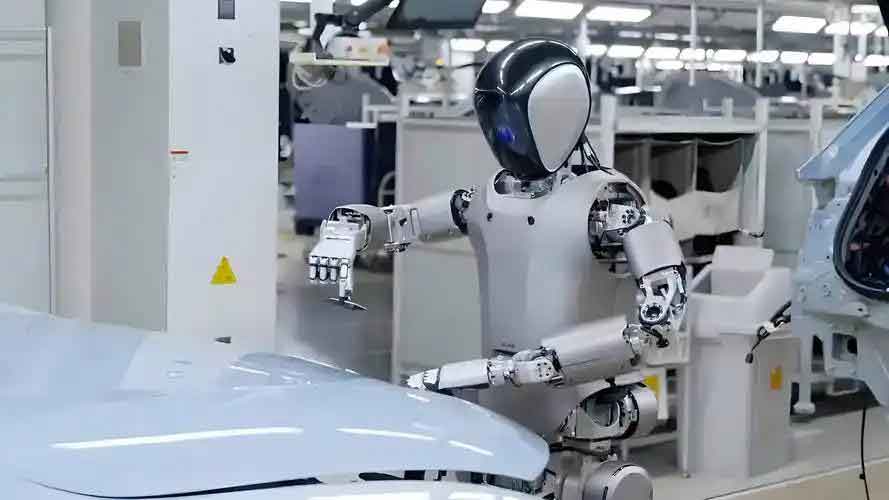
A humanoid robot, often termed an embodied intelligent agent, is designed with biomimetic principles, featuring a human-like morphology, and capabilities for perception, decision-making, action, and interaction. It is considered one of the ultimate forms of artificial intelligence, as its physical embodiment allows it to interact with and manipulate the world built for humans. The primary value proposition of a humanoid robot is its environmental compatibility; its form factor allows it to operate seamlessly in spaces and with tools designed for people, potentially covering the vast spectrum of human activity across domestic, commercial, and industrial settings.
Based on design philosophy and capability, humanoid robots can be categorized into several archetypes:
| Category | Key Features | Primary Focus | Representative Example |
|---|---|---|---|
| Legged/Bipedal | Advanced leg locomotion, arms often for balance. | Dynamic mobility, navigating complex terrains. | Boston Dynamics’ Atlas |
| Mobile Manipulator | Wheeled base + collaborative robot arm(s) + dexterous hand. | Mobile manipulation, combining mobility with precise “hand-eye” coordination. | Paсini’s Tora (conceptual) |
| General-Purpose (Full-Body) | Bipedal + arms + hands + comprehensive sensing + AI. | Versatility, adapting to open-ended tasks in unstructured environments. | Tesla’s Optimus |
| Demonstration/Performative | Limited to pre-programmed actions in controlled settings. | Showcasing basic technological principles or for entertainment. | Various academic or showcase models |
I. A Panoramic View of the Humanoid Robot Industry
1.1 Deconstructing the Value Chain
The ecosystem of the humanoid robot is vast and complex, spanning upstream core technologies, midstream integration, and downstream applications.
Upstream: The Nervous System and Musculoskeletal Components
This layer comprises software developers and hardware component suppliers. The software stack, particularly simulation environments, presents high patent barriers and requires immense data accumulation for training and validation. On the hardware side, the kinematic complexity of a humanoid robot far exceeds that of a traditional industrial robot, leading to a dramatically higher count of joints and actuators. The cost structure is heavily dominated by two key modules:
- Integrated Joint Modules (Actuation): This includes high-performance servo motors, precision reducers (harmonic drive or RV), and lead screws/ball screws. These components form the robot’s “muscles” and tendons. They can account for approximately 60% of the total hardware cost. The development difficulty is stratified: servo motors (medium-high), precision reducers (highest), and transmission elements (high).
- Perception & Control Module (Sensing & Processing): This encompasses a suite of sensors (LiDAR, cameras, IMUs, force/torque sensors, tactile sensors) and the processing chips (CPUs, GPUs, NPUs). This system acts as the “peripheral nervous system” and preliminary “brain stem,” responsible for raw data acquisition and low-level control. It can account for roughly 25% of the cost.
The remaining ~15% covers the structural frame, battery/power systems, and other miscellaneous components. This cost distribution can be summarized by the relation:
$$ C_{robot} \approx 0.60C_{joint} + 0.25C_{perception} + 0.15C_{other} $$
where \( C_{robot} \) is the total hardware cost, \( C_{joint} \) is the cost of all integrated joint modules, \( C_{perception} \) is the cost of sensors and core processing chips, and \( C_{other} \) covers all other components.
Midstream: The System Integrators and OEMs
This tier involves companies with strong system integration capabilities, responsible for the design, assembly, and holistic integration of the humanoid robot本体. This process involves not just physical assembly but also the implementation of core control algorithms, middleware, and system-level software. Current robotics companies often serve as a bridge, with expertise in areas like collaborative robots (cobots), autonomous mobile robots (AMRs), or specialized robots, which provides a foundation for venturing into the humanoid form factor.
Downstream: The Application Frontier
The potential application markets for humanoid robots are extensive but currently nascent. They include:
• Industrial Manufacturing: The most promising near-term sector. Humanoid robots could perform non-standardized, flexible tasks in environments like automotive assembly (wire harnessing, final inspection), electronics manufacturing (component placement, testing), and logistics (mixed-case picking, palletizing).
• Commercial Services: Includes retail guidance, hotel concierge, security patrols, and educational assistants. These applications often have lower initial dexterity requirements.
• Domestic & Care: The long-term “holy grail,” including elderly assistance, home cleaning, cooking, and companionship. This requires the highest levels of safety, reliability, and intuitive interaction.
• Healthcare & Emergency Response: Potential roles in patient rehabilitation, surgery assistance, and disaster response in hazardous environments.
The adoption timeline is expected to follow a trajectory from structured industrial settings to more dynamic commercial and finally to complex domestic environments.
1.2 Current Technological Hurdles and Future Market Landscape
Technologically, humanoid robots are in the arduous “zero-to-one” phase, facing significant challenges across three core competencies:
| Competency Area | Core Challenge | Key Research Focus |
|---|---|---|
| Cognitive Intelligence (“The Brain”) | Developing AI capable of reasoning, task planning, and natural interaction in open-world settings. | Embodied AI, large language/vision-action models (LLMs/VLMs), multimodal learning, world models. |
| Locomotion & Dynamics (“The Cerebellum”) | Achieving stable, efficient, and adaptive bipedal locomotion across varied, uneven terrain. | Model predictive control (MPC), reinforcement learning (RL) for motion, whole-body dynamics control, balance algorithms. |
| Physical Embodiment (“The Body”) | Creating robust, lightweight, and high-power-density hardware. | High-torque-density actuators, lightweight composite/magnesium structures, advanced tactile sensing, efficient thermal and energy management. |
The market potential, however, is colossal. Multiple analyses project explosive growth. For instance, a Goldman Sachs report suggests the global market for humanoid robots could reach \$154 billion by 2035. Other analysts provide more granular forecasts. The adoption curve is expected to be S-shaped, with initial slow growth as technology matures, followed by rapid scaling as costs decline and reliability proves itself in niche applications before broader diffusion.
1.3 The Policy Engine: National and Regional Drive
Recognizing the strategic importance, major economies have placed the humanoid robot industry at the center of their industrial policy. The approach is characterized by top-down strategic planning and rapid local implementation.
| Jurisdiction | Policy/Initiative | Strategic Focus |
|---|---|---|
| National Level (China) | “Guidelines for the Innovation and Development of Humanoid Robots” (Nov 2023) | Blueprint for 2025/2027 milestones; focuses on breaking core tech, building products, expanding applications, and cultivating industry. |
| National Level (China) | “Robotics+” Application Action Implementation Plan (Jan 2023) | Promotes the deep integration of robotics (including humanoids) into specific economic sectors. |
| Beijing | Establishment of Municipal Humanoid Robot Innovation Center | Support for whole-machine and key component R&D,对标 international leaders. |
| Shanghai | Policy directives to accelerate innovation | Fast-tracking development within its advanced manufacturing ecosystem. |
| Guangdong/Shenzhen | Plan to establish Provincial Humanoid Robot Manufacturing Innovation Center | Leveraging strong electronics and hardware supply chains for industrialization. |
This dense policy framework creates a fertile environment for R&D, investment, and talent aggregation, significantly de-risking the long-term bets required in this field.
II. Learning from Global Pioneers
The global race is intensifying, with technology giants and agile startups unveiling remarkable progress. Analyzing key players provides critical insights into technological pathways and commercialization strategies.
1. Tesla Optimus: Arguably the most watched project, Optimus leverages Tesla’s deep expertise in battery technology, electric motors, and, most crucially, its Full Self-Driving (FSD) AI stack and Dojo supercomputer. This provides a potentially unassailable advantage in the “brain” segment. Its design philosophy emphasizes cost-effective manufacturing scalability, with 28 degrees of freedom (DoF) in its body using 6 actuator types. Recent showcases demonstrate refined motor control (handling eggs), end-to-end neural network control from video demonstration, and enhanced environmental memory. Its path to market is tightly coupled with deployment in Tesla’s own factories.
2. UBTECH Walker Series: A pioneer with over a decade of focus on servo actuators and bipedal locomotion. The Walker X model (41 DoF) is aimed at service scenarios. UBTECH has taken a pragmatic approach by partnering with automotive manufacturers to deploy its Walker S in factories for tasks like inspection and logistics, targeting industrial adoption as a stepping stone to more general applications.
3. Zhiyuan Robotics Expedition A1: A startup that has garnered significant attention for its rapid progress. The Expedition A1 features 49 DoF, including an innovative inverse-knee design for greater crouching capability. It has developed its own quasi-direct-drive joint motors for high torque density and thermal efficiency. Its dexterous hand integrates 17 DoF and vision-based fingertip sensors. The company plans commercial rollout in 3C and automotive manufacturing initially.
4. Unitree Robotics H1: Known for its agile quadrupeds, Unitree entered the humanoid space with the H1, notable for being one of the first commercially available (for order) bipedal robots capable of dynamic running and backflips. Its key innovation is the high-torque-density M107 joint motor, which enables remarkable agility and a potential running speed exceeding 5 m/s, highlighting a focus on extreme dynamic performance.
This competitive landscape is enriched by others: Fourier Intelligence with its GR-1 focused on rehabilitation potentials, Xiaomi’s CyberOne project exploring integration with its ecosystem, and iFlytek’s efforts to combine its cognitive AI models with robotic embodiment. The diversity of approaches—from AI-first to actuator-first, from industrial-first to dynamic mobility-first—signals a vibrant and rapidly evolving sector.
III. Strategic Pathways for Industrial Development
Cultivating a robust humanoid robot industry is recognized as a critical engine for long-term economic growth and productivity enhancement. For any region or industrial cluster aiming to participate in this future, a multi-pronged, strategically phased approach is essential. Drawing from the analysis, development should be orchestrated along three complementary pathways: refining existing strengths, nurturing adjacent innovations, and fostering breakthrough creations. These can be conceptualized as strategic vectors in an industrial development space.
3.1 Pathway 1: “Refining the Core” – Excelling in Foundational Sub-sectors
This path leverages existing, mature industrial strengths to secure a vital role in the humanoid robot supply chain. The goal is to achieve global competitiveness in specific, high-demand components where a region already holds a comparative advantage. For example, a region with a strong automotive wiring harness industry is uniquely positioned to dominate the niche of humanoid robot cabling. The requirements here are more demanding than in cars:
• High Flexibility: Cables must withstand millions of complex cyclic motions. The bending radius \( R_{min} \) must be minimized while maintaining signal integrity: $$ \text{Signal Integrity} = f(R_{min}, \text{Shielding}, \text{Material Fatigue}) $$
• Enhanced Durability: Resistance to abrasion, micro-tears, chemicals, and UV radiation is paramount for longevity.
• Advanced Shielding: To prevent electromagnetic interference (EMI) from numerous high-power actuators and sensors, sophisticated multi-layer shielding with coverage exceeding 90% is required: $$ \text{Shielding Effectiveness (dB)} = 10 \log_{10}\left(\frac{P_{incident}}{P_{transmitted}}\right) > 60 \text{ dB} $$
By directing R&D in these precise areas, an established player can become the indispensable supplier for a critical but often overlooked component.
3.2 Pathway 2: “Nurturing the Adjacent” – Cultivating Enabling Technology Clusters
This strategy involves identifying and scaling technologies that are currently within a region’s R&D portfolio or nascent industrial base and are directly applicable to humanoid robots. The focus is on “enabling technologies” that serve as key bottlenecks or differentiators.
| Enabling Technology | Regional Prerequisite | Humanoid Robot Application | Development Goal |
|---|---|---|---|
| Specialized AI/Processing Chips | Existing semiconductor design or photonics R&D base. | Low-latency motion control, real-time sensor fusion, on-device AI inference. | Develop chips for high-dynamic motor drives, high-bandwidth communication, and multi-modal perception. |
| Lightweight Structural Materials | Advanced materials research or production (e.g., magnesium alloys). | Robot skeleton, casing, and limb structures. | Produce high strength-to-weight ratio \( \frac{\sigma}{\rho} \) alloys and composites for energy-efficient, safe robots. |
| Advanced Sensor Fusion | Presence in optics, inertial measurement, or lidar industries. | Creating a coherent 3D world model from multiple sensor streams. | Develop integrated perception modules and robust fusion algorithms. |
The objective is to rapidly transition these technologies from lab-scale to industrial-scale production, capturing value in the upstream segment of the humanoid robot value chain.
3.3 Pathway 3: “Creating the New” – Fostering Breakthrough Innovation Ecosystems
This is the most ambitious path, aimed at developing core competencies in areas where no current local base exists. It requires proactive ecosystem building through strategic招商引资, partnerships with top academic institutions, and the creation of specialized innovation platforms. The targets are the highest-value, most complex subsystems:
- Core Software & AI Platform: Attract or incubate teams to build the middleware, simulation environments, and application development kits (SDKs) for humanoid robots. The value is in the platform itself. The ecosystem’s strength can be modeled by the number of developers \( N_{dev} \) and available tools \( T \): $$ \text{Ecosystem Value} \propto N_{dev} \times \log(T) $$
- High-Performance Actuators: Establish R&D and manufacturing for high-torque-density joint modules. This involves the co-design of motors, reducers, and drivers. Key metrics include torque density \( \tau_{density} = \frac{\text{Peak Torque}}{\text{Mass}} \) (Nm/kg) and power density.
- Dexterous Manipulation: Foster research in anthropomorphic hands with rich tactile sensing and compliant control. This involves integrating micro-motors, tendon mechanisms, and dense sensor arrays.
Success in this pathway transforms a region from a participant into a leader, capable of defining architectural standards and capturing disproportionate value in the humanoid robot revolution.
In conclusion, the age of the humanoid robot is dawning, propelled by technological convergence and societal need. The industry landscape is a dynamic interplay of daunting challenges and extraordinary potential. For economic planners and industrial strategists, the task is not merely to observe but to actively orchestrate participation. By meticulously executing a tripartite strategy—buttressing foundational industries, accelerating the growth of enabling technologies, and courageously investing in the creation of new core competencies—regions can position themselves not just as manufacturers, but as innovators and architects of a future where humanoid robots work alongside humanity, driving the next wave of high-quality development and productivity growth. The race is on, and the strategic pathways are now clear.