
As we navigate the complexities of the 21st century, the imperative to revitalize rural areas has become a cornerstone of sustainable development strategies globally. The integration of advanced technologies into the agricultural and social fabric of the countryside presents a transformative opportunity. Among these technologies, the emergence of sophisticated humanoid robots stands out as a potentially disruptive yet profoundly enabling force. This essay explores, from a first-person analytical perspective, the multifaceted role humanoid robots can play in rural revitalization. I will examine their promising applications, the significant challenges that must be overcome, and propose a holistic governance framework to ensure their deployment is equitable, sustainable, and ultimately successful in empowering rural communities.
I. The Promising Horizon: Applications of Humanoid Robots in Rural Settings
The potential applications of humanoid robots in rural areas extend far beyond simple automation. Their anthropomorphic design allows for interaction with environments and tools originally built for humans, creating unique advantages.
1. Precision Agriculture and Enhanced Productivity: The core promise lies in revolutionizing farm operations. A humanoid robot, equipped with multispectral sensors and AI, can perform tasks with superhuman consistency and precision. It can patrol fields, collecting real-time data on soil moisture ($SM$), nitrogen levels ($N_{soil}$), and plant health indices ($PHI$). Based on this data, it can execute targeted interventions. The economic benefit can be modeled by comparing traditional yield $Y_{trad}$ to robotic-assisted yield $Y_{rob}$:
$$Y_{rob} = Y_{trad} \times (1 + \alpha_{p} + \alpha_{h})$$
where $\alpha_{p}$ is the precision factor (reduced waste, optimal input) and $\alpha_{h}$ is the health factor (reduced disease/pest loss). A single humanoid robot can manage weeding, selective harvesting, and delicate pruning 24/7, dramatically increasing output per unit of land and labor.
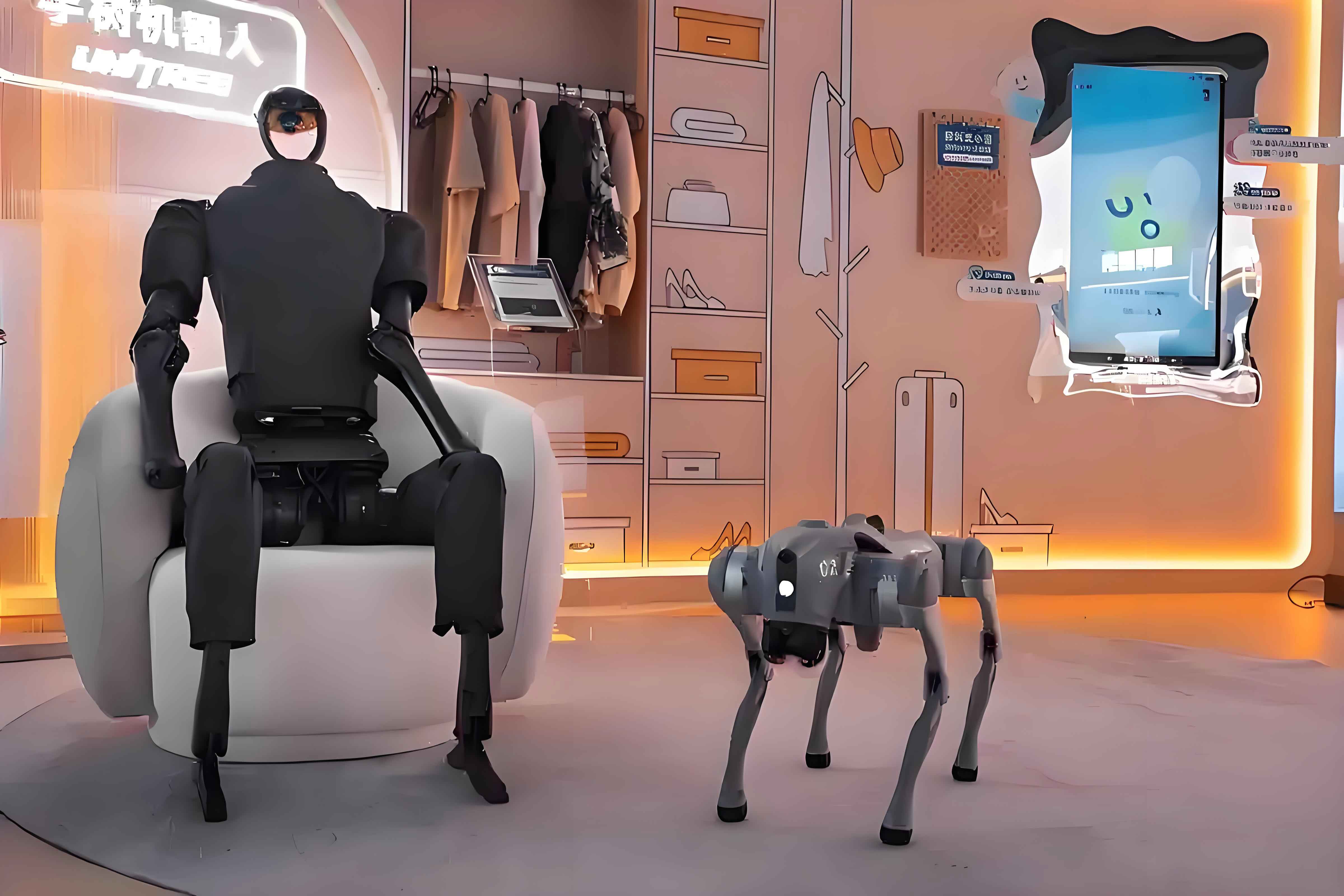
2. Mitigating Demographic and Labor Challenges: Rural depopulation and an aging farmer demographic are critical issues. The humanoid robot acts as a force multiplier and a digital labor supplement. It can take over physically demanding, repetitive, or hazardous tasks—from lifting heavy loads in barns to applying chemicals in controlled environments. This not only compensates for labor shortages but also improves the quality of life and extends the productive years of an aging rural population. The effective labor pool $L_{eff}$ becomes:
$$L_{eff} = L_{human} + \eta \times N_{robot}$$
where $L_{human}$ is the available human labor, $N_{robot}$ is the number of deployed humanoid robots, and $\eta$ is their average labor equivalence coefficient (often >1 for endurance and multitasking).
3. Enabling Sustainable and Regenerative Practices: Sustainability is key to the future of agriculture. Humanoid robots facilitate this transition. They enable hyper-localized application of water and organic inputs, minimizing runoff and environmental impact. They can assist in complex crop rotation schemes, polyculture planting, and soil monitoring for carbon sequestration projects. Their light weight compared to traditional heavy machinery reduces soil compaction, preserving soil health structure $S_{health}$:
$$\Delta S_{health} \propto \frac{1}{P_{robot}} – \frac{1}{P_{tractor}}$$
where $P$ represents ground pressure. By enabling these practices, the humanoid robot becomes an agent for ecological regeneration.
4. Catalyzing New Economic Models: The presence of advanced technology like the humanoid robot can spur new rural industries. It can be the centerpiece of “agri-tech demonstration zones,” attracting investment, research, and tourism. Furthermore, it can support value-added activities like on-site, robot-assisted food processing or packaging. In rural tourism, a humanoid robot can serve as an interactive guide, storyteller, or workshop leader, creating unique visitor experiences and diversifying local income streams $I_{total}$:
$$I_{total} = I_{agri} + I_{tech-service} + I_{tourism}$$
where $I_{tech-service}$ includes robot maintenance, programming, and data analysis services.
| Application Area | Primary Function of Humanoid Robot | Key Benefit | Metric for Success |
|---|---|---|---|
| Precision Crop Management | Monitoring, targeted weeding/fertilizing, selective harvesting | Increased yield & quality; reduced input waste | % Increase in yield per hectare; reduction in fertilizer/water use |
| Livestock Farming | Health monitoring, automated feeding, barn cleaning | Improved animal welfare; labor savings | Reduction in labor hours; improvement in animal health indicators |
| Agroecology | Planting cover crops, monitoring biodiversity, applying biocontrols | Enhanced ecosystem services; soil regeneration | Increase in soil organic matter; pollinator count |
| Rural Infrastructure & Services | Elderly care assistance, parcel delivery, basic community maintenance | Improved quality of life; maintained service viability | Community satisfaction index; cost savings on service provision |
II. Navigating the Terrain: Critical Challenges to Adoption
Despite the promise, the path to integrating humanoid robots into rural landscapes is fraught with significant obstacles that cannot be overlooked.
1. High Initial Investment and Economic Viability: The development and production costs of a capable humanoid robot are currently prohibitive for most individual farmers or small cooperatives. The total cost of ownership $C_{total}$ includes acquisition $C_{acq}$, operation $C_{op}$ (energy, repairs), and periodic upgrades $C_{up}$:
$$C_{total} = C_{acq} + \sum_{t=1}^{T} (C_{op,t} + C_{up,t})$$
The return on investment (ROI) period may be long and uncertain, especially for smallholder operations. The economic risk is a primary barrier.
2. Technical Complexity and Maintenance Gaps: Rural areas often lack the robust digital infrastructure and technical expertise required to support advanced robotics. A malfunctioning humanoid robot requires specialized diagnosis and repair. The lack of local “tech medics” can lead to prolonged downtime, negating its benefits. The reliability $R_{sys}$ of the robotic system in a rural context is a function of both machine reliability $R_{m}$ and support accessibility $A_{s}$:
$$R_{sys} = R_{m} \times A_{s}$$
Low $A_{s}$ in remote areas drastically reduces $R_{sys}$.
3. Energy Consumption and Environmental Footprint: High-performance humanoid robots are energy-intensive. In regions with unreliable or carbon-intensive power grids, their operation could merely shift environmental burdens. Furthermore, the lifecycle impact—from manufacturing to eventual disposal of batteries and electronic components—poses a significant sustainability challenge if not managed with circular economy principles.
4. Socio-Cultural Disruption and Skills Mismatch: The introduction of a humanoid robot may disrupt traditional social structures and knowledge systems. It could devalue hard-won empirical farming knowledge. More tangibly, it risks creating a skills gap and labor market displacement. While it creates high-skill jobs (e.g., robot coordinator), it may reduce demand for mid- and low-skill manual labor, requiring a difficult workforce transition.
5. Ethical and Safety Governance Vacuum: The deployment of autonomous or semi-autonomous humanoid robots in shared rural spaces raises unanswered questions. Who is liable if a robot causes damage? How is data on farm operations and rural life collected and used? Ensuring the safety of humans, livestock, and the environment around these robots requires clear standards and regulations that are currently underdeveloped.
| Challenge Category | Specific Issue | Potential Consequence | Risk Severity |
|---|---|---|---|
| Economic | High CapEx, uncertain ROI, financing access | Exclusion of smallholders; increased inequality | High |
| Technical | Lack of broadband, spare parts, repair skills | System failure, dependency on external vendors | High |
| Social | Job displacement, loss of traditional knowledge, community acceptance | Social friction, erosion of cultural heritage | Medium-High |
| Environmental | High energy demand, e-waste, resource use in production | Contradiction with sustainability goals | Medium |
| Governance | Lack of safety protocols, data privacy rules, liability frameworks | Uncapped risks, ethical breaches, stakeholder distrust | High |
III. A Framework for Responsible Integration: Governance and Pathways Forward
To harness the benefits of the humanoid robot while mitigating its risks, a proactive, multi-stakeholder governance framework is essential. This framework must be co-created with rural communities at its heart.
1. Innovative Financing and Business Models: Making the humanoid robot accessible requires financial innovation. Public-private partnerships (PPPs) can fund shared robotics service centers. “Robotics-as-a-Service” (RaaS) models, where farmers pay a subscription fee for tasks performed, can lower the entry barrier. Targeted subsidies and tax incentives can be directed towards cooperative purchases or sustainability-aligned uses. The effective cost to the farmer $C_{farmer}$ under an RaaS model becomes:
$$C_{farmer} = S_{sub} + \sum_{i=1}^{n} (p_i \cdot u_i)$$
where $S_{sub}$ is a possible subsidy, $p_i$ is the price per unit of service $i$ (e.g., hectare weeded), and $u_i$ is the units consumed.
2. Building Local Capacity and “Tech Stewardship”: Investment in human capital is non-negotiable. Vocational training programs must be established to create a local cadre of robot operators, maintenance technicians, and data analysts. Curriculum in rural schools should incorporate basic robotics and digital literacy. This builds local ownership and resilience, increasing the support accessibility factor $A_{s}$ mentioned earlier.
3. Designing for Sustainability and Circularity: The humanoid robot itself must be engineered for the rural context. This means modular design for easy repair, compatibility with renewable energy sources (e.g., solar-charging stations), and use of recyclable materials. The energy efficiency $EE_{robot}$ should be a key performance indicator:
$$EE_{robot} = \frac{\text{Output (e.g., kg of produce harvested)}}{\text{Energy input (kWh)}}$$
Policies should mandate and incentivize take-back and recycling programs for robotic components.
4. Phased, Participatory Pilot Deployment: Large-scale rollout should be preceded by community-based pilot projects. These pilots, co-designed with farmers, serve as living labs to test technology, adapt business models, study socio-economic impacts, and refine safety protocols. Success should be measured by a balanced scorecard including productivity, environmental, and social cohesion metrics.
5. Proactive Ethical and Regulatory Governance: Governments must work with technologists and rural communities to establish clear guidelines. This includes safety certification for humanoid robots operating in agricultural and public spaces, data sovereignty agreements ensuring farmers own their data, and social impact assessments prior to deployment. Adaptive regulatory sandboxes can allow for safe innovation in real-world settings.
| Governance Pillar | Core Action | Key Stakeholders | Success Indicator |
|---|---|---|---|
| Financial & Economic | Establish RaaS models, green subsidies, cooperative funding | Government, Banks, Tech Companies, Farmer Co-ops | Number of small farms accessing robotic services; reduction in payback period |
| Technical & Infrastructural | Deploy rural broadband, create training hubs, promote modular robot design | Tech Companies, Educational Institutions, Telecoms | Number of certified local technicians; mean time to repair (MTTR) |
| Socio-Cultural | Run community dialogues, integrate traditional knowledge with digital tools, reskill programs | Community Leaders, NGOs, Educational Bodies | Community acceptance index; successful transition of workers to new roles |
| Environmental & Ethical | Set sustainability standards, create e-waste recycling chains, enact data rights laws | Regulators, Environmental Agencies, Tech Companies | Robot’s lifecycle carbon footprint; % of materials recycled; existence of farmer data agreements |
In conclusion, the humanoid robot is not a silver bullet, but it is a powerful tool that could fundamentally reshape rural futures. Its potential to enhance productivity, alleviate labor pressures, and enable sustainable practices is immense. However, this potential is locked behind substantial economic, technical, and social barriers. Realizing a positive future requires moving beyond a purely technological perspective. It demands a holistic governance approach that prioritizes equitable access, community empowerment, and ecological stewardship. The goal must be to integrate the humanoid robot as a harmonious component of the rural ecosystem—a “rural transformer” that works alongside people, augments their capabilities, and helps build resilient, prosperous, and sustainable communities for generations to come. The journey begins not with the deployment of the first robot, but with the inclusive design of the systems that will guide its role in our shared rural landscape.