
The landscape of robotics is undergoing a seismic shift. The convergence of advanced hardware and, more critically, transformative artificial intelligence is propelling the development of a long-envisioned technology: the humanoid robot. Once confined to research laboratories and science fiction, humanoid robots are now poised at the precipice of widespread commercialization, heralded by many as the next disruptive platform following computers, smartphones, and electric vehicles.
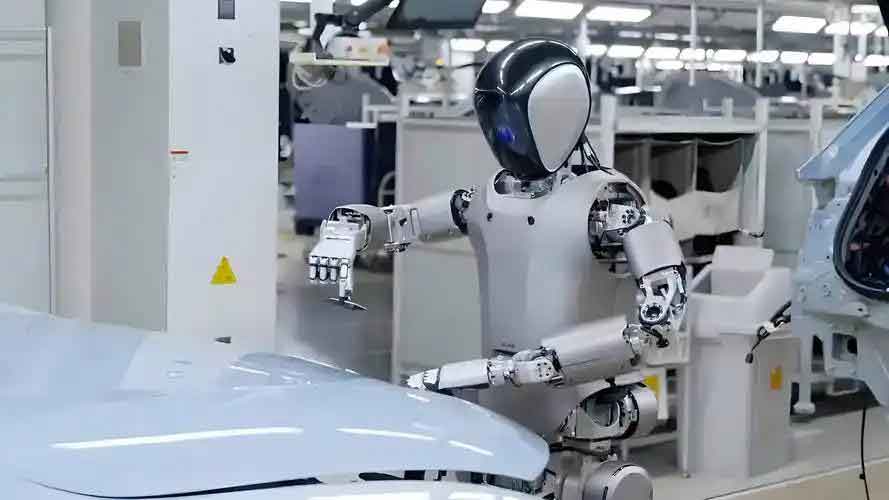
At its core, a modern humanoid robot can be architecturally decomposed into three integrated modules: the “limbs,” the “cerebellum,” and the “brain.” The limbs and cerebellum encompass the mechanical structure, actuators, and low-level motion control systems. The revolutionary change comes from the “brain”—powered by artificial intelligence large models. This integration is the key to transitioning from pre-programmed automation to genuine autonomy. It enables a humanoid robot to perceive its environment, learn from observation (such as watching a human demonstration), and make independent decisions through continuous practice. This capability, largely unimaginable before the advent of foundation models, is what grants the humanoid robot its promised generality—the ability to operate across diverse, unstructured scenarios rather than being locked into a single, pre-defined task.
The Convergence of Forces Driving the Humanoid Robot Boom
The current surge in humanoid robot development is not a singular phenomenon but the result of a powerful synergy between technological advancement, policy support, and capital investment.
1. Policy Momentum: Governments worldwide now recognize the strategic importance of humanoid robotics. In late 2023, China’s Ministry of Industry and Information Technology (MIIT) issued the “Guiding Opinions on the Innovative Development of Humanoid Robots,” outlining a strategic plan and describing humanoid robots as technologies that will “profoundly transform human production and lifestyle.” This was followed by a multi-ministry directive in early 2024 naming humanoid robots as a key future industry. Major municipalities like Beijing, Shanghai, and Shenzhen have subsequently introduced supportive local policies.
2. Proliferation of Products: After decades of foundational academic research, product development has accelerated dramatically. Global leaders like Tesla with its Optimus and Boston Dynamics with Atlas have captured the public imagination. In China, a wave of companies has entered the arena. Xiaomi unveiled its CyberOne, Fourier Intelligence began pre-sales for its GR-1 model, and companies like Xpeng, Ubtech, and others have showcased robots targeting industrial and service applications. This period marks a clear transition from pure research to early commercial prototypes.
3. Capital Influx: The investment community is placing significant bets on this future. In 2023 alone, numerous Chinese humanoid robot startups secured substantial funding rounds, with several exceeding hundreds of millions of dollars. Public listings and rising stock prices for companies in the core components sector further underscore the intense market interest and belief in the sector’s long-term potential.
Developmental Stages and Industry Structure
The evolution of humanoid robots can be categorized into distinct phases, largely driven by breakthroughs in locomotion and control.
- Initial Walking (1970s-1990s): Pioneering work, such as Japan’s WABOT-1, demonstrated basic bipedal locomotion but was slow and unstable.
- Capability Breakthrough (2000s): Robots like Honda’s ASIMO achieved more fluid, dynamic walking and running.
- Technical Mastery (2010s): Focus shifted to extreme agility and balance, epitomized by Boston Dynamics’ Atlas performing complex maneuvers like backflips. However, these remained cost-prohibitive research platforms.
- Commercialization Drive (2020s-Present): The current era, ignited by Tesla’s focus on cost reduction (targeting ~$20,000 per unit) and scalable manufacturing. The goal is no longer just technical prowess but economic viability for real-world tasks.
The industry structure is bifurcating into two main product philosophies, as shown in the analysis below:
| Product Type | Core Focus | Primary Application Scenarios | Key Examples |
|---|---|---|---|
| Physical/Atlas-Type | Extreme mobility, strength, and dynamic motion control. Excels in unstructured physical tasks. | Manufacturing, logistics, warehousing, hazardous environment inspection. | Boston Dynamics Atlas, Tesla Optimus, Agility Robotics Digit. |
| Intelligent/Sophia-Type | Advanced social interaction, facial expression, and conversational AI. Prioritizes human-robot interaction. | Customer service, healthcare assistance, education, entertainment, and companionship. | Hanson Robotics Sophia, Engineered Arts Ameca. |
The developmental path of a humanoid robot is a journey towards the high-degree coupling of “automation” and “autonomy,” evolving from the execution layer upward to the decision-making layer.
Deconstructing the Humanoid Robot: Core Modules and the Enabling Ecosystem
Market projections are optimistic, with some analyses suggesting the global market could reach hundreds of billions of dollars by 2030, assuming a high compound annual growth rate. This potential rests on a complex, multi-layered industry value chain.
| Industry Chain Segment | Description | Key Components & Technologies |
|---|---|---|
| Upstream (Core Components) | The foundational hardware and software that define performance. High technical barriers. |
|
| Midstream (System Integration) | Companies that design, assemble, and integrate components into a functional robot本体. | 本体 manufacturing, system integration, software stack development, testing and validation. |
| Downstream (Application) | The deployment of humanoid robots into specific verticals and use cases. | Manufacturing/Factory, Logistics/Warehouse, Home/Personal Service, Healthcare, Hospitality, Hazardous Environments. |
1. The Perception System: Machine Vision and Beyond
The perception system acts as the humanoid robot‘s sensory organs. The primary focus is on machine vision, heavily leveraging advancements from autonomous driving. A robot must perceive and understand a 3D, dynamic world. This involves tasks like object recognition, scene segmentation, and depth estimation, often processed by an onboard AI chip. The core challenge is the speed and accuracy of visual data processing. The relationship between a captured image $I$ and the derived perceptual state $S_p$ can be framed as:
$$ S_p(t) = f_{vision}(I(t), \Theta_{vision}) $$
where $f_{vision}$ is the vision model (e.g., a neural network) and $\Theta_{vision}$ its parameters. Future systems will integrate multi-modal perception, combining vision with auditory and advanced tactile sensing to build a rich world model.
2. The Interaction System: The Rise of Embodied AI
This represents the core breakthrough enabled by AI large models. The goal is natural language interaction, where a humanoid robot can understand a high-level command (“make me a cup of coffee”), decompose it into a sequence of actionable steps, and execute them while adapting to unforeseen obstacles. This is the realm of Embodied AI. The process involves Natural Language Understanding (NLU), task planning, and contextual reasoning. The response generation $R$ to a language command $C$ and current context $S$ can be modeled as:
$$ R = \arg\max_{R \in \mathcal{R}} P(R | C, S; \Theta_{LLM}) $$
where $\Theta_{LLM}$ represents the parameters of a large language model fine-tuned for embodied reasoning.
3. The Motion and Control System: The Physics of Human-like Movement
This is the “cerebellum” and “limbs” of the humanoid robot. It translates high-level decisions into stable, precise, and efficient physical motion—a profoundly difficult challenge in a high-degree-of-freedom, unstable system. The control stack involves trajectory planning, whole-body control, and low-level joint torque control.
Kinematics & Dynamics: The pose of a humanoid robot is defined by its joint angles $\mathbf{q} \in \mathbb{R}^n$. Forward kinematics calculates the end-effector position $\mathbf{x}$: $\mathbf{x} = FK(\mathbf{q})$. Inverse kinematics (IK) solves for $\mathbf{q}$ given a desired $\mathbf{x}$, often an ill-posed problem requiring optimization techniques.
Balance and Control: A fundamental requirement is maintaining balance, often modeled using the Linear Inverted Pendulum Model (LIPM) for walking. The dynamics can be linearized around an operating point, leading to a state-space representation used for controllers like Linear Quadratic Regulator (LQR):
$$ \dot{\mathbf{x}} = A\mathbf{x} + B\mathbf{u} $$
$$ \mathbf{u} = -K\mathbf{x} $$
where $\mathbf{x}$ is the state (e.g., center of mass position/velocity), $\mathbf{u}$ is the control input (e.g., footstep placement or torso torque), and $K$ is the gain matrix optimized to minimize a cost function $J = \int (\mathbf{x}^T Q \mathbf{x} + \mathbf{u}^T R \mathbf{u}) dt$.
The core hardware—especially high-performance harmonic reducers and responsive servo systems—is critical here. They must be compact, lightweight, and back-drivable for safe force-controlled interaction.
| Challenge | Description | Mathematical/Engineering Focus |
|---|---|---|
| Under-actuation | Feet/contacts with the ground have limited friction, making the system non-holonomic. | Hybrid/Non-linear control theory, contact dynamics modeling. |
| High Degrees of Freedom (DoF) | Coordinating dozens of joints simultaneously leads to a complex control problem. | Whole-body control (WBC), prioritized task-space optimization. |
| Energy Efficiency | Bipedal locomotion is inherently inefficient compared to wheels. | Passive dynamics, actuator co-design, energy regeneration. |
| Impact & Force Control | Managing collisions and applying precise forces for manipulation. | Impedance/Admittance control, force/torque sensing, Series Elastic Actuators (SEAs). |
The Landscape of Humanoid Robot Enterprises
The companies driving humanoid robot development come from diverse backgrounds, each bringing unique strengths to the table. They can be broadly categorized as follows:
| Company Type | Origin & Core Advantage | Typical Focus |
|---|---|---|
| Legacy Robotics Specialists | Years of experience in robotics, with deep expertise in mechatronic systems, motion control, and human-robot interaction. | Building robust, full-stack platforms; often have earlier commercial service robots. |
| Technology-adjacent Startups | Spin-offs from research or companies with expertise in related fields like exoskeletons or quadruped robots. Strong in specific domains like actuator design or dynamic control. | Leveraging proven component or locomotion technology into a humanoid form factor. |
| AI & Tech Giant Spin-offs | New ventures founded by experts from major tech/AI companies. Focus on integrating the most advanced AI from the start. | “Born-with-AI” design, emphasizing large model-based intelligence and generality for future scenarios. |
| Cross-industry Titans (Auto, Electronics) | Established manufacturers from automotive, consumer electronics, etc. Bring immense scale, manufacturing prowess, supply chain access, and adjacent tech (e.g., autonomous driving stacks). | Applying industrial scale and cost-reduction expertise; leveraging existing capabilities in vision, batteries, and precision manufacturing. |
For instance, a leading robotics institute in China transitioned from decades of research in micro-motors and special electric machines into robotics, developing a series of robotic platforms including a humanoid robot that leverages its deep actuation expertise. Meanwhile, national and regional innovation centers are being established as consortiums, pooling resources from industry leaders, academia, and state-backed investment entities to tackle foundational platform technologies.
Investment and Competitive Logic in the AI Era
The industry, while nascent, is already developing its own internal logic shaped by technological drivers and market forces.
1. The AI-Driven Valuation Logic: The primary investment thesis centers on Embodied AI. The belief is that AI large models will be the key to solving the generality problem, transforming the humanoid robot from a single-task machine into a versatile agent. Companies and platforms (like NVIDIA’s Isaac) that enable this fusion of AI and robotics are seen as critical enablers. Investment flows towards teams with strong AI/LLM capabilities combined with robotics hardware competence.
2. The Shakeout Logic in a Future Crowded Market: While the field is currently expanding, a future transition from growth to a “stock game” is anticipated. In such a phase, competitive advantage for component suppliers and integrators will hinge on unassailable moats: proprietary technology (e.g., a unique actuator design), overwhelming cost advantages achieved through scale and vertical integration, and locking in key customers. This will inevitably lead to industry consolidation.
3. The Near-term Volume Logic: Even before a fully general-purpose humanoid robot emerges, there is a credible path to initial volume. The first wave of commercial adoption is expected in structured industrial settings (e.g., auto factories, logistics centers) for repetitive tasks like parts handling, inspection, or box moving. Success in these “simpler” domains will drive volume for key component makers (reducers, motors, sensors), validate technologies, and fund further R&D. The trend of domestic supply chain substitution in many regions adds another layer of growth potential for local component manufacturers.
Strategic Pathways Forward
As a bellwether for national technological and advanced manufacturing prowess, the race in humanoid robotics is intensifying. For ecosystems aiming to lead, a multi-pronged strategy is essential.
First, sustained investment in foundational R&D is non-negotiable. Collaboration between enterprises and research institutions must focus on breakthrough innovations in key areas: novel joint and actuator design for higher power density and compliance; advanced perception algorithms for robust scene understanding; and adaptive control frameworks that ensure safety and reliability in human-centric environments. The goal is to close the technical gaps that currently limit robustness and affordability.
Second, pragmatic and focused exploration of commercialization scenarios is vital. The initial “killer app” for humanoid robots remains undefined. A dual-path approach is likely: aggressively pursuing high-value, repetitive tasks in manufacturing and logistics where the business case is clearer, while concurrently developing platforms for interactive service roles in healthcare, education, and domestic assistance. The human form factor offers a unique advantage for cross-domain generalization, potentially allowing a single platform to be reconfigured via software for different tasks.
Third, constructing a supportive financial and industrial ecosystem is crucial. This involves guiding industrial and financial capital towards long-term bets, supporting leading companies in accessing public markets, and fostering a virtuous cycle of “technology-industry-finance.” Government-backed industrial funds can play a catalytic role in de-risking innovation and orchestrating strategic supply chain partnerships.
Finally, building integrated industrial clusters will accelerate development. Concentrating talent, companies, and capital in specific geographic hubs creates a synergistic effect. These clusters should aim to host the entire value chain—from core component R&D and manufacturing to整机 integration, application development, and testing—creating a world-leading innovation hub and manufacturing base for robotics.
The humanoid robot represents the ultimate ambition in robotics. Its potential extends far beyond factory floors, promising to enter our homes and daily lives as profoundly as the personal computer or the automobile once did. While the technological and commercial challenges are immense, the rapid co-evolution of AI and mechatronics, backed by unprecedented levels of investment and competition, makes this vision more plausible than ever. The market is vast, the race is just beginning, and the final landscape of leaders is yet to be determined. The coming decade will likely witness a dynamic scene of fierce competition and collaborative breakthroughs, ultimately reshaping our relationship with machines.