
As a scholar engaged in the intersection of technology and law, I observe that the advent and proliferation of humanoid robots represent a pivotal shift in our societal fabric. These entities, designed with anthropomorphic features and powered by advanced artificial intelligence, promise to revolutionize industries from healthcare to domestic service. However, with this transformation comes inherent risks—specifically, the potential for harm caused during the use of humanoid robots. In this discourse, I argue from a first-person perspective that users, as direct controllers of humanoid robots, must bear a duty of care tailored to their risk management capabilities. This duty is not merely a legal formality but a cornerstone for ensuring safe intelligent social interactions, preserving human subjectivity and community bonds, and achieving a dynamic balance of interests in an era dominated by embodied AI.
The rise of humanoid robots, such as Tesla’s Optimus, marks a leap toward “embodied intelligence,” where machines possess physical forms and interactive capabilities. Governments worldwide, including China with its policies like the “Guidelines for Innovative Development of Humanoid Robots,” are pushing for mass production and integration. Yet, as these humanoid robots become ubiquitous, they introduce novel perils—from physical injuries due to malfunctions to ethical breaches like privacy invasions or algorithmic biases. Users, who command and oversee these humanoid robots, are at the forefront of risk allocation. Thus, establishing a clear duty of care for humanoid robot users is imperative to shape a responsible usage paradigm and mitigate侵权liabilities.
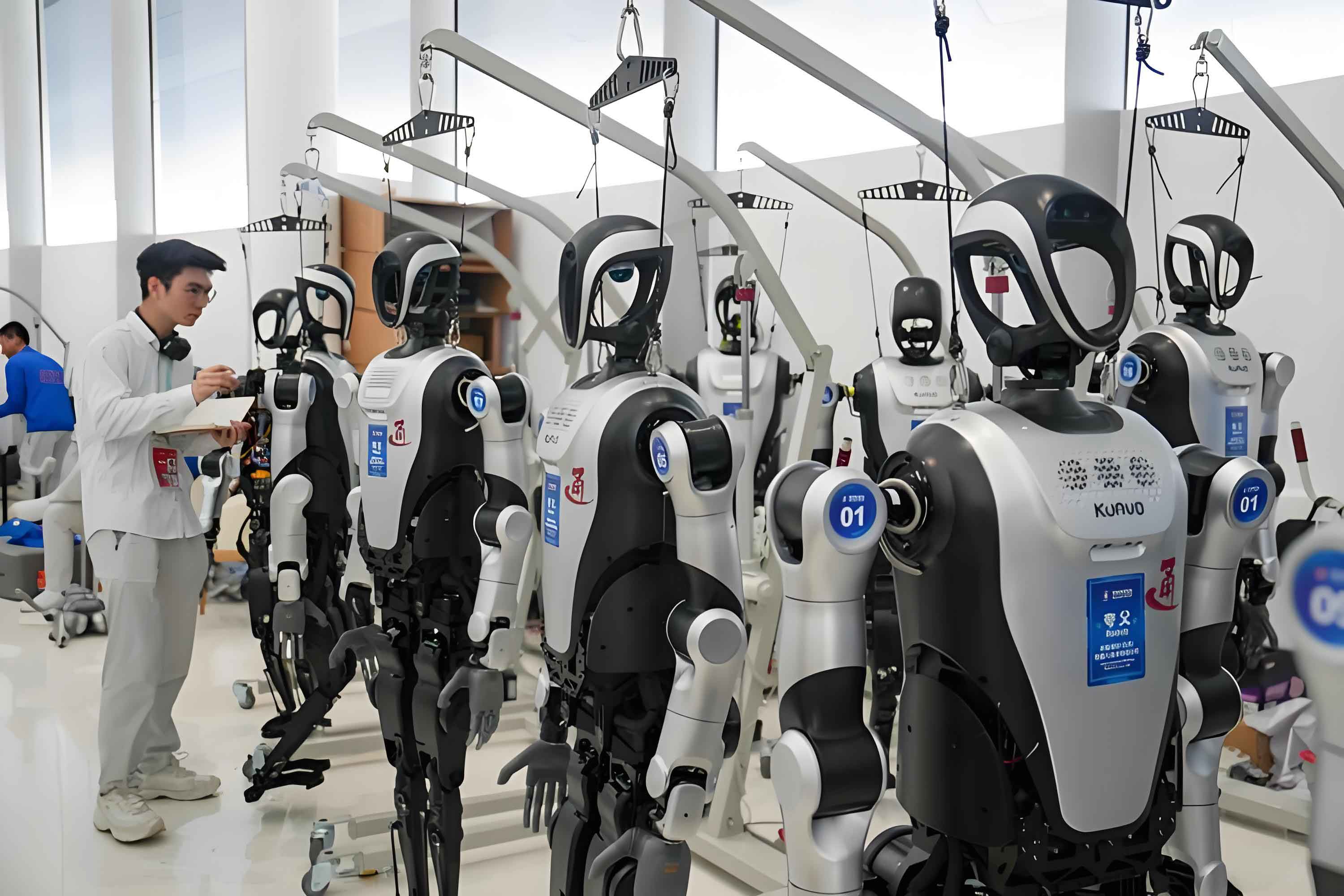
In exploring the duty of care for humanoid robot users, I begin by justifying its necessity. The rationale stems from three core functions: social, ethical, and normative. Socially, humanoid robots alter human interactions by acting as proxies in交往scenarios, but they also amplify risks of abuse or失控. For instance, a user might instruct a humanoid robot to engage in surveillance or physical tasks that endanger others. The duty of care compels users to act prudently, thereby safeguarding communal safety in智能societies. Ethically, over-reliance on humanoid robots can erode human agency and communal ties; by imposing a duty of care, we reinforce the “human-as-subject” framework, ensuring that users remain accountable and respectful of fellow beings. Normatively, this duty serves as a flexible tool to balance safety with innovation, adjusting standards based on technological maturity or risk levels across sectors like healthcare versus manufacturing.
To delineate the duty of care, I categorize it into three primary obligations, summarized in the table below. Each obligation addresses distinct phases of humanoid robot operation, reflecting the user’s role as a commander and supervisor.
| Obligation Type | Description | Key Examples |
|---|---|---|
| Reasonable Instruction Obligation | Ensuring that commands given to the humanoid robot are lawful, ethical, and clear to prevent harm from intended actions. | Avoiding instructions for defamation, unauthorized data processing, or hazardous tasks. |
| Reasonable Operation Obligation | Adhering to operational norms to prevent malfunctions in the humanoid robot’s mechanical, electrical, or信息systems. | Not dismantling safety guards, maintaining secure电气environments, and protecting data integrity. |
| Process Management Obligation | Continuously monitoring the humanoid robot’s performance and intervening when necessary to avert dangers. | Observing for alerts, executing emergency stops, or taking over control during anomalies. |
The reasonable instruction obligation focuses on the content of user directives. Since a humanoid robot acts as an extension of the user, any illicit or ambiguous command can lead to侵权consequences. For example, instructing a humanoid robot to generate deepfake content violates laws against misinformation, thus breaching this duty. Mathematically, we can express the risk of improper instructions as a function of intent and context: $$ R_i = f(I, C) $$ where \( R_i \) is the risk score, \( I \) denotes the instruction’s intent (e.g., malicious or benign), and \( C \) represents the contextual factors like legal frameworks. Users must minimize \( R_i \) by aligning instructions with normative standards.
Next, the reasonable operation obligation pertains to the user’s handling of the humanoid robot’s physical and digital components. Humanoid robots are complex systems requiring meticulous care; negligence in operations can trigger failures. Consider a scenario where a user ignores maintenance protocols, leading to a humanoid robot’s limb malfunction during a task. The duty mandates adherence to safety standards, such as those outlined in international robotics guidelines. A formula for operational risk might integrate variables like maintenance frequency \( M \), environmental hazards \( E \), and user expertise \( U \): $$ R_o = \alpha M^{-1} + \beta E + \gamma U^{-1} $$ where \( \alpha, \beta, \gamma \) are coefficients, and lower \( R_o \) indicates safer operations. Users must optimize these parameters through diligent practices.
Lastly, the process management obligation emphasizes ongoing vigilance. Unlike traditional tools, humanoid robots possess autonomous decision-making capacities, which can unpredictably deviate and cause harm. Thus, users cannot remain passive; they must monitor and be ready to intervene. This obligation is crucial for addressing失控risks, where a humanoid robot might act beyond its programming. The necessity of this duty can be modeled using probability theory: let \( P_d \) be the probability of damage, \( P_m \) the probability of timely monitoring, and \( P_i \) the probability of effective intervention. The overall risk mitigation is given by: $$ RM = 1 – (P_d \times (1 – P_m \times P_i)) $$ Users enhance \( RM \) by maintaining high \( P_m \) and \( P_i \), such as by responding to alerts from the humanoid robot’s systems.
However, not every instance of harm invokes the duty of care. Its establishment hinges on three conjunctive要件, which I formalize as a logical framework. These要件ensure that the duty is fair and feasible, preventing undue burdens on humanoid robot users.
| 要件 | Definition | Mathematical Representation |
|---|---|---|
| Necessity | The duty must be a viable means to prevent harm; if履行would not avert damage, it is not obligatory. | $$ N: \text{Duty} \rightarrow \Delta Risk < 0 $$ where \( \Delta Risk \) is the change in risk due to duty fulfillment. |
| Foreseeability | The user could reasonably anticipate harm from omitting the duty, based on a理性user’s knowledge. | $$ F: P(\text{Harm} | \text{Breach}) > \theta $$ with \( \theta \) as a threshold probability derived from norms. |
| Avoidability | The user has the capacity to take preventive measures within their control scope. | $$ A: C_u \geq C_r $$ where \( C_u \) is user’s capability and \( C_r \) is required effort to avoid harm. |
The necessity要件filters out duties that are ineffective. For a humanoid robot user, this means that if, say, regular software updates would not have prevented a hardware flaw, then that update duty is not necessary. Foreseeability relies on an objective standard—the理性user, who is informed about humanoid robot operations and contextual risks. In high-risk settings, like using a humanoid robot in construction, foreseeability is heightened, demanding greater caution. Avoidability considers the user’s practical limits; for instance, if a humanoid robot malfunctions due to a cryptic algorithmic error beyond user comprehension, avoidability may be low, excusing the duty.
To operationalize these要件, consider a unified condition for duty existence: $$ \text{Duty of Care Exists} = N \land F \land A $$ where \( \land \) denotes logical conjunction. This formula underscores that all three must hold for liability to attach. In practice, assessing these often involves weighing factors like the humanoid robot’s risk profile, the importance of protected interests (e.g., life vs. property), and the cost of prevention. I illustrate this with a hypothetical: a user instructs a humanoid robot to deliver items in a crowded area. If the humanoid robot suddenly swerves due to a sensor glitch (foreseeable given known issues), and the user could have halted it via a remote stop (avoidable), but failed to monitor (breach of process management), then duty is established assuming necessity (monitoring would have helped).
Despite these obligations, users’ control over humanoid robots is inherently limited. They depend on manufacturers and AI providers for technical insights and tools. Therefore, I propose an exemption clause: the duty of care is waived when these entities fail to furnish necessary auxiliary support. This exemption aligns with fairness, as users cannot be expected to manage risks beyond their grasp. Auxiliary duties include providing clear instructions, real-time alerts, emergency controls, and update guidance for the humanoid robot. Formally, if \( S_m \) and \( S_p \) represent the辅助fulfillment by manufacturers and providers respectively, and \( S_{\text{req}} \) is the required support threshold, then exemption occurs when: $$ S_m + S_p < S_{\text{req}} $$ This inequality highlights that insufficiency in support absolves the user, shifting责任to those better equipped.
This exemption is vital to prevent strict liability on humanoid robot users. For example, if a humanoid robot’s AI system fails to warn about a critical bug, and the user lacks alternative means to detect it, the user’s duty of care in process management is excused. Conversely, if adequate warnings are given but ignored, the duty remains. This dynamic fosters a collaborative risk ecosystem, incentivizing manufacturers and providers to enhance humanoid robot safety features and user education.
Expanding on the practical implications, I delve into case studies and future trends. As humanoid robots evolve, their duty of care will intersect with emerging technologies like brain-computer interfaces or swarm robotics. Users must adapt to new interaction modalities, possibly requiring higher-order cognitive skills. Moreover, the globalization of humanoid robot markets necessitates harmonized legal standards—a challenge I address by advocating for international frameworks that embed the duty of care principles discussed here.
In conclusion, the duty of care for humanoid robot users is a multifaceted construct essential for navigating the智能era. Through reasonable instructions, operations, and process management, users can harness the benefits of humanoid robots while mitigating perils. The要件of necessity, foreseeability, and avoidability provide a robust filter for liability, and exemptions for inadequate support ensure equity. As we advance, continuous dialogue among stakeholders—users, makers, policymakers—will refine this duty, ensuring that humanoid robots serve humanity responsibly. My perspective, grounded in interdisciplinary analysis, affirms that proactive legal and ethical scaffolding is not a hindrance but a catalyst for sustainable innovation with humanoid robots at its core.