
As a researcher deeply immersed in the field of robotics and intelligent systems, I observe a pivotal moment in technological history. The humanoid robot, a long-standing symbol of advanced robotics, is transitioning from laboratory prototypes and conceptual showcases to the threshold of widespread, practical application. This transition is not merely a technological evolution; it represents the emergence of a new quality productive force with the potential to reshape industries, redefine labor, and enhance societal well-being on a global scale. In this transformative race, the strategic utilization of a nation’s intrinsic advantages becomes paramount. I posit that for nations possessing a megamarket—characterized by vast scale, diverse industrial sectors, and rapid digital adoption—the most effective catalyst for achieving a leapfrog development in humanoid robot technology is to strategically channel this market’s power toward accelerating iterative technological refinement and scalable deployment.
The global landscape for humanoid robot development is dynamic and competitive. Established players, primarily in the United States and Japan, have built formidable foundations in core research areas. Companies have demonstrated remarkable progress in dynamic motion control, embodied AI, and sophisticated mechanical design. These advancements set a high benchmark. However, the industry universally remains in its nascent, pre-commercialization phase. High unit costs, limitations in general-purpose autonomy, and a scarcity of robust, large-scale application scenarios are shared challenges. This early stage presents a unique window of opportunity. It is a period where the trajectory of the entire industry can be significantly influenced by the approach taken to bridge the gap between technological capability and real-world utility. The nation that successfully creates a virtuous cycle of application-driven iteration and cost reduction will not only catch up but potentially define the future standards of the industry.
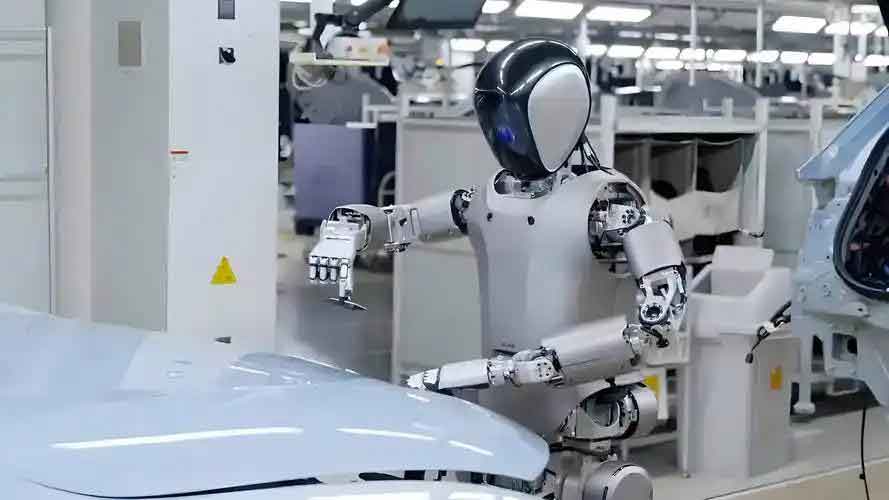
From my perspective, the development paradigm must shift. The traditional model of isolated R&D, followed by a search for a market, is insufficient for a technology as complex and integrative as the humanoid robot. Instead, a market-pull strategy, amplified by strategic policy support, is essential. A megamarket offers an unparalleled testing ground. Its diverse manufacturing base, expansive service sector, and pressing needs in areas like an aging population and public safety present a rich tapestry of potential application scenarios. Deploying humanoid robots in these real-world environments, even initially in limited capacities, generates invaluable data. This data feeds back into the development loop, exposing weaknesses in perception algorithms, stress-testing hardware durability, and revealing unforeseen operational challenges. Each cycle of deployment, feedback, and improvement brings the technology closer to reliability and affordability. This is the core thesis: the scale and diversity of the market are not just a target for eventual sales, but the most powerful R&D engine available.
Current Industrial Landscape and the Persistent Gap
My analysis of the current industrial ecosystem, particularly within contexts possessing a megamarket, reveals a profile of significant strength coupled with critical vulnerabilities. The foundational elements for a thriving humanoid robot industry are increasingly falling into place.
| Dimension | Strengths in a Megamarket Context | Persistent Challenges & Gaps |
|---|---|---|
| Industrial Chain & Supply Base | Comprehensive, covering core components (sensors, servo motors, reducers, controllers), software,本体, and system integration. Strong manufacturing capabilities and agile suppliers from adjacent industries (e.g., automotive, industrial robotics) are rapidly entering the field. | Fragmentation at high-end; reliance on imported specialized components (e.g., high-precision force/torque sensors, advanced actuators). |
| Market Momentum & Investment | Explosive growth forecast; high levels of venture capital and corporate investment; proliferation of startups; strong policy support via national strategies and innovation centers. | Market is still speculative and driven by potential rather than realized revenue; risk of capital misallocation without clear application pathways. |
| Intellectual Property & Innovation Output | High volume of patent filings and academic publications, indicating vigorous research activity. | Quality and foundational nature of patents may lag; innovation often focuses on incremental improvement or application-specific solutions rather than breakthrough core technologies. |
This robust industrial base is a tremendous asset. It enables rapid prototyping, cost-effective manufacturing at scale, and the kind of iterative “tinkering” that is crucial for hardware development. However, when we drill down into the core technological competencies required for a truly capable, autonomous humanoid robot, the gaps become apparent. These gaps are not merely incremental; they represent fundamental hurdles in software and integration.
1. Embodied Artificial Intelligence and Cognitive Architectures: The intelligence of a humanoid robot is its most defining and challenging feature. The gap here is in developing AI that is not just powerful in a data center, but is effectively embodied. This involves:
- Multi-modal Perception and Cognition: Seamlessly fusing and interpreting data from vision, LiDAR, force/torque, tactile, and auditory sensors in real-time to build a coherent understanding of a dynamic, unstructured environment.
- General-Purpose Task Planning and Reasoning: Moving beyond pre-programmed or narrowly learned tasks. A general-purpose humanoid robot must be able to decompose a high-level command (“clean this room”) into a sequence of logical sub-tasks, handle unexpected obstacles, and recover from failures autonomously. The current state often involves models that perform well in controlled settings but lack this robust, common-sense reasoning.
- Learning from Limited Demonstration and Interaction: Efficiently acquiring new skills through imitation learning, reinforcement learning in simulation and reality, and human feedback, without requiring prohibitively large datasets for every single task.
We can conceptualize the challenge of embodied AI performance as a function of data diversity, algorithmic efficiency, and computational resource constraints, loosely expressed as:
$$ \text{EmbodiedAI\_Performance} = f\left( \mathcal{D}_{multimodal}, \mathcal{A}_{efficiency}, \mathcal{R}_{compute} \right) $$
where maximizing performance requires optimizing across diverse real-world data $\mathcal{D}$, efficient and generalizable algorithms $\mathcal{A}$, and the practical limits of onboard computation $\mathcal{R}$.
2. High-Fidelity Sensing and Dynamic Control: The physical interaction of the humanoid robot with the world demands extreme precision and reliability.
- Advanced Sensorization: While standard sensors are commoditized, high-end components like six-axis force/torque sensors remain a challenge. Issues include structural design for precision, calibration stability, durability under repeated stress, and the real-time data fusion from dozens of such sensors across the body.
- Dynamic Balance and Whole-Body Control: Achieving human-like agility, recovering from pushes, walking on uneven terrain, and manipulating objects while maintaining balance requires advanced control theories. The dynamics can be modeled by complex equations, such as variations of the Lagrangian dynamics for a floating-base system:
$$ \mathbf{M}(\mathbf{q})\ddot{\mathbf{q}} + \mathbf{C}(\mathbf{q}, \dot{\mathbf{q}})\dot{\mathbf{q}} + \mathbf{G}(\mathbf{q}) = \mathbf{S}^T \boldsymbol{\tau} + \mathbf{J}_c^T \mathbf{F}_c $$
where $\mathbf{q}$ are generalized coordinates, $\mathbf{M}$ is the inertia matrix, $\mathbf{C}$ captures Coriolis forces, $\mathbf{G}$ gravity, $\boldsymbol{\tau}$ actuator torques, and $\mathbf{F}_c$ contact forces. Real-time, robust solutions to these underactuated, constrained control problems in unpredictable environments are non-trivial. - Dexterous Manipulation: The “robotic hand” problem persists. Creating hands that match the sensitivity, compliance, strength, and durability of the human hand, with a comparable weight and power budget, is a major hurdle in mechanics, materials, and control.
The Imperative of Scalable Scenario Application
This analysis of the technological gap leads directly to the central argument. Waiting for laboratories to perfectly solve these fundamental problems before deployment will cede the strategic initiative. The alternative is to use the megamarket as an open-air laboratory. Scalable scenario application is the bridge that connects current technological capability with the innovation needed to overcome its limitations.
The process is a feedback loop of immense value. Deploying humanoid robots in real scenarios—even with partial autonomy or in structured sub-tasks—generates a continuous stream of “corner case” data. This is data that simulators cannot generate and lab environments cannot replicate. It includes sensor noise patterns in a dusty factory, the subtle force feedback of inserting a flexible hose, the visual clutter of a home environment, or the failure modes when a dynamic step is miscalculated. This data is the fuel for improving the very algorithms and hardware that are currently deficient.
Identifying the right initial scenarios is critical. The goal is to find applications that are valuable enough to justify early adoption, structured enough to be tractable, yet complex enough to drive meaningful technological progress. Based on this logic, two primary domains emerge as first-wave candidates:
| Scenario Domain | Specific Applications | Value Proposition & Driver for Iteration |
|---|---|---|
| Industrial Manufacturing | Final assembly (e.g., wire harnessing, component insertion), logistics handling for mixed SKUs, quality inspection in hard-to-reach areas, tool fetching and assistance for human workers. | High economic value; semi-structured environments; drives needs in dexterous manipulation, safe human-robot collaboration, and task-specific AI. ROI can be directly measured. |
| Emergency Response & Public Safety | Remote inspection in hazardous environments (chemical, radiation), reconnaissance in disaster zones (collapsed structures), basic support in firefighting scenarios. | Social value offsets high initial cost; environments are highly unstructured, driving advances in locomotion, robustness, and perception in poor visibility. Often government-funded. |
Scaling applications in these domains is not merely a matter of placing robots in facilities. It necessitates the co-development of a new ecosystem of enabling resources. I identify two critical layers that must be built concurrently:
1. The Foundational Infrastructure Layer: This includes shared, high-performance computing resources for training massive embodied AI models; large-scale, curated, and annotated scene datasets specific to humanoid robot tasks (e.g., “Industrial Assembly Scene Dataset v2.0”); and robust communication networks for cloud-edge-device coordination. Without these shared resources, every company must build its own from scratch, a massive duplication of effort and cost that slows overall progress.
2. The Tools and Platform Layer: This involves standardized software frameworks and middleware. The current landscape suffers from proprietary silos—each humanoid robot platform has its own API, simulation environment, and development tools. This stifles collaboration and makes it difficult for third-party developers to create applications. A unified or interoperable platform layer, perhaps built around an open-source智能体 framework, would dramatically accelerate innovation by allowing developers to focus on task-level logic rather than low-level integration.
The equation for scalable application success, therefore, expands to include these co-dependent factors:
$$ \text{Scaling Success}(t) = \int_{0}^{t} \left[ \mathcal{T}(t) \cdot \mathcal{I}(t) \cdot \mathcal{P}(t) \right] \, dt $$
Here, $\mathcal{T}(t)$ represents the maturity of core humanoid robot technology, $\mathcal{I}(t)$ represents the availability and quality of foundational infrastructure, and $\mathcal{P}(t)$ represents the openness and capability of development platforms. The integral shows that progress is cumulative, and weakness in any factor constrains the whole.
Strategic Policy Recommendations: Orchestrating the Megamarket Advantage
Given the systemic nature of the challenge and the nascent state of the market, a purely laissez-faire approach is likely to result in suboptimal outcomes, duplicated efforts, and delayed maturation. Strategic government action is required to coordinate, de-risk, and accelerate the development of this ecosystem. The role is not to pick winners, but to build the playing field and establish the rules that encourage rapid, collaborative innovation. I propose a multi-pronged strategy:
1. Fostering “Whole-Chain Collaboration” and “Spinoff Innovation”:
- Encourage Innovation Consortia: Facilitate the formation of consortiums led by end-user companies (e.g., automotive manufacturers, logistics giants) and joined by leading humanoid robot firms, component suppliers, and AI research institutes. These consortia should define pressing, shared technical challenges and collaborate on pre-competitive R&D. This “整零协同” (whole-zero collaboration) model aligns the incentives of the entire value chain.
- Mandate “Spinoff” Pathways (“沿途下蛋”): Acknowledge that the path to a general-purpose humanoid robot is long. Actively encourage and fund the application of intermediate technologies in adjacent, mature markets. For instance, a sophisticated robotic arm developed for a humanoid robot can be sold for industrial automation; a robust locomotion algorithm can be licensed for quadruped robots used in inspection. This generates near-term revenue to fund continued R&D, reduces financial risk, and validates component technologies in the field.
2. Instituting the “One-Scenario, One-Platform, One-Alliance, One-Standard” Mechanism: This framework provides a structured, repeatable model for tackling each high-priority application domain.
- One-Scenario: Government and industry jointly select a specific, high-value application scenario (e.g., “electric vehicle battery pack assembly”).
- One-Platform: A dedicated, open-architecture software and data platform is established for this scenario. It provides simulation environments, standard APIs for robot control, and tools for creating task modules.
- One-Alliance: A formal alliance of all stakeholders—end-users, robot makers, integrators, researchers—is formed around this platform. Members contribute to and benefit from shared resources like a scenario-specific专利池 (patent pool) and a collectively built, anonymized operational dataset.
- One-Standard: The alliance works with standards bodies to develop interoperability standards for this scenario, covering data formats, communication protocols, and performance metrics. This prevents vendor lock-in and ensures healthy competition.
3. Deploying Financial and Business Model Innovation, Inspired by Successful Precedents: The early-stage cost barrier is formidable. We must learn from industries that successfully crossed the “valley of death” from prototype to mass market, such as新能源汽车 (new energy vehicles) and solar photovoltaics.
| Instrument | Model (Inspired By) | Application to Humanoid Robots | Intended Effect |
|---|---|---|---|
| Phased Purchase Subsidies | NEV Purchase Subsidies, Feed-in Tariffs | Direct subsidies to end-users (e.g., manufacturing firms, hospitals) for the first 100-1000 units deployed in a certified scenario. Subsidy decreases over time as costs fall. | Lowers initial capital outlay for users, creates guaranteed early market for robot makers, accelerates data collection from the field. |
| Robot-as-a-Service (RaaS) / Leasing Models | Car Leasing, Solar Power Purchase Agreements (PPA) | Promote business models where users pay a monthly fee for robot services (e.g., per-hour of operation, per-task-completed) rather than buying the asset. This can be facilitated by third-party leasing companies. | Eliminates large capex, transfers maintenance/upgrade burdens to provider, aligns provider incentive with robot uptime and performance, makes costs predictable for users. |
| Shared Infrastructure Funding | National High-Performance Computing Initiatives | Public investment in, or grants for, the creation of large-scale embodied AI training centers and open, high-quality scene datasets for research and SME access. | Democratizes access to essential R&D resources, prevents duplication, raises the baseline capability for all players in the ecosystem. |
The financial logic of the subsidy model can be modeled to show its role in kickstarting the virtuous cycle. Let the initial high cost of a humanoid robot be $C_0$. A subsidy rate $s$ reduces the user’s cost to $(1-s)C_0$. This stimulates initial demand $Q_0$. Deployment generates field data, leading to technical improvements and manufacturing learning curves, reducing the cost for the next period. The learning curve effect is often expressed as:
$$ C_n = C_0 \cdot n^{-b} $$
where $C_n$ is the cost of the $n^{th}$ unit, and $b$ is the learning elasticity (a constant representing the rate of cost reduction per doubling of cumulative production). The subsidy effectively accelerates the movement along this curve by increasing initial $n$, thus bringing forward the point where $C_n$ reaches commercial viability without subsidy. The cycle becomes self-reinforcing: lower cost → more deployment → more data → faster improvement → lower cost.
Conclusion: Forging a New Engine of Growth
The journey toward ubiquitous, capable humanoid robots is a marathon, not a sprint. It is a deeply complex endeavor that sits at the intersection of mechanical engineering, artificial intelligence, materials science, and human-machine interaction. For nations with the foresight and capacity to act, the development of this industry is not just about technological prestige; it is about cultivating a powerful new engine for economic growth, enhancing national productivity, and addressing profound societal challenges from elder care to hazardous work.
The strategic advantage lies not in attempting to simply outspend or out-research established leaders in their own, lab-centric game. The advantage lies in changing the game itself. By consciously and systematically leveraging the unique asset of a超大规模市场 (megamarket), a nation can create a powerful, real-world accelerator for humanoid robot development. This requires a symbiotic partnership between forward-thinking policy and agile, ambitious industry. Policy must act as the architect of the ecosystem—building shared infrastructure, establishing collaborative frameworks, and providing targeted, smart incentives to de-risk early adoption. Industry must engage with this framework, focusing innovation on solving real problems in real scenarios, embracing open collaboration where it makes sense, and iterating with relentless speed based on field data.
The vision is clear: a future where humanoid robots, refined through countless cycles of real-world application in the world’s most dynamic and demanding market, evolve from costly prototypes into reliable, versatile partners. They will work alongside humans in factories, assist in homes and hospitals, and perform tasks in environments too dangerous for people. By harnessing the megamarket as both a testing ground and a launchpad, we can compress the timeline to this future, ensuring that the tremendous benefits of this new quality productive force are realized swiftly and broadly, for the betterment of the economy and society at large.