
As an industry analyst deeply immersed in the evolution of intelligent systems, I observe that the era of humanoid robots is no longer a distant concept from science fiction. Integrating advanced technologies such as artificial intelligence, high-end manufacturing, and new materials, humanoid robots stand poised to become the next disruptive product following computers, smartphones, and new energy vehicles. They promise to profoundly transform human production and lifestyles, reshaping the global industrial development landscape. Currently, the rapid advancement of humanoid robot technology has established it as a new high ground for technological competition, a new track for future industries, and a new engine for economic development, boasting immense development potential and broad application prospects.
The deep integration of artificial intelligence and smart hardware technologies is accelerating the transition of humanoid robots from laboratory concepts to large-scale applications. Market analysis indicates a period of explosive growth. According to one prominent industry report, the scale of China’s humanoid robot industry reached approximately ¥2.76 billion in 2024, representing a staggering year-on-year growth of 53.33%. Analyst forecasts are even more optimistic, projecting the industry scale to surge to ¥5.3 billion in 2025 and reach an estimated ¥38.7 billion by 2028. This exponential growth trajectory is underpinned by three core drivers: enhanced technological maturity, expanding application scenarios, and increased policy support.
| Year | Projected Industry Scale (¥ billions) | Year-over-Year Growth (%) |
|---|---|---|
| 2023 | 1.8 | — |
| 2024 | 2.76 | 53.33 |
| 2025 | 5.3 | 92.03 (Projected) |
| 2026 | 10.3 | 94.34 (Projected) |
| 2027 | 20.0 | 94.17 (Projected) |
| 2028 | 38.7 | 93.50 (Projected) |
The compound annual growth rate (CAGR) for the forecast period from 2023 to 2028 can be modeled as:
$$CAGR = \left( \frac{Final\ Value}{Initial\ Value} \right)^{\frac{1}{n}} – 1$$
For the period 2023 (¥1.8B) to 2028 (¥38.7B), where n=5 years:
$$CAGR = \left( \frac{38.7}{1.8} \right)^{\frac{1}{5}} – 1 \approx 0.847 \text{ or } 84.7\%$$
This signifies a period of hyper-growth for the humanoid robot sector.
A Diversified and Dynamic Enterprise Ecosystem
The landscape of humanoid robot manufacturers is characterized by remarkable diversity and vibrancy. Statistical data reveals a healthy mix of enterprise types driving innovation from different angles.
| Enterprise Type | Approximate Share | Core Characteristics & Advantages |
|---|---|---|
| Start-ups (<5 years old) | 42% | High technical flexibility and market sensitivity; often pioneer breakthroughs in niche applications with differentiated products. |
| Specialized System R&D Firms | 38% | Strong capabilities in embedded systems design, motion control algorithms, and servo drive technology; able to quickly adapt solutions to various scenarios. |
| Cross-border Enterprises (from家电, automotive, internet, etc.) | 11% | Leverage expertise from their core sectors (e.g., automatic control, powertrains, structural components, autonomous driving) to challenge the field of embodied intelligence. |
| Core Component Suppliers | 9% | Play a decisive role in key areas like high-precision reducers, sensors, and controllers; foundational for achieving industrial autonomy and control. |
This ecosystem fosters intense innovation, as evidenced by patent activity. Data shows there are over a thousand existing patents related to humanoid robots in one major market. The application heat has skyrocketed in recent years, with annual patent filings growing by 276.47% and 202.34% in two consecutive years, reaching 128 and 387 applications respectively. The patent portfolio is dominated by invention patents, which account for nearly 63% of the total, followed by utility model patents (28%) and design patents (9%). On a global scale, one region has emerged as the clear leader in intellectual property generation for humanoid robot technology, filing nearly 6,000 patents in the past five years—more than any other country or region and significantly ahead of traditional leaders in North America, Europe, and East Asia.
| Year | Patent Applications Filed | Growth Rate (%) |
|---|---|---|
| 2020 | 46 | — |
| 2021 | 40 | -13.04 |
| 2022 | 34 | -15.00 |
| 2023 | 128 | 276.47 |
| 2024 | 387 | 202.34 |
Robust Investment Fueling Rapid Advancement
Rising industry fervor is mirrored in a simultaneous “dual growth” in market size and investment and financing. Global reports estimate the worldwide market for humanoid robots reached $2.03 billion in 2024 and is projected to expand to $13.25 billion by 2029, reflecting a forecast CAGR of approximately 45.5%. The investment landscape within the broader field of embodied intelligence, of which the humanoid robot is a critical sub-sector, has remained active. In 2024 alone, the field witnessed 182 financing deals totaling ¥14.05 billion. Notably, the humanoid robot segment itself has demonstrated resilient and growing appeal to investors. Its annual financing scale has climbed from ¥1.58 billion in 2020 to ¥7.23 billion in 2024, achieving a CAGR of 35.6%.
| Year | Number of Financing Events (Embodied Intelligence) | Total Financing Scale (¥ billions) |
|---|---|---|
| 2020 | ~65 | ~15 |
| 2021 | ~95 | ~25 |
| 2022 | ~145 | ~85 |
| 2023 | ~180 | ~135 |
| 2024 | 182 | 140.5 |
This influx of capital is accelerating the iterative upgrade of humanoid robot technology and promoting the landing of commercial applications. In 2024, global shipments of humanoid robots (excluding small educational devices) exceeded 4,000 units, with a market scale surpassing ¥4 billion. One single market contributed 2,800 of those units, representing a ¥2 billion scale. As we move forward, feedback from companies suggests quarterly orders in early 2025 have already surpassed the total for the entirety of 2024, with some announcing plans for “hundred-unit” or even “thousand-unit” level mass production. The full-year market is expected to grow three to fourfold, potentially breaking the ¥8 billion mark.
The strong funding environment has attracted a wave of early-stage ventures. Industry data indicates that in one year, the humanoid robot sector in a key market saw at least 65 financing events. The majority of these funded companies were in very early stages, with over 80% of the rounds being Series A or earlier (including Seed, Angel, and Pre-A rounds). This signifies vast confidence in the long-term potential of the humanoid robot platform.
An increasingly Mature Industrial Chain
The rapid development of the humanoid robot industrial chain is poised to have a profound impact on the global economy and social structure. As an integration of next-generation intelligent equipment, this industry is reshaping global manufacturing patterns, driving the upgrade from traditional industrial automation towards flexibility and intelligence. Furthermore, a mature supply chain will help alleviate global structural labor shortages, particularly in manufacturing, medical care, and high-risk operations, where humanoid robots can take over repetitive or dangerous tasks.
A relatively complete industrial chain system has taken shape in a leading market. The upstream segment comprises suppliers of foundational hardware like motors, sensors, and reducers—the core components that form the rotational joints, linear joints, dexterous hands, perception systems, and torso of a humanoid robot. The midstream encompasses system integrators and whole-machine developers who assemble these components into functional units. Downstream is the terminal application market, spanning diverse fields like healthcare, education, disaster relief, public security, manufacturing, and home companionship.
The cost structure of a humanoid robot highlights the critical importance of key components. Reducers and the servo system often constitute the largest cost blocks, together accounting for a significant portion of the total manufacturing expense.
| Component Category | Approximate Cost Share |
|---|---|
| Reducers | 36% |
| Servo System | 24% |
| Controller | 12% |
| Robot Body (Structure) | 12% |
| Other | 16% |
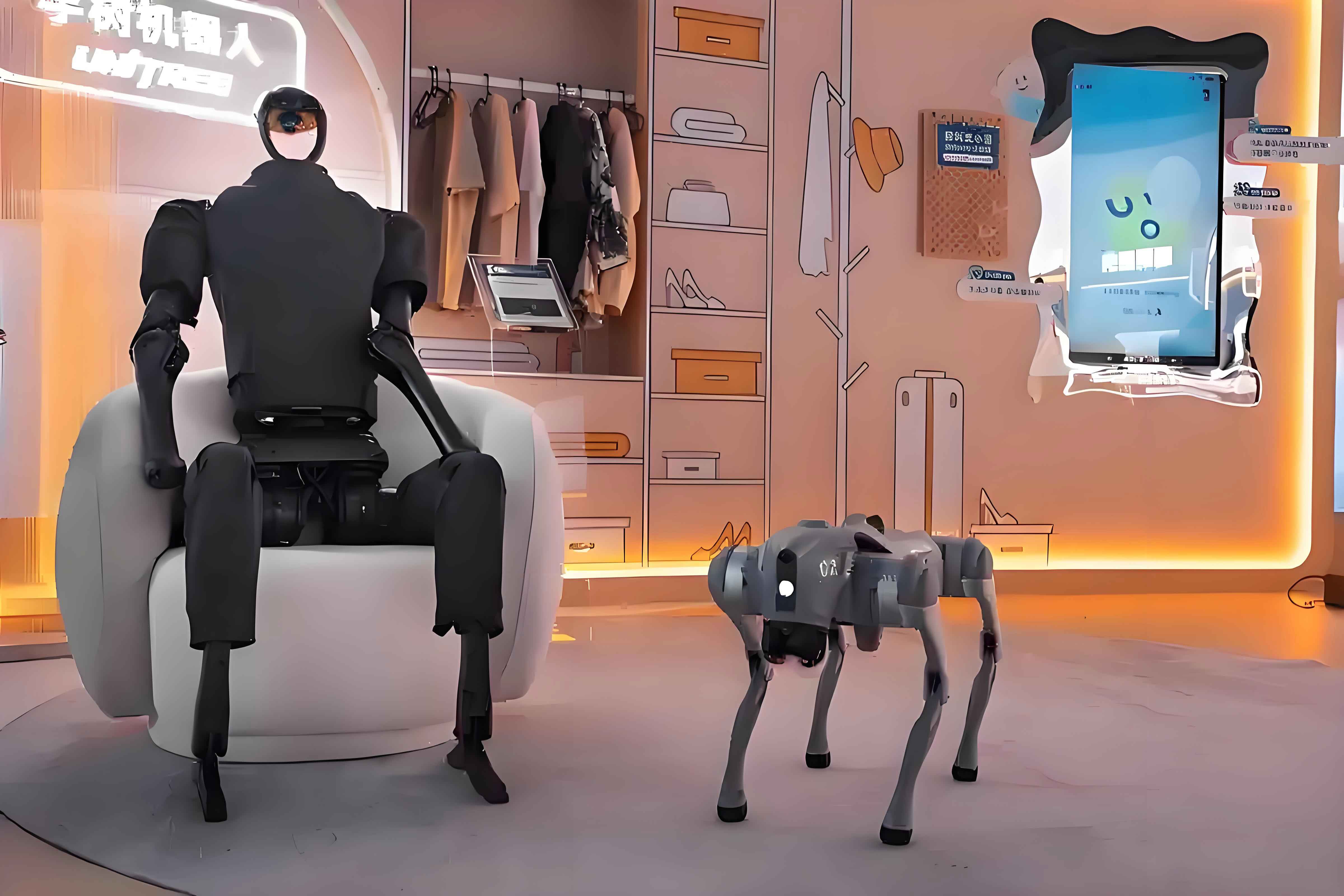
Technology Enabling Diversified Industry Applications
The application prospects for humanoid robots are vast and expanding. From installing high-voltage components in automotive factories to domestic tasks, and from assisting in medical surgeries to stage performances, the technology is penetrating various domains. Empowered by large AI models acting as their “brains” and breakthroughs in domestic core components, humanoid robots are evolving into true “intelligent agents,” potentially becoming the next-generation universal terminal that reshapes human life.
Several key sectors present immense opportunities:
- Smart Eldercare: With a growing aging population, demand for diversified, high-quality elderly care is surging. The smart health and elderly care service industry is facing tremendous opportunities. The market size for smart elderly care in a key region was estimated at approximately ¥68 trillion in 2024, with a CAGR of 12.34%. It is projected to reach ¥72.1 billion in 2025. Humanoid robots can provide companionship, physical assistance, and monitoring, addressing labor shortages in this critical sector.
- Smart Healthcare: Humanoid robots can assist surgeons with high-precision procedures, care for rehabilitation patients, and provide physiotherapy services, alleviating the burden on medical staff. The smart healthcare market in a leading region reached ¥111.37 billion in 2024 and is expected to grow to ¥120 billion in 2025.
- Smart Logistics: In a favorable development environment, the smart logistics market is experiencing rapid growth. The market size was about ¥854.6 billion in 2024 and is forecast to reach ¥965.5 billion in 2025. Humanoid robots can be deployed for complex picking, sorting, and last-meter delivery in unstructured environments.
| Application Sector | 2024 Market Size Estimate | 2025 Market Size Forecast |
|---|---|---|
| Smart Eldercare | ~¥68,000 billion (Total Industry) | ~¥72.1 billion (Focused Segment) |
| Smart Healthcare | ¥111.37 billion | ¥120 billion |
| Smart Logistics | ¥854.6 billion | ¥965.5 billion |
Prominent Regional Clusters Driving Development
From a geographical perspective, the humanoid robot industry exhibits a typical “head city cluster” characteristic. Three metropolitan areas have formed nationally leading cores for research, development, and industrialization.
One northern capital leverages the technical resources of top universities and research institutes to incubate a batch of technology-oriented enterprises focused on breakthroughs in intelligent perception, gait control, and language interaction. These entities are crucial forces pushing the humanoid robot from technical validation toward practical implementation.
A major eastern coastal city attracts innovative enterprises with its open industrial policies and capital environment. Companies based here possess strong system integration and commercialization capabilities, continuously innovating in product design, interactive interfaces, and cloud control to create humanoid robots with higher usability and user-friendliness.
A southern tech hub, as a powerhouse for China’s electronic information industry, boasts complete robotic industry chain supporting capabilities. Enterprises here have developed rapidly, with their products already applied in diverse scenarios such as education and training, exhibition tours, and commercial reception, demonstrating strong mass production capabilities and market expansion potential.
Incomplete statistics suggest these three cities collectively account for over 60% of the country’s total humanoid robot manufacturers. This clustering effect fosters synergistic innovation across the industrial chain’s upstream and downstream, strengthens resource integration, shortens product iteration cycles, and enhances overall industrial competitiveness.
| City/Region | Approximate Share of National Manufacturers |
|---|---|
| Northern Capital (Beijing) | 25% |
| Eastern Coastal Metropolis (Shanghai) | 18% |
| Southern Tech Hub (Shenzhen) | 18% |
| Other Regions | 39% |
In conclusion, the trajectory for humanoid robots is exceptionally promising. The convergence of technological maturation, vigorous investment, a maturing supply chain, explosive application demand, and concentrated regional innovation creates a powerful vortex of growth. The humanoid robot is transitioning from a research prototype to a tangible economic and social force. While challenges in cost, reliability, and general intelligence remain, the foundational pillars for widespread adoption are being laid at an unprecedented pace. The next decade will likely witness the humanoid robot moving beyond controlled environments into our everyday lives, fundamentally altering how we work, live, and interact with technology. The future of the humanoid robot is not just bright; it is being engineered into reality today.