
As a researcher deeply engaged in the intersection of technology and law, I find the ongoing debate surrounding the legal personality of humanoid robots to be both fascinating and critical. In recent years, the rapid advancement of humanoid robots—those sophisticated machines designed to mimic human form and behavior—has sparked intense discussions in academic and legal circles. The core question is whether these entities should be granted legal personhood, akin to natural persons or corporations. Broadly, scholarly opinions are categorized into three camps: the affirmative view, the negative view, and the compromise view. In this article, I will systematically argue from macro, meso, and micro dimensions in favor of the negative view: that humanoid robots should not be endowed with legal personality. My analysis is grounded in the tool-based perspective of humanoid robots, their lack of self-consciousness and autonomy, and the insurmountable legal complexities they pose in terms of rights, duties, and liabilities.
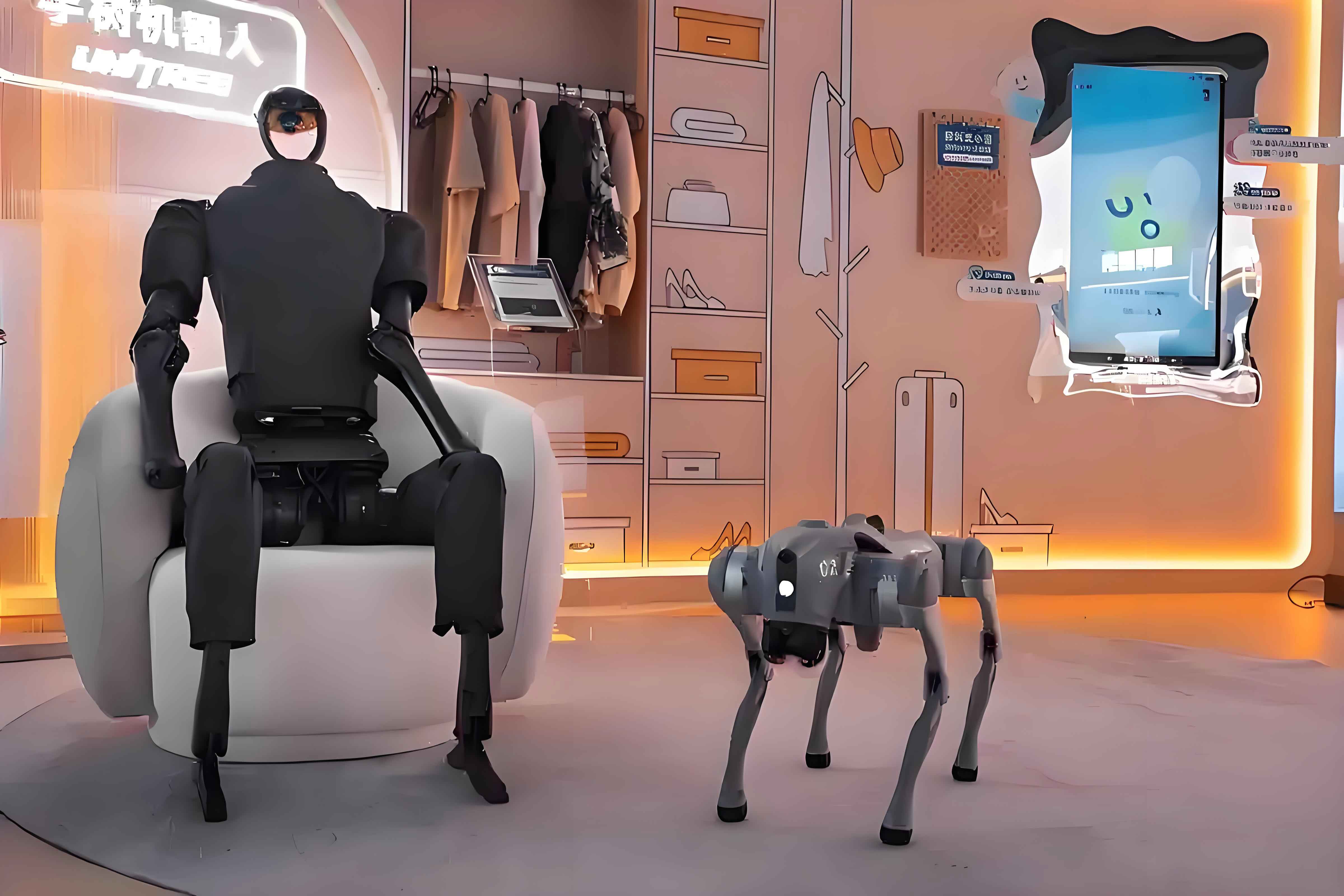
The image above vividly captures the evolving landscape of humanoid robots and their kin, serving as a reminder of their physical presence in our world. However, despite their anthropomorphic appearance and advanced capabilities, I contend that humanoid robots remain fundamentally tools created by humans. This perspective is crucial for maintaining the integrity of our legal systems and societal values.
Macro Dimension: The Tool Theory of Humanoid Robots from an Anthropocentric View
From a macro perspective, the discussion centers on anthropocentrism and the instrumental role of humanoid robots. At its core, granting legal personality to a humanoid robot represents a dilution of human subjectivity. Upholding the tool theory of humanoid robots is not merely a sober recognition of technological essence but a defense of the unique value of human civilization. No matter how intelligent or advanced a humanoid robot becomes, it is ultimately a product of human ingenuity—a means to an end. If we were to confer legal personhood upon humanoid robots, we would blur the essential boundary between humans and machines, potentially undermining human primacy in society and risking human marginalization. Anthropocentrism dictates that all technological development and application should serve human interests as the ultimate goal. From this angle, the purpose of humanoid robots is singular: to enhance human well-being, efficiency, and experience. Therefore, humans are the ends, while humanoid robots are the tools and means. Elevating humanoid robots to a status comparable to humans could erode our perception of human uniqueness.
To elaborate, consider the ontological question: for whom do humanoid robots exist? Despite exhibiting “quasi-subjectivity,” humanoid robots are devoid of intrinsic purpose outside human design. Their existence is contingent on human needs and desires. The following table summarizes the key distinctions between humans and humanoid robots from an anthropocentric tool perspective:
| Aspect | Humans | Humanoid Robots |
|---|---|---|
| Origin | Biological evolution and natural existence | Human engineering and manufacturing |
| Purpose | Intrinsic value, self-determined goals | Instrumental value, human-defined objectives |
| Legal Foundation | Inherent dignity and rights | Derived from human assignment (if any) |
| Role in Society | Autonomous agents and ends in themselves | Tools, assistants, or means to human ends |
| Ethical Consideration | Subjects of moral concern | Objects of moral consideration only indirectly |
This dichotomy underscores that humanoid robots are not autonomous entities but extensions of human will. Their “rights” or “status” would merely be fictional constructs, ultimately controlled by humans. For instance, if a humanoid robot were to own property, the real beneficiary and controller would be its developer or user. This tool-centric view aligns with the philosophical principle that humans must remain at the center of legal and ethical frameworks.
Meso Dimension: The Absence of Self-Consciousness and Autonomy
Delving into the meso dimension, we encounter the philosophical and jurisprudential roots of legal personality. Philosophically, self-consciousness is pivotal. Kantian philosophy emphasizes that humans are ends in themselves, with autonomous consciousness forming the bedrock of personal dignity. Jurisprudentially, legal personality is deeply tied to the principle of autonomy in civil law—the capacity to engage in legal acts based on one’s will and to bear responsibility for them. When scrutinizing humanoid robots through these lenses, a stark gap emerges.
From a philosophical standpoint, consciousness serves as the first demarcation between subject and tool. Consciousness entails subjective experience, self-awareness, emotional feeling, and motivated action, enabling the formation of an “I” concept. Human consciousness is linked to specific brain activities, whereas humanoid robots operate on computational architectures fundamentally different from biological neural systems. Even with advanced large language models, the intelligence displayed by humanoid robots is not synonymous with consciousness. It is merely the outcome of computations based on preset parameters, extensive training data, and model complexity. We can represent this computationally:
Let $C$ denote consciousness, $B$ represent biological brain processes, and $A$ denote algorithmic processes in humanoid robots. Then,
$$ C_{\text{human}} = f(B) \quad \text{where } f \text{ is a biological function} $$
$$ C_{\text{robot}} = g(A) \quad \text{where } g \text{ is a computational function} $$
However, current evidence suggests $C_{\text{robot}} \approx 0$ because algorithms simulate but do not instantiate subjective experience. In other words, humanoid robots lack qualia—the raw feels of experience. This absence is critical; without self-consciousness, a humanoid robot cannot be a true legal subject.
From a jurisprudential perspective, autonomy (or will) is essential for legal agency. The principle of autonomy celebrates the “value of decision” in legal subjects. Human decisions involve reflective judgment, moral reasoning, and intentionality. In contrast, the decision-making process of a humanoid robot is algorithmic optimization over vast datasets. We can model this as:
$$ \text{Decision}_{\text{robot}} = \arg\max_{a \in A} U(a \mid D, \Theta) $$
where $U$ is a utility function, $D$ is the input data, $\Theta$ are model parameters, and $A$ is the set of possible actions. This is deterministic or stochastic based on programming, not free will. Even if a humanoid robot exhibits adaptive behavior, it remains a simulation dependent on human-designed algorithms. Consequently, humanoid robots cannot exercise genuine autonomy or bear responsibility for their “decisions,” as they lack the capacity for reflective self-determination. The following table contrasts human autonomy with robot decision-making:
| Feature | Human Autonomy | Humanoid Robot Decision-Making |
|---|---|---|
| Basis | Conscious will, moral reasoning, and emotional input | Algorithmic processing of data and predefined rules |
| Flexibility | Creative, unpredictable, and context-sensitive | Programmed, bounded by training data and parameters |
| Responsibility | Personal accountability and liability | No inherent accountability; liability falls on humans |
| Legal Relevance | Foundation for legal capacity and personhood | Insufficient for legal personhood; merely instrumental |
Thus, the absence of self-consciousness and true autonomy in humanoid robots disqualifies them from legal personality on philosophical and legal grounds.
Micro Dimension: The Complex Web of Rights, Duties, and Liabilities
At the micro level, legal personality entails a intricate network of rights, duties, and liabilities. Granting such status to humanoid robots introduces systemic obstacles that are difficult to overcome.
First, the exercise of rights by humanoid robots is illusory. Rights are legal powers conferred upon subjects to realize interests, with the choice to exercise them residing in the subject. For humanoid robots, any “enjoyment” of rights is essentially an extension of human control over algorithms. Even if a humanoid robot were granted rights like name or image rights, these would not be inherent but artifacts of human design, with the actual benefits accruing to humans. Similarly, property rights for humanoid robots are nominal; real control lies with developers or users. We can express this formally:
Let $R$ be a set of rights, $H$ denote humans (developers/users), and $HR$ denote humanoid robots. Then,
$$ \text{Effective Holder}(R) = H \quad \text{for all } R \text{ attributed to } HR $$
This means rights assigned to humanoid robots are ultimately proxies for human interests.
Second, the fulfillment of duties by humanoid robots is instrumental. Duties performed by humanoid robots are programmed responses, characterized by passivity and dependence. Passivity means duties are triggered by human presets or commands; dependence means they rely entirely on algorithmic settings in large models. For example, a domestic service humanoid robot, no matter how interactive, is merely a tool for a company to fulfill contractual obligations to consumers. The duty-bearing entity remains human. Consider a duty $D$; its fulfillment by a humanoid robot can be modeled as:
$$ \text{Fulfillment}(D) = \text{Execute}(P, I) $$
where $P$ is the preset program and $I$ is human instruction. The humanoid robot has no volitional commitment to $D$.
Third, the assumption of liability by humanoid robots is impossible. Humanoid robots cannot be liability subjects, as this would lead to responsibility dilution. In current legal frameworks, liability for actions involving humanoid robots falls on developers, producers, or users. Granting legal personality to humanoid robots would create loopholes for these human actors to evade responsibility. Moreover, humanoid robots lack the practical ability to bear liability. They have no independent economic basis for compensation, and punitive functions of law (e.g., criminal sanctions) are ineffective against them. Even proposals like the European Parliament’s suggestion of “electronic personhood” for advanced robots fail to specify accountability mechanisms, rendering such personhood a hollow concept. The liability issue can be summarized with the following equation:
$$ \text{Liability}(HR) = \emptyset \quad \text{whereas} \quad \text{Liability}(H) = L_{\text{actual}} $$
This indicates that liability cannot be meaningfully assigned to humanoid robots.
To synthesize, the table below outlines the legal incapacities of humanoid robots across key dimensions:
| Legal Aspect | Human Capability | Humanoid Robot Incapacity | Reason |
|---|---|---|---|
| Rights Exercise | Autonomous choice and benefit | Proxy control by humans; no genuine interest | Lacks self-consciousness and will |
| Duty Fulfillment | Volitional commitment and adaptation | Programmed execution; passive and dependent | Governed by algorithms, not autonomy |
| Liability Assumption | Economic and moral responsibility | No independent assets; punitive measures ineffective | Tool nature; accountability rests with humans |
| Legal Personhood Basis | Inherent dignity and autonomy | Derived and contingent on human design | Absence of consciousness and true agency |
This comprehensive analysis shows that humanoid robots are ill-suited for integration into the legal personhood framework.
Conclusion: Upholding the Tool Perspective and Legal Stability
In conclusion, after examining the macro, meso, and micro dimensions, I firmly assert that humanoid robots should not be granted legal personality. The humanoid robot, despite its sophisticated mimicry of human form and behavior, remains a tool devoid of self-consciousness, autonomy, and the capacity to engage authentically in legal relations. Granting legal personhood to humanoid robots would not only lack jurisprudential foundation but also risk destabilizing legal systems by creating fictional entities that cannot bear rights, duties, or liabilities.
Instead, we should reinforce the tool theory of humanoid robots. This involves clarifying their status as human instruments and establishing robust liability-allocation mechanisms. For instance, strengthening developer responsibility, implementing insurance schemes, and refining product liability laws can address harms caused by humanoid robots without resorting to artificial personhood. Such approaches ensure that human interests remain paramount while accommodating technological progress.
Ultimately, the discourse on humanoid robots must balance innovation with legal coherence. By recognizing humanoid robots as advanced tools, we preserve human centrality and safeguard the integrity of our legal frameworks. The future of humanoid robot integration into society depends on prudent regulatory strategies that prioritize human welfare and systemic stability, rather than conferring misplaced legal status upon these machines.
Throughout this discussion, the term humanoid robot has been emphasized to underscore its relevance in contemporary debates. The humanoid robot represents a pinnacle of engineering, but its legal treatment must align with its ontological reality. As we advance, let us ensure that our laws reflect the enduring principle that humans are the authors and beneficiaries of technology, not subordinates to it.