
As a researcher immersed in the fields of robotics and advanced sensor technology, I observe that humanoid robots are emerging as a pivotal innovation, integrating artificial intelligence, high-end manufacturing, and new materials. These humanoid robots are anticipated to follow computers, smartphones, and new energy vehicles as disruptive, epoch-defining products, with immense development potential and broad application prospects. Intelligent sensors serve as the core components of the perception systems in humanoid robots, enabling intelligent sensing and autonomous operation, which are foundational for achieving autonomy and intelligence. The high-quality advancement of sensors for humanoid robots is essential to empower the industry’s growth, foster new quality productivity, and propel new industrialization efforts. In this article, I will delve into the current landscape, challenges, and strategic countermeasures, emphasizing the critical role of sensors in humanoid robot evolution, supported by technical analyses, tables, and formulas to provide a comprehensive overview.
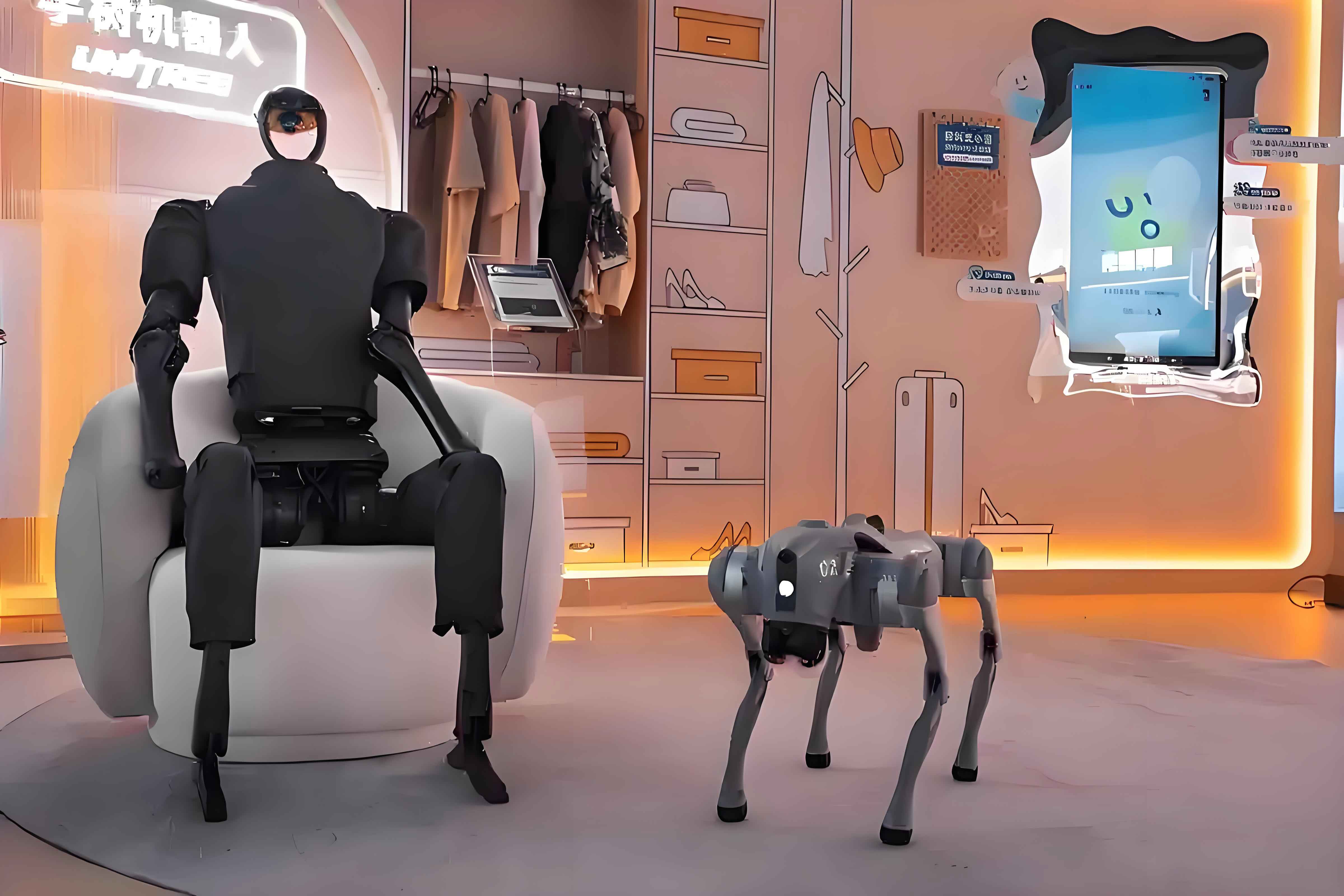
The integration of humanoid robots into various sectors hinges on their ability to perceive and interact with environments akin to humans. This capability is driven by sensor technologies, which act as the “neurons” of artificial intelligence hardware and key “components” in the Internet of Things. Sensors form the bedrock of future industries like industrial internet, smart manufacturing, and humanoid robots. By prioritizing the development of intelligent sensors for humanoid robots, we can accelerate high-quality industrial progress and cultivate new productive forces. From my perspective, the humanoid robot sensor market is rapidly evolving, with significant opportunities and hurdles that demand systematic approaches.
Humanoid robots embody a synthesis of mechanical design, motion control, and artificial intelligence, consisting of sensing systems, control systems, drive and transmission systems, and execution mechanisms. The sensing system, analogous to human sensory organs, perceives external environments and feeds back internal and external information. For humanoid robots, sensors are distributed across this system, including visual, tactile, and auditory types, with potential future applications for olfactory and gustatory sensors in specific scenarios. Key sensors with high technical value and market potential for humanoid robots include six-dimension force sensors, laser radars, flexible electronic skin, high-performance inertial measurement units (IMUs), and force-controlled torque sensors. These components enable humanoid robots to achieve nuanced interactions, such as grasping objects with appropriate force or navigating complex spaces, which are vital for their deployment in services, healthcare, and manufacturing.
To elucidate the sensor landscape for humanoid robots, I present a table summarizing major sensor types, their functions, and associated challenges. This highlights the diversity and complexity inherent in humanoid robot sensor systems.
| Sensor Type | Primary Function in Humanoid Robots | Key Technical Parameters | Common Challenges |
|---|---|---|---|
| Six-Dimension Force Sensor | Measures forces and torques in three axes for precise manipulation | Accuracy (e.g., 0.5% to 3%), range, hysteresis | High cost, calibration complexity, durability under load |
| Laser Radar (LiDAR) | Provides 3D environmental mapping and obstacle detection | Range, resolution, scan rate, power consumption | Size reduction, interference from ambient light, cost |
| Flexible Electronic Skin | Enables tactile sensing for surface texture and pressure detection | Sensitivity, flexibility, response time, multi-point sensing | Scalability, signal consistency, integration with curved surfaces |
| High-Performance IMU | Tracks orientation and acceleration for balance and motion control | Bias stability, noise density, dynamic range | Drift compensation, temperature sensitivity, miniaturization |
| Force-Controlled Torque Sensor | Monitors joint torques for smooth and adaptive movements | Torque range, linearity, overload capacity | Integration with actuators, real-time feedback latency |
The development status of sensors for humanoid robots varies globally, with certain regions leading in specific domains. In my analysis, while domestic enterprises have emerged in areas like laser radars and MEMS microphones, high-end segments remain dominated by foreign companies. For instance, in six-dimension force sensors, firms in the United States and Japan hold technological advantages, with accuracy levels often exceeding those of domestic products. This disparity stems from gaps in precision manufacturing and material science, which are critical for humanoid robot applications. Additionally, much of the research and development is concentrated in academic and research institutions, leading to slower commercialization. A table comparing global market dynamics can illustrate these disparities, emphasizing the need for strategic interventions.
| Sensor Category | Global Market Leaders | Domestic Progress | Technology Gaps |
|---|---|---|---|
| Six-Dimension Force Sensors | Established firms in the U.S. and Japan | Growing R&D, accuracy around 1-3% | High-precision calibration, long-term stability |
| Laser Radars | Mixed, with strong domestic presence | Leading in market share, innovation in 940nm bands | Core detector chips often imported |
| Flexible Electronic Skin | Overseas pioneers in polymer-based designs | Early-stage products, reliability issues | Consistency in tactile response, scalable production |
| High-Performance IMUs | Foreign companies dominate 88% of market | Emerging navigation-grade IMUs | Bias drift mitigation, cost-effective fabrication |
| MEMS Microphones | Global players with advanced fabrication | Significant global market share achieved | Integration with AI for noise cancellation |
Sensors for humanoid robots exhibit distinct characteristics compared to consumer or general industrial sensors. They demand higher reliability, stability, durability, and environmental adaptability due to the diverse and dynamic scenarios humanoid robots encounter. For example, a humanoid robot operating in a household must sense subtle forces when handling fragile objects, while in industrial settings, it may withstand harsh conditions. This necessitates rigorous product qualifications, controlled production processes, and robust supply chains. From a technical standpoint, the performance requirements can be modeled mathematically. Consider a six-dimension force sensor in a humanoid robot’s wrist: the force vector $\mathbf{F} \in \mathbb{R}^6$ (comprising three linear forces and three torques) relates to the strain vector $\mathbf{\epsilon}$ through a stiffness matrix $\mathbf{K}$, expressed as:
$$ \mathbf{F} = \mathbf{K} \cdot \mathbf{\epsilon} $$
Where $\mathbf{K}$ is a $6 \times 6$ matrix that requires precise calibration to minimize errors. Inaccuracies can propagate through the control system, affecting the humanoid robot’s dexterity. Similarly, for IMUs in humanoid robots, the sensor output $\hat{\mathbf{x}}(t)$ at time $t$ includes true values $\mathbf{x}(t)$, bias $\mathbf{b}(t)$, and noise $\mathbf{w}(t)$:
$$ \hat{\mathbf{x}}(t) = \mathbf{x}(t) + \mathbf{b}(t) + \mathbf{w}(t) $$
Advanced filtering techniques, such as Kalman filters, are employed to estimate and correct these errors, ensuring stable locomotion for humanoid robots. The equation for a discrete-time Kalman filter prediction step is:
$$ \mathbf{\hat{x}}_{k|k-1} = \mathbf{F}_k \mathbf{\hat{x}}_{k-1|k-1} + \mathbf{B}_k \mathbf{u}_k $$
Here, $\mathbf{\hat{x}}_{k|k-1}$ is the predicted state, $\mathbf{F}_k$ the state transition model, $\mathbf{B}_k$ the control-input model, and $\mathbf{u}_k$ the control vector for the humanoid robot. Such mathematical foundations underscore the sophistication required in humanoid robot sensor systems.
To address the challenges and harness opportunities, I propose a multi-faceted strategy for developing sensors tailored to humanoid robots. First, optimizing top-level design is crucial. Policymakers should integrate support for humanoid robot sensors into industrial plans, setting clear goals, implementation pathways, and standards. Establishing expert committees can guide direction and foster consensus, ensuring that humanoid robot sensor development aligns with national technological ambitions. Second, enhancing collaborative innovation systems is vital. We must build advanced innovation networks led by humanoid robot integrators, involving upstream and downstream firms, research institutes, and universities. This can tackle key technologies like stable structural design, intelligent signal processing, and multi-information recognition for humanoid robots. For instance, signal processing for tactile sensors in humanoid robots might involve convolutional neural networks (CNNs) to classify textures, with an output $y$ given by:
$$ y = \sigma \left( \sum_{i} w_i * x_i + b \right) $$
Where $\sigma$ is an activation function, $w_i$ are weights, $x_i$ are input features from sensor arrays, and $b$ is bias. Joint R&D efforts can accelerate such innovations, bridging the gap between academia and industry for humanoid robot applications.
Third, cultivating high-tech enterprises and industrial clusters is essential. We should encourage technology transfer from universities to startups focused on humanoid robot sensors, while urging traditional sensor firms to upgrade their products for humanoid robot requirements. This involves refining production controls and performance metrics, such as achieving higher accuracy in force sensors for humanoid robots. Attracting international leaders can also bolster the ecosystem, bringing in expertise and investment. Fourth, strengthening scenario-based pilot demonstrations can drive product adoption. By integrating humanoid robot sensor development into regional synergies, like those in the Greater Bay Area or Yangtze River Delta, we can foster partnerships between sensor makers and humanoid robot manufacturers. “Pairing攻关” models, where teams collaborate closely, can overcome final barriers to application. Insurance mechanisms and financing tools, such as leasing or service purchases, can further promote advanced humanoid robot sensor products.
Fifth,健全要素资源投入 is key to optimizing the industrial ecology. Financial support through dedicated funds, akin to national semiconductor initiatives, can provide capital for humanoid robot sensor projects. Talent development is equally important; we need to map core talent needs and attract global experts in fields like MEMS fabrication and AI integration for humanoid robots. Data sharing initiatives can open public datasets for sensor algorithm training, enhancing the intelligence of humanoid robot systems. Additionally, building pilot platforms for testing and validation can accelerate commercialization, reducing time-to-market for humanoid robot sensors. To quantify resource allocation, consider a cost-benefit model for humanoid robot sensor R&D: the total investment $I$ over time $t$ yields a return $R(t)$ based on adoption rate $\alpha(t)$ and unit profit $p$:
$$ R(t) = \int_0^t \alpha(\tau) \cdot p \cdot N(\tau) \, d\tau – I $$
Where $N(\tau)$ is the number of humanoid robots deployed. Strategic investments can maximize $R(t)$, justifying public and private funding.
In conclusion, the future of humanoid robot sensors hinges on coordinated efforts across policy, innovation, industry, and resources. As I reflect on this domain, it is clear that humanoid robots represent not just a technological frontier but a catalyst for broader economic transformation. By focusing on sensor advancements—from six-dimension force sensors to flexible electronic skin—we can unlock new capabilities for humanoid robots, enabling them to perform complex tasks in healthcare, logistics, and beyond. The integration of formulas and models, as discussed, highlights the technical depth required, while tables summarize market and functional aspects. Moving forward, sustained collaboration and investment will be paramount to building a resilient ecosystem for humanoid robot sensors, ultimately driving the next wave of industrial and societal progress. Through these measures, we can ensure that humanoid robots evolve from prototypes to pervasive, intelligent assistants, reshaping our world with every sensory input and autonomous action.
To further illustrate the interdependencies in humanoid robot sensor systems, I provide a table on cross-functional requirements, emphasizing how sensor performance impacts overall humanoid robot functionality. This reinforces the need for holistic development strategies.
| Humanoid Robot Function | Critical Sensor Types | Performance Metrics | Impact on Humanoid Robot Operation |
|---|---|---|---|
| Precision Grasping | Six-dimension force sensors, tactile arrays | Force resolution < 0.1N, response time < 10ms | Enables delicate object handling without damage |
| Dynamic Walking | IMUs, joint torque sensors | Bias stability < 0.01°/hr, torque accuracy < 2% | Ensures balance and agility on uneven terrains |
| Environmental Awareness | LiDAR, vision sensors | Range up to 100m, field of view > 120° | Facilitates navigation and obstacle avoidance |
| Human-Robot Interaction | Microphones, pressure-sensitive skin | SNR > 60dB, sensitivity > 1kPa^{-1} | Allows natural communication and safe physical contact |
| Energy Efficiency | Integrated sensor fusion units | Power consumption < 1W per sensor cluster | Extends operational lifetime and reduces heat output |
Moreover, the evolution of humanoid robot sensors can be framed within a technology readiness level (TRL) framework, where advancements in materials and algorithms drive progress. For example, the sensitivity $S$ of a flexible tactile sensor for humanoid robots might scale with the piezoresistive coefficient $\pi$ and applied pressure $P$ as:
$$ S = \frac{\Delta R/R}{P} = \pi \cdot \epsilon $$
Where $\Delta R$ is resistance change, $R$ is baseline resistance, and $\epsilon$ is strain. Research into novel materials like graphene can enhance $\pi$, benefiting humanoid robot applications. In summary, by embracing these multifaceted approaches and continuously innovating, we can propel humanoid robot sensor technology toward a future where humanoid robots seamlessly integrate into daily life, powered by intelligent, reliable perception systems.