
As I survey the landscape of advanced robotics, I find that the pursuit of creating machines in our own image stands as one of the most profound and complex engineering endeavors of our time. A humanoid robot is defined by its biomimetic design, mirroring human morphology, posture, and movement to interact with environments and tools built for human form and scale. This field represents a convergence of multiple disciplines—mechanics, electronics, computer science, materials engineering, sensor technology, control theory, and cognitive science—serving as a bellwether for a nation’s technological prowess. The potential applications are vast, spanning domestic assistance, industrial collaboration, healthcare, education, and disaster response. However, the path toward sophisticated, ubiquitous humanoid robots is paved with significant technical hurdles and profound societal questions. In this analysis, I will explore the intricate challenges confronting the development of humanoid robots and extrapolate the probable trajectories that will define their future.
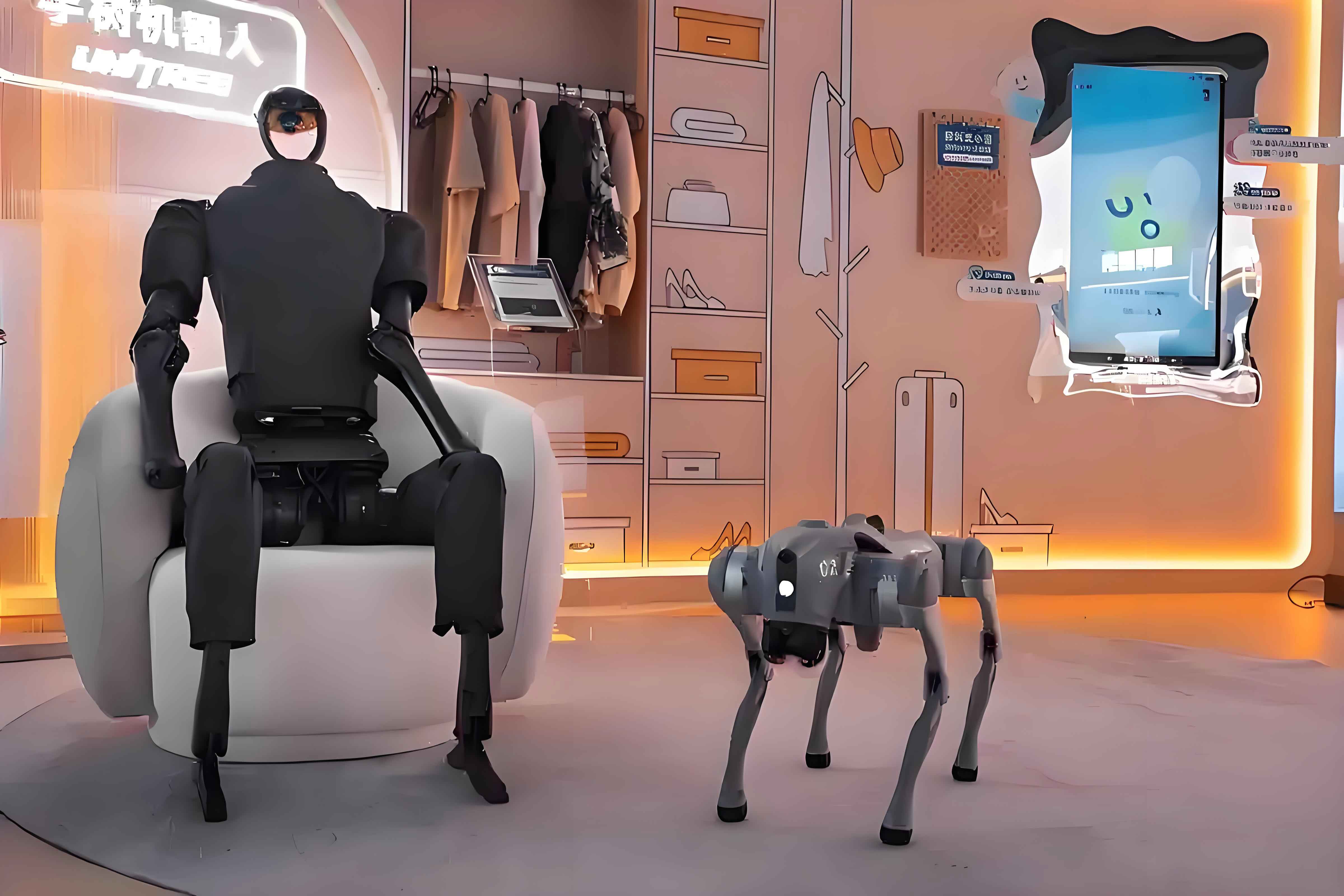
A Concise Historical Trajectory
The conceptual journey of the humanoid robot began long before its physical instantiation. The term “robot” itself was coined in the 1920s, planting a seed in the cultural and scientific consciousness. The mid-20th century saw the formalization of foundational ideas in artificial intelligence and robotics, including the proposal of ethical guiding principles. The following decades marked the transition from simple mechanical automata to electrically powered, computer-controlled prototypes. The late 20th and early 21st centuries witnessed exponential growth, driven by advances in computing, materials, and algorithms, leading to platforms that could walk, run, and interact with increasing autonomy. The historical progression can be summarized by key milestones that highlight the evolution of core capabilities.
| Era | Key Development / Platform | Primary Technological Leap |
|---|---|---|
| Early-Mid 20th C. | Conceptual & Literary Foundations (“Robot” term, Ethical Principles) | Theoretical and ethical framing of autonomous machines. |
| 1970s-1980s | Early Bipedal Research Prototypes (Honda, Waseda University) | Basic static and dynamic bipedal locomotion using centralized control. |
| 1990s-2000s | ASIMO, HRP series | Integrated dynamic walking, running, and basic human-robot interaction (HRI). |
| 2010s | Atlas, Pepper, Sophia | High-dynamic motion (parkour, recovery), social-emotional AI, and cloud-connected services. |
| 2020s-Present | Next-gen platforms (Optimus, etc.) with AI integration | End-to-end neural network control, large language/model integration for task planning, and cost-reduction drives. |
The Multifaceted Challenges
The development of a competent humanoid robot is an exercise in solving a cascade of interdependent problems. I categorize these challenges into technical and non-technical domains, each with its own set of complexities.
Technical Challenges
The physical and cognitive embodiment of a humanoid robot presents a series of formidable engineering puzzles.
1. Locomotion and Dynamic Stability: Achieving human-like grace, efficiency, and robustness in movement remains a core challenge. The humanoid robot must maintain balance under unpredictable disturbances, navigate complex terrains, and perform dexterous manipulations—all while managing its own complex dynamics. This involves high-dimensional, nonlinear control problems. The dynamics can be partially described by equations for a floating-base rigid body system:
$$ M(q)\ddot{q} + C(q, \dot{q})\dot{q} + G(q) = S^T \tau + J_c(q)^T F_c $$
where \( q \) represents the generalized coordinates, \( M \) is the inertia matrix, \( C \) accounts for Coriolis and centrifugal forces, \( G \) is the gravity vector, \( \tau \) are the actuator torques, \( S \) is the selection matrix, \( J_c \) is the contact Jacobian, and \( F_c \) are the contact forces. Solving this in real-time for stable walking or running requires advanced model-based controllers (like Model Predictive Control) or increasingly, data-driven reinforcement learning policies.
2. Perception and Environmental Understanding: For a humanoid robot to operate autonomously, it must perceive and interpret the world with a richness akin to human senses. This involves multi-sensor fusion (vision, LiDAR, IMU, tactile, audio) and sophisticated scene understanding. Challenges include real-time object recognition in cluttered environments, 3D spatial reasoning, and understanding human intent and activity. The perception system must resolve ambiguities and provide a unified world model \( W_t \) at time \( t \), fusing observations \( O_t \) from multiple sensors \( s \):
$$ W_t = F( W_{t-1}, \{ O_t^s \}_{s=1}^{N} ) $$
where \( F \) is the fusion and state estimation function, a task complicated by noise, occlusions, and the need for low latency.
3. Manipulation and Dexterity: The human hand is a masterpiece of biological engineering. Endowing a humanoid robot with comparable dexterity for grasping diverse objects and performing fine manipulations is exceptionally difficult. It requires compliant, high-degree-of-freedom hands, precise force/torque control, and haptic feedback. The grasp stability can be analyzed using concepts like the Grasp Matrix \( G \) and the resultant wrench \( w \):
$$ w = G f $$
where \( f \) are the contact forces. Finding optimal \( f \) within friction cones to resist external wrenches is a core problem in grasp planning.
4. Energy Efficiency and Power Systems: High-power actuators for dynamic movement are energy-intensive. The power density and endurance of current battery technology severely limit the operational duration of a untethered humanoid robot. Achieving full-day operation for demanding tasks requires breakthroughs in battery chemistry, energy-efficient actuator design (e.g., series elastic actuators), and dynamic gait optimization to minimize cost of transport.
5. Autonomy and Cognitive Architecture: Integrating perception, planning, and control into a cohesive, real-time cognitive loop is the ultimate software challenge. The humanoid robot must move from scripted tasks to general-purpose semantic understanding and task planning. This involves hierarchical autonomy: low-level reflex controllers for stability, mid-level motion planners, and high-level task planners often informed by large AI models. The decision-making can be framed as optimizing a policy \( \pi \) that maximizes expected cumulative reward \( R \):
$$ \pi^* = \arg\max_{\pi} \mathbb{E}_{(s_t, a_t) \sim \pi} \left[ \sum_{t=0}^{\infty} \gamma^t R(s_t, a_t) \right] $$
where \( s_t \) is the state and \( a_t \) the action at time \( t \), and \( \gamma \) is a discount factor.
| Challenge Category | Specific Problems | Key Limiting Factors |
|---|---|---|
| Locomotion & Stability | Dynamic walking/running on rough terrain, fall recovery, energy-efficient gaits. | Nonlinear control complexity, actuator bandwidth/power, sensor latency. |
| Perception & Understanding | Real-time 3D scene parsing, human activity recognition, occlusions, lighting variance. | Computational load of deep vision models, sensor fusion complexity, dataset scarcity for novel environments. |
| Manipulation & Dexterity | Versatile grasping, in-hand manipulation, fine motor control, tactile sensing integration. | Mechanical complexity of robotic hands, modeling of soft contacts, high-dimensional control. |
| Cognition & Autonomy | Long-horizon task planning, common-sense reasoning, interactive learning, failure recovery. | Limits of AI planning under uncertainty, simulation-to-reality gap, integration of symbolic and sub-symbolic AI. |
| Power & Endurance | Low operational uptime, high heat dissipation, weight of power systems. | Energy density of batteries, efficiency of electro-mechanical actuation. |
Non-Technical Challenges
Beyond the lab, the successful integration of humanoid robots into society hinges on addressing critical ethical, economic, and legal questions.
1. Ethical and Social Implications: As humanoid robots become more capable and social, they raise deep ethical concerns. These include:
- Privacy: A humanoid robot in a home or workplace is a pervasive sensor platform, collecting vast amounts of audio, visual, and behavioral data.
- Autonomy and Agency: At what level of intelligence does a machine warrant consideration of rights or moral patienthood? The “personhood” of advanced humanoid robots is a future philosophical dilemma.
- Psychological Effects: Over-reliance on humanoid robots for companionship, especially for children or the elderly, could impact human social development and emotional well-being.
- Deception and Manipulation: Highly realistic social humanoid robots could be used to manipulate emotions or trust, raising concerns about informed consent in interactions.
2. Economic and Labor Market Impact: The potential for humanoid robots to automate physical tasks across sectors (manufacturing, logistics, retail, hospitality) poses significant questions about job displacement, economic inequality, and the need for large-scale workforce retraining. A balanced approach focusing on human-robot collaboration (cobotics), where the humanoid robot handles dangerous, dull, or dirty tasks, may be a more viable path than full replacement.
3. Safety, Liability, and Regulation: Clear legal and regulatory frameworks are absent. Critical issues include:
- Safety Certification: How do you certify a general-purpose humanoid robot to be safe in all unpredictable human environments?
- Liability: In case of an accident causing harm or damage, who is liable? The manufacturer, the software developer, the owner, or the humanoid robot itself?
- Weaponization: Policies must be established to prevent the malicious use of humanoid robot technology for violence or surveillance.
4. Cost and Manufacturing Scalability: Current advanced humanoid robots are bespoke, low-volume, and prohibitively expensive (often millions of dollars). Achieving the cost reductions necessary for widespread adoption—akin to the automotive industry—requires innovations in modular design, mass-production techniques for actuators and sensors, and supply chain optimization.
Future Trends and Trajectories
Looking ahead, I anticipate the evolution of humanoid robots will be shaped by concurrent advances across several vectors, driving them from research curiosities towards integral societal tools.
Trend 1: Embodied AI and Large Model Integration
The most transformative trend is the integration of large language models (LLMs) and vision-language-action models into the cognitive core of the humanoid robot. These models provide commonsense knowledge, semantic reasoning, and natural language task understanding. Instead of hard-coding behaviors, a humanoid robot will receive high-level instructions (“clean up this room”) and, through a process of hierarchical planning, decompose it into executable motions. The loop can be conceptualized as:
$$ \text{Instruction} \xrightarrow{LLM} \text{Task Graph} \xrightarrow{Planner} \text{Skill Sequence} \xrightarrow{Controller} \text{Motor Torques} $$
This will dramatically increase the versatility and ease of programming for novel tasks.
Trend 2: Learning-Centric Development
The paradigm for developing humanoid robot skills is shifting from manual engineering and trajectory optimization to large-scale simulation and real-world learning. Reinforcement Learning (RL) and imitation learning from human demonstrations (teleoperation or motion capture) will be used to train robust, adaptive control policies. The training pipeline will heavily rely on massively parallel simulation in photorealistic, physics-accurate virtual environments to collect billions of trial-and-error experiences safely before fine-tuning in the real world. The objective is to learn a general-purpose “motor chassis” policy \( \pi_\theta(a_t | o_t, g_t) \) parameterized by \( \theta \), where \( o_t \) is observation and \( g_t \) is a goal.
Trend 3: Hardware Innovation: Soft Robotics and Advanced Actuation
Future hardware will move beyond rigid servo motors. I expect wider adoption of:
- Series Elastic and Variable Impedance Actuators: For safer force interaction and energy storage/release (like human tendons).
- Hydraulic and Pneumatic Actuation (for high power): Continued use in platforms requiring explosive strength, with improved efficiency and quietness.
- Soft Robotics: The use of compliant, deformable materials for hands, skins, and even limbs to enable safer interaction and robust, adaptive grasping.
- Integrated Sensor Skins: Dense arrays of tactile, temperature, and proximity sensors covering the body for whole-body awareness.
Trend 4: Specialization and Vertical Application
While the goal is general-purpose utility, initial large-scale deployment will occur in specific, high-value verticals where the humanoid form factor offers unique advantages and the environment can be partially structured. The table below outlines likely early adopter sectors.
| Application Vertical | Value Proposition | Key Required Capabilities |
|---|---|---|
| Light Industrial & Logistics | Automating final assembly, kitting, material handling in spaces designed for humans. | Mobile manipulation, dexterous grasping, part recognition, safety around people. |
| Hospitality & Retail | 24/7 customer service, concierge, inventory checks, cleaning. | Social navigation, basic HRI, object manipulation (e.g., handling dishes, products). |
| Healthcare Support | Physical therapy assistance, patient mobility support, logistics in hospitals. | Gentle physical interaction, high reliability, sanitization compatibility. |
| Domestic & Elderly Care | Companionship, routine chore assistance, fall detection, medication reminders. | Long-term autonomy, robust HRI, privacy-by-design, low-cost operation. |
Trend 5: The Human-Robot Symbiosis
The future is not one of replacement, but of collaboration. The humanoid robot will act as an intelligent, embodied tool that amplifies human capabilities. In factories, it will handle heavy lifting and precise, repetitive assembly steps. In homes, it will perform chores, allowing humans more time for creative or leisure activities. In healthcare, it will provide physical support to caregivers, not replace the human touch and empathy. This symbiosis requires intuitive communication interfaces, mutual understanding of intent, and guaranteed safety.
Trend 6: Evolving Socio-Legal Frameworks
In parallel with technological progress, I foresee the gradual development of:
- International safety standards specific to humanoid robots operating in human spaces (e.g., ISO/ASTM standards).
- New liability models, potentially involving mandatory insurance schemes for operators, similar to automobiles.
- Data governance regulations specifying how sensory data from humanoid robots must be processed, anonymized, and stored.
- Public discourse and policy guidelines on ethical design, focusing on transparency, fairness, and human well-being.
Conclusion
The journey toward truly capable and integrated humanoid robots is a marathon, not a sprint. The technical challenges in dynamics, perception, manipulation, and cognition are immense, requiring sustained, interdisciplinary innovation. Simultaneously, we must proactively engage with the ethical, economic, and legal ramifications to ensure this technology benefits humanity as a whole. The convergence of embodied AI, machine learning, and advanced mechatronics is accelerating progress at an unprecedented rate. The humanoid robot is transitioning from a symbol of a distant future to a tangible project of the present. Its ultimate success will be measured not merely by its technical specifications, but by its ability to work alongside us, enhance our safety and productivity, and enrich our lives—all within a framework of trust, responsibility, and shared purpose. The era of the humanoid robot as a partner is dawning, and its development will undoubtedly be one of the defining narratives of 21st-century technology.