
As a researcher deeply immersed in the field of advanced robotics, I observe a paradigm shift accelerating around us. The humanoid robot, an entity integrating artificial intelligence, advanced manufacturing, and new materials within an anthropomorphic form, is transitioning from laboratory prototype to a tangible component of our industrial and social fabric. This machine, designed to mimic human morphology and behavior, represents not merely a tool but a prospective independent force of production. The recent surge in development, particularly following pivotal national policy directives, underscores its potential as a disruptive product poised to reshape global industrial patterns. This analysis, drawn from literature synthesis, enterprise surveys, and expert dialogues, aims to dissect the current landscape, unveil unique opportunities, confront inherent challenges, and propose strategic pathways for the high-quality development of the humanoid robot industry.
I. The Current Industrial Landscape of Humanoid Robots
The global race in humanoid robotics is intensifying, characterized by vast market potential, rapid technological iteration, and strategic policy positioning.
A. Market Perspective: Unprecedented Growth Potential
Demographic and economic trends are creating a powerful impetus for automation. With aging populations leading to a shrinking workforce and consistently rising labor costs worldwide, the economic rationale for “machines replacing humans” grows stronger. Concurrently, economies of scale are gradually reducing the cost of robotics. The humanoid robot, with its general-purpose form factor designed for human environments, stands at the forefront of this transition. Market forecasts, while varied, universally point toward exponential growth, as summarized below:
| Forecast Source | Timeframe | Projected Global Market Size | Key Notes |
|---|---|---|---|
| Industry Research Institute A | 2026 | > $2 Billion | Initial commercial scaling phase. |
| Industry Research Institute A | 2030 | > $20 Billion | China’s market share potentially reaching $5B. |
| Global Investment Bank B | 2035 (Baseline) | $38 Billion | Significant upward revision from prior estimates. |
| Global Investment Bank B | 2035 (Optimistic) | $154 Billion | Contingent on technological breakthroughs. |
| Industry Alliance Report C | Mid-term | Trillion-dollar level | Cumulative demand could reach 70 million units. |
The commercial application is expected to follow a trajectory from Business-to-Business (B2B) to Business-to-Consumer (B2C). Early adoption is likely in structured environments like logistics (highest growth rate), healthcare (largest share), and manufacturing, before gradually permeating personal and home service scenarios, which hold immense long-term potential. The compound annual growth rate (CAGR) for the period 2025-2035 could be modeled as:
$$ CAGR = \left( \frac{FV}{PV} \right)^{\frac{1}{n}} – 1 $$
Where a high CAGR, potentially exceeding 90%, indicates a market on the cusp of explosive growth, heralding the arrival of the “embodied intelligence” era.
B. Technology Perspective: A Dynamic Field of International Rivalry
Technologically, the landscape is one of both convergence and competition. Historically, nations like Japan and the United States established early leads. Japan built formidable core competencies in precision reducers, controllers, and servo motors, often focusing on entertainment and social interaction. The United States leveraged its strengths in artificial intelligence, computing, and aerospace, with its tech giants now releasing foundational platforms for humanoid robot AI.
Domestically, the ecosystem has evolved from foundational academic research to a vibrant, multi-faceted industrial push. The player base now includes established robotics companies, dynamic startups, automotive new forces, large AI model developers, and specialized component makers. This convergence has enabled a leap from “catch-up innovation” to “pioneering innovation.” However, critical gaps remain in core components, operating systems, and integrated machine reliability. The primary constraints can be encapsulated by a fundamental challenge equation for widespread adoption:
$$ A = \frac{P \times R}{C \times E} $$
Here, A represents adoption rate, P is performance (stability, dexterity), R is reliability, C is cost, and E encompasses ethical/social acceptance. Maximizing A requires simultaneously increasing the numerator (P, R) and decreasing the denominator (C, E).
C. Policy Perspective: Strategic Acceleration Amid Global Competition
Globally, major economies have unequivocally placed humanoid robotics at the heart of their future industrial strategies, employing varied policy frameworks from guidance to regulation. The decisive moment for the domestic industry was the issuance of a top-level national guidance document, which explicitly flagged the humanoid robot as a pivotal disruptive product. This policy shifted focus from generic robotics to specifically “humanoid robots,” emphasizing breakthroughs in the “brain” (AI), “cerebellum” (motion control), and “limbs” (actuation), with goals for batch production and international competitiveness. This has triggered a wave of supportive policies across major municipal and provincial regions, each aiming to capture a share of the burgeoning market through initiatives like open-source platforms, application demonstration projects, and the establishment of national innovation centers, with clear targets for industrial scale.
II. Triple Opportunity for High-Quality Development
The domestic humanoid robot industry is uniquely positioned to capitalize on three synergistic macro-trends.
A. Leveraging the New Energy Vehicle (NEV) “Overtaking” Model
The parallel with the New Energy Vehicle industry is profound and instructive. A leading global EV manufacturer demonstrated how automotive engineering prowess can dramatically accelerate humanoid robot development by solving two core industrial pains: leveraging existing manufacturing/supply chains for efficient本体 production and transferring mature autonomous driving AI stacks for environmental perception and navigation. The overlap between the two industries is substantial, exceeding 80% in areas like drive systems, battery management, sensors, and lightweight materials, while the target cost for a humanoid robot is less than half that of a car. As the world’s largest producer and consumer of NEVs, the domestic industry possesses an unparalleled ecosystem—from component suppliers to manufacturing expertise—to potentially replicate a “curve-overtaking” success story in humanoid robotics. The cost convergence can be visualized as a learning curve:
$$ C_t = C_0 \times N_t^{-b} $$
Where \(C_t\) is the cost at time \(t\), \(C_0\) is the initial cost, \(N_t\) is the cumulative production volume, and \(b\) is the learning elasticity. The deep manufacturing experience from NEVs provides a lower \(C_0\) and a steeper learning rate, enabling faster descent down the cost curve.
B. Empowerment by Rapidly Iterating Large Language Models (LLMs)
The core intelligence of a next-generation humanoid robot lies in its algorithms. The advent of Large Language Models (LLMs) and multimodal foundational models provides the crucial “brain,” overcoming the limitations of earlier, narrowly-focused AI. By enabling more natural environmental understanding, task decomposition, and action planning, LLMs exponentially expand the potential application scope of humanoid robots, making them true embodiments of general-purpose embodied intelligence. The domestic landscape is exceptionally strong here. Research indicates that China and the U.S. together develop over 80% of the world’s large-scale AI models, with China ranking second in the number of models with parameters above 10 billion. This represents a mature, frontier-chasing technological cluster. Most leading domestic humanoid robot developers have already integrated proprietary or open-source LLMs, creating a powerful synergy between AI software leadership and hardware innovation.
C. Convergence of Diverse and Capable Industry Players
The industry is witnessing an unprecedented influx of talent and capital from diverse sectors. The ecosystem is no longer limited to traditional robotics firms. The competitive landscape now features dedicated robotics startups, powerful internet and consumer electronics companies entering the fray, NEV manufacturers leveraging their technical base, and AI giants providing the cognitive backbone. This diversity fosters intense competition and rapid iteration. Upstream, a strong base of domestic suppliers for key components like servos, reducers, and controllers is forming. Midstream, over 50本体 manufacturers are showcasing products with competitive motion control and intelligence. Downstream, the vast domestic market offers a rich sandbox for pioneering applications in manufacturing, logistics, healthcare, and services. This vibrant, multi-threaded exploration significantly increases the probability of achieving viable commercialization pathways and capturing first-mover advantages in specific niches.
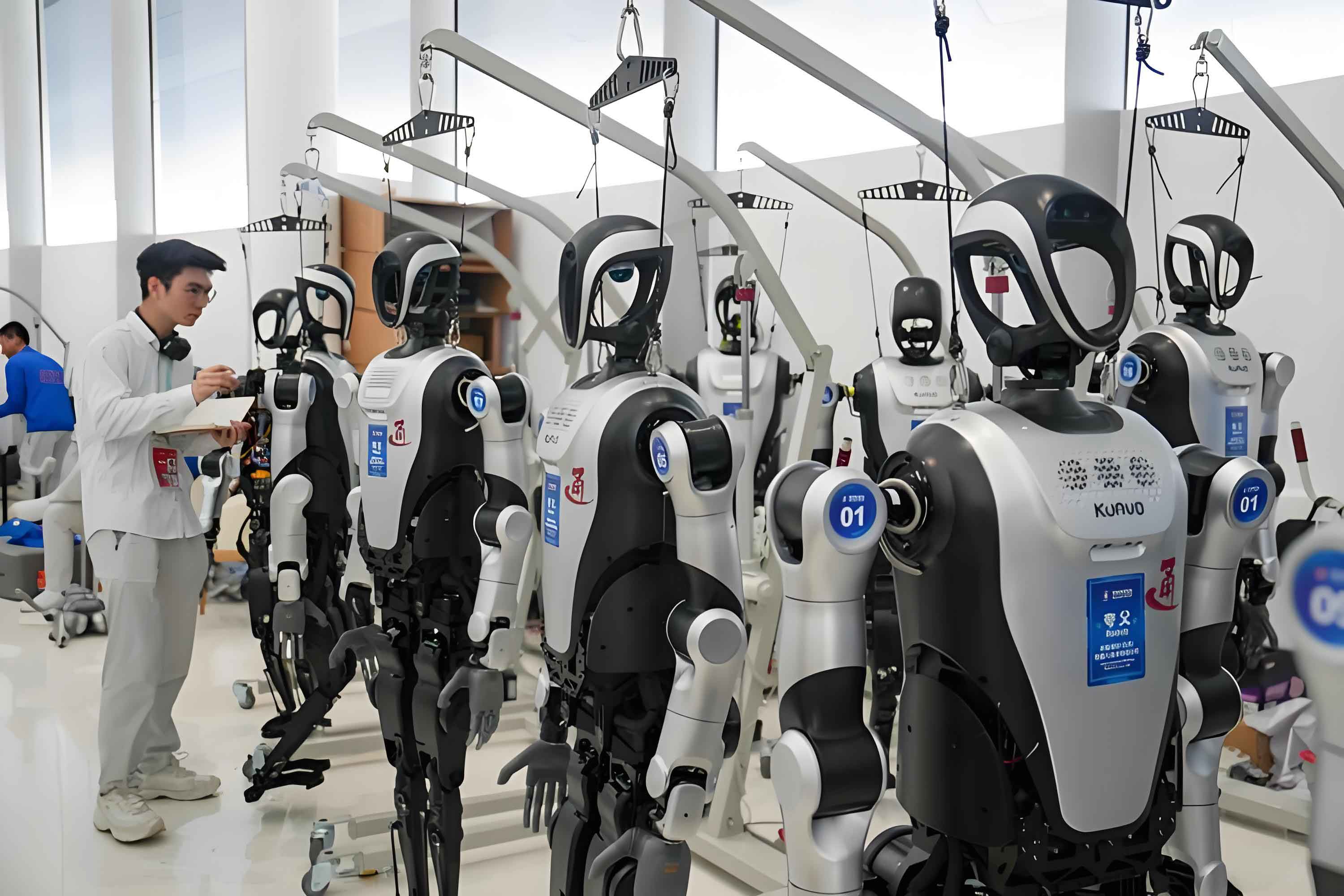
III. Multifaceted Challenges on the Path to Development
Despite the opportunities, the path to a mature, high-quality humanoid robot industry is fraught with significant hurdles across the innovation, industrial, and demand chains.
A. Innovation Chain: The Immaturity of Core Technologies
Technological readiness remains the primary bottleneck. For产业化, advancements are needed across the board: high-fidelity perception and deep interaction, robust stability, lightweight design, long endurance, and low cost. Key dependencies and gaps are starkly revealed in the cost structure and localization rates of critical components:
| Core Component | Typical Cost Share | Estimated Import Dependency | Key Challenge |
|---|---|---|---|
| Frameless Torque Motor | ~21% | High (~70%) | Power density, precision |
| Reducer (Harmonic/Planetary) | ~16% | High (~55%) | Backlash, longevity, precision |
| Force/Torque Sensor | ~16% | Very High (~78%) | Sensitivity, durability, cost |
| Precision Ball Screw / Linear Actuator | ~4% | Very High (~80%) | Manufacturing precision, wear resistance |
| High-performance IMU | ~1% | Extremely High (~86%) | Drift, noise, integration |
Furthermore, underlying software, core AI chips, and advanced sensors face high international patent barriers. While China leads in total patent filings, many are concentrated in structural design and control systems, with relative shortages in high-end areas like autonomous learning, advanced sensor fusion, and sophisticated human-robot interaction.
B. Industrial Chain: An Ecosystem Requiring Optimization
The industrial geography is taking shape, with clusters forming around major metropolitan hubs. However, disparities in strength, innovation density, and capital flow indicate an ecosystem still in consolidation. The following table illustrates the distribution of key resources, highlighting areas for more balanced development:
| Region | 本体 + Parts Cos. | Strong/Promising R&D Institutes | Share of 2023 Invention Patents | 2023 Financing Share |
|---|---|---|---|---|
| Beijing | 9 + 48 | 10 + 2 | 27.3% | 36.4% |
| Guangdong | 11 + 93 | 4 + 18 | 18.9% | 31.8% |
| Shanghai | 7 + 39 | 7 + 3 | N/A | 27.3% |
| Zhejiang | 3 + 21 | 4 + 9 | 14.7% | N/A |
| Jiangsu | 2 + 47 | 3 + 28 | 9.7% | N/A |
Application scenarios are the “last mile” for产业化. While pilot projects are emerging in factories, public services, and experimental communities, moving from proof-of-concept demonstrations to large-scale, economically sustainable deployments remains a formidable challenge. The industry is currently more technology-push than demand-pull.
C. Demand Chain: Social Acceptance and Cost Barriers
Social and economic factors present profound challenges. Public apprehension about job displacement, ethical dilemmas (privacy, decision-making authority, emotional manipulation), and safety concerns can hinder acceptance. High costs currently place humanoid robots out of reach for widespread use. Prices for advanced prototypes range from $30,000 to over $100,000, far from the sub-$20,000 target often cited for mass consumer adoption. The timeline for decisive technological breakthroughs and cost reductions is uncertain. Therefore, viable business models, clear value propositions for early adopters, and thoughtful regulatory frameworks for ethics and safety are all urgent, parallel requirements for the industry’s healthy development.
IV. Strategic Recommendations for High-Quality Development
To navigate these challenges and seize the opportunities, a coordinated, multi-pronged strategy focused on technology, ecology, and governance is essential.
A. Focus on Core Technologies to Build “First-Mover Advantage”
1. Attack Common Key Technologies: Implement “cornerstone” projects targeting interdisciplinary fundamental theory, lightweight flexible materials, and advanced engineering manufacturing. Prospectively research brain-computer interfaces and human-robot-environment fusion. Support the formation of innovation consortiums to tackle bottleneck technologies through mechanisms like “challenge grants.”
2. Master本体 Manufacturing Technology: Dedicate resources to developing high-quality multi-modal data systems and cloud-edge AI architectures (“brain”). Advance dynamic motion control algorithms, high-mobility本体 design, and high-torque-density joints (“cerebellum & limbs”). Innovate in long-endurance power units and thermal management.
3. Develop Core Software & Chips: Build a resilient software supply chain for专用 chips, simulation platforms, and core algorithms. Foster integration with hardware development. Accelerate the creation of specialized chips for vision, force, and audio processing to enhance computational efficiency. Develop a robust ecosystem of intelligent, secure application software.
B. Focus on Industrial Ecology to Construct “Developmental Superiority”
1. Integrate Resources and Optimize Carriers: Accelerate the construction of public platforms: national/manufacturing innovation centers, shared testing grounds, and computing power hubs. Support academia-industry collaboration for prototyping and攻关. Explore financial innovation, such as milestone-based funding, to help companies cross the “valley of death” from R&D to production.
2. Cultivate Leadership and Complete the Industrial Gradient: Pursue a “本体 + Core Support” synergistic model. Focus on cultivating leading本体 manufacturers to drive cluster development. Simultaneously, aggressively support upstream suppliers of key components (e.g., dedicated motors, precision reducers, ball screws) to enhance supply chain autonomy and resilience.
3. Open Application Scenarios Comprehensively: Establish graded testing environments, from simple to complex. Launch pilot applications in real-world settings (e.g., manufacturing logistics, patient assistance, public guidance) to accumulate data and refine products. Leverage scale to build large-scale robotic training centers. Proactively cultivate new ecosystems like “emerging fields + humanoid robot.”
C. Focus on Strategic Leadership to Achieve “Lane Leadership”
1. Strengthen Policy Guidance: Formulate and implement detailed action plans for humanoid robot cluster development and application scenario implementation. Create clear technology and product roadmaps to align disparate projects and entities into cohesive value chains.
2. Establish Comprehensive Standards and Safety Systems: Systematically develop standards for terminology, general-purpose本体, and social ethics. Advance standards for AI decision-making, perception, and control. Conduct pre-research on standards for key components and performance evaluation metrics. Proactively develop safety and security frameworks covering control algorithms, data governance, and legal compliance. Form multidisciplinary expert groups to assess and mitigate risks related to security, privacy, and ethics.
3. Promote Civil-Military Integration: Leverage dual-use technologies through top-level design. Facilitate the transfer of advanced R&D成果 from specialized domains to the commercial humanoid robot sector and vice-versa, fostering synergistic innovation and opening new development avenues.
In conclusion, the journey toward a mature humanoid robot industry is complex, resting at the intersection of extraordinary opportunity and non-trivial challenge. By adopting a strategic, ecosystem-focused approach that simultaneously hammers away at technological bottlenecks, nurtures a collaborative industrial environment, and establishes forward-looking governance, the foundation can be laid not just for participation, but for leadership in the era of embodied general-purpose intelligence. The humanoid robot is more than a machine; it is a testbed for our collective technological, economic, and societal foresight.