
As I observe the rapid evolution of the robotics landscape, the emergence of the humanoid robot as a focal point of technological advancement is undeniable. These machines, designed to mimic human form and function, are transitioning from laboratory curiosities to dynamic entities capable of operating in complex, real-world environments. The journey from merely “moving on stage” to “competing on the field” and ultimately “being used in daily life” marks a significant leap. This progress, however, is acutely constrained by a critical bottleneck: a severe shortage of highly skilled, composite talent. The demand for professionals who can bridge algorithms, mechanical design, and systems integration for the humanoid robot is skyrocketing, far outpacing supply. This narrative explores the dimensions of this talent crisis, the transformative role of industry-education integration, and the technical pillars sustaining the humanoid robot revolution.
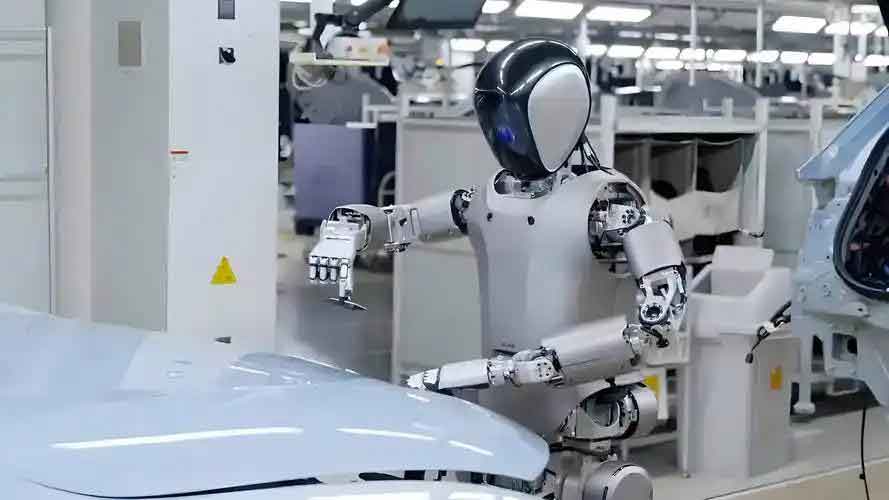
From my perspective, the data speaks volumes. The recruitment landscape for the humanoid robot sector is experiencing nothing short of an explosion. Recent market analyses indicate that the number of job postings in the humanoid robot domain has surged dramatically, reflecting growth rates that overshadow most other tech fields. This surge underscores the industry’s transition from foundational R&D towards more applied development and pre-commercialization phases. The core demand lies in technical roles that drive the intelligent and physical capabilities of the humanoid robot.
| Job Role Category | Key Focus Areas | Approximate Demand Growth Trend | Average Monthly Salary (Representative) |
|---|---|---|---|
| Algorithm Development | Embodied AI, Reinforcement Learning, Motion Control, Planning, Perception | Exceptionally High | 25,000 – 26,000 units |
| Navigation & Localization | SLAM, Sensor Fusion, Path Planning | Very High | 20,000 – 21,000 units |
| Mechanical Structure Design | Lightweight Materials, Actuation, Kinematic/Dynamic Optimization | High | 15,000 – 16,000 units |
| Systems & Software Integration | Middleware, Real-time Systems, Simulation | High |
The table above crystallizes a key insight: algorithm engineers, particularly those working on the brain of the humanoid robot, command the highest premium. This is intrinsically linked to the core challenges of a humanoid robot: achieving strong intelligent interaction and flexible movement in unstructured environments. The mathematical foundation for these capabilities is paramount. For instance, the motion control of a humanoid robot often relies on sophisticated algorithms to solve inverse kinematics and dynamics in real-time.
Consider the fundamental problem of determining joint torques $\\boldsymbol{\\tau}$ required for a desired motion. For a humanoid robot, this often involves solving a modified version of the rigid-body dynamics equation:
$$ \\boldsymbol{\\tau} = \\mathbf{M}(\\mathbf{q})\\ddot{\\mathbf{q}} + \\mathbf{C}(\\mathbf{q}, \\dot{\\mathbf{q}})\\dot{\\mathbf{q}} + \\mathbf{g}(\\mathbf{q}) + \\mathbf{J}^{T}\\mathbf{f}_{ext} $$
where $\\mathbf{q}$ is the vector of joint angles, $\\mathbf{M}$ is the inertia matrix, $\\mathbf{C}$ captures Coriolis and centrifugal forces, $\\mathbf{g}$ is the gravity vector, and $\\mathbf{J}^{T}\\mathbf{f}_{ext}$ represents forces due to external contacts. Optimizing this for stability and efficiency is a primary task for a humanoid robot control engineer.
Similarly, perception for a humanoid robot involves sensor fusion and state estimation. A common framework is the Kalman Filter, which provides an optimal estimate for a linear system. The prediction and update steps are given by:
$$ \\hat{\\mathbf{x}}_{k|k-1} = \\mathbf{F}_k \\hat{\\mathbf{x}}_{k-1|k-1} + \\mathbf{B}_k \\mathbf{u}_k $$
$$ \\mathbf{P}_{k|k-1} = \\mathbf{F}_k \\mathbf{P}_{k-1|k-1} \\mathbf{F}_k^T + \\mathbf{Q}_k $$
$$ \\mathbf{K}_k = \\mathbf{P}_{k|k-1} \\mathbf{H}_k^T (\\mathbf{H}_k \\mathbf{P}_{k|k-1} \\mathbf{H}_k^T + \\mathbf{R}_k)^{-1} $$
$$ \\hat{\\mathbf{x}}_{k|k} = \\hat{\\mathbf{x}}_{k|k-1} + \\mathbf{K}_k (\\mathbf{z}_k – \\mathbf{H}_k \\hat{\\mathbf{x}}_{k|k-1}) $$
$$ \\mathbf{P}_{k|k} = (\\mathbf{I} – \\mathbf{K}_k \\mathbf{H}_k) \\mathbf{P}_{k|k-1} $$
where $\\hat{\\mathbf{x}}$ is the state estimate (e.g., position and orientation of the humanoid robot), $\\mathbf{P}$ is the error covariance, $\\mathbf{F}$ is the state transition model, $\\mathbf{H}$ is the observation model, and $\\mathbf{K}$ is the Kalman gain. Mastery of such algorithms is non-negotiable for developing a competent humanoid robot.
Faced with this talent scarcity, the ecosystem has turned to dynamic, practice-oriented solutions. I have witnessed firsthand how competitive events have evolved into powerful pedagogical tools. These contests are no longer mere exhibitions; they are rigorous proving grounds and dynamic classrooms. Teams from leading companies and numerous universities converge, pitting their humanoid robot designs against each other in tasks ranging from soccer to assisted services. This “competition to promote education” model serves multiple critical functions.
| Competition Aspect | Pedagogical Impact | Skill Development |
|---|---|---|
| Scenario-Based Tasks (e.g., hotel cleaning, fetch-and-carry) | Provides integrated practice platform, simulating real-world applications for the humanoid robot. | Systems integration, task decomposition, robustness testing. |
| Technical Challenges (e.g., dynamic walking, manipulation) | Translates theoretical knowledge into practical problem-solving under constraints. | Advanced algorithm tuning, real-time control, hardware-software co-design. |
| Interdisciplinary Events (e.g., robotic dance) | Fosters cross-domain innovation, merging art with technology for the humanoid robot. | Creative engineering, trajectory planning for aesthetic motion, multi-modal integration. |
| Industry-Academia Interaction | Facilitates direct feedback, exposure to cutting-edge industry challenges and standards for the humanoid robot. | Professional networking, understanding commercial R&D pipelines, career awareness. |
The table illustrates how these events de-silo education. For students, building and programming a humanoid robot for a competition forces the integration of mechanics, electronics, control theory, and computer science—a microcosm of the industry’s needs. It is a potent form of “learning by doing” where failure is an inherent and instructive part of the process. This approach effectively bridges the gap between academic syllabi and the multifaceted requirements of developing a functional humanoid robot.
This naturally leads to the broader, more systemic strategy: deep industry-education integration. I believe this fusion is the most sustainable pipeline for cultivating the high-composite talent that the humanoid robot field desperately requires. The development of a capable humanoid robot is inherently dependent on a mature supply chain and industrial ecosystem; therefore, cultivating talent must involve close coordination with that industrial base. Several innovative models are emerging.
One effective model involves enterprise mentors directly embedded within academic programs. A structured approach might assign one industry expert for a small cohort of students. Furthermore, dedicated “practice weeks” can be organized, featuring targeted training sessions conducted by partner companies working on the humanoid robot. These sessions are not generic lectures but are focused on specific technical stacks or problem sets relevant to current industry projects. This creates a direct pathway from training to internship and potential employment, ensuring a tighter feedback loop between market needs and educational output.
From a strategic standpoint, this integration allows both academia and industry to align on a shared “competency coordinate system.” Companies can articulate their latest technical hurdles—perhaps a specific challenge in stabilizing a bipedal humanoid robot on uneven terrain—and educators can incorporate these challenges into curricula or competition themes. Conversely, student performance in tackling these real-world problems serves as a dynamic, performance-based metric for recruitment, significantly reducing the onboarding and trial period for new hires in the humanoid robot sector.
The technical roadmap for the humanoid robot is paved with complex challenges that demand a convergent skill set. Beyond basic control, the integration of large embodied models is becoming crucial for high-level task planning and natural interaction. The optimization of mechanical design for energy efficiency and durability remains a key hurdle. We can model the search for an optimal actuator placement for a humanoid robot leg as a constrained optimization problem:
$$ \\min_{\\mathbf{p}} \\, J(\\mathbf{p}) = \\sum_{i=1}^{N} w_i \\cdot f_i(\\mathbf{p}) $$
$$ \\text{subject to: } g_j(\\mathbf{p}) \\leq 0, \\quad j = 1, …, M $$
where $\\mathbf{p}$ represents design parameters (e.g., link lengths, motor positions), $J$ is a cost function aggregating objectives like energy consumption $f_1$, weight $f_2$, and torque requirements $f_3$, with weights $w_i$, and $g_j$ are constraints on workspace, stiffness, or manufacturability. Solving such multi-objective problems requires a blend of mechanical insight and computational optimization skills.
| Integration Mode | Description | Primary Benefit |
|---|---|---|
| Embedded Enterprise Mentorship | Industry professionals co-teach courses, supervise projects, and provide career guidance focused on the humanoid robot. | Direct knowledge transfer of current practices and expectations. |
| Curriculum Co-Design | Academic and industry panels jointly develop course modules, labs, and degree programs for the humanoid robot. | Ensures educational content remains relevant and前瞻性. |
| Shared R&D Infrastructure | Universities gain access to industrial-grade simulation platforms, testing facilities, and prototype humanoid robot hardware. | Reduces the resource gap, allows work on state-of-the-art problems. |
| Staged Practical Training | Structured programs (e.g., orientation, shadowing, rotation, placement) integrated throughout the academic journey for the humanoid robot. | Builds professional competencies progressively, aligns with job market cycles. |
Looking ahead, the trajectory is clear. The demand for talent capable of advancing the humanoid robot will continue its steep, upward climb. This is not a transient trend but a structural shift as the technology matures and seeks commercial scale. The inherent complexity of the humanoid robot—a system that must perceive, reason, act, and interact in human-centric spaces—guarantees that the need for multidisciplinary experts will remain acute. Therefore, the imperative to strengthen the symbiosis between industry and education is more pressing than ever.
In conclusion, the evolution of the humanoid robot represents one of the most exciting frontiers in modern engineering and AI. Its progress, however, is gated by human capital. The synergistic model of industry-education integration, catalyzed by practical mechanisms like competitive platforms and embedded mentorship, presents the most viable pathway to cultivating the necessary talent. By aligning educational outcomes with industrial benchmarks, we can accelerate the development cycle of the humanoid robot and ensure a steady flow of innovators ready to tackle the profound technical and societal challenges this technology will bring. The future of the humanoid robot, therefore, is not just written in code and carbon fiber, but in the collaborative frameworks we build today to educate the architects of tomorrow’s machines.