
It feels as if a tide has surged overnight. In what seemed like a blink, humanoid robots have stepped out of research labs and science fiction pages, appearing on stages from the Spring Festival Gala to factory floors. I have watched them dance, perform acrobatics, serve tea, and even attempt marathons. This pervasive visibility signals more than just clever marketing; it heralds the accelerating convergence of technologies that promise to reshape our physical world. As an observer of this technological wave, I am convinced we are witnessing the nascent stages of a fundamental shift, where humanoid robot platforms are becoming the primary vessel for what we now call embodied intelligence.
The concept of “embodied intelligence” is central to understanding this transition. It posits that true, generalizable intelligence is not merely a computational process divorced from the physical realm but is fundamentally shaped by having a body that can perceive and act within an environment. A humanoid robot, with its anthropomorphic form designed to navigate human-centric spaces and manipulate human-designed tools, is arguably the ideal candidate to host such intelligence. The recent inclusion of “embodied intelligence” in high-level policy documents underscores its perceived strategic importance, framing the development of advanced humanoid robots as a national priority akin to the pursuit of semiconductors or electric vehicles.
My analysis suggests that the rapid progress in humanoid robots rests on three interdependent technological pillars: advanced locomotion and manipulation, multimodal sensor fusion, and the integration of large foundation models.
1. The Physical Dynamics: Motion and Manipulation
The most immediate challenge for any humanoid robot is stable, dynamic movement. Early bipedal robots walked with a stiff, cautious gait. Modern systems leverage sophisticated control algorithms that process data from inertial measurement units (IMUs), joint encoders, and force-torque sensors in real-time to maintain balance. The fundamental dynamics can be described using the equations of motion for a multi-link system. The Lagrangian formulation is often employed:
$$
\mathcal{L} = T – U
$$
where \( T \) is the total kinetic energy and \( U \) is the total potential energy of the robot’s body. The equations of motion are then derived from:
$$
\frac{d}{dt} \left( \frac{\partial \mathcal{L}}{\partial \dot{q}_i} \right) – \frac{\partial \mathcal{L}}{\partial q_i} = \tau_i
$$
Here, \( q_i \) and \( \dot{q}_i \) represent the generalized coordinates (joint angles) and their velocities, and \( \tau_i \) represents the generalized forces (joint torques). Solving these equations in real-time, while accounting for ground contact forces and external disturbances, is a monumental computational task. Modern approaches often use simplified models like the Linear Inverted Pendulum (LIP) for walking trajectory planning or employ Model Predictive Control (MPC) to optimize future movements over a short horizon.
2. Perceiving the World: Sensor Fusion
A humanoid robot must understand its surroundings to interact meaningfully. This requires fusing data from a suite of sensors—cameras (mono, stereo, RGB-D), LiDAR, microphones, and tactile sensors. The goal is to create a unified, actionable representation of the world. A common framework is the Bayesian filter, with the Kalman Filter (KF) and its non-linear extensions (Extended Kalman Filter, Unscented Kalman Filter) being foundational for state estimation. For pose estimation and mapping, the problem is often framed as a maximum likelihood estimation:
$$
\hat{X} = \arg\max_X ~ p(Z | X)
$$
where \( X \) is the robot’s state (position, orientation) and \( Z \) is the set of all sensor observations. For complex, large-scale environments, Simultaneous Localization and Mapping (SLAM) algorithms solve for both the robot’s trajectory and a map of the environment concurrently. The recent integration of deep learning for visual odometry and object recognition has dramatically improved robustness in unstructured settings.
3. The “Brain”: Foundation Models and Task Planning
This is the most transformative pillar. Large language models (LLMs) and vision-language models (VLMs) provide humanoid robots with a high-level understanding of concepts, instructions, and the physical properties of objects. A human can give a command like “please tidy up the table by putting the mug in the dishwasher and the book on the shelf.” The robot’s system must decompose this instruction into a sequence of actionable steps: locate the mug and book, plan collision-free arm trajectories, execute precise grasps, navigate to the dishwasher and shelf, and perform the placement. This involves hierarchical planning, often formalized as a Markov Decision Process (MDP) defined by the tuple \( (S, A, P, R, \gamma) \), where:
- \( S \): A set of states.
- \( A \): A set of actions.
- \( P(s’ | s, a) \): Transition probability to state \( s’ \) from state \( s \) after taking action \( a \).
- \( R(s, a) \): Immediate reward for taking action \( a \) in state \( s \).
- \( \gamma \): Discount factor.
The objective is to find a policy \( \pi(a | s) \) that maximizes the expected cumulative reward \( \mathbb{E} \left[ \sum_{t=0}^{\infty} \gamma^t R(s_t, a_t) \right] \). In practice, solving MDPs for complex real-world tasks is intractable, so methods like Monte Carlo Tree Search or learning-based policies (e.g., via Reinforcement Learning) are used.
The industrial ecosystem developing around these pillars is diverse and rapidly maturing. Companies are pursuing different but complementary strategies, creating a resilient and innovative supply chain.
| Strategic Focus | Primary Goal | Key Technological Emphasis |
|---|---|---|
| Whole-Body Dynamic Performance | Achieve stable, fast, and agile bipedal locomotion (running, jumping, navigating complex terrain). | High-torque density actuators, lightweight rigid structures, whole-body dynamics control algorithms, real-time MPC. |
| Precision Manipulation & Dexterity | Enable delicate and precise hand-based tasks (assembling electronics, handling tools). | Multi-fingered dexterous hands with integrated tactile sensing, fine force control, imitation learning from human demonstrations. |
| AI-Native Cognitive Architecture | Develop a unified “brain” for reasoning, task planning, and interaction. | Integration of VLMs/LLMs for instruction understanding, large-scale simulation for training, reinforcement learning in virtual environments. |
| Cost-Optimized Commercialization | Drive down unit cost for mass adoption in specific verticals (e.g., logistics, manufacturing). | Design for manufacturability, leveraging mature automotive/consumer electronics supply chains, modular platforms. |
This diversified approach fortifies the entire industry. While one team cracks the problem of dynamic running, another is perfecting a robot’s sense of touch, allowing it to “feel” the difference between a ripe and unripe fruit or thread a needle. Each breakthrough in a niche strengthens the collective capability for building a truly versatile humanoid robot.
The potential application domains for humanoid robots are vast and expanding. They are not intended to be mere novelties but practical tools that augment human capability.
| Domain | Potential Applications | Key Value Proposition |
|---|---|---|
| Industrial Manufacturing & Logistics | Assembly, quality inspection, machine tending, palletizing, sorting in unstructured warehouses. | Flexibility to perform multiple, non-repetitive tasks without extensive re-tooling; works alongside humans in shared spaces. |
| Service & Hospitality | Front-desk concierge, retail guidance, food service, cleaning, and inventory management in hotels/stores. | 24/7 availability, consistent service quality, handling of mundane tasks to free up human staff for complex interactions. |
| Healthcare & Domestic Assistance | Elderly care support, rehabilitation aid, household chores (laundry, tidying, cooking basic meals). | Addressing labor shortages in care, promoting independent living for seniors, automating tedious home maintenance. |
| Hazardous Environments | Nuclear facility inspection, disaster response, explosive ordnance disposal, high-voltage maintenance. | Removing humans from immediate danger while performing complex manual interventions in environments built for people. |
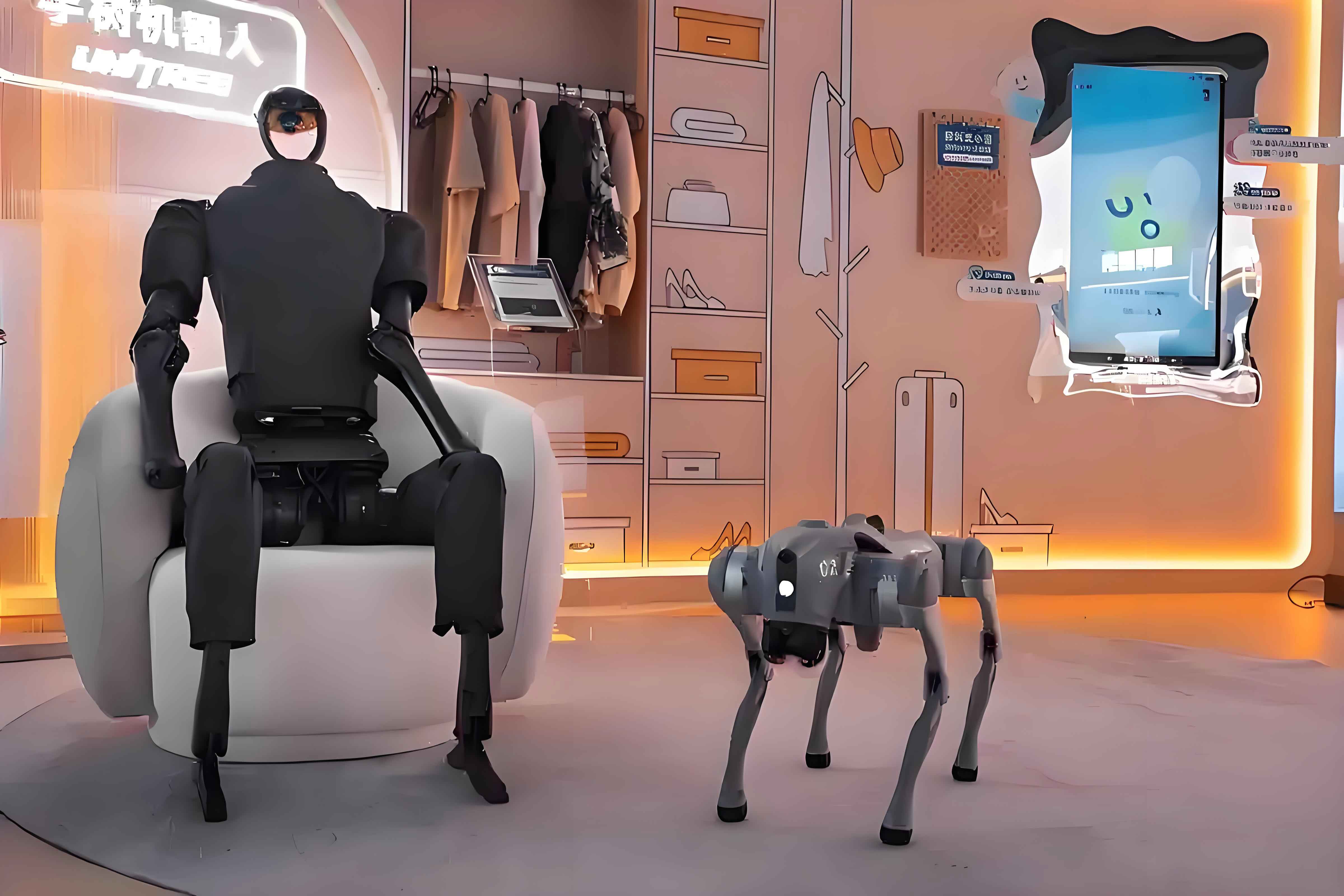
Observing demonstrations in these areas, it’s clear that each new application scenario acts as a forcing function, driving focused research and development. The vision of a domestic humanoid robot that can fold laundry or prepare a meal pushes engineers to solve problems in deformable object manipulation and long-horizon task planning. This practical pull is as important as the technological push from laboratories.
However, the path from impressive demos to reliable, ubiquitous utility is fraught with significant bottlenecks. The current state of the art, while revolutionary, remains fragile.
1. The Cost and Durability Chasm: Premium humanoid robot prototypes can cost hundreds of thousands of dollars, primarily due to custom-made actuators, sensors, and carbon-fiber structures. Their mean time between failures (MTBF) in demanding real-world conditions is often measured in hours, not years. Industrial adoption requires robustness akin to automotive standards. Durability is a multi-physics challenge involving wear of mechanical components, fatigue of composite materials, and reliability of electronic systems under vibration and thermal stress.
2. The Energy Density Problem: Dynamic motion is power-hungry. The energy density of even the best modern lithium batteries is a severe limitation for an untethered humanoid robot expected to work a full shift. The specific energy \( E_{specific} \) (Wh/kg) of batteries needs significant improvement to match the demands of high-power actuators. This often leads to the comical yet necessary sight of human “handlers” following marathon-running robots with spare batteries and cooling systems—a stark reminder of the gap between capability and practicality.
3. The “Last Centimeter” Problem in Manipulation: While gross arm movement is well-solved, the final precise alignment and grip, especially for unfamiliar or delicate objects, remains a challenge. It requires millimeter-level accuracy from perception systems and exquisite force control. The contact dynamics during grasping can be modeled, but uncertainties abound. The impedance control law:
$$
\tau = J^T (K_p (x_d – x) – K_d \dot{x})
$$
where \( \tau \) is joint torque, \( J \) is the Jacobian, \( K_p \) and \( K_d \) are stiffness and damping matrices, and \( x_d \) and \( x \) are desired and actual end-effector positions, must be tuned perfectly for each interaction type, which is non-trivial for a general-purpose machine.
4. The Multidisciplinary Maintenance Gap: A single humanoid robot is a fusion of mechanics, electronics, software, and AI. Diagnosing a failure could involve checking harmonic drive wear, debugging a CAN bus communication error, updating a perception model, or retuning a PID controller. The workforce capable of such multidisciplinary troubleshooting is virtually non-existent today, posing a major barrier to deployment at scale.
| Bottleneck Category | Specific Challenge | Potential Mitigation Path |
|---|---|---|
| Hardware | High-cost, low-durability actuators and structures; limited battery energy density. | Mass production to lower costs; new materials (e.g., liquid crystal elastomers); hybrid power systems; wireless charging stations. |
| Software & AI | Fragile real-world generalization of AI models; difficulty in long-horizon, precise task planning. | Massive-scale simulation-to-real (Sim2Real) training; foundation models trained on robotic action data; hierarchical reinforcement learning. |
| System Integration | Complexity in integrating perception, planning, and control stacks reliably; system-level safety certification. | Development of standardized middleware (e.g., ROS 2) and interoperability standards; modular, fail-operational architectures. |
| Operational | Lack of skilled maintenance and repair workforce; high total cost of ownership (TCO). | Creation of new technical education tracks; predictive maintenance using digital twins; Robotics-as-a-Service (RaaS) business models. |
Projections from financial institutions paint a picture of an immense future market, with forecasts of hundreds of millions to billions of units sold by mid-century. While these numbers seem astronomical, they are based on the premise that the humanoid robot will become a universal tool, a new class of general-purpose technology. The economic rationale is powerful: a machine that can be quickly taught to perform almost any physical human task, without fatigue and with superhuman precision in some domains, would be incredibly valuable.
This inevitably leads to profound philosophical and social questions. Will these machines replace human workers? My conclusion, drawn from observing both the technology’s potential and its limitations, is that replacement is too simplistic a framework. The more likely and valuable outcome is augmentation and collaboration. A humanoid robot in a factory may handle the heavy, repetitive, or dangerous parts of a process, while a human oversees the line, handles exceptional cases, and performs tasks requiring deep creativity or nuanced judgment. In homes, a robot might manage chores, but it cannot replace the emotional bond and developmental stimulus provided by human parents for a child. The essence of care, empathy, and deep creative thought remains a human domain. The goal is not to replicate humans, but to create intelligent partners that amplify our own abilities and free us to focus on what makes us uniquely human.
The journey from the clunky WABOT-1 to today’s dynamic machines has been long, but the pace is now exponential. We are no longer just building machines that look like us; we are imbuing them with the beginnings of the ability to see, reason, and act in our world. The humanoid robot is indeed drawing nearer, step by calculated step. Its integration into our lives will be iterative, starting in controlled industrial settings and gradually expanding into broader society. The challenges are daunting, but the collective momentum across research, industry, and policy is undeniable. We are building the vessels for a new form of intelligence, and in doing so, we are inevitably redefining our own future.