
As I observe the relentless advancement of artificial intelligence, measured not in years but in days, I am struck by how humanoid robots are pushing the boundaries of what it means to be human. The integration of AI into physical forms that mimic our own forces a profound philosophical reckoning. In this essay, I will explore the implications of this convergence, arguing that the emergence of humanoid robots necessitates a fundamental rethink of concepts like agency, identity, and ethics. The central question haunting our time is no longer merely about what AI can do, but what it means for our own self-conception.
The pace is staggering. Artificial intelligence evolves at a daily clip, and breakthroughs in humanoid robotics are making these systems increasingly anthropomorphic. This isn’t just a technical milestone; it’s a mirror held up to humanity. When an AI, especially one embodied in a humanoid robot, interacts with us using natural language and learned behaviors, the line between tool and entity blurs. I find myself constantly pondering: Is this intelligence a tool I command, or a potential partner with whom I collaborate? This question isn’t academic; it has tangible societal stakes. If we deem AI a “partner,” could it participate in governance or social management? Conversely, if it’s merely a “tool,” does that justify exposing the entirety of human privacy to its algorithms? The technology is, in effect, demanding a philosophical answer.
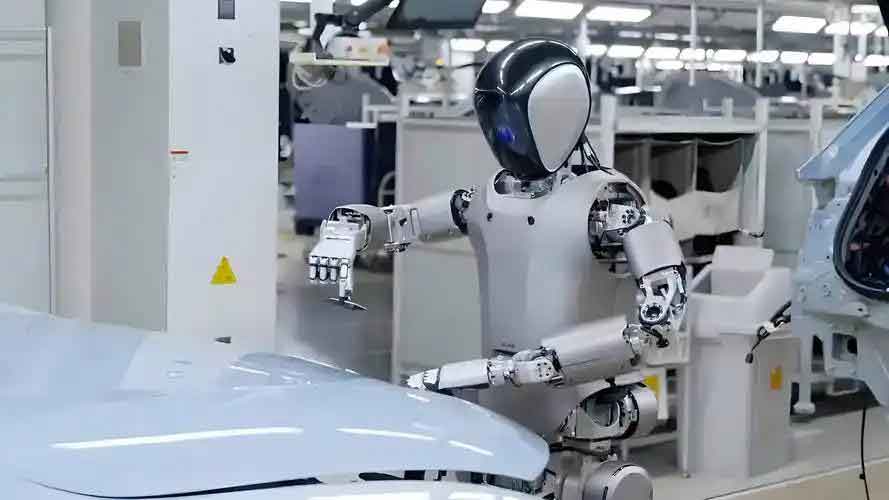
This inquiry naturally leads to a more foundational puzzle: How do we define “the human”? Has the practicing, thinking subject of today transcended the traditional concept of a person defined by flesh and individual consciousness? The classical philosophical problem of subjectivity—whether it is synonymous with “humanness”—has been thrust into everyday life by the digital society. Even before considering advanced AI, our existence mediated by technology places us in a state of uncertain agency. A person with a brain-computer interface, an individual encased in powerful exoskeletal gear, a user fused with a virtual game avatar, or even someone navigating the torrent of machine-generated and user-generated content—all represent a form of human-machine synthesis. It becomes increasingly difficult to define these states solely through the lens of discrete personality and biological body.
To make this concrete, consider common media scenarios. Public discourse on any event is now rarely a pure aggregation of individual human opinions. Instead, it is a coupled outcome of algorithmic logic, information architecture, and fleeting public reactions—a collectively assembled narrative. In such a process, no single human subject can be held fully responsible for the final consensus, and no individual’s view directly shapes the result. Attempting to pin responsibility on a specific person or group feels forced. This “responsibility without a subject” is precisely why enforcing ethical norms or achieving “rational discourse” in technologically mediated spaces is so challenging. The advent of sophisticated AI, particularly through the lens of the humanoid robot, accelerates and sharpens this problem.
Modern AI engages in highly anthropomorphic learning, processing and producing natural language. Even if we are not ready to grant it full status as an independent thinking agent, its pervasive role as an assistant means it constitutes a part of our extended agency. The humanoid robot, with AI as its “brain,” compounds this by combining human-like “form” with simulated “thought.” This advancement forces social science and philosophy to contend with the heterogeneity, plurality, and combinatorial nature of agency. Consequently, some theorists refer to AI as a quasi-subject or a para-subject. Others, acknowledging the practical reality of human-machine integration, propose concepts like the “trans-subject,” a hybrid framework that encompasses both human and machine elements.
The misalignment between the concept of the subject and the traditional concept of “the human” leads directly to the failure of classical humanist frameworks and the ethical principles built upon interpersonal relationships. A spontaneous ethical response has been to reductively disaggregate these heterogeneous subjects back into human components who can bear moral responsibility. In this view, the algorithm engineer has ethical duties, the AI trainer has theirs, and the individual media user is bound by their own social contracts. While not yet fully codified or unified, these norms exist in a dispersed manner through laws, industry guidelines, and cultural mores, each exerting some constraint. This approach, as I see it, is a compromise with traditional notions of subjectivity. At its core, there is a paradox: we humans, who initiated AI, struggle to impose ethical rules upon a creation that may exceed our own conceptual framework. We create Generative AI (AIGC), yet we live in trepidation of being controlled by it. The medieval theological query—”Can God create a stone so heavy that He cannot lift it?”—now reverberates for humanity in the 21st century.
To systematically analyze these shifts, I propose several conceptual models. First, let us consider the spectrum of agency in the digital age, which can be represented by a continuum formula. Let \( A_t \) represent total agency in a given action or thought process. It is no longer solely human (\( A_h \)), but a function of human, artificial, and mediating system components:
$$ A_t = f(A_h, A_{ai}, A_m) = \alpha A_h + \beta A_{ai} + \gamma A_m $$
where \( \alpha, \beta, \gamma \) are weighting coefficients that vary by context, and \( A_m \) represents the agency of the mediating platform or algorithm. In the case of a humanoid robot operating autonomously, \( \beta \) may approach 1, while \( \alpha \) is near 0, challenging our attribution of action.
The ontological status of a humanoid robot can be mapped along two dimensions: Physical Embodiment and Cognitive Autonomy. This creates a typology of entities, as shown in the table below.
| Entity Type | Physical Embodiment | Cognitive Autonomy (AI-driven) | Example | Subjectivity Classification |
|---|---|---|---|---|
| Traditional Human | Biological Body | Low (Biological Intelligence) | Individual person | Full Subject |
| Human with Tech Augmentation | Bio-technical Hybrid | Medium (Assistive AI) | User with neural implant | Hybrid Subject |
| Software AI Agent | None (Digital) | High | Large Language Model | Quasi-Subject |
| Non-Humanoid Robot | Mechanical (Non-anthropomorphic) | Medium to High | Industrial robotic arm | Tool/Quasi-Subject |
| Humanoid Robot | Mechanical (Anthropomorphic) | High | Advanced general-purpose robot | Para-Subject or Trans-Subject |
This table illustrates the unique position of the humanoid robot, which maximizes both embodied presence and cognitive simulation, thereby posing the greatest challenge to our categories. The repeated emergence of the humanoid robot in such frameworks is not coincidental; it is the archetype that forces the issue.
The ethical dilemma can be further formalized. Let \( R \) represent a moral responsibility claim. In traditional ethics, \( R \) is mapped to a human subject \( H \): \( R \rightarrow H \). In a human-AI system, particularly one involving a humanoid robot, the mapping becomes complex: \( R \rightarrow \Psi(H, AI, C) \), where \( \Psi \) is a distribution function over the human, the AI system, and the context \( C \). The problem is determining the arguments for \( \Psi \). A proposed heuristic for accountability, based on the current “reductive” ethical approach, could be:
$$ \text{Accountability Score} = \sum_{i=1}^{n} (w_i \cdot C_i) $$
where \( w_i \) is a weight assigned to a human stakeholder role (e.g., designer, trainer, user), and \( C_i \) is their degree of causal contribution and control. This model, however, often breaks down when the humanoid robot’s actions are emergent and not directly traceable to a single human’s input.
This discussion intersects with economic paradigms like the “First Release Economy,” which thrives on innovation—the very engine driving AI and humanoid robot development. This economy, centered on launching new products, services, business models, and flagship stores, creates a culture of perpetual novelty. Each successful innovation, be it a new AI model or a commercial humanoid robot prototype, activates markets. Yet, this economic system also accelerates the societal penetration of these technologies, shortening the time between technological possibility and philosophical consequence. The humanoid robot is not just a philosophical subject; it is a potential product, a service platform, and a new economic actor in this “first release” ecosystem.
The parable of the kangaroo and the cage offers a crucial metaphor for our approach to these challenges. The keepers, faced with escaping kangaroos, repeatedly raise the cage height, missing the fundamental issue of the open door. Similarly, in regulating AI and humanoid robots, we might focus on technical safeguards (the height of the cage) while neglecting the core questions of purpose, control, and definition (the closed door). The “door” in our context is the clear understanding of agency and ethics in a composite world. We must identify the primary and secondary contradictions: the core issue is the reconstitution of subjectivity itself, not merely the incremental improvement of AI safety features.
Let me delve deeper into the phenomenology of interaction with a humanoid robot. When I encounter a machine that looks, moves, and communicates in a human-like way, my cognitive systems are predisposed to attribute intentionality and emotion to it—a phenomenon known as anthropomorphism. This is not a bug but a feature of human cognition. The humanoid robot exploits this feature, creating a powerful feedback loop. My perception influences my behavior toward the robot, and the robot’s learned responses reinforce my perception. This loop can be modeled as a dynamical system:
$$ \frac{dP}{dt} = k_1 I(R) – k_2 P $$
$$ \frac{dB}{dt} = k_3 P + k_4 R(B) $$
Here, \( P \) represents my perception of the robot’s agency, \( I(R) \) is the input from the robot’s appearance and behavior, \( B \) is my behavioral response, and \( R(B) \) is the robot’s response to my behavior. Constants \( k_1, k_2, k_3, k_4 \) govern the rates of change. This system can reach stable states where I treat the humanoid robot as a social other, even if objectively it is a machine.
The economic implications are vast. The development cycle for a humanoid robot involves massive investment in R&D, materials science, AI training, and user experience design. We can model the innovation lifecycle in the First Release Economy for such a product:
| Phase | Key Activities | Primary Actors | Ethical & Social Questions Raised | Role of Humanoid Robot |
|---|---|---|---|---|
| Research & Concept | Basic AI research, mechanical design | Scientists, Engineers | What capabilities should we pursue? What are the limits? | Technical blueprint |
| Prototype & First Release | Building first working models, media launch | Corporations, Media | How is it presented to the public? Tool or being? | Novelty product, media spectacle |
| Commercialization & Scaling | Mass production, finding applications (care, service, industry) | Manufacturers, Investors, Businesses | Job displacement, dependency, social integration | Economic asset, potential coworker |
| Societal Integration | Widespread use, norm formation, policy response | Public, Policymakers, Ethicists | Legal personhood? Rights? Responsibility for actions. | Social agent, quasi-citizen |
This table shows that the humanoid robot evolves from a concept to a social entity, and at each stage, it forces new questions. The path of the humanoid robot is a microcosm of the broader AI integration journey.
In my reflection, the core intellectual task is to develop a new metaphysical framework. We must move beyond binary categories. One promising direction is process philosophy, where agency is seen as an event or a happening rather than a property of a substance. In this view, a “subject” is a temporary nexus of relations and processes. A humanoid robot participating in a caregiving interaction is part of a “care process” that also involves the human recipient, the programmers, the institutional context, and the cultural norms. The ethical evaluation then attaches to the process’s capacity to foster flourishing, rather than solely to individual entities. This can be expressed as:
$$ \text{Ethical Value}(E) = \int_{t_0}^{t_1} F(\vec{R}(t)) \, dt $$
where \( E \) is an event or process, \( \vec{R}(t) \) is a vector of relations (human-human, human-humanoid robot, humanoid robot-environment) at time \( t \), and \( F \) is a function measuring the flourishing generated within that network of relations.
The legal dimension follows closely. If a humanoid robot causes harm, who is liable? The manufacturer, the owner, the software developer, or the AI itself? Current law struggles with this. A potential formula for apportioning liability (L) in a scenario involving a humanoid robot might be:
$$ L_{\text{total}} = L_{\text{design}} + L_{\text{operation}} + L_{\text{context}} $$
$$ L_{\text{design}} = \sum (d_i \cdot \text{Defect}_i) $$
$$ L_{\text{operation}} = o \cdot \text{Negligence}_{\text{user}} $$
$$ L_{\text{context}} = c \cdot \text{Unforeseen\_Environment\_Factor} $$
Here, \( d_i, o, c \) are weighting factors, and the “Defect” terms could relate to flaws in the AI’s training or the robot’s hardware. This is a simplistic model, but it highlights the combinatorial nature of responsibility.
Ultimately, the journey with AI and humanoid robots is a journey of self-discovery. Every challenge posed by a humanoid robot—from its uncanny gaze to its potential for autonomous action—is a question about ourselves. What aspects of our humanity are essential? Is it our biology, our consciousness, our capacity for relationship, or something else? The humanoid robot, as the most complete mirror, reflects these questions back with unsettling clarity. I believe we are not heading toward a future where machines replace humans, but toward a future of complex symbiosis. Our concepts must evolve to match this reality. We need an inclusive, flexible ethics—a “relational ethics” for the age of hybrid agents. This will require continuous dialogue across technology, philosophy, law, and the arts. The humanoid robot is not the end of the human story; it is the beginning of a much more intricate chapter, where understanding “who we are” will require us to also understand what we have created and what it is becoming alongside us. The humanoid robot, therefore, stands as the central icon of this transitional age, a catalyst for the greatest redefinition of our species since the Enlightenment.