
In the rapidly evolving landscape of robotics, the deep integration of artificial intelligence and robotic technologies is propelling humanoid robots from laboratory settings into diverse application scenarios such as industrial automation, healthcare, service industries, entertainment, and rescue operations. The market for humanoid robots is experiencing explosive growth, with projections indicating a global market value reaching billions of dollars by 2030. This expansion underscores the necessity for modularization and standardization to meet scalability and commercialization demands. As a researcher in this field, I have observed that the lack of standardized interfaces poses significant bottlenecks, hindering efficient industry chain collaboration. Interfaces that connect sensing, decision-making, and execution modules in humanoid robots are critical yet fraught with challenges related to function/performance, safety, reliability, compatibility, and environmental adaptability. This article delves into the standardization needs for humanoid robot interfaces, analyzing current standards, classifying interface types, examining technical challenges, and proposing directions for standardization efforts. The goal is to provide a foundational reference for future standard development, ensuring that humanoid robots can achieve seamless integration, robust performance, and widespread adoption.
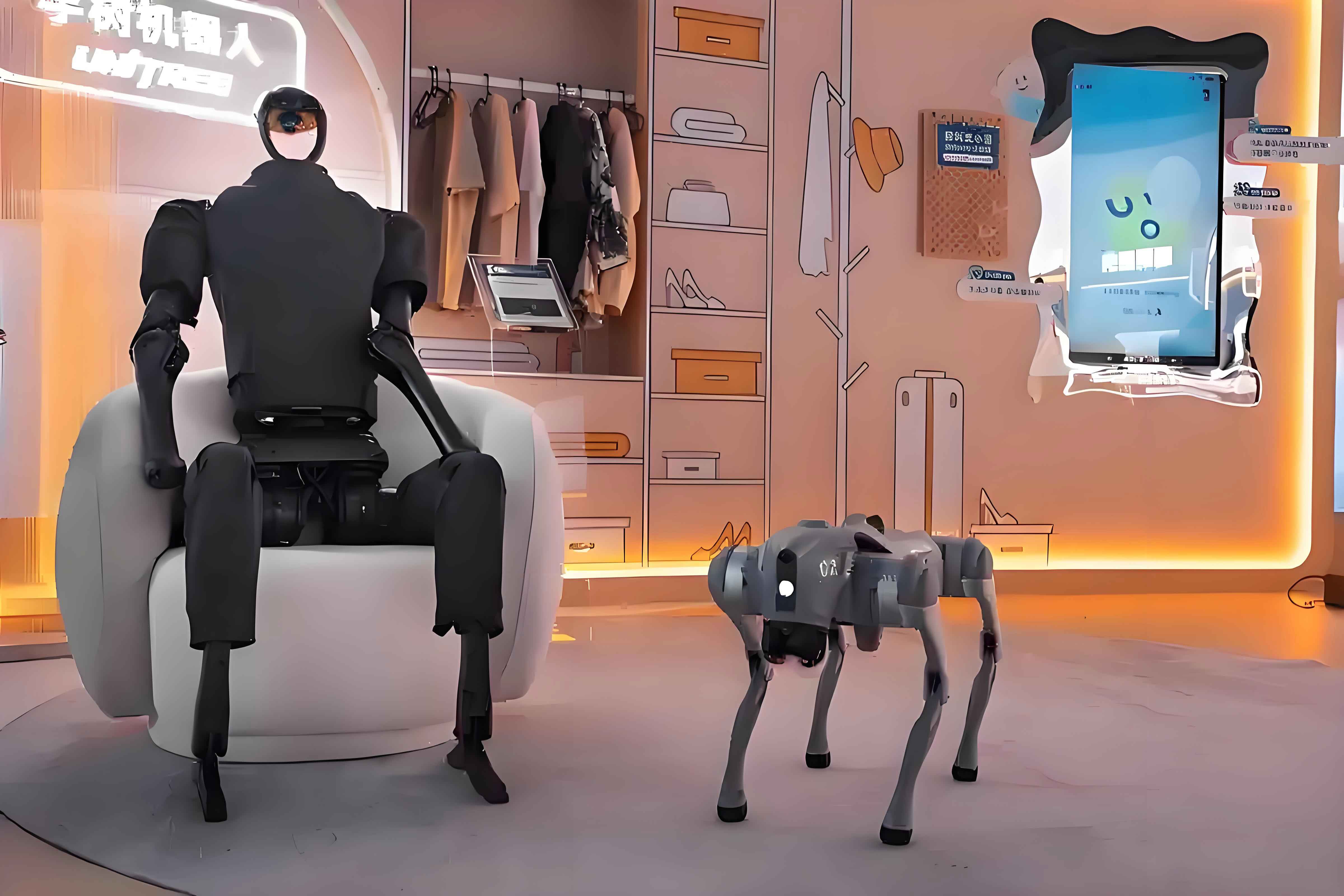
The modularization trend in the humanoid robot industry necessitates cohesive interfaces to enable interoperability among components from various manufacturers. Currently, humanoid robots incorporate a plethora of sensors, actuators, and processing units, each with proprietary interfaces, leading to increased complexity and cost in system integration. For instance, perception modules may use different data formats and communication protocols, while control systems might lack unified real-time communication standards. This fragmentation impedes the development of humanoid robots that can reliably perform complex tasks in dynamic environments. Through this study, I aim to systematically address these issues by advocating for comprehensive standardization, which will facilitate the humanoid robot ecosystem’s growth, reduce development barriers, and enhance safety and performance across applications.
Standardization efforts for humanoid robots are still in their infancy globally. Internationally, organizations such as the International Organization for Standardization Technical Committee for Robotics (ISO/TC 299) and the International Electrotechnical Commission Technical Committee for Power Robotics (IEC/TC 129) have established standards for general robotics and power system applications, respectively. However, neither has yet initiated specific standardization projects for humanoid robots. Domestically, in various regions, research institutions and enterprises have begun drafting standards related to humanoid robot datasets, classification, technical requirements for whole machines, simulation testing platforms, and integrated joint specifications. Yet, interface standardization remains underexplored, creating a gap that must be filled to support the humanoid robot industry’s advancement. This absence of focused standards complicates collaboration and innovation, highlighting the urgency for dedicated efforts in interface standardization.
To understand the standardization needs, I have categorized humanoid robot interfaces into three primary types based on their functions: perception input interfaces, decision control interfaces, and execution output interfaces. Each category encompasses multiple sub-interfaces that facilitate specific tasks within the humanoid robot system. Below, I present tables summarizing these interfaces, detailing their hardware components, software algorithms, and functionalities. This classification serves as a framework for identifying technical challenges and standardization requirements.
| Interface Name | Hardware Components | Software Algorithms | Functionality |
|---|---|---|---|
| Head Composite Perception Interface | Binocular vision cameras, microphone arrays, Time-of-Flight (ToF) sensors | Object detection algorithms, voice recognition algorithms | Acquires visual and auditory environmental data for scene perception and sound identification |
| Joint Torque Feedback Interface | Six-axis torque sensors | Data filtering algorithms, analytical algorithms | Measures force and torque at joints, providing mechanical parameters for motion control |
| Dexterous Hand Perception Interface | Cameras, proximity sensors, tactile sensors (e-skin), position sensors | Image recognition algorithms, tactile signal processing algorithms | Captures detailed object information,感知 grasping force, texture, and shape |
| Foot Pressure Perception Interface | Six-axis torque sensor matrices, ground contact sensing devices | Pressure distribution analysis algorithms | Monitors foot-ground contact state and pressure distribution for balance maintenance |
| Inertial Navigation Fusion Interface | Inertial Measurement Units (IMU) | Sensor fusion algorithms | Provides precise orientation, position, and motion姿态 measurements for path planning |
| Gesture Interaction Input Interface | Depth cameras, inertial sensors for gesture recognition | Gesture recognition algorithms | Interprets human gesture commands for intuitive human-robot interaction |
The perception input interfaces are crucial for enabling humanoid robots to interact with their surroundings. They rely on multi-modal data fusion, which integrates diverse sensor outputs. However, the heterogeneity in data formats, sampling rates, and units presents significant challenges. For example, the fusion of visual data from cameras and force data from torque sensors requires sophisticated algorithms to ensure coherence. The data transmission rate for these interfaces must be high to handle large volumes of real-time data. A formula representing the required data rate can be expressed as:
$$ R_p = \sum_{i=1}^{n} f_i \cdot d_i $$
where \( R_p \) is the total data rate for perception interfaces, \( f_i \) is the sampling frequency of sensor \( i \), and \( d_i \) is the data size per sample. For a humanoid robot with multiple sensors, achieving \( R_p \) without latency is critical for real-time responsiveness.
| Interface Name | Hardware Components | Software Algorithms | Functionality |
|---|---|---|---|
| Heterogeneous Computing Power Extension Interface | GPUs, NPUs, TPUs, other accelerator chips | Algorithm runtime environment setup programs | Supports computational demands for complex algorithms and large-scale data processing in humanoid robots |
| Real-Time Control Bus Interface | High-speed communication lines (e.g., EtherCAT-based networks) | Data synchronization algorithms, real-time control algorithms | Ensures high-speed, reliable communication between main controller and joint drives for precise multi-joint synchronization |
| Dynamics Algorithm Interface | None (software-only) | Inverse kinematics algorithms, gait planning algorithms, balance control algorithms | Provides algorithmic support for motion planning and control, enabling trajectory planning and dynamic adjustments |
| System Diagnostic Interface | Hardware health monitoring sensors (e.g., temperature, voltage, current sensors) | Fault detection algorithms, fault classification algorithms | Monitors hardware health in real-time, diagnoses software faults to ensure stable operation of humanoid robots |
Decision control interfaces act as the “brain” of the humanoid robot, facilitating communication between processing units and other components. The integration of heterogeneous computing resources, such as GPUs and NPUs, requires efficient task scheduling and data exchange. The lack of standardized interfaces for task allocation can lead to suboptimal resource utilization. The performance of these interfaces can be modeled using latency formulas. For instance, the communication latency \( L_c \) in a real-time control bus interface can be given by:
$$ L_c = \frac{D_{packet}}{B} + P_{processing} $$
where \( D_{packet} \) is the packet size, \( B \) is the bandwidth, and \( P_{processing} \) is the processing delay. Minimizing \( L_c \) is essential for the timely execution of control commands in humanoid robots.
| Interface Name | Hardware Components | Software Algorithms | Functionality |
|---|---|---|---|
| Rotational Joint Drive Interface | Servo systems for shoulder, elbow, and other rotational joints | Joint angle control algorithms, dynamic stiffness control algorithms | Precisely controls joint angles and adjusts dynamic stiffness for complex motions like arm swinging |
| Linear Joint Drive Interface | Linear motion components for knees, ankles, etc. | High-precision position control algorithms, force control algorithms | Enables high-accuracy linear actuation and force control for actions such as standing and jumping |
| End-Effector Interface | Mechanical grippers, dexterous hands, other tools | Grasping planning algorithms, fine manipulation control algorithms | Executes object grasping and精细操作 tasks in humanoid robots |
| Emotional Interaction Interface | Facial expression displays, voice speakers, tactile feedback devices | Emotion recognition algorithms, expression generation algorithms | Facilitates emotional expression and social interaction, enhancing human-robot体验 for humanoid robots |
Execution output interfaces drive the physical movements of humanoid robots, enabling interaction with the environment. Safety and reliability are paramount, as these interfaces manage forces and motions that could pose risks in human-robot collaboration. The torque output \( \tau \) of a rotational joint drive interface, for example, must be precisely controlled to avoid excessive force. This can be described by:
$$ \tau = K_p \cdot e + K_d \cdot \frac{de}{dt} $$
where \( K_p \) and \( K_d \) are proportional and derivative gains, and \( e \) is the error in joint angle. Standardizing such control parameters ensures consistent performance across different humanoid robot models.
Having classified the interfaces, I now analyze the technical challenges associated with each category for humanoid robots. These challenges underscore the need for comprehensive standardization to address performance bottlenecks and safety concerns.
For perception input interfaces, multi-modal data fusion is a major hurdle. The diverse data types from sensors—such as images, audio, and force measurements—exhibit variations in format, sampling frequency, and dimensionality. This complicates the integration process, often leading to inaccurate environmental perception. The fusion efficiency \( E_f \) can be expressed as a function of data alignment:
$$ E_f = \frac{1}{n} \sum_{i=1}^{n} \alpha_i \cdot S_i $$
where \( \alpha_i \) represents alignment weights for sensor \( i \), and \( S_i \) is the sensor data quality. Without standardized data protocols, achieving high \( E_f \) is difficult, impairing the decision-making capabilities of humanoid robots. Additionally, hardware interface inconsistency across manufacturers increases integration complexity and cost. The transmission latency for perception data must be minimized to support real-time operations. If the data rate exceeds interface capacity, packet loss may occur, modeled as:
$$ P_{loss} = f(R_p, C) $$
where \( C \) is the interface capacity. This can degrade the responsiveness of humanoid robots in dynamic environments.
Decision control interfaces face challenges in heterogeneous computing power coordination. Humanoid robots often incorporate multiple accelerator chips (e.g., GPUs, NPUs) to handle varied computational tasks, but the absence of standardized interfaces for data transfer and task scheduling hampers efficient resource utilization. The overall system efficiency \( \eta \) can be represented as:
$$ \eta = \frac{T_{useful}}{T_{total}} \times 100\% $$
where \( T_{useful} \) is the time spent on useful computations, and \( T_{total} \) is the total time including overhead from inefficient interface communication. Real-time control bus interfaces must also ensure data integrity and fault tolerance. Errors in transmission can lead to control指令 deviations, affecting the运动精度 and stability of humanoid robots. The bit error rate (BER) should be kept below a threshold, defined as:
$$ BER = \frac{N_{errors}}{N_{total}} $$
Standardization can help define acceptable BER limits for reliable operation of humanoid robots.
Execution output interfaces grapple with safety assurance. While basic safety features like force feedback and collision detection exist, the robustness of protection mechanisms under overload or short-circuit conditions is often unclear. This limits the application of humanoid robots in close-contact scenarios such as healthcare. The safety margin \( M_s \) can be quantified as:
$$ M_s = \frac{F_{max}}{F_{operating}} $$
where \( F_{max} \) is the maximum allowable force, and \( F_{operating} \) is the operating force. Standardized thresholds for \( M_s \) would enhance the safety of humanoid robots. Furthermore, environmental adaptability is critical; interfaces must withstand factors like electromagnetic interference, temperature extremes, and moisture. The failure rate \( \lambda \) due to environmental stress can be modeled using the Arrhenius equation for temperature effects:
$$ \lambda = A \cdot e^{-\frac{E_a}{k T}} $$
where \( A \) is a constant, \( E_a \) is activation energy, \( k \) is Boltzmann’s constant, and \( T \) is temperature. Standardizing environmental ratings will ensure the durability of humanoid robot interfaces.
Based on these challenges, I propose a framework for standardization工作 that addresses five core aspects: performance, safety, reliability, compatibility, and environmental adaptability. Each aspect requires specific metrics and guidelines to ensure that humanoid robot interfaces meet industry needs. Below, I outline these requirements with supporting tables and formulas to illustrate key indicators.
Performance standards must define metrics for data transmission, control responsiveness, and accuracy. For humanoid robots, this includes data rate, bandwidth, sampling rate, communication protocol efficiency, latency, task scheduling response time, control precision, and response speed. These metrics ensure that interfaces can handle the real-time demands of humanoid robot operations. A comprehensive performance index \( P_{index} \) can be derived as a weighted sum:
$$ P_{index} = w_1 \cdot R + w_2 \cdot \frac{1}{L} + w_3 \cdot A $$
where \( R \) is data rate, \( L \) is latency, \( A \) is accuracy, and \( w_i \) are weights. Standardizing \( P_{index} \) benchmarks will facilitate comparisons across humanoid robot systems.
| Metric | Description | Target for Humanoid Robots |
|---|---|---|
| Data Transmission Rate | Speed of data transfer between modules | > 1 Gbps for perception interfaces |
| Communication Latency | Delay in signal transmission | < 1 ms for real-time control interfaces |
| Control Precision | Accuracy in executing motion commands | ±0.1° for rotational joints |
| Response Time | Time to react to inputs | < 10 ms for safety-critical interfaces |
Safety standards should encompass data校验, transmission integrity, fault tolerance, and抗干扰性. They must define mechanisms to prevent data errors, loss, and security breaches, particularly under adverse conditions like hacking or electrical faults. For humanoid robots, safety can be evaluated using a risk score \( S_{risk} \):
$$ S_{risk} = \sum_{j=1}^{m} p_j \cdot c_j $$
where \( p_j \) is the probability of failure for interface \( j \), and \( c_j \) is the consequence severity. Standardization should aim to minimize \( S_{risk} \) through requirements for encryption, error correction codes, and fail-safe mechanisms.
Reliability standards need to address metrics such as Mean Time Between Failures (MTBF), failure rates, aging characteristics, connection stability, data storage integrity, and thermal stability. These ensure that humanoid robot interfaces operate consistently over time. The reliability function \( R(t) \) can be expressed as:
$$ R(t) = e^{-\int_0^t \lambda(\tau) d\tau} $$
where \( \lambda(\tau) \) is the time-dependent failure rate. Standardizing MTBF targets (e.g., > 10,000 hours) and redundant storage protocols will enhance the longevity of humanoid robots.
| Aspect | Indicator | Standardization Requirement |
|---|---|---|
| Reliability | MTBF | Minimum 10,000 hours for critical interfaces |
| Reliability | Data Storage Redundancy | Dual备份 with error correction |
| Compatibility | Mechanical Interface Dimensions | Unified tolerances (e.g., ±0.05 mm) |
| Compatibility | Electrical Voltage Range | 12-48 V DC with standard connectors |
| Compatibility | Communication Protocol | Support for EtherCAT, CAN, etc. |
Compatibility standards are vital for interoperability, covering mechanical installation dimensions and tolerances, electrical connection specifications (voltage, current ranges), and communication protocol types. This enables seamless integration of components from different suppliers, reducing development costs for humanoid robots. A compatibility score \( C_{score} \) can be defined as:
$$ C_{score} = \frac{N_{compatible}}{N_{total}} \times 100\% $$
where \( N_{compatible} \) is the number of compatible components, and \( N_{total} \) is the total components. Standardization should aim for \( C_{score} \)接近 100% to promote modularity in humanoid robot design.
Environmental adaptability standards must specify performance under varying temperatures, humidity levels, and electromagnetic interference. For humanoid robots, this ensures functionality in diverse settings, from industrial floors to outdoor救援 scenarios. Key metrics include operating temperature range (e.g., -20°C to 60°C), IP rating for water and dust resistance (e.g., IP65), and electromagnetic compatibility (EMC) limits. The environmental stress factor \( E_{stress} \) can be quantified as:
$$ E_{stress} = \alpha_T \cdot \Delta T + \alpha_H \cdot \Delta H + \alpha_E \cdot E_{field} $$
where \( \alpha \) coefficients represent sensitivity to temperature change \( \Delta T \), humidity change \( \Delta H \), and electromagnetic field strength \( E_{field} \). Standardizing maximum \( E_{stress} \) thresholds will guarantee that humanoid robot interfaces remain operational in harsh conditions.
In conclusion, the standardization of interfaces is a pivotal enabler for the humanoid robot industry’s growth. By establishing uniform specifications for performance, safety, reliability, compatibility, and environmental adaptability, we can overcome current barriers related to interface inconsistency, system integration difficulties, and safety concerns. This standardization will benefit all stakeholders: upstream component manufacturers can achieve economies of scale, midstream integrators can adopt modular approaches for efficient assembly, and downstream users can rely on safer, more interoperable humanoid robots. The humanoid robot ecosystem stands to gain significantly from reduced adaptation costs, lower technical risks, and enhanced collaborative efficiency. As research progresses, I advocate for concerted efforts among standardization bodies, industry players, and academia to develop and implement these standards, ultimately accelerating the commercialization and widespread deployment of humanoid robots across global markets.
Through this analysis, I have highlighted the critical need for interface standardization in humanoid robots. The proposed framework, supported by tables and formulas, provides a roadmap for future标准研制. As humanoid robots continue to evolve, adhering to these standards will ensure they meet the demands of complex applications, fostering innovation and sustainability in robotics. The journey toward fully standardized humanoid robot interfaces may be challenging, but it is essential for realizing the full potential of these advanced machines in transforming industries and everyday life.