
As I observe the rapid evolution of technology, I am convinced that the humanoid robot represents the pinnacle of embodied artificial intelligence. It is not merely a machine; it is a symbol of technological innovation and advanced manufacturing capability. From my standpoint,前瞻布局 the humanoid robot赛道 is crucial for accelerating the development of new quality productive forces. Currently, the humanoid robot industry is at a critical window for strategic positioning, with no generational gap yet evident among urban developments. In this context, based on my analysis of industry trends and regional development dynamics, I propose that focusing on downstream high-growth tracks,前瞻布局 application scenarios for humanoid robots, and building a national demonstration hub for humanoid robot applications are essential steps.
I have delved into the development trends of the humanoid robot industry, and here is my detailed assessment.
Development Trends of the Humanoid Robot Industry
From my research, I see that the humanoid robot industry is entering a period of technological explosion. With advancements in high-performance core components and iterative improvements in AI algorithms, I anticipate that within the next 5-10 years, humanoid robots will reach mature application stages. In my view, Chinese entities, including companies and universities, are gradually increasing their influence in humanoid robot technology R&D. For instance, a leading Chinese company holds 763 valid technical patents for humanoid robots, ranking first globally. Universities such as Tsinghua University and Beijing Institute of Technology also maintain high patent output activity, fueling the rapid growth of the domestic humanoid robot industry.
I believe the economic value of humanoid robots is gaining market recognition. In the first half of 2024, global funding events in the humanoid robot领域 exceeded 22 deals, with total financing surpassing 70 billion yuan. According to Goldman Sachs estimates, under ideal conditions, the compound annual growth rate (CAGR) of humanoid robot sales from 2025 to 2035 could reach 94%. The formula for CAGR is expressed as:
$$ \text{CAGR} = \left( \frac{V_f}{V_i} \right)^{\frac{1}{n}} – 1 $$
where \( V_f \) is the final value, \( V_i \) is the initial value, and \( n \) is the number of years. In the long term, I foresee humanoid robots becoming another blue ocean for AI application scenarios, following new energy vehicles. Based on the “Humanoid Robot Industry Research Report,” I predict that China’s humanoid robot market size will reach 27.6 billion yuan in 2024, and by 2035, it is expected to grow to 3000 billion yuan, serving as a new engine for economic growth. This growth can be modeled using an exponential function:
$$ S(t) = S_0 \cdot e^{gt} $$
where \( S(t) \) is the market size at time \( t \), \( S_0 \) is the initial size, and \( g \) is the growth rate. For instance, if we assume \( S_0 = 27.6 \) billion yuan in 2024 and \( S(t) = 3000 \) billion yuan in 2035, we can solve for \( g \).
I have compiled key metrics in the table below to summarize the economic outlook for humanoid robots.
| Indicator | Value | Description |
|---|---|---|
| Global Funding Events (H1 2024) | 22 deals | Financing in humanoid robot领域 |
| Total Financing Amount (H1 2024) | 70 billion yuan | Approximately 10 billion USD |
| Projected CAGR (2025-2035) | 94% | Under ideal scenarios |
| China Market Size (2024) | 27.6 billion yuan | Estimated |
| China Market Size (2035) | 3000 billion yuan | Projected |
| Global Patent Leader | 763 patents | Valid technical patents for humanoid robots |
In my observation, the application scenarios for humanoid robots are continuously expanding, thanks to the ongoing “catalysis” of artificial intelligence. Currently, humanoid robots are being applied in structured manufacturing环节 such as precision assembly and material handling. The world’s first humanoid robot factory officially commenced operations in October 2024, marking a significant step from R&D to industrialization and规模化生产 for humanoid robots. I see this as a pivotal moment for the humanoid robot industry.
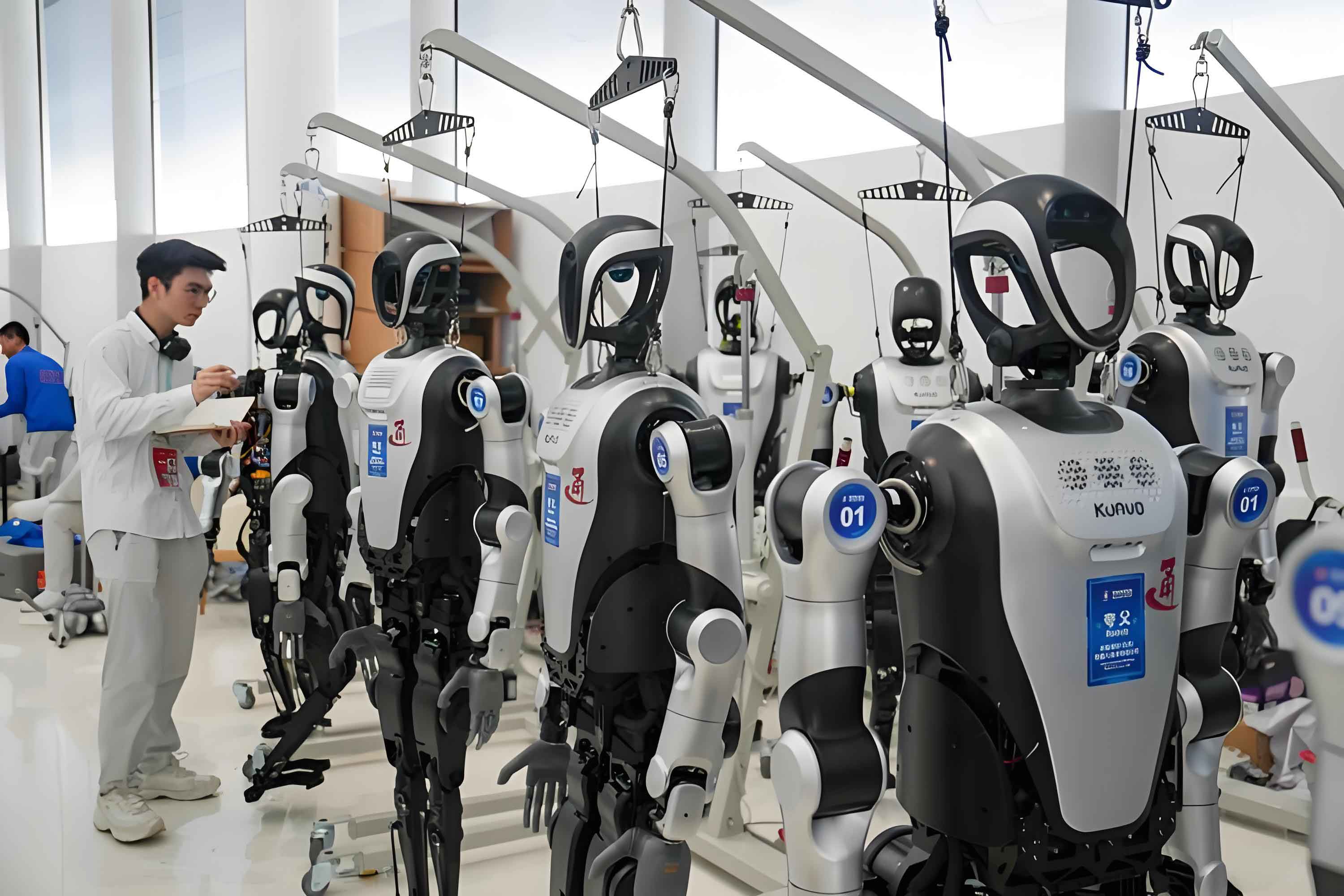
From a policy perspective, I note that favorable policies are being密集频发 in various regions. In September 2023, the Ministry of Industry and Information Technology identified humanoid robots as a key direction and issued揭榜挂帅 tasks. In November 2023, the ministry issued the “Guidance on Innovative Development of Humanoid Robots,” outlining a national top-level deployment for the medium- to short-term strategic path for humanoid robots. In January 2024, seven departments including the Ministry of Industry and Information Technology released the “Implementation Opinions on Promoting the Innovative Development of Future Industries,” explicitly calling for breakthroughs in high-end equipment products like humanoid robots. Multiple cities are actively布局 the humanoid robot industry, introducing relevant policies and action plans to accelerate technology R&D, product development, and promote the application of整机产品 in various typical scenarios for humanoid robots.
Strategic Considerations for Building a Humanoid Robot Demonstration Hub
In my analysis, accelerating the布局 of demonstration application scenarios for humanoid robots is vital for injecting strong momentum into the construction of a modern industrial system. Under the backdrop of “industrial立市 and manufacturing强市,” I believe that speeding up the布局 of humanoid robot application scenarios is of great significance for健全优化 the modern industrial system.
From the perspective of the industry’s own development, I consider that the manufacturing环节 of humanoid robots本身 has极高 development value and can become an important support for creating new digital industry formats. Particularly, core components and operating systems with high单品价值量 and large用量 are currently in the technology breakthrough stage. Driven by downstream market expansion, I expect substantial future returns for humanoid robots.
From the perspective of industrial linkage effects, I observe that the humanoid robot industry is closely related to the development of advanced manufacturing. For example, 8 out of 30 key industrial chains in a major city are密切关联 with the upstream technology development of humanoid robots. By using application scenario construction as a牵引, I am confident that this will vigorously拉动 upstream advanced manufacturing development and整体提能.
I view超前布局 demonstration application scenarios for humanoid robots as a beneficial exploration to address the future decline in the working-age population比例. In the context of aging and少子化,面对未来青壮年劳动力供应不足 and shortages in elderly care service personnel, promoting the accelerated落地 of humanoid robots in民生服务场景 has become a useful path to破解难题. From the perspective of劳动力替代, the “拟人” advantage endows humanoid robots with universality, making them easier to integrate into social life, providing多样化 and适配性 support, effectively alleviating shortages in basic production labor, and further optimizing social labor division. From the perspective of serving an aging society, intelligent humanoid robots capable of undertaking tasks such as health management, care nursing, and陪伴娱乐 will become important aids in enhancing social efficiency and quality of life. Not only can they provide more贴心 and personalized services for the elderly, but they can also drive the development of the智慧养老 industry for humanoid robots.
I assert that科学布局 demonstration application scenarios for humanoid robots is an inevitable move to助推 technological innovation and the transformation of scientific and technological achievements simultaneously. As an智力密集型 industry, technological innovation plays a decisive role in the development of the humanoid robot industry, and the construction of application demonstration scenarios is of great significance for带动 innovation breakthroughs. From the perspective of同步发力 conversion and innovation, a major city has already deployed a batch of high-level innovation resources in fields related to humanoid robots, such as artificial intelligence and robotics. However, downstream中试 and小试 application scenarios still do not meet demand. By deploying humanoid robot application scenarios, I believe this can be further expanded. From the perspective of market demand driving technological innovation, diversified market demand有利于激发 technological innovation vitality. In率先布局 regions, industrial版 humanoid robots that “进厂打工” and service-type humanoid robots with various “绝活” have emerged, driving上游技术发展 to continuously achieve迭代升级, which is conducive to抢占先机 in future market competition for humanoid robots.
Current Position and Advantages in Humanoid Robot Development
From my evaluation, innovation vitality is强劲 in regions focusing on humanoid robots. Universities and research institutes possess abundant talent resources. For instance, the software industry in a certain city has over 630,000 employees, and local universities cultivate a large number of excellent AI computing talents, laying a solid foundation for the development of the humanoid robot相关 industry. However, compared to other leading cities, there is still a gap. According to data, among the 280 most globally influential AI scholars in China, a leading city accounts for 43.2%, another for 8.2%, while a western region has only 5, accounting for 1.8% nationally.
I note that technological innovation platforms are持续壮大. A major city is the second in the country to operate both supercomputing and intelligent computing dual centers, possessing 8 national-level R&D platforms in the AI computing领域 and nearly 20 robot innovation platforms. In 2024, the city’s first robot innovation center was launched; the first新型研发机构 in the humanoid robot领域 in the central-western region has been established, focusing on the “brain” R&D for humanoid robots.
From an industrial perspective, I see澎湃动能. The AI industry is蓬勃发展. A major city has been approved to build a national new-generation AI innovation development pilot zone and a national AI innovation application先导区, with over 900 AI科技型企业. The AI industry has achieved a compound growth rate of over 40% in the past three years,蓄势积能 for breakthroughs in core software algorithms for humanoid robots. The robot全产业链 has初具雏形. A preliminary formation of a full robot industry chain from key components,本体, system integration to terminal applications has been achieved. In 2023, the robot industry scale in a certain city was 40 billion yuan (still a certain gap compared to other leading cities where the robot industry scale exceeded 100 billion yuan in 2022), ranking 9th in China’s robot industry regional development potential cities. I have summarized this in the table below.
| City/Region | Robot Industry Scale (2022/2023) | Rank in Development Potential | Key Features Related to Humanoid Robots |
|---|---|---|---|
| Leading City A | >100 billion yuan (2022) | High | Strong AI talent concentration |
| Leading City B | >100 billion yuan (2022) | High | Numerous humanoid robot本体企业 |
| Major City C | 40 billion yuan (2023) | 9th | Growing innovation platforms |
| Other Regions | Varies | Lower | Emerging humanoid robot initiatives |
However, I recognize that enterprise cultivation还需要加力. Existing robot-related enterprises in some regions are relatively small in scale, with products mainly applied in mid-to-low-end markets. There is a lack of industry-leading enterprises with strong driving force and high industry discourse power in the humanoid robot领域. According to incomplete statistics, among 50 domestic humanoid robot本体企业, leading cities have 12, 12, and 9 respectively, while some regions have none. Additionally, there is a lack of major牵引性功能性项目落地. But in my opinion, before整机产品大规模量产, the number of product releases at this stage cannot yet represent the strength of a city’s industry. The focus should be on the stage from laboratory prototypes to批量化生产和 actual scenario demonstration applications for humanoid robots.
Key Focus Areas for Humanoid Robot Application
Based on my assessment, the following areas are crucial for the deployment of humanoid robots. I will outline them with specific recommendations.
Industrial Manufacturing
In the context of national promotion of large-scale equipment updates and accelerating the transformation and upgrading of traditional manufacturing, the application scenarios for “机器换人” in industrial manufacturing will accelerate释放. My suggestion is to use new energy vehicle manufacturing scenarios as an entry point for humanoid robot applications, gradually推动示范应用场景覆盖汽车,装备,材料,医药,家电,冶金,食品加工等规模领域. Accelerate the advancement of digital workshops, smart factories, and other scenario solutions,打造人形机器人示范产线和工厂 for humanoid robots. The efficiency gain from deploying humanoid robots can be modeled as:
$$ E = \frac{P_{\text{robot}}}{P_{\text{human}}} \times 100\% $$
where \( E \) is the efficiency ratio, \( P_{\text{robot}} \) is the productivity of humanoid robots, and \( P_{\text{human}} \) is human productivity.
Healthcare and Elderly Care
High-quality medical resources continuously attract a large volume of medical consumers, making the integration of humanoid robots into medical环节 to improve diagnosis efficiency前景可观. Simultaneously, the growing demand for medical养老 and康复护理 creates space for the落地 of service-type humanoid robots. My recommendation is to select有条件 hospitals, healthy communities, and other medical facilities to orderly部署垂类机器人创新产品,加强人形机器人在全病程服务体系中的探索应用 for humanoid robots. Focus on the needs of the养老护理 and医疗康复领域, based on soft robotics and AI technology, to provide services for disabled or semi-disabled populations. The potential market size \( M_{\text{health}} \) can be estimated as:
$$ M_{\text{health}} = N_{\text{elderly}} \times A_{\text{adoption}} \times C_{\text{cost}} $$
where \( N_{\text{elderly}} \) is the elderly population, \( A_{\text{adoption}} \) is the adoption rate of humanoid robots, and \( C_{\text{cost}} \) is the average cost per robot.
Home Services
Thanks to advantages such as a常住人口 of 21 million, continuous净流入 of population, and密集年轻人口, the market space for home service-type humanoid robots is巨大. My suggestion is to搭建家庭服务模拟训练场,推动人形机器人技术在家庭服务中的应用 for humanoid robots,配合智能家电完成替代性家务劳动, attracting service-type humanoid robot本体制造企业 to conduct试验 and训练. The demand \( D_{\text{home}} \) can be expressed as:
$$ D_{\text{home}} = H \times \alpha \times \beta $$
where \( H \) is the number of households, \( \alpha \) is the penetration rate of smart homes, and \( \beta \) is the probability of adopting humanoid robots for家务劳动.
Warehousing and Logistics
As a key logistics hub city in the southwest region, the flexibility and adaptability of humanoid robots provide new possibilities for solving standardization challenges in warehouse operations and improving作业效率. My recommendation is to推动人形机器人嵌入智慧物流系统 for humanoid robots,推进物流枢纽及示范物流园区实施智能化改造,联合物流机器人企业开发末端配送人形机器人整体解决方案,打造多式联动的即时配送场景. The improvement in logistics efficiency \( \Delta L \) can be calculated as:
$$ \Delta L = \frac{T_{\text{before}} – T_{\text{after}}}{T_{\text{before}}} \times 100\% $$
where \( T_{\text{before}} \) and \( T_{\text{after}} \) are the time before and after deploying humanoid robots.
Culture, Entertainment, and Tourism
Rich cultural, entertainment, and tourism resources,常年举办重要国际盛会, and vibrant文体旅消费市场 provide abundant scenarios for humanoid robot applications. My suggestion is to actively expand the落地应用空间 for robots in scenarios such as cultural entertainment, sports competitions, and文艺演出. Rely on platforms like museums, science museums, art galleries, and科幻馆 to打造人形机器人表演,展示,科普舞台 for humanoid robots.
Strategic Recommendations for Building a Humanoid Robot Demonstration Hub
Based on my analysis, I propose the following对策建议 to foster the growth of humanoid robot applications.
Leading with Mechanism Construction to Accelerate Application Scenario落地
First, establish a多元协同推进机制. Set up a协同推进机制 for humanoid robot scenario落地,引导 key districts to打造标杆公共服务场景, encouraging other有条件区(市)县 to错位布局示范应用场景 for humanoid robots. Second, establish a技术与场景供需对接机制. Explore building a “资源池” for humanoid robot application scenario demands and solutions, establish a常态化供需对接机制, conduct humanoid robot application scenario征集活动, and征集推出一批 “人形机器人+” 典型示范应用场景 for humanoid robots. Third, establish a技术成果落地转化机制. Encourage有基础区(市)县 to试点建设 humanoid robot相关技术孵化平台,成果转化中心,产品体验中心; encourage innovation platforms like robot innovation centers and university research institutes to强化资源导入与成果转化,推动优质项目落地 for humanoid robots.
Guided by Market Demand to Broaden Industrial Conversion Paths
First,梯次推进特定场景落地应用. Encourage districts to分级分类打造人形机器人示范产线,示范车间,示范工厂 for humanoid robots. Explore introducing humanoid robot products in多元场景 such as养老陪护,家庭服务,迎宾接待,商超导购, and encourage有条件产业园区 to建设 “人形机器人 +” 体验中心. Second, support公共服务场景先试先用. Encourage enterprises to establish cooperation mechanisms with public service management departments and state-owned enterprises during the测试验证阶段, achieving落地应用 of humanoid robots in公共服务场景. For需求 such as危险场景作业,打造特种应用场景下高可靠人形机器人解决方案 for humanoid robots. Third, accelerate制造业转型升级. Encourage local robot整机集成及零部件供应商 to extend into the高端零部件领域 for humanoid robots, support enterprises in conducting产业链上下游纵向联合,整合,升级 for humanoid robots.
Leveraging Innovation Capability to助力产业集聚发展
First, strengthen the “源动力” of technological攻关. Focus on “卡脖子” technologies and product迭代需求, support the establishment of relevant R&D计划项目 by科技部门,培育本地高价值核心专利 for humanoid robots. Support有条件 enterprises and R&D institutions to actively undertake national and provincial重大科技专项. Second, optimize spatial布局 “建集群”. Focus on相关产业园区 in key districts, organize个性化场景应用产品研发,验证 for humanoid robots; encourage有条件产业园区 in other districts to试点推进机器人技术和产品应用推广 for humanoid robots,有序开放区内应用落地场景, and encourage the establishment of product体验区. Third, cultivate and壮大企业 “强梯队”. Leverage the “重产 + 科创”基金体系作用,加强对国内外人形机器人头部企业,潜力企业的引进 for humanoid robots;推动科创政策资源向人形机器人产业倾斜,培育具有生态主导力和全国竞争力的本土优质企业 for humanoid robots.
In conclusion, from my first-person perspective, I believe that the humanoid robot industry holds immense potential. By focusing on application scenarios, fostering innovation, and implementing strategic mechanisms, we can effectively harness the power of humanoid robots to drive economic growth and societal advancement. The journey ahead for humanoid robots is promising, and I am optimistic about their transformative impact across various sectors. The continuous iteration of AI algorithms and core components will only accelerate this progress, making humanoid robots an integral part of our future. As I reflect on these insights, I emphasize that proactive布局 in the humanoid robot赛道 is not just an option but a necessity for staying competitive in the global technological landscape. Let us embrace the era of humanoid robots with strategic vision and concerted effort.
To further illustrate the growth dynamics, consider the following formula for the cumulative adoption of humanoid robots over time, incorporating market saturation and innovation diffusion:
$$ A(t) = \frac{M}{1 + e^{-k(t – t_0)}} $$
where \( A(t) \) is the adoption level at time \( t \), \( M \) is the maximum market potential, \( k \) is the growth rate, and \( t_0 \) is the inflection point. This logistic model captures the S-shaped curve typical for technology adoption, applicable to humanoid robots.
Additionally, I have compiled a summary table of recommended actions based on my analysis to enhance the development of humanoid robot applications.
| Focus Area | Recommended Actions | Expected Outcomes for Humanoid Robots |
|---|---|---|
| Mechanism Construction | Establish协同推进机制,供需对接机制,成果转化机制 | Faster scenario落地 and innovation diffusion |
| Market Demand | 梯次推进场景落地, support公共服务先试先用, accelerate制造业升级 | Broadened application paths and industrial growth |
| Innovation Capability | Strengthen技术攻关, optimize spatial clusters, cultivate企业梯队 | Enhanced competitiveness and产业集聚 |
| Cross-sector Integration | Promote humanoid robots in工业,医疗,家庭,物流,文娱 | Diversified use cases and societal benefits |
As I finalize this analysis, I reiterate the importance of continuous monitoring and adaptation in the rapidly evolving field of humanoid robots. The interplay between technology, policy, and market forces will shape the trajectory of humanoid robots, and staying agile is key to success. I encourage stakeholders to embrace a collaborative approach, leveraging insights from this analysis to drive forward the humanoid robot revolution. The future is bright for humanoid robots, and together, we can unlock their full potential.