
As someone deeply immersed in the evolution of robotics, I find the current market dynamics surrounding humanoid robots nothing short of revolutionary. For years, the concept of a personal or consumer-grade humanoid robot seemed relegated to science fiction, primarily due to prohibitive costs. However, recent developments have shattered this perception, heralding a new chapter where affordability becomes a central theme. The narrative is no longer about whether we can build these machines, but how quickly we can make them accessible. This shift is not merely a pricing adjustment; it is a fundamental rethinking of what a humanoid robot represents—from a high-end research tool to a potential household companion, educational aid, and entertainment device. In this article, I will explore this transformation from my perspective, delving into the factors driving price reductions, comparing emerging products, and examining the broader implications for the industry and society.
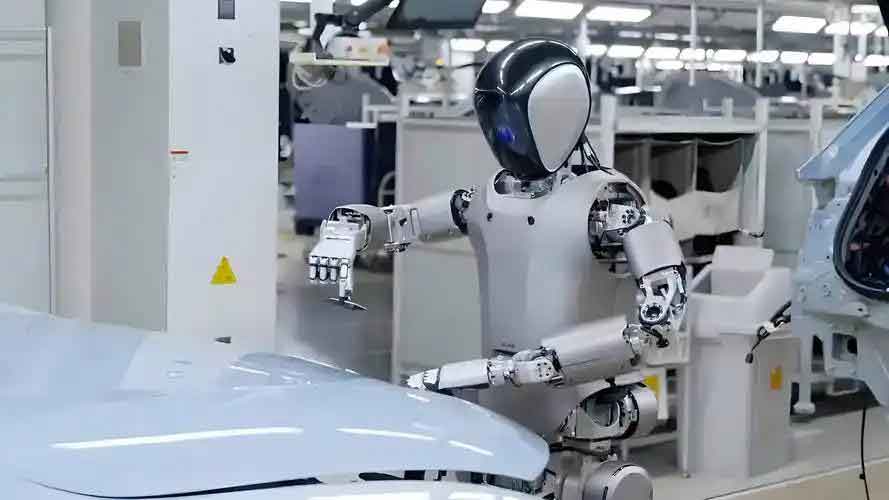
The catalyst for this discussion is the recent introduction of several humanoid robot models at price points previously deemed unattainable. I recall a time when even basic humanoid robots commanded prices in the tens of thousands of dollars, limiting their use to laboratories and high-budget projects. Today, we see models being offered for as low as the equivalent of a few thousand dollars, a dramatic reduction that signals a maturing industry. For instance, one notable humanoid robot, standing approximately 94 cm tall and weighing around 12 kg, with no fewer than 21 degrees of freedom, has been launched with a promotional price under $1,500. This is a stark contrast to earlier versions that cost several times more. Similarly, another humanoid robot, with a height of 95 cm, weight of 19.5 kg, and 22 degrees of freedom, is available at a limited-time price starting around $4,200. These figures are not just numbers; they represent a bold statement that the era of expensive humanoid robots may be ending. I believe this trend mirrors historical technological adoptions, such as the reduction in rocket launch costs or the democratization of smartphones, where innovators found ways to slash prices through efficiency and scale.
To better understand these developments, it’s useful to compare key specifications and pricing of recent humanoid robot offerings. Below is a table summarizing some representative models, though I avoid naming specific companies to focus on the general trend. The data is based on publicly available information and reflects the rapid changes in the market.
| Humanoid Robot Model | Height (cm) | Weight (kg) | Degrees of Freedom | Target Applications | Approximate Price (USD) |
|---|---|---|---|---|---|
| Model Alpha | 94 | 12 | ≥21 | Entertainment, Education, Exhibition | ~1,400 |
| Model Beta | 95 | 19.5 | 22 | Education, Competitions, Performances | ~4,200 |
| Model Gamma | Variable | Variable | ≥30 | Industrial, Research | ~20,000+ |
From this comparison, it’s evident that humanoid robots designed for consumer-oriented tasks like education and entertainment are seeing the most aggressive price cuts. I observe that these models often share similar physical dimensions but differ in their underlying platforms—some emphasize being a versatile development tool validated in international robotics competitions, while others focus on straightforward affordability. This dichotomy highlights the diverse strategies within the humanoid robot sector. As an insider, I welcome this variety because it fosters innovation and allows different market segments to explore the potential of humanoid robots. The key takeaway is that the humanoid robot is no longer a monolithic concept; it is evolving into a spectrum of products tailored to specific needs and budgets.
The driving forces behind this price reduction are multifaceted, and I think they can be encapsulated through economic and engineering principles. One fundamental aspect is the cost structure of producing a humanoid robot. Traditionally, high prices were attributed to expensive components, custom manufacturing, and significant research and development (R&D) expenditures. However, with advancements in supply chain localization and economies of scale, these costs are plummeting. For example, the material and production costs for a humanoid robot can be modeled using a simplified formula:
$$ C_{total} = C_{materials} + C_{labor} + C_{R\&D} + C_{overhead} $$
where \( C_{total} \) is the total cost per unit. In the early stages, \( C_{R\&D} \) dominates due to low production volumes, leading to high prices. As production scales, \( C_{materials} \) decreases through bulk purchasing and component国产化替代 (domestic substitution), while \( C_{R\&D} \) is amortized over more units. This can be expressed as:
$$ C_{R\&D\ per\ unit} = \frac{R}{N} $$
where \( R \) is the total R&D investment and \( N \) is the number of units produced. As \( N \) increases, \( C_{R\&D\ per\ unit} \) drops sharply, enabling lower retail prices. I’ve seen this firsthand in the consumer electronics industry, and now it’s unfolding for humanoid robots. Additionally, the learning curve effect plays a role; with each generation of humanoid robot, manufacturing efficiency improves, further driving down costs. This can be represented by the experience curve formula:
$$ C_n = C_1 \times n^{-b} $$
where \( C_n \) is the cost of the \( n \)-th unit, \( C_1 \) is the cost of the first unit, and \( b \) is the learning rate parameter (typically between 0.1 and 0.3 for complex assemblies). For humanoid robots, as production doubles, costs may fall by 10-30%, depending on process optimizations. This mathematical insight underscores why prices are declining so rapidly now that several companies are ramping up output.
Another critical factor is the distinction between consumer-grade and industry-grade humanoid robots. In my analysis, consumer-grade humanoid robots—those aimed at education, entertainment, and personal use—are experiencing the most pronounced price drops. This is due to their relatively standardized designs, higher production volumes, and the use of off-the-shelf components. For instance, some consumer humanoid robot models have seen prices halve within a year, a trend accelerated by domestic供应链 integration and competition. Conversely, industry-grade humanoid robots, such as those used in manufacturing or specialized logistics, remain more stable in pricing. These robots often require custom integrations, robust safety features, and extensive software customization, keeping R&D costs high and volumes low. The price elasticity for industrial humanoid robots is also different; businesses are willing to pay a premium for reliability and performance, whereas consumers are highly price-sensitive. I often think of this in terms of a demand function:
$$ Q_d = a – bP $$
where \( Q_d \) is quantity demanded, \( P \) is price, and \( a \) and \( b \) are constants. For consumer humanoid robots, \( b \) is large, meaning demand spikes as prices fall. For industrial humanoid robots, \( b \) is smaller, so price reductions have less impact on demand until broader adoption occurs. This explains why prices for factory-ready humanoid robots haven’t budged much; they are still in the proof-of-concept (POC) phase, where cost is secondary to functionality.
The implications of affordable humanoid robots extend beyond mere economics. From my viewpoint, this price reduction is unlocking new applications and democratizing access to robotics technology. Educational institutions that once could only afford a single humanoid robot for research can now deploy multiple units for hands-on learning. Families might soon consider a humanoid robot as a toy or tutor, much like a high-end gadget. This expansion of use cases creates a virtuous cycle: more users lead to more feedback, driving innovation and further cost reductions. I envision a future where humanoid robots become as ubiquitous as smartphones, with prices eventually stabilizing at a level comparable to other consumer electronics. However, this journey is not without challenges. There are concerns about price wars and恶性竞争, but I differentiate between healthy competition that expands the market and destructive tactics that undermine quality. If one humanoid robot is priced at $4,000 and another at $3,500, that’s normal market rivalry. But when prices break into a new tier—like dropping below $1,500—it represents a paradigm shift that opens entirely new scenarios, such as mass adoption for home entertainment. This isn’t a price war; it’s a market creation strategy.
To quantify the price trajectory, I often refer to historical technology adoption curves. The humanoid robot market appears to be following a pattern similar to other disruptive technologies, where prices decline exponentially as volume increases. This can be modeled using a logistic decay function:
$$ P(t) = \frac{P_0}{1 + e^{k(t – t_0)}} $$
where \( P(t) \) is the price at time \( t \), \( P_0 \) is the initial high price, \( k \) is the decay constant, and \( t_0 \) is the inflection point. For humanoid robots, I estimate we are at or near \( t_0 \), with prices poised to fall rapidly over the next few years. Data from recent launches supports this; the introduction of sub-$1,500 models suggests \( k \) is large, indicating swift adoption. Moreover, the concept of “price bands” is useful here. As humanoid robots move from luxury to mainstream, they traverse distinct price bands: above $10,000 for professional models, $5,000-$10,000 for high-end consumer models, and now below $5,000 for entry-level models. Each band correlates with different performance expectations and user bases. I predict the next band could be under $1,000 for simplified humanoid robots, perhaps within a decade, as component costs continue to fall and AI integration becomes more efficient.
In terms of industry structure, the humanoid robot ecosystem is evolving from vertical integration to specialization. Early humanoid robot makers often designed everything in-house, from actuators to software, leading to high costs. Now, we see a trend toward modular designs and open-source platforms, where companies focus on core competencies and leverage shared ecosystems. For example, some humanoid robots are marketed as development platforms, with robust APIs and community support, enabling third-party innovation. This reduces barriers to entry and accelerates price reductions. The total cost of ownership for a humanoid robot also includes software and maintenance, which are becoming more affordable through cloud-based services and standardized interfaces. I express this as:
$$ TCO = P_{acquisition} + \sum_{i=1}^{n} (C_{software,i} + C_{maintenance,i}) $$
where \( TCO \) is total cost of ownership over \( n \) years. As \( P_{acquisition} \) drops and software costs decrease via subscription models, \( TCO \) falls, making humanoid robots more attractive. This holistic view is crucial for understanding long-term affordability.
Looking ahead, I am optimistic about the future of humanoid robots. The current price reductions are just the beginning; as production scales globally, costs will continue to decline. Factors such as advancements in battery technology, more efficient motors, and AI-driven automation in manufacturing will further drive down prices. I also anticipate regulatory frameworks and safety standards evolving to support widespread deployment, which could initially add costs but ultimately ensure reliability and trust. From a societal perspective, affordable humanoid robots could address challenges in education, elder care, and service industries, though ethical considerations around privacy and employment must be addressed. In my experience, technology transitions like this are messy but ultimately beneficial, and the humanoid robot revolution is no exception.
In conclusion, the trend toward affordable humanoid robots is a transformative shift that I have been eagerly observing. Through a combination of scale economies, supply chain optimizations, and innovative business models, prices are falling at an unprecedented rate. This is not a race to the bottom but a expansion of possibilities, where humanoid robots become accessible tools for creativity, learning, and daily life. As the market matures, I expect prices to stabilize at levels that reflect reasonable margins while enabling broad adoption. The journey of the humanoid robot from an expensive curiosity to a household name is underway, and I am excited to be part of this narrative. The key takeaway is simple: the humanoid robot is becoming a reality for everyone, and its falling price is the catalyst for a new era of human-machine interaction.