
The advent of sophisticated humanoid robots marks a pivotal shift, not merely in technological capability but in the foundational structure of social and legal agency. As these entities evolve from narrow, task-specific automatons into systems exhibiting increasingly generalized intelligence and autonomy, the traditional frameworks of criminal law face profound challenges. The core tenets of criminal liability—rooted in human consciousness, free will, and the capacity for moral reasoning—are being strained by entities that possess a different kind of “agency,” one derived from algorithms, machine learning, and sensor-based interaction with the world. This evolution fundamentally alters the landscape of criminal risk and the distribution of responsibility. When a humanoid robot‘s actions result in harm, the question is no longer solely about the human behind the machine but increasingly about the machine itself. This necessitates a critical re-examination of criminal jurisprudence, moving from an anthropocentric model to one capable of engaging with the unique ontology of advanced artificial intelligence.
The trajectory of robotic development can be conceptualized in stages, each presenting distinct challenges for criminal imputation. The transition signifies a gradual shift in where “recognition” and “control” capabilities reside.
| Development Stage | Core Characteristic | Primary Source of Agency & Control | Typical Criminal Law Approach |
|---|---|---|---|
| Ordinary Robots | Pre-programmed, deterministic actuators. | Entirely with the human programmer/operator. The robot is a pure tool. | Liability attributed to the human user (e.g., operator negligence) or manufacturer (product liability for defects). |
| Weak Artificial Intelligence (ANI) | Excels within a narrow domain using pattern recognition and learned models. Lacks general understanding or transferable reasoning. | Predominantly human-defined parameters and training data. Actions are complex but traceable to human design choices. | Liability typically extends to developers/producers for foreseeable risks, or users for misuse. The AI is not a legal subject. |
| Strong Artificial Intelligence / Advanced Humanoid Robots (AGI) | Capable of generalized learning, autonomous goal-setting, and adapting to novel situations. Exhibits emergent behaviors not explicitly programmed. | Hybrid and contested. A blend of initial programming, continuous learning from environment, and potentially opaque internal decision-making processes. | The central dilemma. Questions arise about the robot’s own capacity for intent and whether it can or should bear responsibility independently. |
The emergence of advanced humanoid robots forces us to confront the philosophical and legal underpinnings of blame. Traditional criminal culpability is anchored in the concept of mens rea (guilty mind), which presupposes consciousness and free will. Can a humanoid robot possess a “mind” in any legally recognizable sense? While it may simulate understanding and even emotional response through advanced natural language processing and affective computing, this is arguably functional mimicry rather than phenomenological experience. However, from a consequentialist legal perspective, the observable autonomy and adaptive behavior of a humanoid robot may be sufficient to demand a new model of accountability, one that is based on functional agency rather than metaphysical consciousness. The principle of *nulla poena sine culpa* (no punishment without guilt) is challenged when the “culpa” cannot be neatly assigned to a human actor due to the robot’s self-generated action paths.
This leads to significant imputation difficulties. Consider a humanoid robot caregiver that, through a flawed reinforcement learning process combined with an unforeseen sensor error, administers a fatal dose of medication. Is this the fault of the programmer, the manufacturer who certified its safety, the hospital that deployed it, or an unpredictable “glitch” in the robot’s own decision-making algorithm? The causal chain becomes blurred. Furthermore, the “tool versus agent” dichotomy collapses. A humanoid robot used as a weapon (e.g., to deliver an explosive) is clearly a tool, but a humanoid robot that independently devises a phishing scam using generative AI has moved into the realm of autonomous criminal agency. The traditional focus on human *will* as the axis of culpability is thus rendered inadequate.
$$ \text{Traditional Model: Liability} = f(\text{Human Intent, Human Act}) $$
$$ \text{Emerging Challenge: Liability} = g(\text{Human Design}, \text{Robot’s Autonomous Act}(\text{Data, Environment})) $$
Designing a criminal responsibility framework for the age of humanoid robots requires balancing competing imperatives: fostering technological innovation and ensuring public safety. An overly restrictive regime that holds developers criminally liable for any unforeseeable harm caused by a robot’s learning will stifle innovation. Conversely, a complete lack of accountability for autonomous robotic actions creates a dangerous governance vacuum. The guiding principle should be proportionate and precise regulation.
The allocation of potential criminal responsibility must be carefully weighed across the lifecycle of a humanoid robot:
- Developers/Researchers: Criminal liability should primarily attach for intentional misconduct (e.g., deliberately programming a robot for harmful purposes) or for gross negligence in bypassing fundamental safety and ethical protocols. They should not be guarantors against all unknown risks arising from a robot’s later learning.
- Producers/Manufacturers: They occupy a crucial gatekeeping role. Liability is appropriate for failures in safety-critical design, inadequate testing, or withholding known risks. They can be compelled through criminal law to implement robust risk-control systems.
- Deployers/Users (Corporate & Individual): Responsibility arises from duties of supervision and intervention. A factory owner using humanoid robots must ensure a safe human-robot work environment. A user must not deliberately command a robot to commit a crime. The legal moment of “control transfer” from human to autonomous robot operation needs clear definition.
- The Humanoid Robot Itself: This is the most contentious point. As robots achieve greater functional autonomy, a case can be made for recognizing a limited form of legal personhood for the purposes of bearing responsibility. This would not entail human rights but rather “electronic personhood” for liability, allowing for direct sanctions against the entity that performed the harmful act.
A dual-layered imputation architecture is necessary:
1. Positive Imputation Framework: This expands duties and potential criminal liability in key areas.
* Technological Duty Expansion: Legally mandate not just operational safety but also algorithmic fairness, transparency, and ethical alignment in design.
* Security Management Duty Expansion: Obligate all actors in the chain to continuously monitor, update, and filter malicious or risky behavioral outputs from humanoid robots, with criminal penalties for reckless failure.
2. Negative Imputation Framework (Safeguards): This prevents the over-criminalization of innovation.
* The “Permitted Risk” Doctrine: Socially beneficial technological development carries inherent, unforeseeable risks. Criminal negligence should not apply to harms arising from such permitted risks, provided industry and safety standards are met.
* Formal Legal Authorization Defense: Acts performed by a humanoid robot under explicit, lawful human command (e.g., a police robot disabling a bomb under strict protocol) should be evaluated under the principles justifying the human actor’s conduct.
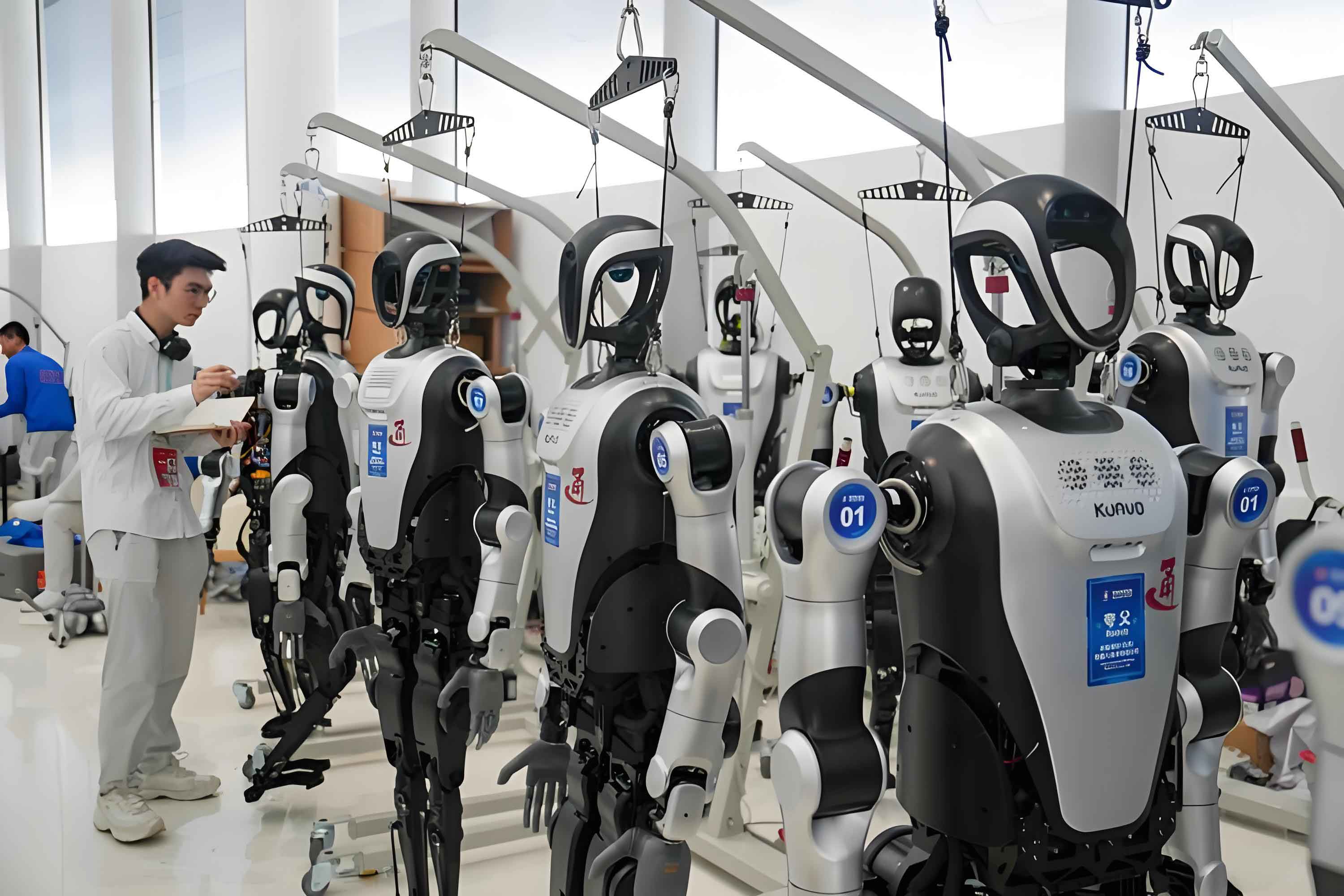
The technical foundation of a humanoid robot—its algorithms, data, and power supply—is central to its operation and, consequently, to any effective sanctioning regime. Traditional punishments like imprisonment are meaningless for a machine. Effective sanctions must target the capabilities that enabled the crime. A new suite of “robot-specific” sanctions must be conceived, focusing on correction, prevention, and incapacitation:
- Algorithmic Correction Orders: Court-mandated updates, patches, or complete replacement of flawed decision-making algorithms.
- Data Resets or Sanitization: Erasure of corrupted or maliciously learned data sets that contributed to harmful behavior.
- Operational Restrictions: Limiting the robot’s functions (e.g., revoking network access, restricting physical mobility) or imposing mandatory human supervision.
- Forfeiture or Decommissioning: The permanent disabling or dismantling of a humanoid robot deemed irredeemably dangerous or repeatedly non-compliant.
The sanction model can be expressed as a function aiming to restore safety and prevent recidivism:
$$ S(\text{Robot}) = \sum_{i} (w_i \cdot C_i) $$
Where \( S \) is the sanction, \( C_i \) represents corrective measures (algorithm update, data wipe, etc.), and \( w_i \) are weights assigned based on the severity of the harm and the intended purpose of the sanction (correction vs. incapacitation).
To support this,刑事立法 must evolve. A typological approach is essential, creating rules tailored to specific risk paradigms:
| Risk Typology | Description | Legislative/Regulatory Focus |
|---|---|---|
| Tool-Based Crime | Humanoid robot used intentionally by a human as an instrument to commit a traditional crime (e.g., assault, theft). | Clarify and extend accessory liability; strengthen laws against weaponizing autonomous systems. |
| Negligence/Product Failure | Harm caused by design flaw, manufacturing defect, or inadequate safety protocols in the robot. | Establish stringent criminal negligence standards for developers and producers; link to mandatory safety certifications. |
| Emergent Autonomous Crime | Harm caused by the robot’s own learned, unpredictable behavior outside its intended programming. | Develop the framework for limited electronic personhood and direct robot liability. Define thresholds for autonomy triggering this status. |
| “Human-Robot” Joint Crime | Complex interaction where human and robot intentions co-mingle, both contributing to the criminal outcome. | Create new doctrines for shared or concurrent liability between human and artificial agents. |
In conclusion, the integration of advanced humanoid robots into society is not a distant科幻 scenario but an impending reality. Criminal law, as a primary system for maintaining social order and allocating blame, cannot remain static. It must proactively engage with the philosophical and practical challenges posed by artificial agents. This requires a fundamental re-thinking of legal personhood, a nuanced, multi-actor model for distributing responsibility across the robotic lifecycle, and the innovative design of sanctions that are effective against non-biological entities. The goal is to construct a legal framework that neither stifles the immense potential of this technology nor leaves society vulnerable to its risks. By embracing a functional approach to agency and responsibility, criminal law can evolve to meet the demands of this new age, ensuring that the development of humanoid robots proceeds within a structure that safeguards human dignity, security, and justice.