
The spectacle at a recent global artificial intelligence conference was unmistakable. Standing not as mere exhibits but as active greeters, a formation of humanoid robots captured the collective imagination, their presence arguably generating more fervent discussion than the latest large language models. This moment crystallized a pivotal shift: the era of speculative research and awe-inspiring lab demonstrations is giving way to a determined march toward utility and integration. The central question has evolved from “Can we build them?” to “When will they become commonplace in our homes, factories, and cities?” The age of awakening for the humanoid robot is unequivocally here.
This awakening is fueled by a profound convergence. The humanoid robot represents the ultimate integration platform, synthesizing breakthroughs in artificial intelligence, precision actuation and control, advanced materials science, and sensor fusion. Its form factor—biomorphic and designed for a world built by and for humans—offers unparalleled potential for application across diverse environments without the need to retrofit our surroundings. This potential has ignited a global race, positioning the humanoid robot as the next strategic frontier in advanced technology.
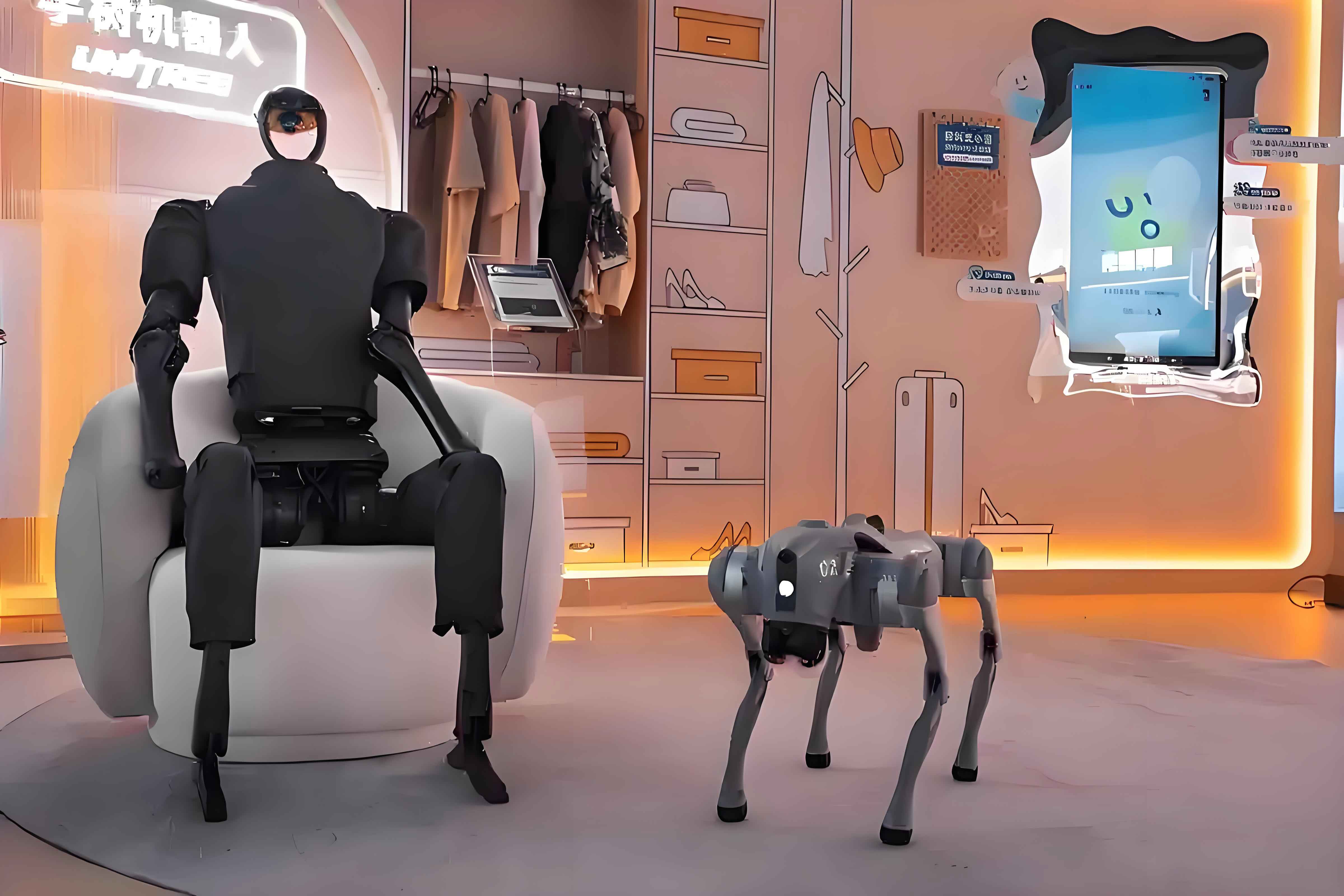
The path from laboratory prototype to reliable, economically viable partner is complex, paved with both formidable technical challenges and immense commercial promise. This article delves into the core technological pillars enabling this transition, analyzes the evolving commercialization pathways, and outlines the critical ecosystem developments required to propel the humanoid robot into mainstream adoption.
The Core Technological Evolution: From Rigid Mechanics to Adaptive Intelligence
The modern humanoid robot is a symphony of interdisciplinary engineering. Early iterations prioritized mechanical stability and basic locomotion, often resulting in rigid, slow, and energy-inefficient systems. The current generation embodies a paradigm of “adaptive rigidity” or “controlled compliance,” where hardware and software are co-designed to achieve both strength and sensitivity.
1. Actuation and Locomotion: The quest for natural, efficient movement drives innovation in actuators. The dichotomy between high-torque, precise but heavy electric motors and powerful, dynamic but complex hydraulic systems is being bridged by new technologies. Series Elastic Actuators (SEAs) and various proprioceptive actuators introduce intentional elasticity, storing and releasing energy like tendons and improving force control and shock absorption. This is crucial for dynamic walking and safe human interaction. The fundamental dynamics of a bipedal humanoid robot can be simplified using the Linear Inverted Pendulum Model (LIPM) for gait planning:
$$ \ddot{x}_{CoM} = \frac{g}{z_c} (x_{CoM} – x_{ZMP}) $$
where \( x_{CoM} \) is the Center of Mass position, \( x_{ZMP} \) is the Zero-Moment Point (the point where net ground reaction force acts), \( g \) is gravity, and \( z_c \) is the constant height of the CoM. Maintaining \( x_{ZMP} \) within the support polygon (the convex hull of ground contact points) is essential for stability. More advanced control employs Whole-Body Control (WBC) frameworks that solve a quadratic program to compute optimal joint torques \( \tau \) across all \( n \) joints:
$$ \min_{\tau} \quad & \| J \dot{q} – v_{d} \|^2 + \lambda \| \tau \|^2 \\
\text{s.t.} \quad & M(q)\ddot{q} + C(q, \dot{q}) + G(q) = S^T \tau + J_c^T F_c \\
& \text{Friction Cone Constraints} \\
& \text{Joint Limit Constraints} $$
Here, \( M \), \( C \), and \( G \) are the inertia, Coriolis, and gravity matrices, \( J \) is the task Jacobian, \( v_d \) is the desired task-space velocity, and \( J_c^T F_c \) represents contact forces.
2. The AI Brain: Perception, Cognition, and Learning: The true “awakening” of the humanoid robot is driven by AI. Multi-modal perception systems (cameras, LiDAR, inertial measurement units, tactile sensors) create a rich world model. The breakthrough lies in end-to-end learning architectures where neural networks translate high-level commands (“pick up the cup”) directly into coordinated motor actions, bypassing tedious manual programming of every sub-motion. Reinforcement Learning (RL) and Imitation Learning (IL) are key. An RL agent learns a policy \( \pi_\theta(a|s) \) parameterized by \( \theta \) that maximizes the expected cumulative reward \( R = \sum_t \gamma^t r(s_t, a_t) \), often trained in massive parallel simulations. A core objective function for policy gradient methods is:
$$ J(\theta) = \mathbb{E}_{\tau \sim \pi_\theta} [R(\tau)] $$
The gradient \( \nabla_\theta J(\theta) \) is then estimated to update the policy. This allows a humanoid robot to learn complex locomotion and manipulation skills through trial and error in silico before fine-tuning in the real world.
| Technical Focus | Traditional Approach | Modern/Advanced Approach | Key Advantage |
|---|---|---|---|
| Gait Generation | Pre-computed, static trajectory libraries; ZMP-based control. | Model Predictive Control (MPC); Reinforcement Learning (RL) trained policies; Hybrid zero dynamics. | Adaptive to terrain, robust to pushes, energy-efficient. |
| Actuation | High-ratio gearbox motors, rigid position control. | Series/Parallel Elastic Actuators (SEA/PEA); Torque-controlled motors with low-ratio gears; Hydraulic compliance. | Higher force fidelity, energy storage/recovery, safer human interaction. |
| Manipulation Control | Individual joint trajectory planning for each object. | Visual Servoing; End-to-end visuomotor policies; Teleoperation-based imitation learning. | Generalizes to novel objects, handles pose uncertainty, more intuitive. |
| World Perception | Pre-defined object models; Geometric mapping. | Multi-modal fusion (Vision+LiDAR+Touch); Neural Radiance Fields (NeRF) for scene understanding; Foundation models for semantic labeling. | Rich, actionable 3D understanding; recognizes objects by function/type. |
Commercialization Pathways: From Structured to Unstructured Worlds
The “first wave” of humanoid robot commercialization is strategically targeting environments where the value proposition is clearest and the operational challenges are relatively bounded. The trajectory generally follows a path of increasing environmental complexity.
Stage 1: Industrial and Logistical Environments. This is the primary beachhead. Factories, warehouses, and fulfillment centers offer semi-structured layouts, repetitive tasks, and a strong ROI case for automating dull, dirty, or dangerous jobs. Initial applications are highly specific: moving standardized cartons from conveyor A to pallet B, performing simple machine tending, or conducting inspection rounds. The humanoid robot’s advantage here is its ability to navigate spaces designed for human workers and use existing tools and interfaces without major infrastructure changes. Success is measured in reliability (uptime >99%), task cycle time, and total cost of ownership versus traditional automation or human labor.
Stage 2: Commercial and Professional Service. The next frontier includes retail stocking, hospital logistics (delivering supplies), laboratory assistance, and public space guidance or cleaning. These environments are more dynamic, with unpredictable human traffic and a wider variety of objects to handle. This stage requires significant advances in social navigation (understanding human motion patterns), robust manipulation of diverse items, and higher-level task planning.
Stage 3: The Ultimate Goal – Domestic and Personal Assistance. The home represents the most complex, unstructured, and cost-sensitive environment. A domestic humanoid robot must be affordable, exceptionally safe, capable of long-term learning and adaptation to a specific household’s patterns, and able to perform a vast array of non-repetitive tasks (tidying, laundry, meal prep, elder care assistance). This stage depends on breakthroughs in affordable yet capable hardware, generalized AI, and intuitive human-robot interaction. It remains the long-term vision driving much of the fundamental research.
| Cost Component | Current Prototype (High-end, Low Volume) | Target for Initial Commercial Deployment | Long-term Goal (Mass Market) |
|---|---|---|---|
| Actuators & Drivetrain | 40-50% | 30-35% | 20-25% |
| Compute & Sensors (AI Brain) | 25-30% | 25-30% | 20-25% |
| Structure & Materials | 15-20% | 20-25% | 25-30% |
| Integration, Software, BMS | 10-15% | 15-20% | 20-25% |
| Estimated Total Unit Cost | > $150,000 | $50,000 – $100,000 | < $20,000 |
The economic equation for a humanoid robot is defined by its Total Cost of Operation (TCO) versus its productivity. A simplified model for an industrial setting could be:
$$ \text{ROI Period (years)} = \frac{\text{Unit Cost} + \text{Integration Cost}}{\text{Annual Labor Cost Displaced} \times \eta – \text{Annual Maintenance & OpEx}} $$
where \( \eta \) (0 < \( \eta \) ≤ 1) represents the efficiency of the humanoid robot relative to a human for the specific task. Achieving ROI under two years is typically the threshold for serious adoption in industry.
Building the Ecosystem: The Invisible Infrastructure for Adoption
The proliferation of the humanoid robot is not solely dependent on advances within individual companies. A robust supporting ecosystem is vital.
1. Simulation and Digital Twins: Accelerating development is impossible without high-fidelity simulation environments. These digital twins allow for the safe, parallel, and accelerated training of AI controllers (e.g., using millions of years of simulated experience in days), hardware-in-the-loop testing, and virtual validation of tasks in a digital replica of a real-world factory or home before physical deployment.
2. Developer Platforms and Standardization: For the humanoid robot market to scale, it must attract a vast developer community. This requires open or accessible APIs, software development kits (SDKs), and common middleware (e.g., ROS 2). Standardization efforts—for communication protocols, safety interfaces, and perhaps even modular hardware components—will reduce integration costs and foster interoperability.
3. Safety, Ethics, and Public Perception: As humanoid robots move into shared spaces, establishing rigorous safety standards (functional safety, collision detection, emergency protocols) is non-negotiable. Furthermore, ethical considerations regarding autonomy, data privacy, job displacement, and human-robot relationship boundaries must be proactively addressed through transparent industry guidelines and thoughtful policy frameworks to ensure public trust.
Future Trajectory and Concluding Synthesis
The journey ahead is one of convergence and scaling. We will see the consolidation of technological approaches around the most efficient and reliable paradigms. The “general-purpose” humanoid robot will likely emerge not as a single, all-knowing machine, but as a capable hardware platform whose skills are defined by modular software applications (“robot apps”) tailored for specific verticals—a “generalist body with specialist skills.”
The key technological milestones to watch include:
- Embodied Foundation Models: AI models trained not just on text and images, but on physical interactions, developing common-sense reasoning about the physical world.
- Massively Scalable Manufacturing: Innovations in actuator production, battery integration, and composite material forming to drive down costs dramatically.
- Energy Density and Management: Achieving operational durations of 8+ hours on a single charge for demanding tasks through better batteries, motors, and system-level power optimization.
The narrative is no longer about if a humanoid robot can walk across a stage, but how reliably it can work a full shift, how intuitively it can understand a new instruction, and how seamlessly it can integrate into our economic and social fabric. The “awakening” signifies a shift from building machines that mimic human form to deploying intelligent, embodied systems that augment human capability and address systemic challenges in labor, productivity, and care. The race is on, and the finish line is a world where the humanoid robot transitions from a remarkable novelty to a necessary tool, quietly and efficiently shaping the future of work and daily life.