
The concept of intelligence, as we strive to replicate and harness it, has long been debated. From my perspective, a profound shift is underway, moving us from purely computational frameworks towards intelligent systems that are fundamentally grounded in the physical world. This paradigm, which I and many others refer to as embodied intelligence or embodied AI, represents the critical synthesis of mind and body within a machine. An embodied AI robot is not merely a processor of information but an entity that acquires understanding through sensorimotor interaction with its environment. This essay explores the technological foundations, current industrial landscape, inherent limitations, and future trajectories of embodied AI robot systems, arguing that they constitute the core architectural force driving the next wave of technological and industrial transformation.
The philosophical underpinnings of this field are not new. Early pioneers in cybernetics and computer science envisioned machines that could learn and adapt through interaction. However, it is the confluence of three modern forces—exponentially growing computational power, the availability of massive-scale multimodal data, and breakthroughs in AI model architectures—that has accelerated the pursuit from concept to tangible reality. The definition I adhere to is concise: an embodied AI robot is an intelligent system that uses a physical body to perceive, reason, and act within an environment. It learns by doing, forming a closed loop of perception, cognition, decision-making, and action, thereby developing adaptive and intelligent behaviors through continuous interaction.
It is crucial to distinguish between related terms often used interchangeably. Artificial Intelligence (AI) broadly focuses on algorithms and computational models for cognition. A humanoid robot emphasizes a physical morphology mimicking the human form. Embodied AI, however, prioritizes the triadic synergy of the embodied AI robot (the agent), its environment, and the algorithms that enable it to learn and act within that environment. The essence lies in how perception, decision, and execution mechanisms are fully utilized within a physical entity and evolved through environmental feedback.
Current Technological Landscape of Embodied AI
The development of sophisticated embodied AI robot platforms hinges on advances across five interconnected core domains. These domains form the scaffold upon which more general, autonomous, and collaborative intelligence is being built.
1. Simulators for Embodied AI
Simulation engines are indispensable for training and testing embodied AI robot systems in safe, scalable, and controllable virtual environments before real-world deployment. Their core goal is rapid algorithm iteration and risk mitigation. They can be broadly categorized as follows:
| Category | Representative Platforms | Key Characteristics & Applications |
|---|---|---|
| General-Purpose Physics Simulation | Gazebo, NVIDIA Isaac Sim | Built on extensible physics engines (e.g., ODE, PhysX). Support multi-robot simulation, navigation, and collaboration. Isaac Sim offers high-fidelity rendering and is tailored for autonomous driving and large-scale reinforcement learning. |
| Photo-realistic & Interactive Scene Simulation | AI2-THOR, iGibson | Focus on interactive, semantically rich environments. AI2-THOR contains numerous objects with actionable states for home task research. iGibson reconstructs high-precision scenes from real building data, supporting multi-modal sensor simulation and human-robot interaction. |
2. Embodied Perception
Perception for an embodied AI robot involves actively gathering and interpreting multi-modal sensory data to understand the environment. The trend is moving from passive reception to active, fused, and semantically rich perception.
- Active Visual Perception: Methods like Next-Best-View (NBV) planning enable the robot to decide where to look or move next to maximize information gain, crucial for efficient exploration and mapping. The objective can be formalized as finding the action \(a^*\) that maximizes the expected information gain \(I\) about the unknown environment state \(X\):
$$a^* = \arg\max_{a \in A} I(X; Z_a | z_{1:t})$$
where \(Z_a\) is the observation from taking action \(a\), given past observations \(z_{1:t}\). - 3D Visual Grounding: This links natural language to 3D spatial data (e.g., point clouds). Models like 3DVG-Transformer perform tasks like “pick up the red mug left of the monitor,” which is fundamental for manipulation in warehouses or homes.
- Non-Visual Perception: Tactile sensing technologies (e.g., GelSight, DIGIT) provide high-resolution feedback on texture, force, and slip, enabling delicate tasks like assembly or handling fragile objects. The integration of vision and touch is a key multi-modal challenge.
3. Embodied Interaction
This domain focuses on establishing natural, efficient, and semantically aligned dynamic relationships between the embodied AI robot, objects, and humans.
| Interaction Type | Description & Examples |
|---|---|
| Human-Agent Interaction | The robot answers questions based on its first-person visual stream (Embodied QA). This tests its spatial and situational understanding. |
| Agent-Object Interaction | The robot executes physical actions based on language instructions. Methods like SayCan or Code-as-Policies use large language models (LLMs) for high-level planning, translating “make me a coffee” into a sequence of actionable steps (find cup, approach machine, press button). |
4. The Embodied AI Agent
This refers to the integrated entity capable of the perception-understanding-decision-execution闭环. Current research pushes these agents from specialized tools towards general-purpose systems.
- Multi-Modal Foundational Models: Models like Google’s RT-2 unify visual, language, and action data into a single neural network trained on large-scale robotic data. This allows for emergent capabilities and better generalization to novel objects and instructions.
- Task Planning Systems: These systems combine LLMs for semantic parsing with classical planning, world models, and memory. The LLM acts as a high-level “brain” that decomposes “clean the spilled milk” into sub-tasks (locate spill, fetch sponge, wipe area), which are then executed by the robot’s control “小脑”. The decision function for an action \(a_t\) at time \(t\) can be seen as:
$$a_t = \pi_\theta(o_t, M_t, G)$$
where \(\pi_\theta\) is the policy, \(o_t\) is the current observation, \(M_t\) is the accumulated memory, and \(G\) is the goal derived from language instruction.
5. Sim-to-Real Adaptation
Bridging the reality gap between simulation and the physical world is the final, critical hurdle for widespread deployment of embodied AI robot systems.
- Embodied World Models: Learned dynamics models (e.g., DreamerV3) allow the agent to predict future states in imagination, facilitating planning and reducing real-world trial-and-error.
- Domain Randomization (DR): By randomizing simulation parameters (lighting, textures, physics properties) during training, the agent learns policies that are robust to variation. The optimization becomes:
$$\min_\theta \mathbb{E}_{p_{\text{sim}}(s), \pi_\theta} [\mathcal{L}(s, a)] \text{ s.t. policy } \pi_\theta \text{ is invariant to randomization in } p_{\text{sim}}(s)$$
where \(s\) represents the randomized simulation state. - Adversarial Learning & Generative Data: Techniques like using diffusion models to generate vast, diverse, and physically plausible training scenes (e.g., with PhyScene) help cover the long-tail of real-world scenarios.
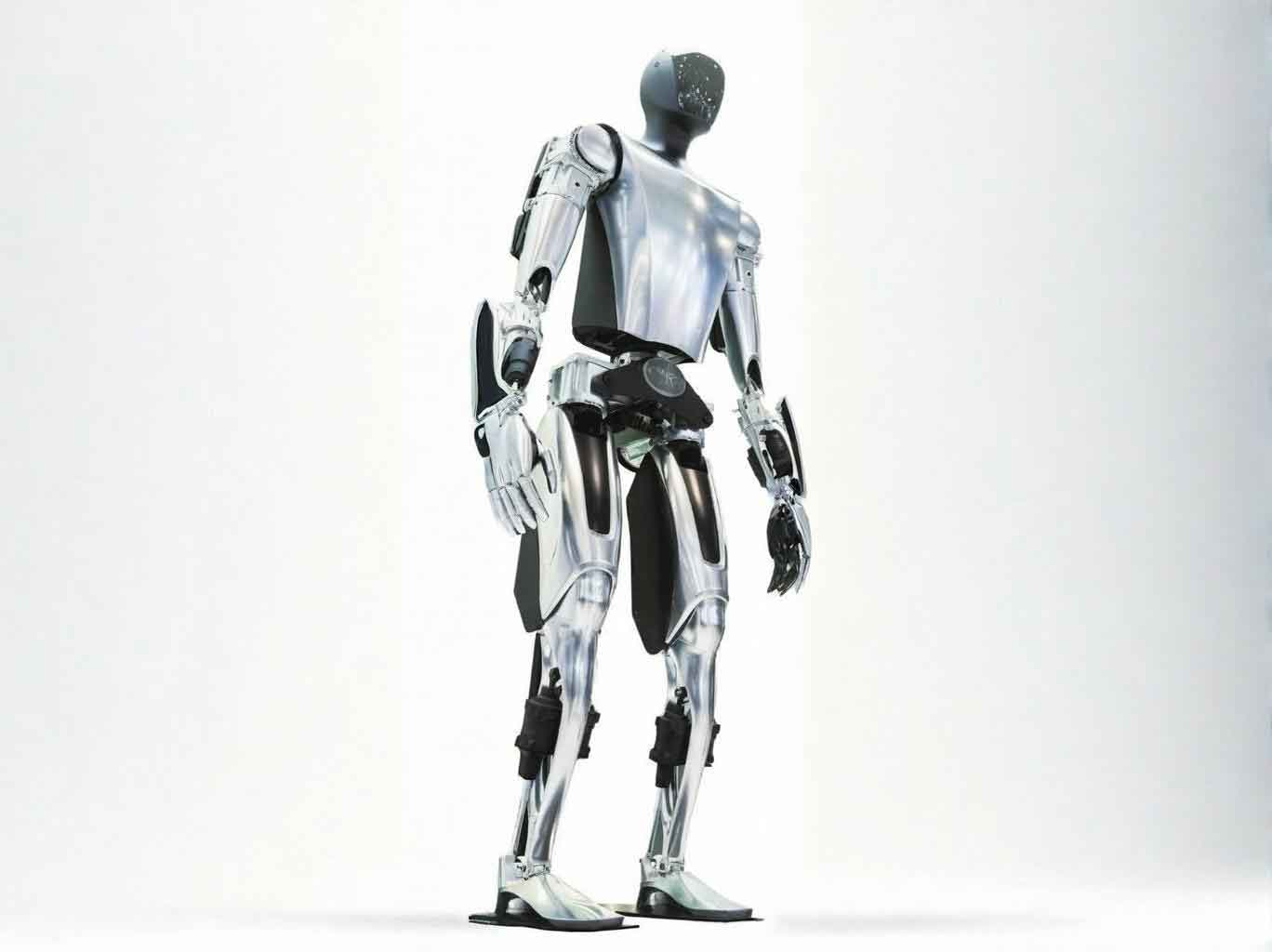
The Industrial Landscape of Embodied AI Robotics
The transition from lab to market is accelerating. The embodied AI robot is spawning new industries and reshaping existing ones, with distinct regional profiles.
| Region | Key Sectors & Leadership | Notable Companies & Products (Embodied AI Robot Examples) |
|---|---|---|
| China | Rapid scaling, strong manufacturing & logistics focus, policy-driven growth. | Industrial: Siasun, Estun. Logistics: Geek+ (mobile warehouse robots). Autonomous Vehicles: Baidu Apollo (Robotaxi), Pony.ai. Service: Unitree (Humanoid H1), Ecovacs/Dreame (home cleaning robots). |
| United States | Technology innovation & business model leadership, strong venture capital. | Logistics: Amazon Robotics, Boston Dynamics (Spot, Stretch). AVs: Waymo (Robotaxi leader). Service: Tesla (Optimus humanoid), Intuitive Surgical (da Vinci). Drones: Zipline (medical delivery). |
| European Union | Deep industrial automation heritage, precision engineering, focus on healthcare & collaborative robots. | Industrial: ABB, KUKA. Collaborative Robots: Universal Robots (UR series). Medical: CMR Surgical (Versius). Inspection: ANYbotics (ANYmal quadruped). |
Pushing the Boundaries: Limitations and Open Challenges
Despite impressive progress, the capabilities of today’s embodied AI robot are bounded by significant constraints. Current systems, often built upon large language or multi-modal models (GPT-4, PaLM-E, RT-2), excel at statistical pattern matching but struggle with genuine understanding of the physical and social world.
The limitations manifest in three weak forms of reasoning:
- Spatial Reasoning: Difficulty in precisely modeling complex 3D object relationships and self-localization.
- Physical Reasoning: Lack of intuitive understanding of physics, causality, and material properties, leading to manipulation errors.
- Temporal Reasoning: Inability to perform robust long-horizon planning and adapt to dynamic environmental changes.
These shortcomings stem from two root causes. First, the prevailing paradigm relies on static, offline datasets, lacking the active, closed-loop perception-action cycle that characterizes human learning. This highlights Moravec’s Paradox: high-level reasoning is easier to simulate than low-level sensorimotor skills. Second, current models lack explicit causal and world models. They are often “black boxes” that correlate inputs to outputs without building an internal, manipulable representation of how the world works. Their performance degrades sharply under conditions not represented in their training data (the domain shift problem).
To overcome these barriers, the field must focus on:
- Developing architectures with explicit modules for spatial, physical, and temporal reasoning.
- Prioritizing active learning and lifelong adaptation through real-time environmental interaction.
- Building unified foundational models that learn from multi-modal, cross-embodiment data.
- Creating robust self-models and environment models that allow for internal simulation and counterfactual prediction.
Future Trajectories: Perception, Learning, Imagination, and Collaboration
The evolution of the embodied AI robot will be orchestrated along four key vectors, marking a shift from “compute-driven” to “understanding-driven” intelligence.
1. Perception: Multi-Modal Fusion and Active Exploration
The perceptual front of an embodied AI robot will evolve beyond passive sensing. Multi-modal fusion (e.g., lidar+vision+thermal for autonomous vehicles) will create redundant, cross-validated environmental representations. Concurrently, active perception algorithms will guide the robot to seek information that reduces uncertainty, much like a human turning their head or moving to see behind an obstacle. This is critical for efficient search and rescue or exploration missions.
2. Learning: Closed-Loop Interaction and Lifelong Evolution
Future learning paradigms will be characterized by continuous, online, and causal interaction. An embodied AI robot will not be “trained once and deployed.” Instead, it will engage in lifelong learning, constantly updating its world model and policies based on new experiences. This enables:
- Online Adaptation: A warehouse robot re-planning paths in real-time due to new obstacles.
- Causal Learning: An agricultural drone inferring that a specific irrigation pattern (cause) leads to better crop yield (effect), rather than just memorizing correlations.
- Personalized Adaptation: A rehabilitation robot tailoring its assistance to a patient’s daily recovery progress.
3. Imagination: World Models and Mental Simulation
“Thinking before doing” through internal simulation will be a hallmark of advanced embodied AI robot systems. By running forward predictions in a learned world model, the robot can:
- Evaluate the potential consequences of actions without physical risk.
- Solve complex tasks through mental search and planning.
- Understand and adhere to social norms by simulating interactions (e.g., a caregiver robot practicing polite conversation).
This capability is the cornerstone of safe deployment in high-stakes environments like factories and hospitals.
4. Collaboration: Human-Robot and Robot-Robot Teams
The ultimate test of an embodied AI robot‘s intelligence is its ability to work seamlessly with others. This spans two levels:
| Collaboration Type | Mechanisms & Goals |
|---|---|
| Human-Robot Collaboration (HRC) | Using natural interfaces (voice, gesture, gaze) for intuitive instruction. The robot must exhibit explainable AI and predictable behavior to build trust, especially in assistive or co-manufacturing roles. Safety through force feedback and collision detection is paramount. |
| Multi-Robot Collaboration | Heterogeneous teams (e.g., UAVs, UGVs, manipulators) coordinating for a common goal, such as disaster response or automated logistics. This requires standardized communication, distributed task planning, and emergent swarm behaviors. |
Conclusion
In conclusion, the embodied AI robot represents a fundamental convergence. It bridges the algorithmic “brain” with a physical “body,” and integrates perception, motion, environmental dynamics, and social context into a unified intelligent system. As such, it stands as the pivotal force behind the ongoing technological and industrial revolution. While current systems grapple with the complexities of open-world reasoning, the path forward is illuminated by principles of active exploration, continuous learning, causal understanding, and collaborative integration.
The next decade will witness the pervasive embedding of these systems across the fabric of society—from factories and farms to our homes and hospitals. The impact transcends mere efficiency gains; it heralds a paradigm shift from computation to comprehension. The journey of the embodied AI robot is, in essence, the most tangible and promising pathway toward realizing more general forms of artificial intelligence. Navigating this future responsibly will require concerted effort across technology, policy, ethics, and interdisciplinary research, ensuring that this powerful architectural force leads to a more capable, safe, and prosperous era for all.