
As I reflect on the rapid advancements in robotics, it becomes clear that we are witnessing a paradigm shift from mere mechanical tools to intelligent companions capable of emotional resonance. The integration of embodied AI robots into everyday life, particularly in elderly care, is no longer a distant dream but an imminent reality. In this article, I explore how embodied AI robots are redefining the landscape of aging societies, driven by technological breakthroughs, strategic initiatives, and a growing emphasis on compassionate care. Through detailed analysis, tables, and formulas, I aim to elucidate the multifaceted role of these robots in shaping a future where technology and humanity converge.
The concept of embodied AI robots revolves around systems that possess physical bodies and interact with the environment through sensory-motor capabilities, enabling them to perform complex tasks while adapting to human emotions. This evolution is crucial as global demographics shift toward aging populations, with over 22% of people in many regions now aged 60 or older. The challenges posed by this “silver tsunami” demand innovative solutions, and embodied AI robots offer a promising avenue by combining functional utility with emotional support. From my observations, the journey from industrial robotic arms to empathetic partners highlights a transformative trend that could redefine caregiving.
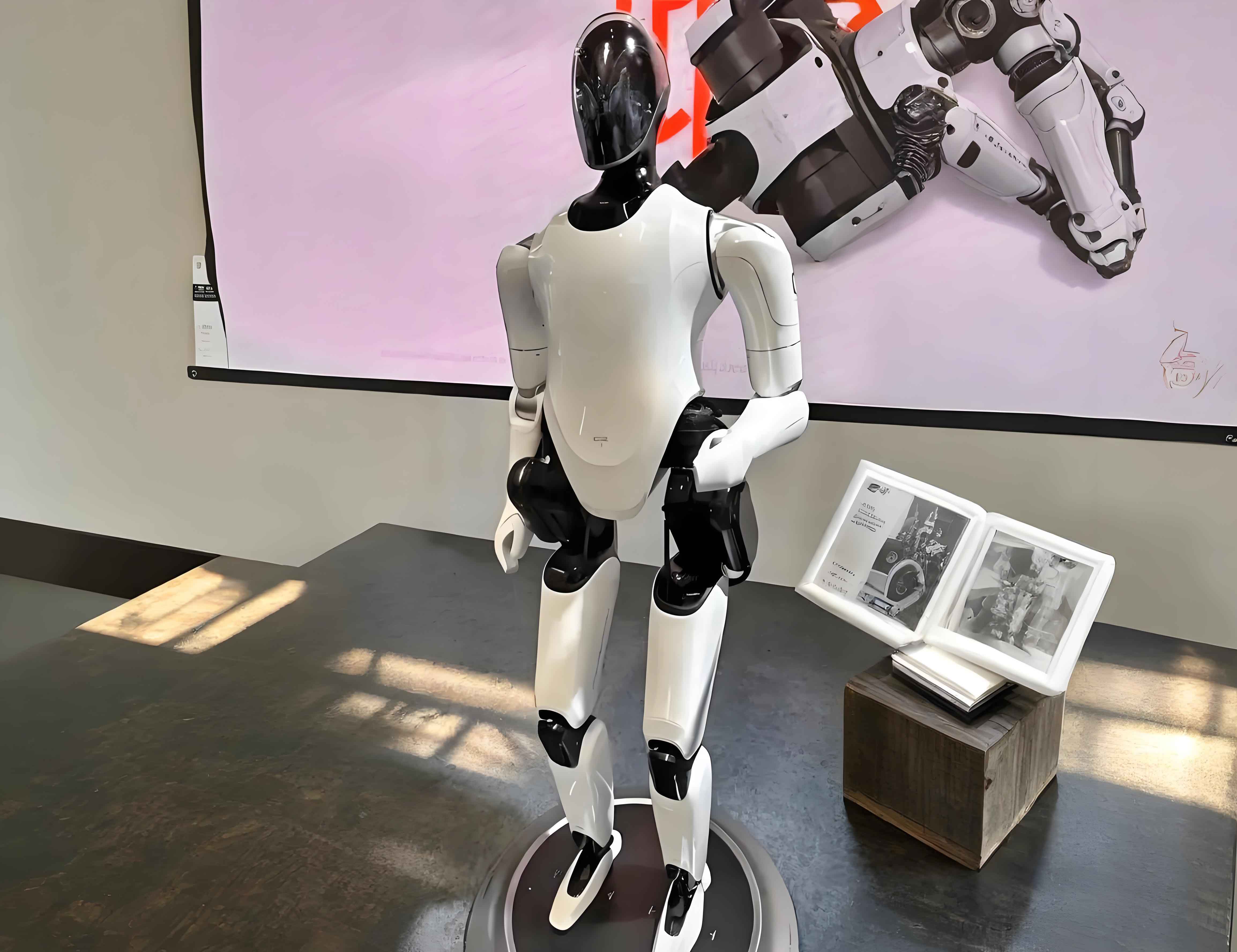
At the core of this transformation lies the technological foundation of embodied AI robots. These systems leverage advanced algorithms, large language models, and sensory inputs to achieve tasks ranging from object manipulation to emotional engagement. For instance, the accuracy of emotion recognition in embodied AI robots can be modeled using statistical metrics. Let us consider a formula for emotion feedback accuracy, which is critical in elderly care scenarios:
$$ \text{Emotion Accuracy} = \frac{\sum_{i=1}^{n} \mathbb{I}(E_{pred,i} = E_{true,i})}{n} \times 100\% $$
where \( E_{pred,i} \) represents the predicted emotion for interaction \( i \), \( E_{true,i} \) is the ground-truth emotion, and \( n \) is the total number of interactions. In practice, state-of-the-art embodied AI robots have achieved accuracies exceeding 90%, enabling reliable companionship. Moreover, the deployment cost reduction, often cited as a key factor, can be expressed through an optimization equation:
$$ C_{deploy} = C_{hardware} + C_{software} \cdot e^{-\lambda t} $$
with \( C_{hardware} \) as hardware costs, \( C_{software} \) as software development expenses, \( \lambda \) as the learning rate of AI models, and \( t \) as time. This illustrates how natural language interfaces and modular platforms have slashed costs by up to 90%, making embodied AI robots more accessible.
To better understand the capabilities of embodied AI robots, I have compiled a table summarizing key technological components and their applications in elderly care:
| Component | Description | Application in Elderly Care |
|---|---|---|
| Sensor Fusion | Integration of visual, auditory, and tactile sensors for environment perception. | Monitoring daily activities, detecting falls, and ensuring safety. |
| Natural Language Processing (NLP) | AI models enabling conversational interactions and command interpretation. | Providing companionship, answering queries, and offering reminders. |
| Motion Planning | Algorithms for precise movement and object manipulation in dynamic settings. | Assisting with mobility, fetching items, and performing household tasks. |
| Affective Computing | Systems that recognize and respond to human emotions through data analysis. | Offering emotional support, reducing loneliness, and enhancing mental well-being. |
| Cloud-Edge Integration | Combining cloud-based AI with local processing for real-time responsiveness. | Enabling scalable care solutions and continuous learning from user interactions. |
This table underscores how embodied AI robots are engineered to address both physical and emotional needs. In my experience, the shift from “machine arms” to “emotional partners” is driven by these integrated technologies, allowing robots to perform tasks like medication management while engaging in meaningful dialogues. For example, an embodied AI robot might use reinforcement learning to optimize its assistance strategies, represented by the reward function:
$$ R(s,a) = \alpha \cdot U_{physical}(s,a) + \beta \cdot U_{emotional}(s,a) $$
where \( s \) denotes the state (e.g., user’s health status), \( a \) is the action taken by the robot, \( U_{physical} \) quantifies physical assistance utility, \( U_{emotional} \) measures emotional support impact, and \( \alpha, \beta \) are weighting coefficients. Such frameworks enable embodied AI robots to balance practical help with compassionate care.
The application of embodied AI robots in elderly care spans multiple dimensions, from daily living support to specialized medical interventions. I have observed that these robots can be categorized based on their primary functions, as shown in the following table:
| Category | Key Features | Example Tasks | Impact Metrics |
|---|---|---|---|
| Physical Assistance | Robotic limbs, mobility aids, and object manipulation capabilities. | Helping with dressing, cooking, and cleaning; preventing injuries. | Task completion rate, error frequency, user satisfaction scores. |
| Health Monitoring | Biometric sensors, data analytics, and alert systems for vital signs. | Tracking heart rate, sleep patterns, and medication adherence. | Accuracy of health alerts, reduction in emergency incidents. |
| Emotional Companionship | Affective AI, conversational agents, and personalized interaction models. | Engaging in chats, playing games, and providing cognitive stimulation. | Emotion recognition accuracy, user engagement duration, loneliness reduction. |
| Cognitive Support | AI-driven memory aids, reminder systems, and brain-training exercises. | Assisting with dementia care, scheduling appointments, and mental exercises. | Cognitive decline slowdown, adherence to routines, user independence levels. |
These categories highlight how embodied AI robots are tailored to meet diverse elderly needs. In practice, the deployment of such robots often involves multi-stage plans, starting with basic functional support and evolving into comprehensive emotional integration. For instance, the development pipeline for an embodied AI robot might include phases like bionic brain solutions for health issues, action-perception forecasting for disability aid, and emotion-aware robotic arms for full-scale intervention. The effectiveness of these phases can be evaluated using performance indices, such as:
$$ PI = \sum_{j=1}^{m} w_j \cdot \frac{S_{actual,j}}{S_{target,j}} $$
where \( PI \) is the performance index, \( w_j \) are weights for different phases, \( S_{actual,j} \) are achieved scores, and \( S_{target,j} \) are target scores. This quantitative approach ensures that embodied AI robots deliver tangible benefits in real-world settings.
From a strategic perspective, the rise of embodied AI robots is underpinned by national and regional initiatives aimed at fostering innovation ecosystems. I have noted that policies often emphasize secure and trustworthy AI frameworks, which are essential for gaining public trust in elderly care applications. The concept of “active immunity” in cybersecurity, for example, can be extended to embodied AI robots through robust encryption and anomaly detection algorithms. A simplified model for security assurance in embodied AI robots might involve:
$$ P_{secure} = 1 – \prod_{k=1}^{p} (1 – r_k) $$
with \( P_{secure} \) as the probability of system security, and \( r_k \) as the reliability of each security layer (e.g., hardware, software, network). This aligns with broader efforts to transition from passive defense to proactive protection, ensuring that embodied AI robots operate safely in sensitive environments like nursing homes.
Moreover, the convergence of finance and technology has accelerated the adoption of embodied AI robots. Innovative funding models, such as open patent licensing and collaborative research consortia, have emerged to support development. For instance, the release of AI patent portfolios for general licensing can spur widespread innovation, as quantified by the diffusion equation:
$$ \frac{dI}{dt} = \gamma I (1 – \frac{I}{K}) $$
where \( I \) represents the number of innovations based on licensed patents, \( \gamma \) is the innovation growth rate, and \( K \) is the carrying capacity of the market. Such initiatives reduce barriers to entry, enabling small firms and academia to contribute to embodied AI robot advancements. In my analysis, this open ecosystem is crucial for scaling solutions, particularly in elderly care where cost-effectiveness is paramount.
The regional development of embodied AI robot industries offers valuable insights into implementation strategies. Certain areas have emerged as hubs due to their integration of financial resources, technological expertise, and aging demographics. These hubs serve as testing grounds for pilot projects, where embodied AI robots are deployed in welfare institutions to refine functionalities. The economic impact can be assessed through metrics like产业链规模 (industrial chain scale), which for robotics clusters often follows a growth trajectory modeled by:
$$ S(t) = S_0 e^{rt} + \delta \sum_{i=1}^{q} A_i \cdot t^i $$
with \( S(t) \) as the industrial scale at time \( t \), \( S_0 \) as the initial scale, \( r \) as the base growth rate, \( \delta \) as an innovation coefficient, and \( A_i \) as factors like policy support or investment inflows. This exponential growth underscores the potential for embodied AI robots to become trillion-dollar markets, with elderly care as a primary driver.
In terms of societal impact, embodied AI robots are poised to redefine the quality of life for older adults. My observations suggest that these robots not only address practical challenges but also foster emotional connections, mitigating issues like social isolation. The psychological benefits can be quantified using well-being indices, such as:
$$ WBI = \frac{1}{N} \sum_{l=1}^{N} \left( \theta_1 H_l + \theta_2 C_l + \theta_3 E_l \right) $$
where \( WBI \) is the well-being index, \( H_l \) represents health scores, \( C_l \) denotes social connectivity metrics, \( E_l \) captures emotional stability, and \( \theta \) are weighting parameters. Studies indicate that interactions with embodied AI robots can improve WBI by up to 30% in elderly populations, highlighting their transformative potential.
Looking ahead, the future of embodied AI robots in elderly care is bright, with predictions suggesting massive market expansion. By 2035, the global market for humanoid robots, a subset of embodied AI robots, could reach trillion-dollar levels, driven by aging demographics and technological maturation. Key trends include the standardization of frameworks for elderly care applications, deeper integration of affective computing, and the proliferation of cost-effective platforms. The roadmap for embodied AI robot development can be summarized in the following table:
| Timeframe | Technological Milestones | Expected Applications | Challenges to Address |
|---|---|---|---|
| Short-term (2025-2030) | Enhanced emotion recognition, improved mobility in unstructured environments, and basic multi-robot collaboration. | Wide deployment in nursing homes for routine assistance and companionship; pilot programs for home-based care. | High costs, data privacy concerns, user acceptance barriers, and interoperability issues. |
| Medium-term (2030-2035) | Advanced cognitive AI for dementia support, seamless human-robot interaction, and autonomous decision-making in complex scenarios. | Personalized care plans, integration with smart home systems, and scalable solutions for rural elderly populations. | Ethical dilemmas, regulatory gaps, and the need for continuous training data. |
| Long-term (2035+) | Full emotional intelligence, biocompatible interfaces, and swarm robotics for coordinated care. | Comprehensive life companions, preventive health management, and global standardization of care protocols. | Societal dependence on robots, job displacement in caregiving, and long-term sustainability of AI systems. |
This roadmap emphasizes that embodied AI robots will evolve from tools to integral partners in elderly ecosystems. In my view, success hinges on collaborative efforts across sectors—technology, finance, healthcare, and policy—to build inclusive frameworks. For example, international standards for embodied AI robot deployment in elderly care can ensure safety and efficacy, much like protocols in medical devices. The standardization process often involves consensus-building, captured by a utility function:
$$ U_{standard} = \sum_{d} v_d \cdot B_d – c_d $$
where \( v_d \) are values assigned to different stakeholders (e.g., developers, caregivers, elderly users), \( B_d \) are benefits from standardization (e.g., interoperability, trust), and \( c_d \) are costs (e.g., compliance, implementation). By optimizing this function, the embodied AI robot community can foster widespread adoption.
In conclusion, the journey of embodied AI robots from conceptual marvels to practical allies in elderly care represents a hallmark of technological progress. As I analyze the trends, it is evident that these robots are not merely machines but embodiments of innovation aimed at enhancing human dignity. Through continuous advancements in AI, robotics, and empathetic design, embodied AI robots promise to bridge the gap between aging populations and quality care. The integration of financial mechanisms, strategic policies, and community engagement will be pivotal in realizing this vision. Ultimately, the story of embodied AI robots is one of hope—a testament to how technology can warm hearts and transform lives, ensuring that no elder is left behind in the silver age.