
The integration of intelligent technology into educational frameworks is no longer a futuristic vision but a pressing contemporary imperative. From my perspective as a researcher observing this convergence, the field of special education stands at a particularly critical juncture. It faces unique, persistent challenges—scarce specialized resources, high costs of individualized care, and the profound diversity of learner needs—that demand innovative solutions. In this context, the emergence of embodied AI robots presents a transformative opportunity. Unlike disembodied software or passive tools, an embodied AI robot is a physical entity endowed with multi-modal perception, adaptive intelligence, and the capacity for situated action within the real world. This synthesis of a “body” and a “mind” allows it to interact with students in a materially grounded way, offering not just cognitive support but also functional compensation and physical assistance. This article explores, from my analytical viewpoint, the potential scenarios, intrinsic value, and future application trajectories of embodied AI robots in empowering special education.
1. Core Application Scenarios for Embodied AI Robots
The efficacy of any educational technology is measured by its fit within authentic pedagogical contexts. For embodied AI robots, several key scenarios in special education are particularly salient, addressing core areas of student need.
1.1 Personalized Learning Assistance and Dynamic Adaptation
Personalization is the cornerstone of effective special education, yet it is notoriously resource-intensive. An embodied AI robot, equipped with cameras, microphones, and other sensors, can act as a persistent, perceptive assistant. It observes a student’s micro-expressions, vocal stress, engagement levels, and task performance in real-time. This continuous data stream allows the robot to build a dynamic learner model. For instance, if a student with autism spectrum disorder (ASD) shows signs of sensory overload (e.g., avoiding light, covering ears), the robot can modulate its own voice output, suggest a break, or adjust the ambient environment if connected to smart controls. The adaptation is governed by algorithms that seek to optimize the student’s state for learning. We can conceptualize this as an optimization problem where the robot adjusts parameters (like task difficulty D, sensory input S, and presentation pace P) to maximize a composite engagement and comprehension score E for student i at time t.
$$ \text{Maximize } E_i(t) = f(D_i(t), S_i(t), P_i(t) | \Theta_i) $$
Here, $\Theta_i$ represents the unique, evolving learner model for student i. The following table outlines how different needs are addressed:
| Student Need / Disability | Role of Embodied AI Robot | Adaptive Mechanism |
|---|---|---|
| Attention Deficits / ADHD | Break tasks into micro-steps; provide immediate, tangible feedback; use physical presence to re-orient attention. | Monitors gaze and posture; intervenes with a tactile cue or simplified instruction when attention drifts. |
| Intellectual Disabilities | Concrete, repetitive practice of core concepts (e.g., sorting, matching) using physical objects the robot can manipulate. | Adjusts number of choices, complexity of matching, and repetition frequency based on success rate. |
| Social Communication Challenges (e.g., ASD) | Serves as a predictable, patient social partner to practice turn-taking, eye contact, and basic dialogue. | Modulates social demand (e.g., duration of gaze expected, complexity of question) based on student’s anxiety cues. |
1.2 Intelligent and Multi-Modal Reading Assistance
Reading barriers are multifaceted. An embodied AI robot can integrate several assistive functions into a cohesive, interactive experience. For a student with dyslexia, it can scan text, present it with an optimized, dyslexia-friendly font on a built-in screen, and simultaneously provide synchronized auditory reading. For a visually impaired student, the robot becomes a navigational and descriptive guide. Using OCR and computer vision, it can describe illustrations, read text aloud, and even guide the student’s hand to explore a tactile diagram. For a student who is deaf or hard of hearing, the robot can display sign language avatars on its screen or use a simplified visual language while also providing text captions. This integration transforms reading from a potentially frustrating task into an accessible, multi-sensory activity. The functionality can be summarized as:
$$ \text{Reading Support} = \text{OCR}(Text) + \text{CV}(Image) + \text{TTS}(Audio) + \text{SLG}(Sign) + \text{Haptic Guidance} $$
where OCR is Optical Character Recognition, CV is Computer Vision, TTS is Text-to-Speech, and SLG is Sign Language Generation.
1.3 Social-Emotional Skill Training in Situated Contexts
Social skills are best learned through practice in context. An embodied AI robot can simulate a wide range of social scenarios—greeting a peer, sharing, dealing with frustration—in a safe, controlled environment. Its physical form allows for the practice of non-verbal cues: it can model appropriate personal space, use gesture, and respond to the student’s own body language. Advanced emotion recognition algorithms allow the robot to label the student’s affective state (“You look frustrated because the block tower fell”) and suggest coping strategies. This biofeedback loop helps students develop emotional literacy and self-regulation skills. The robot’s consistency and lack of judgment create a low-pressure space for trial and error.
| Social Skill Target | Robot-Mediated Activity | Embodied Element |
|---|---|---|
| Emotion Recognition | The robot displays facial expressions (on screen or via mechanical face) and asks the student to identify them; then vice-versa. | Physical presence makes the emotion more tangible than a 2D picture. |
| Turn-taking & Conversation | The robot engages in a simple dialogue, using a physical token that is passed back and forth to signify speaking turns. | The tangible token and the robot’s orienting movements reinforce the social structure. |
| Conflict Resolution | The robot role-plays a scenario (e.g., both wanting the same toy) and guides the student through problem-solving steps. | Robot can physically enact solutions like setting a timer or finding another toy. |
1.4 Affective Support and Companion-Based Interaction
The ability to provide consistent, calibrated emotional support is a profound potential of embodied AI robots. Through affective computing, the robot can detect distress, anxiety, or happiness from vocal prosody, facial expression, and physiological signals (if linked to wearables). In response, it can offer verbal comfort, play calming music, lead a simple breathing exercise (visually and verbally), or initiate a comforting activity like a slow-paced game. Its physical embodiment allows for socially acceptable tactile interactions, such as a gentle pat on the back (if designed for such contact) or the presentation of a comfort object. For students who experience social isolation, the robot can serve as a stable social companion, mitigating feelings of loneliness and building foundational relational skills that may transfer to human interactions.
1.5 Rehabilitation and Functional Skill Training
This is where the physical “embodiment” becomes directly functional. Embodied AI robots can be designed as therapeutic assistants or even as wearable exoskeletons. For motor skill rehabilitation, a robot can guide a child’s limbs through correct movement patterns for tasks like feeding or dressing, providing adaptive resistance and support. It can monitor range of motion and progress over time, adjusting the therapy regimen autonomously. For mobility training, a robot can act as a smart walker or navigation aid for the visually impaired, using SLAM (Simultaneous Localization and Mapping) to navigate safely. These applications move beyond cognitive tutoring into the direct enhancement of physical capability and independence.
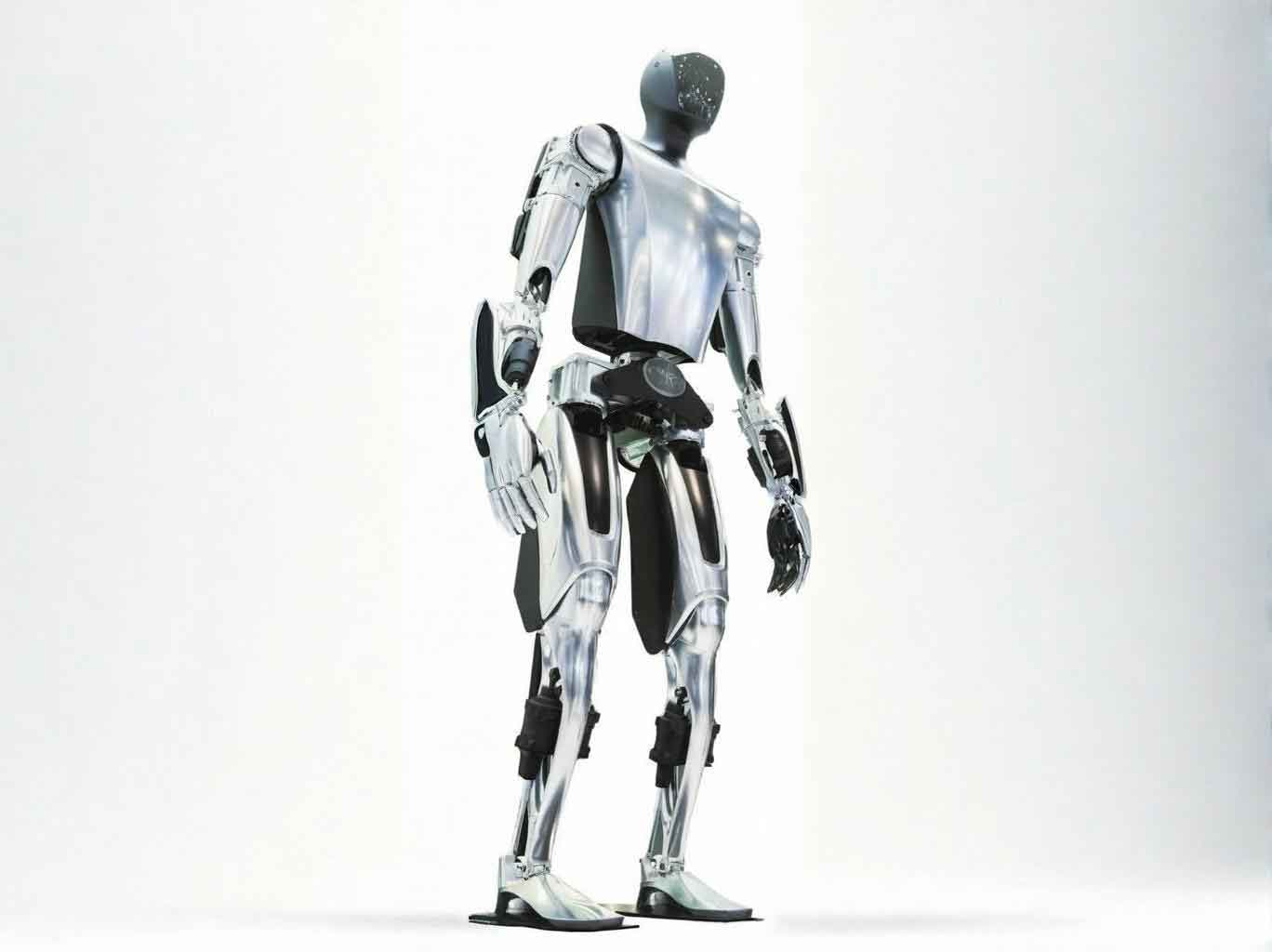
The image above conceptually aligns with this rehabilitation and functional support scenario, illustrating the tangible, physical form factor that enables an embodied AI robot to interact directly within a user’s personal space for assistive purposes.
2. Value Proposition and Impact Analysis
The implementation of embodied AI robots is not merely a technical upgrade; it carries significant value propositions for the ecosystem of special education.
2.1 Democratizing Access and Promoting Equity
One of the most compelling values is the potential to democratize high-quality, personalized support. Specialized human therapists and teachers are unevenly distributed, often concentrated in urban centers. An embodied AI robot, while requiring initial investment, can operate consistently in remote, underserved areas, providing a level of intervention that might otherwise be unavailable. It can help bridge the resource gap, offering every student access to a basic level of adaptive tutoring, therapeutic practice, and emotional support, thereby promoting educational equity on a broader scale.
2.2 Enabling Deep Personalization at Scale
The robot’s capacity for continuous, multi-modal data collection enables a depth of personalization that is difficult for a single teacher managing a classroom to achieve. Every interaction feeds into the student’s model, allowing the embodied AI robot to fine-tune its approach. This moves personalization from a static IEP (Individualized Education Program) document to a dynamic, real-time process. The value lies in optimizing the learning and development trajectory for each unique individual, potentially accelerating progress and improving outcomes.
2.3 Augmenting, Not Replacing, Human Educators
The value of an embodied AI robot is as an augmentative tool. It can handle repetitive practice, constant monitoring, and data logging, freeing up human teachers and therapists to focus on the highest-value aspects of their work: complex problem-solving, fostering creativity, building deep empathetic relationships, and making strategic pedagogical decisions informed by the data the robot provides. This human-robot collaboration can lead to a more sustainable and effective special education practice.
2.4 Fostering Transferable Skill Generalization
Because an embodied AI robot operates in the physical, messy reality of a classroom or home, skills practiced with it may generalize more effectively to real-world situations than those practiced on a tablet screen. Learning to take turns with a physically present robot, or to navigate a hallway with a robotic guide, provides embodied experiential learning that closely mirrors interactions with the physical and social environment. This promotes greater functional independence.
3. Future Application Prospects and Development Trajectories
Looking forward, the role of embodied AI robots in special education is poised to evolve in sophistication and scope, driven by advances in several key areas.
3.1 Advancements in Affective Computing and Empathic Response
Future embodied AI robots will feature more nuanced and culturally competent affective intelligence. This involves moving beyond basic emotion recognition to understanding emotional context, blending, and regulation strategies. The robot’s response will become more empathic and tailored, potentially integrating therapeutic frameworks like CBT (Cognitive Behavioral Therapy) or mindfulness into its interactions. The accuracy of affect detection $A_d$ will be a function of multi-modal sensor fusion:
$$ A_d = \alpha \cdot \text{Vision}(Face) + \beta \cdot \text{Audio}(Voice) + \gamma \cdot \text{Physio}(HR, GSR) + \delta \cdot \text{Context} $$
where $\alpha, \beta, \gamma, \delta$ are weighting coefficients learned for individual students.
3.2 Seamless Multi-Robot and IoT Ecosystem Integration
A single robot will not operate in isolation. Future applications will see embodied AI robots as nodes in a broader smart educational ecosystem. They will interact with other classroom robots, wearable sensors on students, smart furniture, and cloud-based learning platforms. For example, a robot noticing a student’s agitation could dim the smart lights and notify the teacher’s dashboard while initiating a de-escalation protocol. This ecosystem approach creates a holistic, responsive learning environment.
3.3 Specialization for Vocational and Life Skills Training
A critical frontier is the use of embodied AI robots for training adolescents and young adults in special education on vocational and life skills. Robots could simulate retail checkout counters, warehouse sorting tasks, or kitchen environments, providing step-by-step, patient guidance for job skills. They could also coach complex life skills like using public transportation, grocery shopping, or managing a household budget, practicing in a simulated or real environment with robotic support.
| Development Area | Short-Term (1-3 years) | Medium-Term (3-7 years) | Long-Term (7+ years) |
|---|---|---|---|
| Technical Core | Reliable basic interaction, robust navigation, simple emotion recognition. | Advanced multi-modal learning, seamless human-robot collaboration, improved dexterity. | Context-aware general intelligence, highly sophisticated and natural social AI, brain-computer interface (BCI) integration. |
| Primary Application | One-on-one tutoring assistants, basic social skill trainers, motivational companions. | Integrated classroom assistants, personalized therapeutic aides for specific disabilities, vocational trainers. | Holistic life-long learning and support companions, capable of adapting to evolving needs from childhood to adulthood. |
| Key Enablers | Cost reduction, teacher training programs, pilot study evidence. | Interoperability standards, robust ethical frameworks, large-scale efficacy studies. | Breakthroughs in AI theory, advanced materials science for robot bodies, widespread social acceptance. |
3.4 Ethical Frameworks and Participatory Design
The future must be built on strong ethical foundations. This involves co-designing embodied AI robots with educators, therapists, parents, and the students themselves. Critical issues of data privacy, algorithmic bias, dependency, and the preservation of human dignity must be addressed proactively. Transparent design, user agency over data, and clear guidelines on the robot’s role as a tool rather than a relationship substitute are essential for responsible development.
4. Concluding Synthesis
The journey of integrating embodied AI robots into special education is just beginning. From my standpoint, their potential is not in replicating human teachers but in offering a new category of assistive technology—one that is interactive, adaptive, and physically present in the learner’s environment. The scenarios span from personalized tutoring and emotional support to physical rehabilitation and vocational training, addressing the whole child. The value proposition centers on equity, deep personalization, and the augmentation of human expertise. Looking ahead, the trajectory points toward more empathic, integrated, and ethically-grounded systems. Realizing this potential will require sustained interdisciplinary collaboration among educators, technologists, ethicists, and the disability community. If navigated thoughtfully, embodied AI robots can become powerful allies in building a more inclusive and effective educational future for all learners, ensuring that the benefits of the AI revolution are accessible to those who stand to gain the most from personalized, patient, and perpetually available support.