
As artificial intelligence evolves from perception and language to action and interaction, embodied AI robots have emerged as a frontier direction. These intelligent agents emphasize the need for “action” and “adaptation” capabilities, integrating cognitive modeling, robotic execution, semantic understanding, and environmental interaction. This allows embodied AI robots to understand tasks, make decisions, and execute behaviors in the real world. They are increasingly deployed in critical domains such as service robotics, autonomous driving, medical assistance, and industrial automation, deeply embedding themselves into social life. However, due to this deep integration into physical and social environments, the security challenges of embodied AI robots are more complex and pose greater real-world threats compared to traditional AI. Beyond data security and model robustness, embodied AI robots face direct and irreversible risks such as uncontrollable physical behaviors, task intent deviations, and ethical conflicts in human-robot collaboration. Failures or malicious manipulations can lead not only to system crashes or information leaks but also to property damage or physical harm. This shift presents novel challenges for AI security research, moving from algorithm-centric robustness to a holistic system-level approach encompassing perception, cognition, decision-making, and execution. In this article, we analyze the risk propagation mechanisms in embodied AI robots, explore key defense strategies, and discuss practical deployment challenges, aiming to provide a structured foundation for building trustworthy systems.
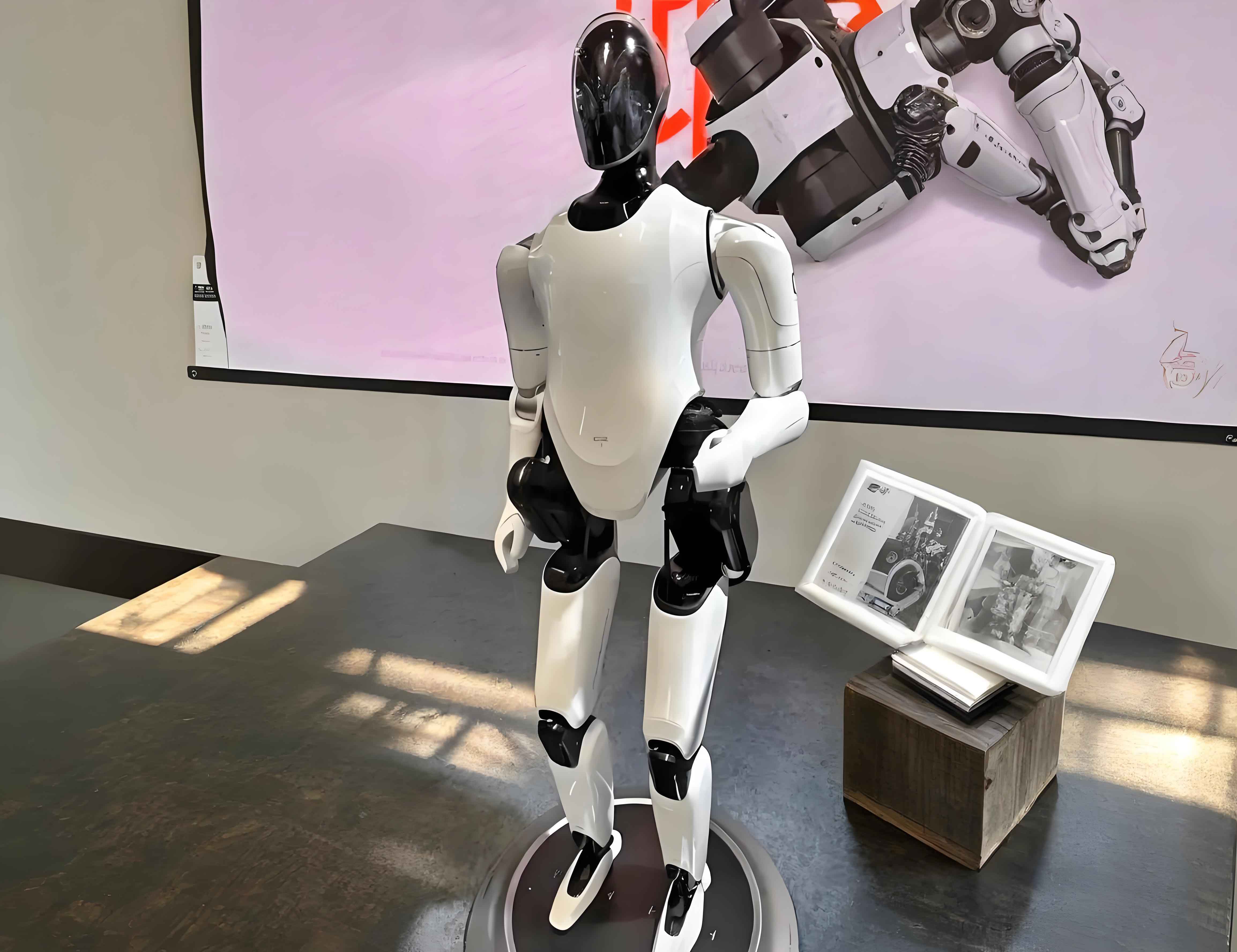
The security of embodied AI robots is fundamentally a systemic issue, as failures manifest as irreversible physical damages rather than mere prediction errors. These systems operate through a continuous closed-loop structure from perception to execution, where disturbances in perception can propagate and amplify into behavioral anomalies. Formally, the decision path of an embodied AI robot under perturbation can be represented as:
$$a’ = \pi(s) + \delta_p + \delta_\pi$$
Here, \( s \) denotes the current system state, \( \pi \) is the policy function, \( \delta_p \) is the perception perturbation, and \( \delta_\pi \) is the policy perturbation. For the system to remain stable, the output deviation \( \delta_a = a’ – \pi(s) \) must satisfy \( \| \delta_a \| \leq \epsilon \), where \( \epsilon \) is a safety threshold. This inequality forms the basic robustness constraint for embodied AI robots. Moreover, these systems rely on multimodal fusion, processing heterogeneous data streams like images, text, touch, and sound. Cross-modal interference can lead to risk propagation across modules, increasing the dimensionality of the threat space. For instance, a visual attack might corrupt object recognition and subsequently misguide language understanding, causing trajectory instability or unsafe actions. To address this, we define an alignment loss function to ensure semantic consistency across modalities. Let \( v_1, v_2, \dots, v_n \) be feature vectors from different modalities; the alignment loss is:
$$\mathcal{L}_{\text{align}} = \sum_{i \neq j} \| v_i – v_j \|^2$$
If \( \mathcal{L}_{\text{align}} \) exceeds a threshold \( \tau \), the system detects modal conflicts or deceptive inputs, triggering perception validation or safety fallback mechanisms. This highlights the need for redundant verification and dynamic weighting of information channels in embodied AI robots.
In terms of security threats, embodied AI robots face diverse attacks that span the entire perception-decision-action loop. The following table summarizes typical threat types and their impacts:
| Threat Type | Attack Examples | Affected Module | Consequences |
|---|---|---|---|
| Perception Deception | Adversarial images, occlusion, sensor interference | State recognition | Environmental misunderstanding, leading to execution偏差 |
| Policy Induction | Reward hacking, prompt injection | Decision policy | Abnormal behavior output, stability degradation |
| Execution Perturbation | Control signal hijacking, collision manipulation | Action control | Hardware failure, physical injury |
| Interaction Misuse | Ambiguous instructions, value misalignment | Human-robot collaboration | Inappropriate behavior, loss of trust |
| Multimodal Combined Attacks | Image + language联合误导 | Full system链路 | System失控, chain risk propagation |
To mitigate these threats, embodied AI robots require integrated security mechanisms across perception, policy, and execution. In the policy generation stage, adversarial robustness training is crucial to ensure stability under uncertain environments. For a policy network \( \pi_\theta \), we optimize the following objective function to enhance robustness against worst-case perturbations:
$$\max_{\theta} \min_{\delta \in S} \mathbb{E}_{s \sim D} [R(s, \pi_\theta(s + \delta))]$$
Here, \( \delta \) represents perturbations within a feasible set \( S \), \( R \) is the reward function, and \( D \) is the state distribution. This approach suppresses nonlinear behavioral fluctuations caused by minor perceptual changes in embodied AI robots. Additionally, to prevent high-risk actions, a safety regularization term is introduced:
$$\mathcal{L}_{\text{safe}} = \lambda \cdot \mathbb{E}_s \left[ \sum_{a \in A_{\text{unsafe}}} \pi_\theta(a|s) \right]$$
where \( A_{\text{unsafe}} \) is a predefined set of unsafe actions, and \( \lambda \) is a penalty coefficient that adjusts the conservativeness of policy generation. This ensures that embodied AI robots prioritize safety during decision-making.
At the execution level, embodied AI robots must incorporate physical behavior control mechanisms, such as force limiters, speed monitors, and spatial safety boundaries. To enhance explainability, behavior decisions can be modeled with causal chains. For example, an action \( a_t \) at time \( t \) depends on the current state \( s_t \) and historical behavior embedding \( h_t \):
$$a_t = f(s_t, h_t), \quad h_t = \sum_{i=1}^{t-1} \psi(s_i, a_i)$$
where \( \psi \) is an embedding function. This allows for behavior tracing and user interrogation, building trust in embodied AI robots. Furthermore, with the integration of large language models, semantic consistency checks are vital. Given visual features \( v_{\text{vis}} \) and language features \( v_{\text{lang}} \), the similarity score is computed as:
$$\text{Score}_{\text{sim}} = \cos(v_{\text{vis}}, v_{\text{lang}})$$
If \( \text{Score}_{\text{sim}} < \tau \), the system may be under semantic诱导, prompting low-risk operation or user confirmation. These mechanisms collectively form a multi-layered defense for embodied AI robots, transitioning from passive protection to active detection and adaptive adjustment.
In real-world deployment, embodied AI robots encounter challenges rooted in environmental non-ideality and social complexity. Uncertainty in open scenes, such as lighting variations and occlusions, can cause perceptual drift, leading to abrupt failures at boundary conditions. Semantic misalignment in human-robot interaction is another隐蔽 threat, where vague user instructions or malicious prompts can derail system intent. Moreover, multimodal combined attacks exploit cross-modal vulnerabilities, creating cascading risks that are hard to detect with isolated defenses. System heterogeneity poses structural difficulties; when the same model is deployed on different hardware platforms, discrepancies in execution frequency or sensor resolution can cause policy instability. This “policy-platform mismatch” is exacerbated in multi-robot协作 scenarios. Additionally, cultural embedding and behavioral boundary adaptation are critical for global acceptance. Embodied AI robots must navigate diverse social norms, such as personal space and communication styles, to avoid ethical conflicts or legal issues. These challenges underscore that security for embodied AI robots is not just technical but also socio-contextual, requiring mechanisms that are resilient, interpretable, and culturally sensitive.
Looking ahead, research on embodied AI robot security must evolve toward systemic resilience and social alignment. Key directions include multimodal robustness modeling, where cross-modal attention and fusion techniques enhance consistency under perturbations. The alignment loss can be extended for multiple modalities; let \( x_v, x_l, x_h \) represent visual, language, and tactile inputs, with encoders \( f_i \), then:
$$\mathcal{L}_{\text{align}} = \sum_{i \neq j} \| f_i(x_i) – f_j(x_j) \|^2$$
This supports dynamic redundancy in embodied AI robots. Explainability and causal analysis are also paramount, enabling users to understand decision paths and intervene when necessary. Social value embedding requires preference learning and rule-based adaptation to align with ethical norms across cultures. For multi-agent协作, distributed systems and secure communication protocols must mitigate risk propagation among embodied AI robots. Furthermore, standardized evaluation benchmarks and open-source frameworks are急需 to accelerate progress. The table below outlines future research priorities:
| Research Direction | Core Goals | Involved Technologies | Challenges |
|---|---|---|---|
| Multimodal Robustness Modeling | Resist combined perturbations, strengthen perception一致性 | Modal alignment, cross-modal attention | Designing协同 mechanisms |
| Policy Explainability and Causal Analysis | Enhance user trust and debugging efficiency | Causal reasoning, graph models, behavior tracking | Complexity in decision chain modeling |
| Social Value Embedding and Alignment | Avoid cultural bias and ethical conflicts | Preference learning, dialogue modeling, rule learning | Abstracting norms, subjective evaluation |
| Multi-Agent Collaboration and Consensus Mechanisms | Build safe and trustworthy intelligent体协作 systems | Distributed systems, secure communication protocols | Controlling risk propagation paths |
| Security Evaluation Standards and Open-Source Frameworks | Promote横向 comparison and纵向 reproduction | Simulation platforms, metric systems, benchmark datasets | Community coordination and resource costs |
In conclusion, ensuring the security of embodied AI robots is a multidimensional endeavor that intersects technology, ethics, and society. We must balance development and safety, promoting reliable deployment in民生 fields like healthcare and logistics while prioritizing risk mitigation in critical industries. Collaboration among academia, industry, and research institutions is essential to tackle core issues of safety, explainability, and伦理 compliance. As embodied AI robots scale, building a “secure, trustworthy, controllable, and usable” ecosystem will determine their transition from tools to partners, ultimately serving as key infrastructure for societal benefit. Through integrated mechanisms—spanning robust perception, stable policies, controllable behaviors, and semantic filtering—embodied AI robots can achieve trustworthy operation, fostering innovation while safeguarding public welfare.