
The evolution of artificial intelligence has progressively shifted focus from symbolic reasoning and connectionist models towards paradigms that emphasize interaction within physical and social contexts. This shift is central to the development of embodied AI robot systems, where intelligence is understood as emerging from the dynamic coupling of the brain (or control system), a physical body, and the environment. My research perspective aligns with the growing consensus that for an intelligent agent to achieve effective and harmonious collaboration with humans, it must encompass not only cognitive capabilities but also emotional responsivity. Truly synergistic human-machine systems require the machine to understand the human’s cognitive framework and navigate their complex, fluctuating emotional landscape.
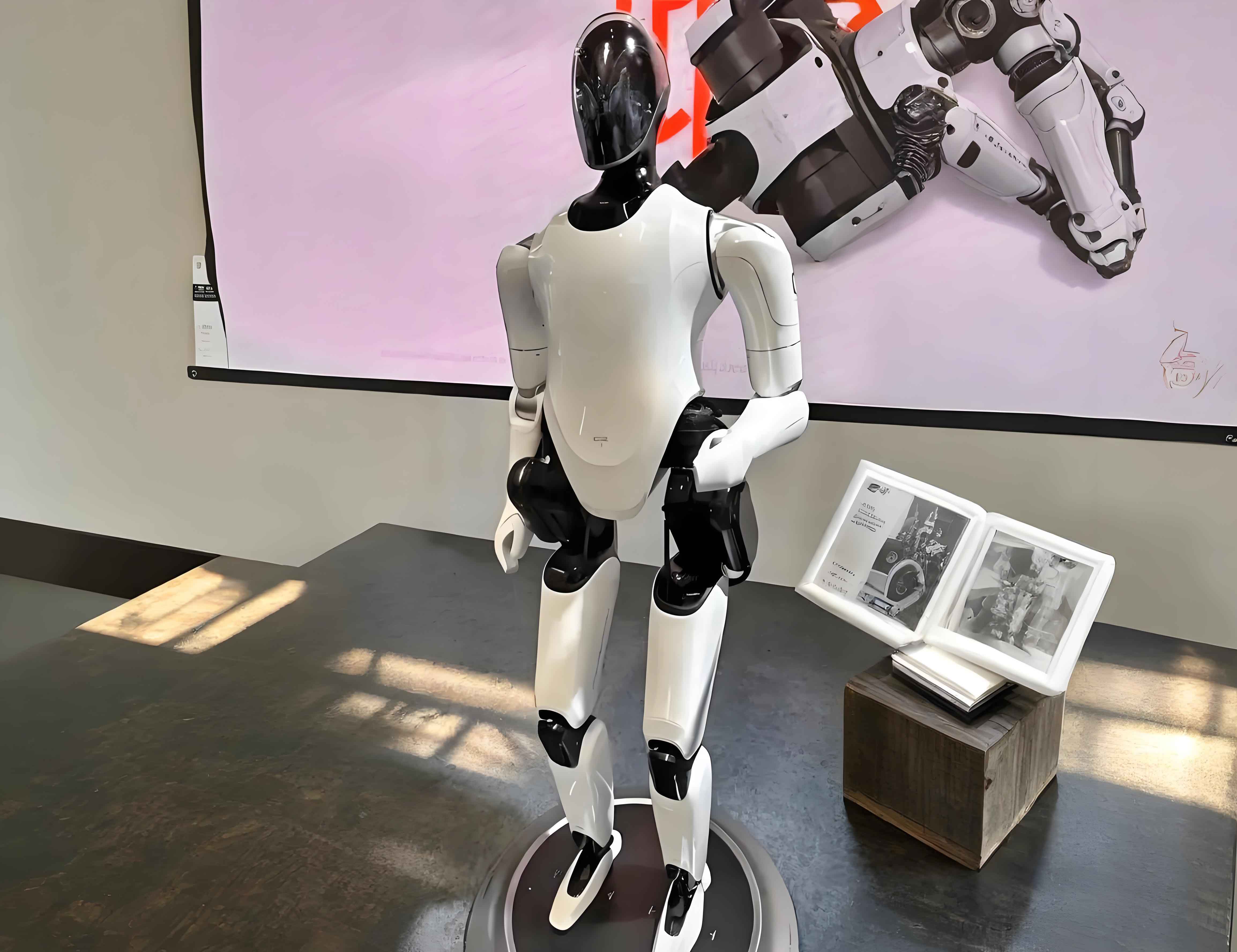
While significant research in human-machine teaming incorporates human-in-the-loop cognitive models (e.g., ACT-R, SOAR), the long-term vision of complete symbiotic partnership necessitates endowing machines with emotional interaction capabilities. This article, from my viewpoint, synthesizes the architectural components of affective interaction for an embodied AI robot. I will structure the discussion around the generation, recognition, and expression of emotion within intelligent agents, while also considering the critical influences of individual differences and socio-cultural group characteristics on this process.
The Embodied AI Paradigm and Human-Machine Empathy
The concept of embodied AI robot intelligence finds its early roots in the works of Turing and later Brooks, who argued that intelligence is inherently situated and physically instantiated. A contemporary embodied AI robot acts as an extension of human sensory and manipulative capacities, finding applications across industry, healthcare, services, and domestic environments. The ultimate goal within this “cognitive-embodied-affective” framework is to achieve a state of natural harmony through close coupling, enabling high-dimensional emotional experiences. This progression leads to the concept of human-machine empathy—a deep, bidirectional emotional understanding and resonance. For me, this represents the anticipated evolution of cooperative interaction, where emotional co-experience forms a more立体 (three-dimensional) structure for human-embodied AI robot共生 (symbiosis).
Architectures for Affective Interaction
The complete affective loop in human-embodied AI robot interaction involves three core stages: the generation of an emotional state, its recognition in the human partner, and the expression of an appropriate affective response by the robot. This forms a foundation for emotional intelligence in interactive systems.
1. Representing Emotion: Computational Models
A fundamental challenge is formally representing emotion in a computationally tractable way. Based on psychological and physiological theories, three primary model types prevail.
Discrete/Categorical Models: These posit a set of basic, universal emotions (e.g., joy, sadness, anger, fear, surprise, disgust). A prominent example is Ekman’s “big six.” However, human-computer interaction elicits more nuanced affective states. From my analysis, finer-grained categories relevant to HCI include:
| Basis for Classification | Affective State | Interpretation |
|---|---|---|
| Interaction Process | Flow / Control | A sense of mastery and focused engagement with the task. |
| Interaction Process | Confusion / Boredom | States arising from mismatched challenge or lack of interest. |
| Social Emotion | Pride / Admiration | Evaluations directed at oneself or the embodied AI robot. |
| Social Emotion | Guilt / Contempt | Moral or social evaluations triggered by interaction events. |
Dimensional Models: Emotions are represented as coordinates within a continuous space. Common models include:
Two-Dimensional (VA): Valence (pleasure-displeasure) and Arousal (activation-deactivation). A point $E_{VA}$ is represented as:
$$E_{VA} = (V, A), \quad \text{where } V, A \in [-1, 1]$$
Three-Dimensional (PAD): Adds Dominance (submissiveness-control). A point $E_{PAD}$ is:
$$E_{PAD} = (P, A, D), \quad \text{where } P, A, D \in [-1, 1]$$
Four-Dimensional (Hourglass): Cambria’s model uses Pleasantness, Attention, Sensitivity, and Aptitude, with intensities $I$ on each dimension:
$$E_{H} = (I_P, I_{At}, I_{Se}, I_{Ap}), \quad I \in [0,1]$$
Cognitive Appraisal Models: Emotions arise from a subject’s evaluation of events. The OCC model is seminal, defining 22 emotion types based on appraisals of Consequences of Events, Actions of Agents, and Aspects of Objects. The likelihood of an emotion $Emo$ can be framed as a function of appraisal variables $a_i$:
$$P(Emo) = F(a_1, a_2, …, a_n)$$
where $a_i$ represent constructs like desirability, praiseworthiness, liking, etc.
2. Recognizing Human Emotion: Methods and Fusion
Emotion recognition leverages multiple channels, often categorized as subjective experience, external expression, and physiological arousal.
Subjective Measures: Self-report tools like the SAM (Self-Assessment Manikin) for PAD dimensions or the PANAS (Positive and Negative Affect Schedule) are common but not real-time.
Behavioral Expression: This includes facial action units (FACS), vocal features, and body gesture. Features can be extracted as time-series vectors. For example, a vocal feature vector $\vec{V}$ might be:
$$\vec{V} = [pitch_{mean}, pitch_{std}, energy_{max}, MFCC_1, … MFCC_n]$$
Physiological Arousal: Signals provide objective, continuous data. Key signals and their associated features are summarized below:
| Signal | Abbreviation | Relevant Features (Examples) | Primary Affective Correlation |
|---|---|---|---|
| Electroencephalogram | EEG | Power Spectral Density (PSD), Differential Entropy (DE) | Valence (Approach/Withdrawal) |
| Electrocardiogram | ECG | Heart Rate (HR), Heart Rate Variability (HRV) | Arousal, Stress (HRV for anxiety) |
| Galvanic Skin Response | GSR | Skin Conductance Level (SCL), Response Amplitude | Arousal/Sympathetic Activation |
| Electromyography | EMG | Mean Amplitude, Frequency (MF) | Valence (e.g., frown vs. smile muscle) |
| Eye-Tracking | ET | Pupil Diameter, Fixation Duration, Saccade Velocity | Cognitive Load, Arousal, Interest |
Multimodal Fusion: Single-modality recognition is prone to noise and ambiguity. Therefore, a robust embodied AI robot must employ fusion strategies. Let $M_i$ represent the feature vector from modality $i$ (e.g., face, voice, ECG). Fusion can occur at different levels:
Feature-Level Fusion: Early concatenation: $\vec{F}_{fusion} = [\vec{M}_{face}, \vec{M}_{voice}, \vec{M}_{ECG}]$. This can be high-dimensional.
Decision-Level Fusion: Each modality yields a probability distribution over emotions $P_i(Emo)$. Final emotion $E^*$ is determined by a combination rule $G$:
$$E^* = \arg\max_{Emo} G(P_{face}(Emo), P_{voice}(Emo), P_{ECG}(Emo))$$
where $G$ could be a weighted sum, product, or a learned meta-classifier.
Model-Level Fusion: Using architectures like Multimodal Transformers or late-fusion RNNs that learn cross-modal interactions directly within the model parameters $\theta$:
$$P(Emo | M_{face}, M_{voice}, …) = Model_{\theta}(M_{face}, M_{voice}, …)$$
3. Generating and Expressing Robot Emotion
An embodied AI robot must not only perceive but also generate believable affective responses. This involves both macro-level architectural frameworks and micro-level expressive parameters.
Macro-Frameworks for Emotion Generation: These are high-level models determining how emotional states evolve. The TAME framework integrates Trait (personality), Attitude, Mood, and Emotion. A dynamic update for a robot’s mood $Mood(t)$ could be modeled as:
$$Mood(t+1) = \alpha \cdot Mood(t) + (1-\alpha) \cdot \sum_{i} w_i \cdot Emotion_i(t) + \epsilon$$
where $\alpha$ is a decay factor, $w_i$ are weights from personality, and $\epsilon$ is noise. The OCC model is often used as the engine to generate specific $Emotion_i(t)$ based on appraised interaction events.
Micro-Parameters for Emotion Expression: Once an internal state is determined, the robot conveys it through its actuators. The mapping from internal state $E_{internal}$ (e.g., a PAD vector) to actuator parameters $\vec{A}$ is crucial:
$$\vec{A} = \Phi(E_{internal})$$
This mapping $\Phi$ can be defined for different channels:
| Modality | Actuator/Parameter | Mapping Example (for a state with high A, high P) |
|---|---|---|
| Visual (Face/Lights) | LED Hue, Saturation, Blink Rate | $\Phi_{lights}(P, A): Hue=Green, Saturation=High, BlinkRate=Fast$ |
| Acoustic | Voice Pitch, Speech Rate, Volume | $\Phi_{voice}(P, A): Pitch=High, Rate=Fast, Volume=High$ |
| Kinesthetic (Motion) | Joint Velocity, Amplitude, Smoothness | $\Phi_{motion}(P, A): Velocity=High, Trajectory=Curved/Expansive$ |
| Haptic | Vibration Pattern, Intensity | $\Phi_{haptic}(A): Intensity=Strong, Pattern=Continuous$ |
The Social-Cognitive Context of Emotion
Emotion is not merely a biophysical phenomenon; it is profoundly shaped by social and cognitive factors. An effective embodied AI robot must account for this context.
Individual Differences
Emotional responses vary significantly based on user traits. Personality models like OCEAN (Openness, Conscientiousness, Extraversion, Agreeableness, Neuroticism) can parameterize these differences. A user’s personality vector $\vec{Per}$ can modulate the appraisal process in an OCC-like model. For instance, a user high in Neuroticism might have a lower threshold for appraising an event as undesirable, affecting the generated emotion probability:
$$P(Emo_{distress} | Event) = F_{appraisal}(Event, \vec{Per}_{high-N}) > F_{appraisal}(Event, \vec{Per}_{low-N})$$
Furthermore, the robot’s own perceived personality (e.g., extroverted vs. submissive) influences user trust and interaction quality, guided by theories like similarity-attraction.
Group and Cultural Characteristics
Emotion is a social construct. Cross-cultural studies show variance in emotion lexicons, display rules, and interpretations. An embodied AI robot designed for a global context must adapt its expressive repertoire $\Phi$. For example, the appropriate intensity of expressive gestures $\vec{A}_{gesture}$ might be scaled by a cultural factor $\beta_{culture}$:
$$\vec{A}_{gesture, adapted} = \beta_{culture} \cdot \vec{A}_{gesture, neutral}, \quad \text{where } \beta_{culture} \in [0.5, 1.5]$$
Social role expectations also matter. A robot perceived as a “butler” is expected to show different emotional dynamics (e.g., more subdued, respectful) than one perceived as a “companion,” which might be expected to show empathy and shared joy. The CASA (Computers Are Social Actors) paradigm confirms users apply social norms even to machines, making these design considerations critical for natural interaction.
Conclusion and Future Perspectives
Integrating emotional intelligence into embodied AI robot systems is a multifaceted challenge, spanning computational models, multimodal signal processing, and socio-cognitive design. From my standpoint, future research must delve deeper into two key areas. First, modeling individual heterogeneity in real-time, capturing the dynamics of emotional state transitions and their long-term impact on the human-robot relationship. Second, formally integrating cross-cultural adaptability into the emotion recognition and expression pipelines of the embodied AI robot.
The advent of large language models (LLMs) and multimodal foundation models presents a transformative opportunity. These models can serve as the central “brain” for an embodied AI robot, enabling more nuanced context understanding, emotional reasoning, and the generation of coherent, empathetic dialogue within a closed-loop “perceive-understand-respond” cycle. Future work will involve building unified, privacy-preserving platforms for multimodal affective data and establishing standardized benchmarks to evaluate emotional interactions. The goal is to co-create a genuine affective ecosystem with embodied AI robots, moving closer to the vision of ubiquitous, personalized, and collaborative human-machine symbiosis.