
As an observer deeply immersed in the field of robotics, I have witnessed a remarkable shift in recent months: the once-distant dream of embodied AI robots is rapidly approaching a tipping point. The convergence of plummeting prices and surging commercial orders signals that we are on the cusp of a new era. From laboratories to factory floors, these machines are stepping out of demonstrations and into real-world applications. Yet, amidst this excitement, a fundamental question persists: when will these embodied AI robots truly become reliable partners, capable of handling complex tasks in our homes and workplaces with the stability we demand? This article explores the current landscape, the breakthroughs, the challenges, and the path forward, drawing on my analysis and industry insights.
The most tangible indicator of progress is the dramatic cost reduction. Just a few years ago, a functional humanoid robot—an embodied AI robot with bipedal locomotion and basic manipulation—commanded prices in the hundreds of thousands of dollars, confining it to research institutions. Today, that barrier is shattering. We have seen announcements of fully-capable models priced at levels comparable to high-end consumer electronics. This price “ice-breaking” is not accidental; it results from strategic engineering and supply chain mastery. Companies are achieving this through high degrees of vertical integration, in-house development of core components like actuators and control systems, and the aggressive adoption of composite materials and domestic manufacturing. The cost structure of an embodied AI robot can be modeled to understand this trend. We can break down the total cost (C_total) into several key components:
$$C_{\text{total}} = C_{\text{hardware}} + C_{\text{software}} + C_{\text{integration}} + C_{\text{margin}}$$
Where:
- $C_{\text{hardware}} = \sum_{i=1}^{n} (C_{\text{materials}_i} + C_{\text{fabrication}_i})$ for all mechanical, electrical, and sensor components.
- $C_{\text{software}}$ encompasses the development and licensing costs for the AI, perception, and control algorithms.
- $C_{\text{integration}}$ is the cost of system assembly, calibration, and testing.
- $C_{\text{margin}}$ represents the desired profit margin.
The driving force behind the price drop is the rapid reduction in $C_{\text{hardware}}$, achieved via design optimization, mass production techniques, and sourcing from high-volume, cost-effective supply chains. The learning curve effect, common in manufacturing, applies powerfully here. The cost often decreases exponentially with cumulative production volume (V):
$$C_{\text{hardware}}(V) = C_0 \cdot V^{-b}$$
Here, $C_0$ is the initial cost, and $b$ is the learning rate parameter (typically between 0.1 and 0.3). As orders increase, costs fall predictably. This is precisely what is enabling prices to tumble from the realm of luxury assets to potential consumer gadgets. The table below summarizes some recent milestones in price positioning for embodied AI robots, illustrating this aggressive trend.
| Robot Model (Representative) | Announced Price Point (Approx. USD) | Key Positioning & Features | Implied Market Segment |
|---|---|---|---|
| Model A (Child-sized Companion) | ~1,400 | Full motion, interactive play, educational programming | Early Consumer / Prosumer |
| Model B (General-purpose Platform) | ~4,200 | Advanced mobility, strong payload, developer-focused | Commercial & Research |
| Model C (High-performance Humanoid) | ~5,600 | High speed, agility, complex manipulation capabilities | Industrial & Advanced Research |
| Previous Generation Lab Systems | > $70,000 | Custom-built, low volume, research-grade components | Exclusively Research |
This pricing revolution is fundamentally altering the economics of deployment. When an embodied AI robot costs less than a specialized industrial arm, it opens the door to entirely new use cases based on its general form factor and mobility.
Concurrently, the commercial landscape is heating up with significant, real-world orders. This is the second pillar of the产业化 “dawn.” It’s one thing to build a cheap robot; it’s another to have companies commit millions to deploy them. In recent months, we’ve seen a flurry of announcements involving substantial contracts for embodied AI robots and related solutions. These are not mere memorandums of understanding but firm purchase agreements, often spanning multi-year deployments numbering in the hundreds or thousands of units. The domains are initially focused on industrial settings—electronics manufacturing, precision assembly, logistics—where the flexibility of a humanoid form can complement or replace fixed automation. The value proposition here is clear: an embodied AI robot can adapt to multiple tasks within a workflow without massive retooling, offering a pathway to flexible automation. The following table captures the scale and scope of some recent notable commercial engagements.
| Application Sector | Reported Scale of Commitment | Primary Use-Case Focus | Timeframe |
|---|---|---|---|
| Precision Manufacturing | Over $11 million USD | Assembly, inspection, material handling | Initial deployment phase |
| Semiconductor Display Panel Production | Thousands of units, valued at hundreds of millions USD | Delicate material transfer, quality control | Rollout over 3 years |
| General Manufacturing & Logistics | Multiple contracts for “pilot-to-scale” deployments | Palletizing, machine tending, packaging | Ongoing, 2024-2025 |
The magnitude of these orders validates a crucial hypothesis: the embodied AI robot is transitioning from a technology demonstrator to a bona fide capital good. The competitive dynamic is also evolving. As one industry leader aptly noted, the next three years will be a race for “real-scenario closure.” The winner won’t necessarily be the one with the cheapest robot today, but the one whose embodied AI robot can be deployed in the most diverse real-world settings, operate reliably, and—critically—use the resulting operational data to fuel a virtuous cycle of improvement. This feedback loop is essential for advancing both hardware and the AI “brain.” We can model the performance improvement of an embodied AI robot system over time as a function of deployed experience (E):
$$P(E) = P_{\text{base}} + \gamma \int_{0}^{E} \frac{D(e)}{1 + \alpha e} \, de$$
Where $P(E)$ is the overall performance metric (e.g., task success rate, efficiency), $P_{\text{base}}$ is the initial performance, $\gamma$ is a learning gain coefficient, $D(e)$ is the data richness from experience $e$, and $\alpha$ is a factor accounting for diminishing returns. Companies that achieve large-scale deployment gather $E$ rapidly, accelerating their climb up the performance curve and creating a formidable moat.
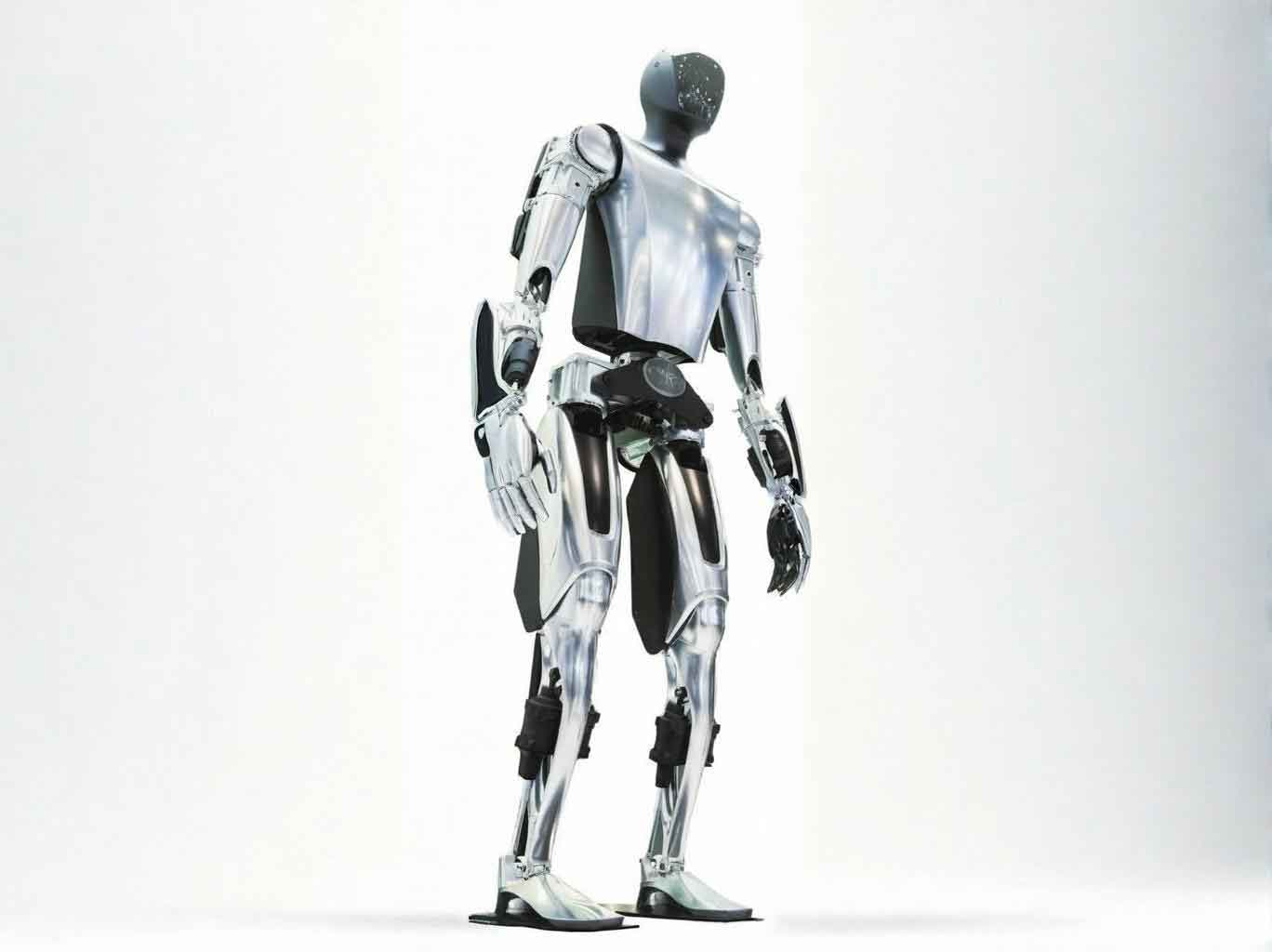
The image above symbolizes the scaling manufacturing base that makes this possible. This infrastructure, capable of producing the sophisticated electromechanical systems that constitute an embodied AI robot, is a cornerstone of the current price and availability revolution. It represents the硬件 backbone upon which the software intelligence is built.
However, to view the field solely through the lens of price and orders would be overly optimistic. There remains a significant “capability攻坚” ahead. The core challenge is that today’s most advanced embodied AI robots, while impressive in controlled demos, still operate at a fraction of human capability in unstructured environments. In my assessment, comparing an embodied AI robot to a human worker in a factory setting reveals a substantial gap. A useful metric is the Effective Work Coefficient (EWC), which compares the robot’s output to a human benchmark for the same task suite:
$$EWC = \frac{\sum (T_{\text{human}, i} / T_{\text{robot}, i}) \cdot S_i}{N}$$
Where for each task $i$, $T$ is the time to completion, $S_i$ is the success rate, and $N$ is the number of tasks. Current estimates from deployment pilots suggest EWC values are in the range of 0.3 to 0.4. This means the embodied AI robot is about 30-40% as effective as a human for a comparable set of industrial duties. The gap stems from several factors: dexterous manipulation in cluttered spaces, real-time adaptation to unforeseen changes, energy efficiency, and the overarching challenge of integrating robust, common-sense reasoning into physical actions.
We can think of the development of an embodied AI robot as paralleling human maturation—a metaphor I find apt. It begins with mastering locomotion and basic motor skills (the “toddler” phase we are currently exiting), progresses to understanding and manipulating objects with purpose (the “child” phase we are entering), and will eventually require advanced cognitive reasoning, long-horizon planning, and social intuition for tasks like elderly care. The progression can be modeled as a multi-stage S-curve for capability acquisition:
$$C_{\text{stage}}(t) = \frac{L}{1 + e^{-k(t – t_0)}}$$
Here, for each major capability stage (e.g., dynamic walking, bimanual manipulation, contextual reasoning), $C$ is the capability level, $L$ is the maximum level for that stage, $t$ is development time, $t_0$ is the inflection point, and $k$ is the growth rate. We are currently on the steep ascent of the “physical competency” curve, while the “cognitive integration” curve is in its very early, flat phase. This explains why early adopters are focusing on well-structured industrial tasks or applications emphasizing non-physical value, like companionship and education, where the demands on physical dexterity and environmental understanding are lower.
So, when will the embodied AI robot truly enter “ten thousand homes” and become a staple on factory lines? Forecasts vary significantly based on the definition of “true” utility. For industrial settings, the timeline is shorter. Based on the current EWC improvement rate and deployment feedback cycles, I project that within 3-5 years, we will see embodied AI robots achieving EWC values exceeding 0.7-0.8 in specific, structured verticals like electronics assembly or logistics hubs. They will transition from being “trainees” requiring frequent oversight to “competent technicians” capable of running semi-autonomously for extended periods. The adoption will be driven by total cost of ownership (TCO) calculations that become increasingly favorable. The TCO over a period (Y years) can be expressed as:
$$TCO = C_{\text{acquisition}} + \sum_{y=1}^{Y} \left( C_{\text{maintenance}, y} + C_{\text{energy}, y} + C_{\text{downtime}, y} – V_{\text{output}, y} \right)$$
As $C_{\text{acquisition}}$ falls and $V_{\text{output}}$ (value of work performed) rises with improving EWC, the TCO turns negative, justifying widespread investment.
For the home environment, the horizon is longer and more uncertain—likely 5 to 10 years at minimum. A domestic embodied AI robot must be a generalist in an incredibly complex, dynamic, and personalized world. It must understand natural language commands, navigate cluttered and ever-changing spaces, handle fragile and diverse objects, and perform tasks ranging from cleaning to security to personal assistance. The cognitive demands here are orders of magnitude higher. The required integration of large language models, world models, and ultra-safe, reliable actuators is still a fundamental research challenge. While small, affordable robots for entertainment and simple educational interaction are already emerging—and are a vital first step—the vision of a true robotic domestic helper remains a longer-term goal.
In conclusion, the embodied AI robot industry is undeniably at a破晓 moment. The dual engines of cost reduction and commercial validation are propelling it forward with unprecedented momentum. The embodied AI robot is no longer a futuristic concept but a tangible product with growing market pull. However, the journey from capable prototype to ubiquitous, reliable partner is a marathon, not a sprint. The path will be paved by continuous hardware innovation, breakthroughs in AI—particularly in multimodal understanding and reinforcement learning for the physical world—and, most importantly, by the invaluable data harvested from each new real-world deployment. The race is on, and it is a race not just for technological supremacy, but for the practical integration of intelligent machines into the fabric of our work and daily lives. The embodied AI robot stands at the threshold, and the coming years will determine how confidently it steps across.