
The evolution of artificial intelligence has entered a decisive phase characterized by its embodiment. I observe that embodied intelligence, or embodied AI, represents a paradigm shift from software confined to digital realms to intelligent systems that perceive, reason, and act within the physical world. This shift is primarily driven by the integration of advanced multimodal large language models (LLMs) with sophisticated robotic hardware, creating what I term the embodied AI robot. The core operational principle of an embodied AI robot can be conceptualized by a triad of essential elements:
$$ \text{Embodied AI System} = \text{Ontology (Body)} \oplus \text{Environment} \oplus \text{Intelligence (AI Brain)} $$
Where ‘$\oplus$’ denotes a deep, synergistic integration rather than a simple sum. The ‘Ontology’ refers to the physical hardware—sensors, actuators, and manipulators. The ‘Environment’ is the unstructured, dynamic physical world it navigates. The ‘Intelligence’ is the multimodal AI model that processes sensory input, makes decisions, and generates action plans. This integration grants embodied AI robots distinctive characteristics: humanoid generality (allowing them to use human tools and spaces), stable robustness (operating reliably in complex conditions), and intelligent autonomy (learning and adapting from real-world interactions).
The historical progression of human-machine interaction reveals a clear trajectory towards greater machine autonomy and collaboration, which fundamentally reshapes labor markets. I identify three dominant waves of technological interaction logic:
| Era | Interaction Paradigm | Society Type | Primary Labor Impact |
|---|---|---|---|
| Industrial Revolution | Human-Machine Interaction (HMI) | Labor-Intensive / Capital-Intensive | Mechanization of manual tasks; shift to supervision. |
| Information Age | Human-AI Interaction (HAI) | Knowledge-Intensive | Automation of cognitive routines; data-driven management. |
| Super-Smart Society | Human-Embodied AI Interaction (HEAI) | Knowledge-Concentrated (Driven by Data, Information, Knowledge) | Collaborative task execution; hybrid roles requiring oversight of autonomous physical agents. |
The transition to the HEAI paradigm, powered by the embodied AI robot, is not merely an incremental change. It represents a fundamental reconfiguration of production factors, instigating profound transformations in employment structures across all sectors. The impact is dualistic, simultaneously causing displacement and creation, a dynamic I analyze through the lens of different AI philosophical foundations and their corresponding labor market effects.
The influence of the embodied AI robot on employment is sector-specific and evolutionary. Its application has migrated from rigid, rule-based environments to dynamic, service-oriented settings.
| AI Foundation | Era & Embodiment Stage | Primary Domain | Impact on Labor Structure |
|---|---|---|---|
| Symbolism (Rule-based) | 1950s-1980s (Industrial Robots) | Manufacturing & Industrial | Replacement of low-skill, repetitive manual labor (e.g., assembly line workers). Created demand for machine operators and technicians. |
| Behaviorism (Reactive, Sensor-driven) | 1980s-1990s (Service/Bio-mimetic Robots) | Non-Manufacturing (Services, Healthcare, Logistics) | Displacement of routine service tasks. Created new service-tech hybrid roles (e.g., robotic system assistants). Increased demand for higher skill levels. |
| Connectionism (Deep Learning) | 2000s-Present (Algorithmic, LLM-driven Robots) | Technical & Cross-Domain (New Employment Forms) | Replacement of standardized cognitive and physical tasks. Creation of high-skill AI development, maintenance, and data analysis roles. Emergence of platform-based gig work managed by algorithms. |
A key manifestation of this evolution in manufacturing is the integration of humanoid robots.
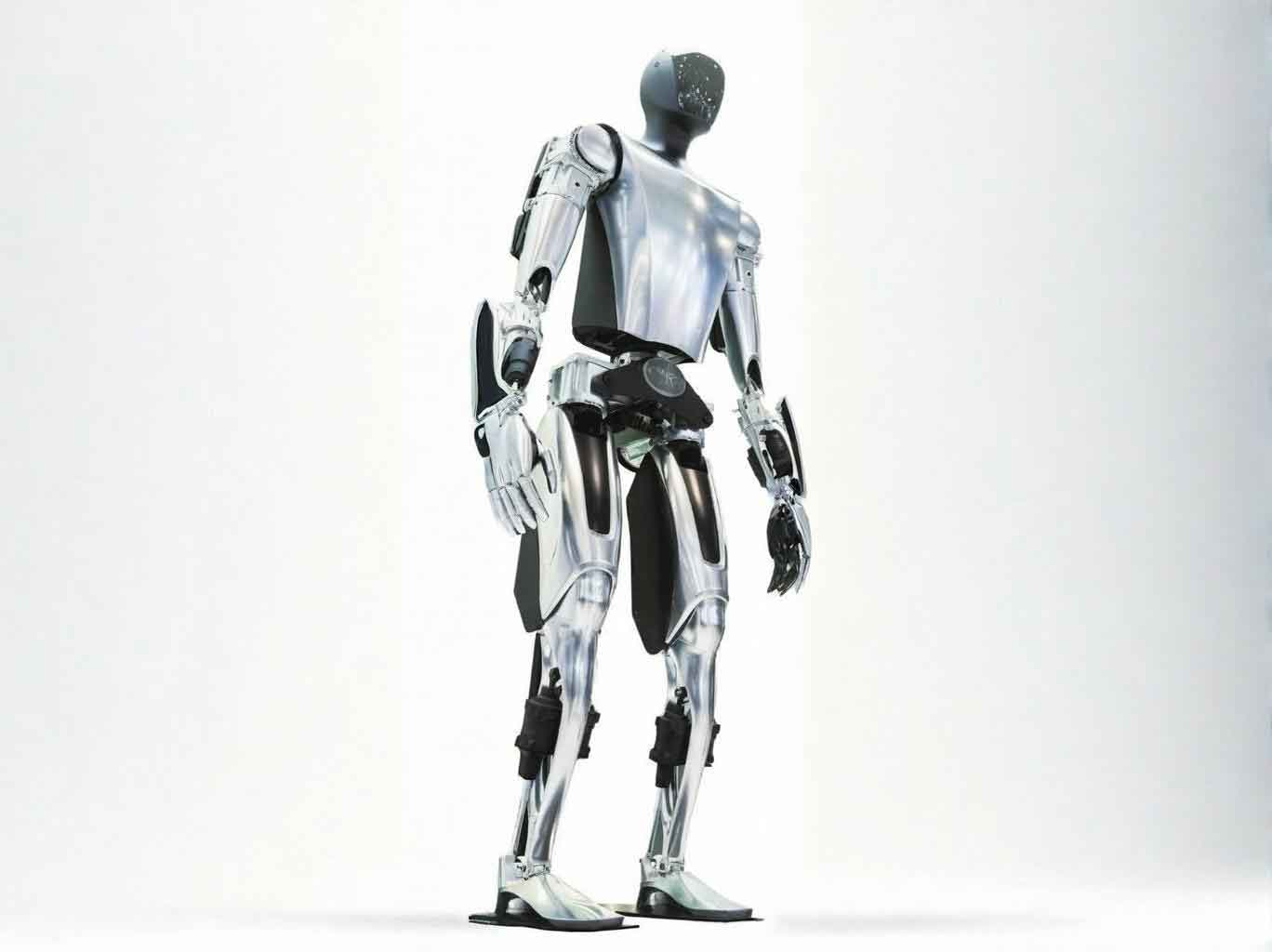
The deployment of such embodied AI robots in factories exemplifies the shift towards flexible, cognitive automation that can work alongside humans or autonomously handle complex assembly and quality control tasks, directly influencing the skill composition of the workforce.
This structural shift exerts significant pressure on core workers’ rights. I contend that the autonomous and physical nature of the embodied AI robot creates unique challenges that go beyond those posed by previous automation waves.
1. Impact on Equal Opportunity in Employment
The embodied AI robot encroaches upon employment opportunities in a pervasive manner. Its decision-making, often based on opaque data analysis and predictive modeling, can lead to systemic biases. If the training data or algorithmic design reflects historical prejudices, the embodied AI robot used in hiring or task allocation can perpetuate or even amplify discrimination. The risk is summarized by a simple risk assessment formula:
$$ R_{\text{discrimination}} = P(\text{bias in data/model}) \times C(\text{autonomous enforcement by embodied agent}) $$
Where a high probability of bias combined with the autonomous, physical enforcement capability of the robot leads to a significant risk of unfair exclusion. Furthermore, the superior efficiency, precision, and cost-effectiveness of an embodied AI robot in many roles create a powerful economic incentive for employers to prefer machines over human workers, directly threatening the right to equal access to jobs.
2. Erosion of Freedom of Career Choice
While offering apparent flexibility, the ecosystem built around the embodied AI robot can subtly undermine workers’ autonomy. Algorithmic management extends from digital platforms into the physical coordination of work. A worker’s schedule, task sequence, and performance evaluation may be dictated by the optimization logic governing a fleet of embodied AI robots. This creates a form of “technological determinism” where human choice is constrained by the machine’s operational protocol. The constant data collection by sensors on the embodied AI robot, used to monitor and evaluate human co-workers, can lead to a loss of privacy and pressure to conform to machine-optimized patterns of behavior, effectively narrowing genuine professional choice.
3. Challenges to the Right to Career Development
The rapid capability evolution of the embodied AI robot accelerates skill obsolescence. The traditional model of linear career progression based on experience accumulation is disrupted. The embodied AI robot can learn and adapt to new procedures faster than a human can be retrained, creating a moving target for skill development. This results in severe skill mismatch. The required skillset transitions from routine execution to higher-order functions like supervision, exception handling, interdisciplinary coordination, and ethical oversight of AI systems. The gap between existing workforce capabilities and the demands of a HEAI environment can be modeled as:
$$ \text{Skill Gap}(t) = \int_{0}^{t} \left( \frac{dS_{\text{AI}}(t)}{dt} – \frac{dS_{\text{Worker}}(t)}{dt} \right) dt $$
where $S_{\text{AI}}(t)$ is the evolving skill capability of the embodied AI system, and $S_{\text{Worker}}(t)$ is the skill level of the human workforce. Without intervention, this gap widens, jeopardizing sustainable employment and the right to career advancement.
Legal and Policy Frameworks for Safeguarding Workers’ Rights
Addressing these challenges requires a proactive, multi-faceted legal response centered on reaffirming human primacy in the world of work. The law must evolve to ensure that the embodied AI robot serves as a tool for human empowerment, not displacement.
1. Affirming Human Subjectivity and Equal Employment Rights: The foundational legal principle must be the unambiguous recognition of the human worker as the sole subject of labor rights. An embodied AI robot, regardless of its sophistication, is a capital asset and a product. Legal frameworks should mandate “human-in-command” or “human-over-the-loop” principles for all significant workplace decisions, especially those involving hiring, promotion, and termination. Algorithmic impact assessments for bias should be required before deploying embodied AI robots in HR functions. Legislation must enforce transparency and contestability, allowing workers to understand and challenge decisions made or influenced by autonomous systems.
2. Protecting Autonomy and Freedom of Choice: To safeguard free career choice, laws must regulate algorithmic management and data collection. Drawing from principles like the EU’s GDPR, workers should have rights regarding data collected by embodied AI robots in shared workspaces. This includes limits on continuous surveillance, rights to access and correct personal data, and crucially, the right that such data not be used for automated decision-making with significant effects without human review. Collective bargaining agreements should be empowered to set boundaries on the use of performance analytics derived from human-robot interaction.
3. Guaranteeing the Right to Development through Lifelong Learning: The most critical long-term intervention is a legally underpinned commitment to lifelong learning. This requires a systemic shift in education and training policy, supported by public investment and legal obligations for employers. A skills development levy or mandated training hours for industries adopting embodied AI robots could be effective. The focus should be on cultivating both the “hard” technical skills needed to work alongside AI (e.g., robotics maintenance, data literacy) and the irreplaceably human “soft” skills (e.g., creative problem-solving, ethical reasoning, empathy). National qualifications frameworks must be dynamically updated to reflect the hybrid skills demanded in a HEAI workplace.
Conclusion: Towards a Symbiotic Future
The journey from simple tools to intelligent machines mirrors humanity’s quest to extend its capabilities. The embodied AI robot is the latest milestone in this journey, possessing an unprecedented ability to blend cognitive and physical labor. Its integration into the economy is inevitable and holds promise for productivity and tackling undesirable work.
However, I maintain that the ultimate measure of technological progress is not efficiency alone, but its contribution to human flourishing. The central task for law, policy, and ethics in the coming decades is to govern the integration of the embodied AI robot in a way that prioritizes human dignity, agency, and equitable participation in economic life. By firmly establishing legal guardrails that protect equal opportunity, autonomy, and the right to continuous development, we can steer towards a future of collaborative symbiosis—a future where humans and embodied AI robots cooperate, each amplifying the other’s strengths, to create a more prosperous and humane society of work.