
The concept of “embodied AI” represents a fundamental shift in artificial intelligence, moving from purely digital cognition to intelligence that is grounded in a physical form capable of interacting with and learning from the real world. An embodied AI robot, particularly in its humanoid manifestation, is the ultimate expression of this paradigm. It is not merely a machine programmed for specific tasks but an intelligent system that integrates advanced hardware—limbs, sensors, actuators—with sophisticated software for perception, reasoning, and motor control. The embodied AI robot learns through interaction, adapting its behavior based on environmental feedback, thereby closing the loop between thought and action. This technological convergence positions the embodied AI robot as a potential keystone for future industries, from advanced manufacturing to personalized domestic and healthcare services.
The global landscape for developing these embodied AI robots is intensely competitive, with strategic national policies playing a decisive role in shaping the pace and direction of innovation. A comparative analysis of the strategic approaches between major economies reveals distinct priorities and trajectories.
| Region | Core Strategic Focus | Policy Evolution & Current Stance | Key Institutional Drivers |
|---|---|---|---|
| United States | Foundational research, academic-industry collaboration, maintaining foundational technology leadership. | Initiated early with National Robotics Initiatives (NRI, NRI-2.0, NRI-3.0). Recent trends show a relative shift in federal funding priority towards other frontier technologies like AI, prompting industry-led calls for renewed strategic investment. | National Science Foundation (NSF), DARPA, leading research universities (e.g., UC Berkeley, MIT, Stanford), and private sector giants (e.g., Tesla, Figure AI, NVIDIA). |
| China | Systematic industrial deployment, technological self-reliance, and cultivation of a complete domestic supply chain and application ecosystem. | Accelerated top-down planning, transitioning from general AI and robotics strategies (e.g., “14th Five-Year Plan” for Robotics) to specific directives for humanoid robots (2023 Guiding Opinions). 2025 Government Work Report explicitly listed “embodied AI.” | Ministry of Industry and Information Technology (MIIT), National Development and Reform Commission (NDRC), coupled with proactive provincial/municipal governments and a vibrant private enterprise sector. |
| Japan & Europe | Early pioneers in robotics, with focus on safety, human-robot collaboration, and specific industrial or service applications. | Pioneered early industrial robot policies. Current development in the humanoid and embodied AI robot domain is perceived as slower-paced compared to the U.S.-China dynamism, though retaining deep expertise in precision components and specific applications. | Long-established industrial corporations (e.g., Toyota, Honda, Kawasaki in Japan; KUKA, ABB in Europe) and research institutes. |
The Chinese strategy exhibits a marked characteristic of concentrated, sustained policy execution. This has catalyzed a “blooming” of industrial activity. According to industry analyses, over 110 companies globally developing humanoid robot platforms are based in China, accounting for roughly half of the world’s total. In 2024 alone, Chinese entities publicly filed over 2,168 patents related to humanoid robotics. This explosive growth is underpinned by regional policies that align with, yet specialize, the national directive. For instance, Beijing’s policies emphasize foundational research and platform building; Shanghai focuses on engineering applications and standardization; while Guangdong leverages its immense manufacturing base to drive application-led, hardware-first industrialization of the embodied AI robot.
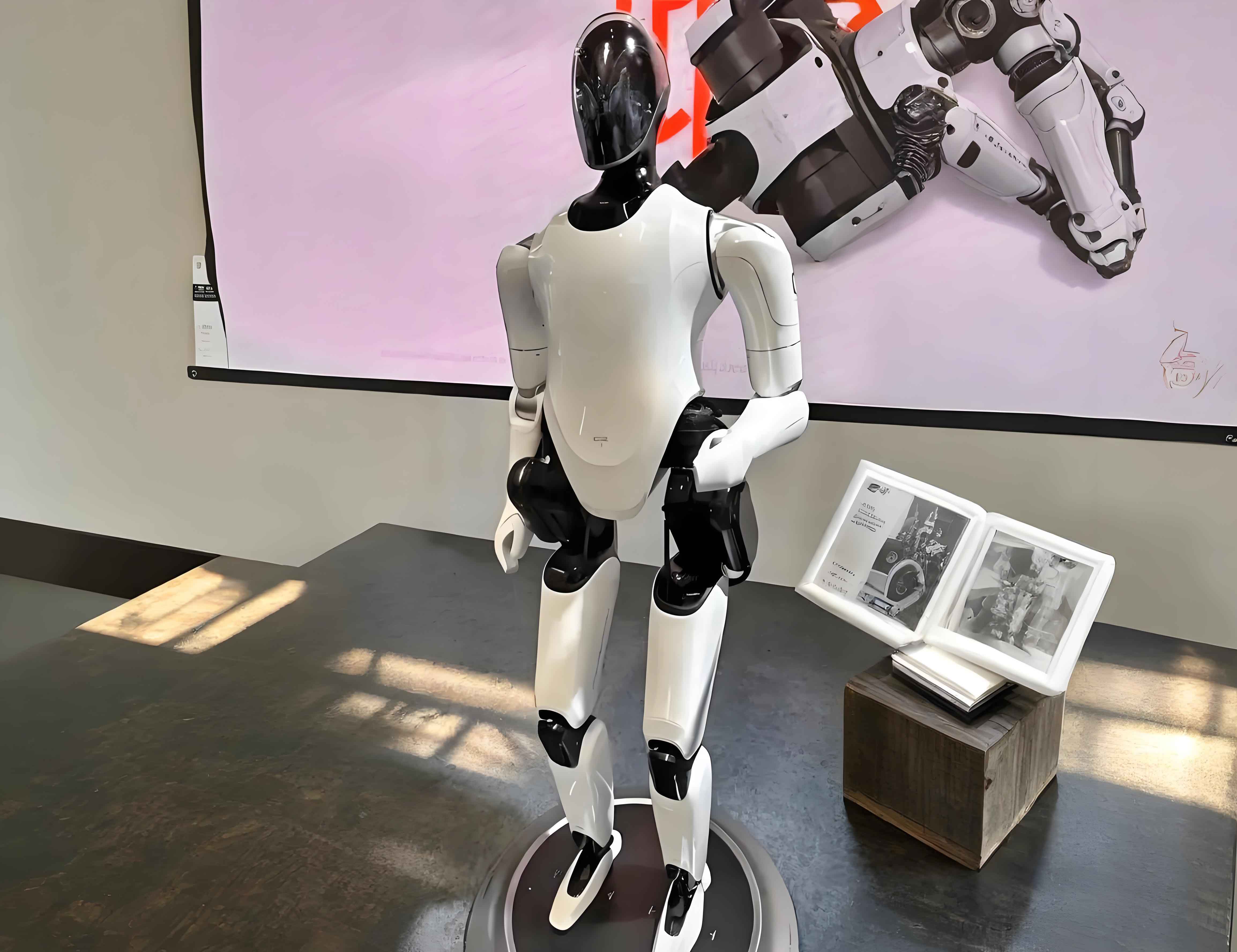
The pathway to commercial viability for an embodied AI robot is intrinsically linked to its application scenarios. The technical complexity and required maturity level vary dramatically across different fields. We can model a scenario’s technical difficulty ($D_s$) as a function of environmental dynamics ($E$), task structure ($T$), and required human-robot interaction complexity ($I$):
$$ D_s = \alpha E + \beta T + \gamma I $$
where $\alpha$, $\beta$, $\gamma$ are weighting coefficients specific to the embodied AI robot‘s capability stack. Guided by policy, current exploration clusters around three primary domains with ascending $D_s$.
| Application Domain | Example Scenarios | Technical & Maturity Characteristics | Policy Emphasis (e.g., from Chinese Regional Plans) |
|---|---|---|---|
| Industrial Manufacturing | Automotive assembly, 3C electronics inspection, component handling, warehouse logistics. | Structured, semi-controlled environments ($E$ low). Repetitive, well-defined tasks ($T$ high). Limited direct HRI ($I$ low). Lower $D_s$ makes this the primary testing ground for first-generation commercial embodied AI robots. | Building demonstration production lines; integrating into smart factory standards; “Humanoid Robot + Manufacturing” projects. |
| Specialized & Hazardous Services | Emergency rescue, fire inspection, explosive ordnance disposal, hazardous material handling. | Highly unstructured and extreme environments ($E$ very high). Critical, often non-repetitive tasks ($T$ low to medium). Remote or supervised operation ($I$ medium). High $D_s$ but offers strong justification for cost. | Encouraging pilot applications in public safety and hazardous industries; “unveiling the roster” mechanisms for specific challenging tasks. |
| Consumer & Professional Services | Healthcare rehabilitation, elderly assistance, domestic service, education, hospitality, retail. | Dynamic human-centric environments ($E$ medium to high). Highly variable, social tasks ($T$ low). Requires sophisticated, safe, and natural HRI ($I$ very high). The highest $D_s$, representing the long-term vision for the embodied AI robot. | Creating “human-robot共生” demonstration environments; opening public service scenarios; fostering B2B2C business models. |
The current stage of technological maturation can be described using a modified version of the Technology Readiness Level (TRL) framework, tailored for embodied AI robots. Most commercial platforms reside between TRL 4 (Component validation in lab environment) and TRL 7 (System prototype demonstration in operational environment). The journey to TRL 9 (Actual system proven in operational environment) requires overcoming compounding challenges. The overall system reliability $R_{sys}$ of an embodied AI robot is a product of the reliability of its interdependent subsystems:
$$ R_{sys} = R_{brain} \times R_{perception} \times R_{control} \times R_{actuation} \times R_{power} $$
where:
$R_{brain}$ = Reliability of the AI reasoning and decision-making stack.
$R_{perception}$ = Reliability of multi-sensor fusion and environment understanding.
$R_{control}$ = Reliability of real-time motion planning and balance control.
$R_{actuation}$ = Reliability of joints, motors, and manipulators.
$R_{power}$ = Reliability of the energy supply and management system.
Each of these $R$ values is currently significantly less than 1, making the cumulative $R_{sys}$ a key bottleneck for safe, unattended operation in complex settings.
Despite the challenges, pioneering enterprises are making tangible progress, moving from laboratory showcases to initial field deployments and pilot orders. Their strategies highlight the diverse approaches to building and commercializing an embodied AI robot.
| Enterprise Type | Representative Examples | Commercialization Focus & Key Pilots | Technological Value Proposition |
|---|---|---|---|
| Integrated Platform Developers | Companies like Ubtech, Fourier Intelligence, Shanghai Zhiyuan. | Deploying humanoid platforms in auto factories for handling/assembly; establishing rehabilitation demonstration bases with hospitals; targeting exhibition/guidance services. | Full-stack development of hardware and software; integration of proprietary or partnered large AI models for embodied intelligence; seeking general-purpose platforms. |
| Specialized Solution Providers | Companies like Pudu Technology, Unitree, Vbot. | Developing commercial service robots for delivery/cleaning; deploying quadruped robots for industrial inspection and firefighting; creating task-specific embodiments for logistics. | Optimizing robot morphology for specific high-demand scenarios (e.g., wheeled + manipulator for delivery); achieving cost-effectiveness and reliability in defined operational domains (OOD). |
| Core Component & Ecosystem Enablers | Various startups and established suppliers in sensors, actuators, joints, simulation software, AI training platforms. | Supplying high-torque density servo motors, force-torque sensors, robotic hands, or simulation environments to platform developers. | Driving down the cost and improving performance of key bottlenecks like actuators ($R_{actuation}$) and enabling mass data generation for training $R_{brain}$ and $R_{perception}$. |
The scalability of these ventures is critically dependent on financial fuel. The capital intensity of developing an embodied AI robot is extreme, encompassing long R&D cycles, expensive hardware iterations, and massive computational costs for AI training. The investment required to reach a production-ready Generation ($G_n$) robot can be modeled as:
$$ I_{total}(G_n) = \sum_{i=1}^{n} (C_{R\&D}(G_i) + C_{hardware}(G_i) + C_{AI\_train}(G_i)) $$
where costs generally increase with each generation’s complexity. The investment landscape is characterized by significant venture capital inflow, but also a strategic push for governmental guidance funds to de-risk early-stage development and steer capital towards national priority areas.
| Fund Type | Primary Objective | Typical Scale | Investment Focus for Embodied AI Robot |
|---|---|---|---|
| National/Regional Government Guidance Funds | Implement industrial policy, fill market gaps in early-stage funding, attract private capital. | Large-scale (e.g., $1B to $10B+). | Core technology breakthroughs (e.g., actuators, chips for robotics), platform-level companies, critical infrastructure (e.g., testing grounds, data platforms). |
| Venture Capital / Private Equity | Seek high-risk, high-return investments in disruptive technologies. | Wide range, from seed to growth stage. | Promising platform startups, differentiated solution providers, enabling technology companies (e.g., vision, tactile sensing). |
| Corporate Strategic Investment | Gain strategic access to technology, foster ecosystem, secure supply chains. | Varies with corporate strategy. | Startups aligned with the corporation’s future product roadmap (e.g., automotive OEMs investing in robotics for factory automation). |
A rational financial model for funding an embodied AI robot startup must account for the extended path to profitability. The required runway ($T_{runway}$) before reaching positive unit economics is long. The future value $V$ of an investment is heavily discounted by the technical and market risks ($r_{tech}$, $r_{market}$):
$$ V = \frac{CF_{terminal}}{(1 + r_{tech} + r_{market})^{T_{runway}}} $$
This equation underscores why patient, strategic capital is essential. The recent trend of establishing large, thematic government-backed industrial funds specifically for robotics and AI aims to lower the effective $r_{tech}$ and $r_{market}$ for domestic companies by providing validation, network access, and longer-term commitment.
The road to ubiquitous embodied AI robots is fraught with interconnected hurdles that extend beyond pure technical R&D. The primary challenges can be categorized as follows:
1. Technological Fragmentation & System Integration: No consensus exists on the optimal architectural paradigm (e.g., central vs. distributed control, model-based vs. learning-based control). This fragmentation hinders the development of standardized software tools and interoperable components, slowing down industry-wide progress and increasing $C_{R\&D}$ for everyone.
2. The Cost-Quality Dilemma: High-performance components necessary for a capable embodied AI robot (e.g., high-precision actuators, multi-modal sensors) remain prohibitively expensive. Achieving the cost reductions seen in other electronics industries is difficult due to the complexity and low initial volumes. The bill of materials (BOM) cost must follow a steep learning curve: $$ BOM_n = BOM_0 \times V_n^{-k} $$ where $V_n$ is the cumulative production volume and $k$ is the learning coefficient. Reaching high $V_n$ requires lower initial cost, creating a classic chicken-and-egg problem.
3. The Data Desert for Embodiment: Training a robust $R_{brain}$ and $R_{perception}$ requires vast amounts of diverse, real-world interaction data. Collecting this “embodiment data” is slow, expensive, and often dangerous. Simulation helps but faces the reality gap. The data generation rate is a critical limiting factor.
4. Regulatory & Social Acceptance Vacuum: Frameworks for safety certification, liability, data privacy, and ethical deployment of autonomous embodied AI robots, especially in human spaces, are largely undeveloped. Public apprehension about job displacement and safety incidents could severely constrain market growth.
To navigate these challenges and solidify a leading position in the era of embodied intelligence, a multi-pronged, synergistic approach is necessary:
A. Coordinated, Differentiated Regional Development: National policy should encourage regions to specialize based on their comparative advantages (e.g., hardware manufacturing clusters, AI research hubs, application-rich sectors) to avoid redundant, cut-throat competition and build a robust, complementary national ecosystem for the embodied AI robot industry.
B. Strengthening Application-Pull Mechanisms: Beyond funding R&D, policies must actively catalyze demand. This includes public procurement for pilot projects in municipal services, tax incentives for companies that deploy robots, and creating “regulatory sandboxes” for testing in real-world environments like airports or hospitals. This accelerates the data collection and iteration cycle.
C. Fostering Open Platforms & Standards: Encouraging the development of open-source software frameworks, modular hardware interfaces, and shared benchmarking datasets can reduce duplication of effort, attract broader developer talent, and accelerate innovation, ultimately lowering the entry barrier and improving $R_{sys}$ for all.
D. Building a Mature Tech-Finance Talent Pipeline: The field requires a new breed of engineers and scientists skilled in mechatronics, AI, cognitive science, and systems integration. Expanding interdisciplinary university programs, industry-sponsored research chairs, and hands-on training facilities is crucial. Simultaneously, cultivating venture capitalists and fund managers who understand the deep-tech lifecycle of an embodied AI robot is needed to ensure smart capital allocation.
In conclusion, the development of the embodied AI robot is not a simple linear engineering challenge but a complex sociotechnical evolution. Success will be determined not only by breakthroughs in algorithms and actuators but by the effective orchestration of policy, capital, talent, and market creation. The current strategic layouts being implemented globally represent the opening moves in a long game to define the next platform for human productivity and interaction. The nation or region that best manages to integrate technological innovation with systemic ecosystem cultivation will be poised to lead the embodied intelligence revolution, turning today’s prototype machines into tomorrow’s indispensable partners in work and life.