
The evolution of artificial intelligence is undergoing a fundamental transition, moving beyond the realm of pure data and algorithms confined to servers and screens. We are entering the era of the Embodied AI Economy, a new economic paradigm where intelligence is not just computed but enacted through physical interaction with the world. This economy is driven by embodied AI robots—systems that integrate perception, cognition, and action within a physical body to perform tasks autonomously in complex, unstructured environments. This marks a shift from cloud-centric, virtual intelligence to a model where the physical and digital worlds converge, creating a novel, systemic economic form characterized by innovation-driven growth, deep physical dependency, cross-sectoral fusion, and robust ecological interdependencies.
This transformation represents more than a technological upgrade; it signifies a reconfiguration of production factors, industrial networks, and value creation mechanisms. The core agent of this change is the embodied AI robot, which acts as the tangible interface between algorithmic intelligence and the physical realm. The economic implications are profound, promising to reshape industries from manufacturing and logistics to healthcare and personal services. The following analysis explores the definition, drivers, manifestations, and challenges of this emerging economy, utilizing frameworks, models, and empirical observations to chart its developmental trajectory.
Defining the Embodied AI Economy
The Embodied AI Economy can be defined as the totality of industrial systems and economic activities arising from the deep integration of embodied intelligence technologies, their interactive environments, application scenarios, and the supporting ecosystem. It is distinguished from the broader digital economy (focused on datafication and connectivity) and the AI economy (centered on the “compute-data-algorithm” triad) by its foundational principle: intelligence requires a body to interact with and learn from the physical world. The value is generated not merely through data processing but through situated, physical execution and adaptation.
The operational core of this economy is the embodied AI robot, whose effectiveness can be conceptualized by a modified production function. While traditional models consider capital (K) and labor (L), we must now account for robotic capital (R). A simplified representation is:
$$ Y = A \cdot K^{\alpha} L^{\beta} R^{\gamma} $$
where \(Y\) is economic output, \(A\) represents total factor productivity (significantly boosted by AI), and \(\gamma\) captures the output elasticity of embodied AI robot capital. The critical insight is that \(A\) itself is a function of the learning and data generated by these robots’ interactions: \(A = f(\text{Embodied Experience Data})\). This creates a potential for increasing returns to scale specific to this factor.
Product Forms and the Industrial Chain Panorama
The manifestations of the Embodied AI Economy can be categorized into three primary product forms, each representing an evolutionary stage in human-machine collaboration.
| Product Form | Core Function | Key Economic Impact | Example of Embodied AI Robot |
|---|---|---|---|
| Labor Imitation & Substitution | Performs repetitive, precise, or hazardous tasks in structured/semi-structured environments. | Raises productivity, reduces operational risk and cost, reallocates human labor to higher-value tasks. | Industrial assembly robots, warehouse logistics AMRs. |
| Emotional Companionship & Care | Provides social interaction, cognitive assistance, and basic physical aid, primarily for elderly or children. | Addresses labor shortages in care sectors, improves quality of life, creates new service markets. | Elderly companion robots, educational assistant robots. |
| Human Augmentation & Creative Collaboration | Assists in precision work (e.g., surgery) or enhances human creativity through real-time feedback and co-processing. | Amplifies human capability, enables new forms of innovation and artistry, reduces error rates in critical tasks. | Surgical robotics platforms, co-creative design robots. |
The progression from substitution to augmentation outlines the trajectory from economic efficiency gains to entirely new value creation paradigms. The industrial chain supporting these forms is complex and multi-layered. At its heart, a functional embodied AI robot requires the integration of a “Brain” (high-level decision-making, often powered by large models), a “Cerebellum” (real-time sensorimotor control), and a “Body” (actuators, sensors, mechanical structure). Externally, the产业链 spans upstream (core components: sensors, chips, actuators), midstream (system integration,本体 manufacturing), and downstream (deployment in specific application scenarios). The following panorama illustrates this ecosystem:
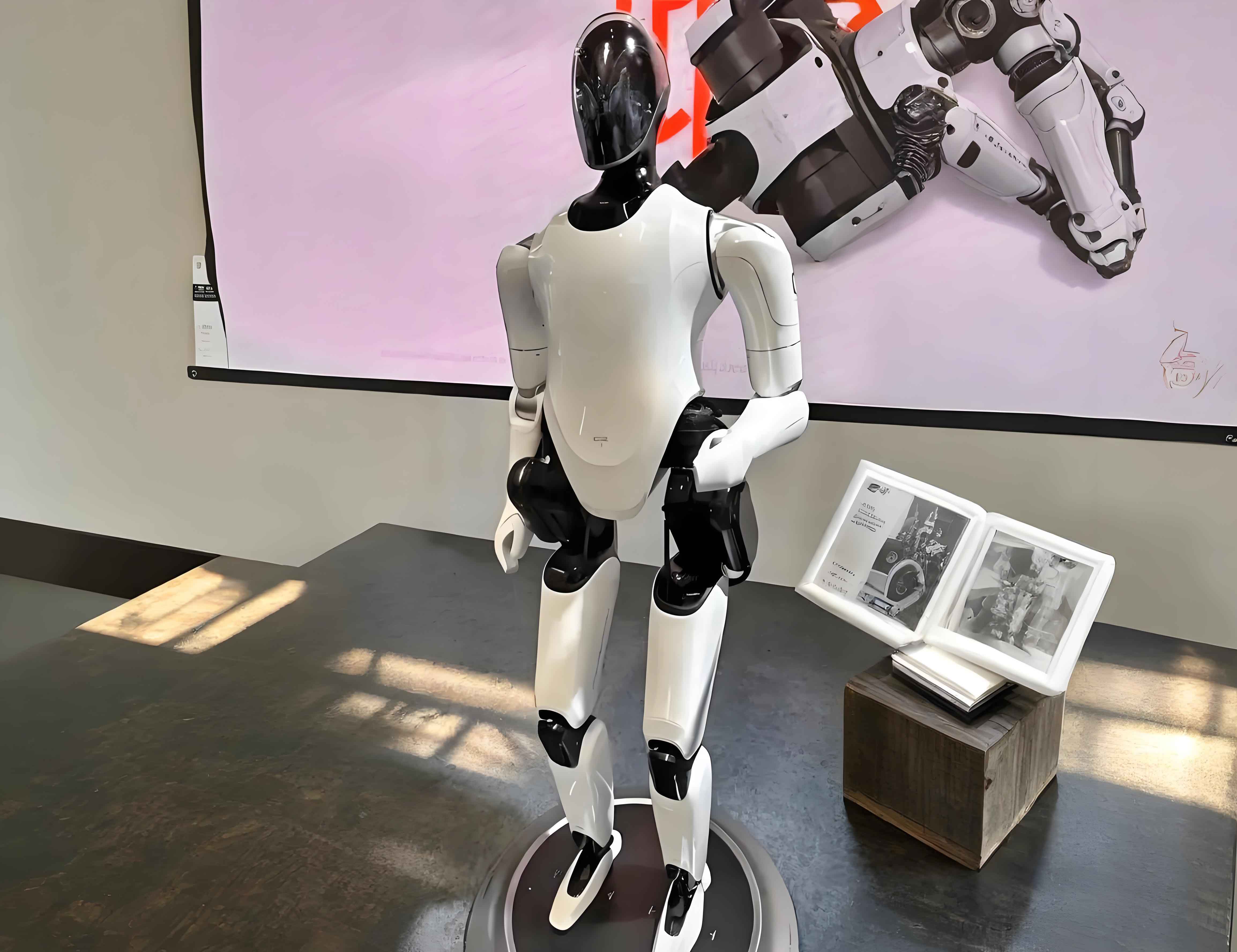
The complexity and length of the midstream and downstream value chains highlight the system-integration and application-adaptation challenges that are central to the economics of this field.
Techno-Economic Characteristics
The Embodied AI Economy exhibits four defining characteristics that shape its development dynamics and policy needs.
1. Innovation-Driven Nature: It is currently in a technology-supply-driven phase. Progress hinges on breakthroughs in two key areas: Embodiment Technologies (high-precision actuators, durable and flexible materials, advanced proprioceptive sensors) and Intelligent Decision-Making (multimodal large models for scene understanding, reinforcement learning for physical skill acquisition). The performance of an embodied AI robot is a multiplicative function of its hardware capabilities and its software intelligence, not a simple sum.
2. Physical Dependency: Unlike pure software AI, value creation is intrinsically tied to hardware performance and environmental interaction. The operational efficacy \(E\) of an embodied AI robot can be modeled as constrained by its physical parameters and environment:
$$ E = I(S, D) \cdot \Phi(P, E_{nv}) $$
where \(I\) is the intelligence function (based on Software \(S\) and Data \(D\)), and \(\Phi\) is the physical feasibility function, dependent on the robot’s Physical parameters \(P\) (e.g., degrees of freedom, power density) and the Environmental conditions \(E_{nv}\) (e.g., terrain, lighting, obstacle density).
3. Cross-Domain Fusion: It inherently involves the convergence of disciplines (robotics, AI, cognitive science, materials science) and industries (IT, advanced manufacturing, automotive, healthcare). This fusion creates combinatorial innovation but also requires unprecedented levels of cross-sectoral coordination.
4. Systemic Ecology: Value is generated and captured within a dense network of actors: governments, core tech firms, component suppliers, integrators, end-users, research institutes, and investors. The health of the economy depends on the synergistic interactions within this ecosystem.
The Four Evolutionary Dynamics: A Formal Perspective
The growth of the Embodied AI Economy is propelled by four interlocking effects, which can be framed using economic and systems theory.
1. Scale Effect: The Paradigm Shift. This represents the transition from virtual to physical AI deployment. The key driver is the falling cost per capability unit of the embodied AI robot. A learning curve model applies:
$$ C_t = C_0 \cdot N_t^{-b} $$
where \(C_t\) is the unit cost at time \(t\), \(C_0\) is the initial cost, \(N_t\) is the cumulative production volume, and \(b\) is the learning elasticity. As \(N\) grows—fueled by manufacturing scale and design standardization—costs drop, enabling wider adoption, which in turn feeds back into larger \(N\). This effect transforms the embodied AI robot from a capital good into a scalable “smart labor” factor.
2. Activation Effect: Knowledge Spillover. Breakthroughs in core technologies for embodied AI robots (e.g., a new actuator design or a more sample-efficient training algorithm) spill over into adjacent industries, activating latent productivity. This can be seen as an expansion of the technological opportunity set. If \(T\) represents the technology frontier, its expansion \(\Delta T\) due to embodied AI innovations positively affects productivity \(A\) in multiple sectors \(i\):
$$ \Delta A_i = g(\Delta T_{Embodied AI}, \text{Absorptive Capacity}_i) $$
This activation is particularly potent in sectors with high physical interaction components, such as logistics, construction, and agriculture.
3. “Head Goose” Effect: Strategic Leadership. Leading firms or breakthrough platforms in the embodied AI robot space set de facto standards and create demand pull for the entire supply chain. Their R&D investments de-risk technologies for followers. This effect strengthens industrial agglomeration. The profit \(\pi_j\) for a downstream firm \(j\) using the leading platform can be modeled as:
$$ \pi_j = V_j – \int_{0}^{k} c(x) dx $$
where \(V_j\) is the value created in its application, and the integral represents the cost of adopting/complementing the leading platform’s technology suite \(k\), which decreases as the platform matures and ecosystems form around it.
4. “Flywheel” Effect: The Self-Reinforcing Cycle. This is the core growth engine. A positive feedback loop is established between Technology (T), Data (D), and Scenarios (S).
$$ T_{n} \xrightarrow{\text{enables}} S_{n} \xrightarrow{\text{generates}} D_{n} \xrightarrow{\text{trains/improves}} T_{n+1} \xrightarrow{\text{enables}} S_{n+1} … $$
The data \(D\) collected from real-world interactions is uniquely valuable because it is grounded and context-dependent. This “flywheel” exhibits network effects. The value \(V\) of the entire embodied AI ecosystem can relate to the number of deployed robots \(n\) and the diversity of scenarios \(m\) through a Metcalfe-like law modified for physical intelligence:
$$ V \propto n \cdot m \cdot \overline{I} $$
where \(\overline{I}\) is the average interaction intelligence per robot-scenario pair. Once critical mass in \(n\) and \(m\) is reached, the flywheel effect accelerates non-linearly.
Typical Application Scenarios and Economic Potential
The theoretical dynamics described above materialize in several key verticals, each at a different stage of maturity.
| Scenario | Current Stage | Key Embodied AI Robot Role | Economic Driver & Metric | Projected Market Scale |
|---|---|---|---|---|
| Industrial Robotics | Mature, transitioning to adaptive “cobots”. | Precision assembly, material handling, quality inspection. | Robot Density (units/10k workers), Overall Equipment Effectiveness (OEE). | ~$55 Billion by 2032 (Fortune Business Insights). |
| Autonomous Driving | L4 development, L2+ deployment. | Perception, path planning, and vehicle control in dynamic environments. | Cost per safe mile, traffic efficiency improvement, new Mobility-as-a-Service (MaaS) revenue. | ~$1.2 Trillion by 2035 (Boston Consulting Group). |
| Humanoid Robots | Early R&D & prototyping, initial niche deployments. | General-purpose manipulation and mobility in human-centric spaces (factories, homes). | Task success rate, mean time between failures (MTBF), cost per human-equivalent task hour. | Potential for $ billions by 2040s; long-term projections up to $ trillion-scale. |
In industrial settings, the embodied AI robot is optimizing lean manufacturing. In autonomous driving, it is restructuring the transportation and logistics cost model. The humanoid embodied AI robot represents the frontier, aiming to become a general-purpose capital good capable of flexible labor across multiple domains, with immense potential in addressing demographic challenges like aging societies.
Critical Constraints and Impediments
Despite its promise, the maturation of the Embodied AI Economy faces significant bottlenecks that can dampen the evolutionary dynamics.
| Constraint Category | Specific Challenges | Effect on Evolutionary Dynamics |
|---|---|---|
| Technological & Cost | High cost of core components (e.g., force-torque sensors, precision reducers). Limited dexterity and robust decision-making in unstructured settings. “Sim2Real” gap for efficient training. | Suppresses Scale Effect, slows the initiation of the Flywheel Effect due to high initial deployment cost and low n. |
| Industrial Deployment | Lack of standardized interfaces and modular architectures. Unclear ROI for many potential applications. Fragmented, siloed industrial ecosystems. | Weakens the “Head Goose” Effect by preventing platform dominance and ecosystem cohesion. Limits Activation Effect across sectors. |
| Infrastructure | Insufficient edge-computing power for real-time control. Inconsistent and high-latency communication networks (needed for swarm/cloud robotics). Unstable or inefficient energy supply for sustained operation. | Constrains the physical performance \(\Phi\) of the embodied AI robot, directly limiting scenario expansion (S) and thus the Flywheel. |
| Systemic Risk | Safety and liability frameworks for physical AI agents. Data privacy and security for pervasive sensors. Workforce displacement and social acceptance issues. Ethical concerns around autonomous decision-making with physical consequences. | Creates regulatory and social friction, potentially imposing a “risk tax” or moratoriums that can halt the Flywheel and trigger negative public perception. |
These constraints are interconnected. High costs (Constraint 1) deter deployment, which in turn prevents the data collection (Constraint 2) needed to improve technology and prove ROI, while infrastructure gaps (Constraint 3) limit the performance of even well-designed systems.
Strategic Pathways for Development
To overcome these constraints and catalyze the positive dynamics, a multi-pronged, synergistic strategy is essential. The goal is to create a coherent innovation system that aligns technological push with market pull.
| Strategic Pillar | Concrete Policy & Action Levers | Intended Impact on Dynamics |
|---|---|---|
| Core Technology Breakthrough | National R&D programs targeting “bottleneck” components (actuators, specialized AI chips). Funding for interdisciplinary research in embodied cognition and world models. Support for open-source software platforms and middleware (e.g., ROS 2). | Directly lowers \(C_0\) and raises performance \(I\) and \(\Phi\), fueling the Scale and Flywheel effects. Open platforms strengthen the “Head Goose” Effect for ecosystem leaders. |
| Infrastructure Modernization | Strategic deployment of 5G/6G and edge computing nodes in industrial parks and pilot cities. Establish testbeds and “regulatory sandboxes” for real-world experimentation. Incentivize green energy solutions for robotic operations. | Improves the environmental function \(\Phi\) and enables more complex, valuable scenarios (S), directly accelerating the Flywheel. |
| Ecosystem Cultivation & Collaboration | Foster industry consortia to develop interoperability standards. Implement “scenario opening” initiatives where public sectors (hospitals, transport) pose challenges for embodied AI robot solutions. Create innovation clusters that co-locate research, prototyping, and manufacturing. | Increases the diversity and number of scenarios \(m\), facilitating cross-sector Activation. Clustering amplifies knowledge spillovers and strengthens the overall ecosystem. |
| Governance & Talent Development | Develop adaptive, risk-based safety certification for different classes of embodied AI robots. Invest in STEM education with a focus on robotics and AI ethics. Establish reskilling programs for workforces impacted by automation. | Mitigates Systemic Risks, building public trust and social license to operate, which is essential for sustained scale. Develops the human capital needed to drive and complement embodied AI. |
The successful development of the Embodied AI Economy hinges on recognizing it as a complex adaptive system. Policy must move beyond linear support for R&D to actively shape the interactions between technology, market, infrastructure, and society. The nation or region that most effectively orchestrates these elements, lowers the friction for the flywheel effect to spin, and responsibly manages the transition will be poised to lead in this next chapter of intelligent, physical automation, harnessing the embodied AI robot as the cornerstone of a new, more productive, and adaptive economic era.