
As I reflect on the rapid evolution of artificial intelligence, I am increasingly convinced that embodied AI robots represent a transformative leap in technology. These systems, which integrate physical form with advanced cognitive capabilities, are poised to reshape industries, healthcare, education, and daily life. However, this promise comes with profound risks that demand a robust governance framework. From my perspective, ensuring the safe and ethical development of embodied AI robots is not just a technical challenge but a societal imperative. In this article, I will explore effective regulatory pathways, drawing on principles of risk assessment, certification, liability allocation, and ethical governance, all while emphasizing the centrality of human oversight.
The core of regulating embodied AI robots lies in acknowledging that “uncontrolled innovation is the greatest insecurity.” As a proponent of human-centric AI, I believe we must always retain mastery over these technologies. Embodied AI robots should serve as assistants, not masters, and must be designed without capacity for self-training, self-replication, or autonomous evolution. This necessitates legal frameworks that uphold human agency, including rights to intervene in embodied AI robot operations. Globally, fragmented governance could incentivize companies to relocate high-risk activities to regions with lax oversight, triggering a “race to the bottom” in standards. Thus, international coordination, perhaps through a United Nations-led body, is essential to mitigate risks posed by embodied AI robots. I advocate for a proactive approach where nations collaborate to establish norms that balance innovation with safety.
To begin, scientific risk assessment is the cornerstone of regulating embodied AI robots. I propose a structured methodology where risks are evaluated systematically before deployment. This aligns with guidelines that emphasize assessing uncertainties and potential misuses. For embodied AI robots, risks can be categorized into five levels, as summarized in Table 1.
| Risk Level | Description | Management Measures |
|---|---|---|
| No Risk | Negligible impact; safe for deployment. | No restrictions; monitor periodically. |
| Low Risk | Minor reversible effects; limited scope. | Basic safeguards; user guidelines. |
| Medium Risk | Moderate impact; may affect safety or privacy. | Enhanced controls; mandatory audits. |
| High Risk | Severe consequences; potential for harm. | Strict regulations; pre-market approval. |
| Unacceptable Risk | Catastrophic outcomes; violates ethical norms. | Prohibition on research and development. |
I argue that for embodied AI robots, assessment should focus on algorithm impact and personal data protection. Algorithm impact evaluation involves analyzing the embodied AI robot’s decision-making processes to gauge risk levels. A dynamic model can represent this: $$ R_a = \sum_{i=1}^{n} w_i \cdot S_i $$ where \( R_a \) is the algorithm risk score, \( w_i \) are weights for factors like bias and transparency, and \( S_i \) are scores from audits. This ensures that embodied AI robots undergo independent scrutiny before use in public or commercial settings. Similarly, personal information protection impact assessments are crucial, as embodied AI robots often process sensitive data. I recommend a formula for data risk: $$ D_r = P_{breach} \times I_{severity} $$ where \( D_r \) is data risk, \( P_{breach} \) is probability of a breach, and \( I_{severity} \) is impact severity. Such assessments help embed privacy-by-design in embodied AI robot development.
Furthermore, certification systems play a vital role in ensuring the safety of embodied AI robots. As I see it, certification offers expertise and efficiency in regulation. For embodied AI robots, we need both traditional quality certifications and novel data-centric ones. Table 2 outlines key certification types.
| Certification Type | Focus Area | Standards Required |
|---|---|---|
| Product Safety | Hardware reliability and physical safety. | ISO 13482 for personal care robots. |
| Data Security | Protection of data processed by embodied AI robot. | Based on Data Security Management Rules. |
| Personal Information Protection | Compliance with privacy laws and ethics. | Aligns with Personal Information Protection Certification Rules. |
| Algorithmic Fairness | Bias mitigation and transparency in AI decisions. | Emerging standards for algorithmic accountability. |
I emphasize that certification bodies must be independent and professional. While voluntary certification suits most cases, mandatory certification should apply to high-risk embodied AI robots, such as those used in healthcare or critical infrastructure. To support this, we need granular standards. A risk-based, classification approach is essential—what I call “differential regulation.” For example, an embodied AI robot in manufacturing might face lighter rules than one in elder care. This avoids “one-size-fits-all” pitfalls and fosters innovation while managing risks of embodied AI robots.
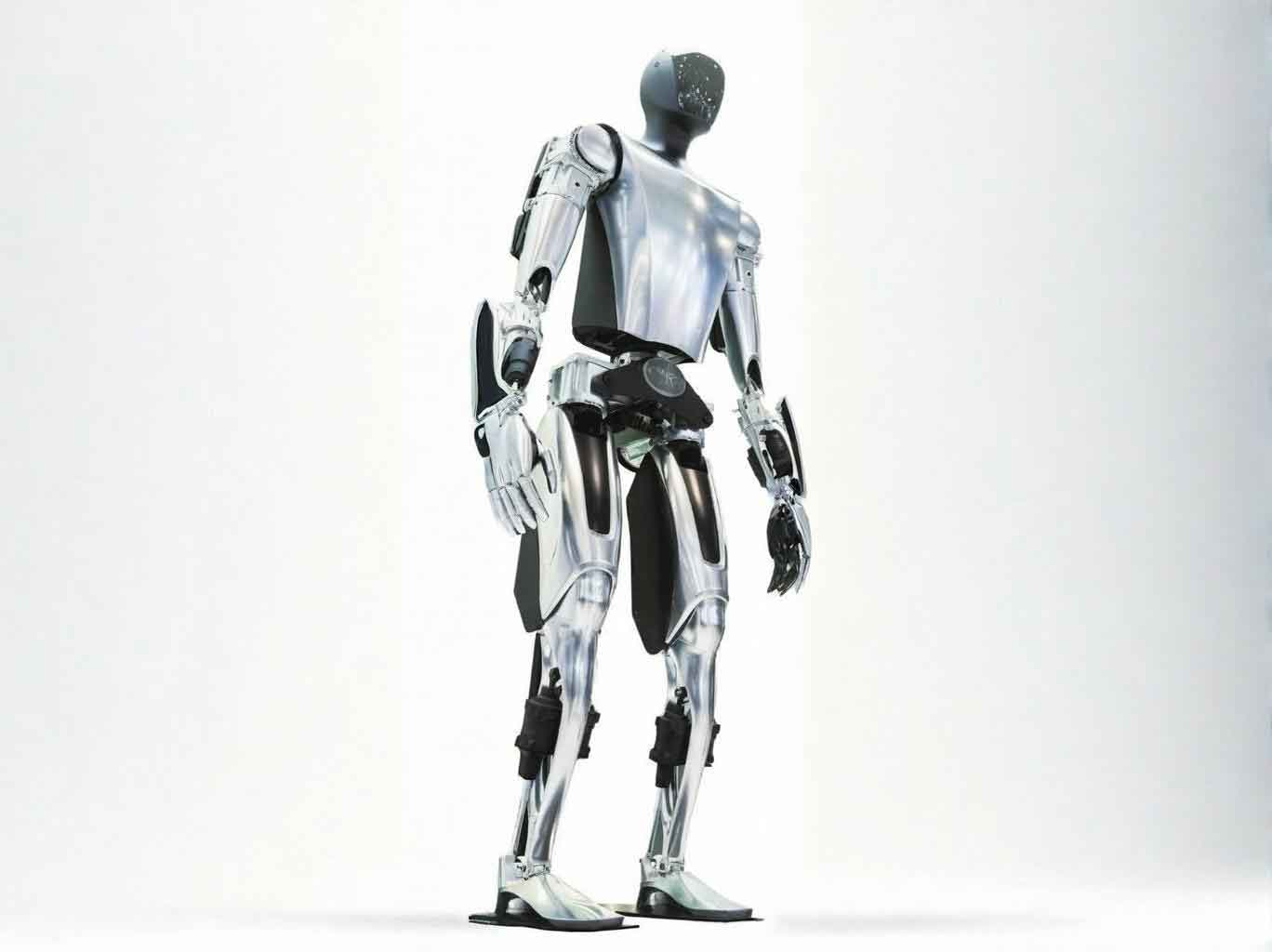
In discussing responsibility, I contend that embodied AI robots cannot be legal persons. Despite their human-like appearance and learning abilities, they lack free will and moral agency. Thus, we must avoid the “embodied AI robot trap” of over-anthropomorphization, which might let developers shirk liability. Instead, responsibility should be allocated among human actors. Table 3 summarizes the key stakeholders and their duties.
| Stakeholder | Primary Responsibilities | Liability Basis |
|---|---|---|
| Developers | Design safe algorithms; ensure ethical coding; update systems. | Strict liability for defects; risk-benefit principle. |
| Producers | Manufacture reliable hardware; comply with safety standards. | Product liability laws. |
| Software Designers | Create robust software; mitigate biases in embodied AI robot. | Negligence or warranty claims. |
| Users | Operate as intended; report malfunctions. | Contributory negligence if misused. |
| Regulators | Set and enforce standards; monitor embodied AI robot deployments. | Administrative accountability. |
From my viewpoint, developers should bear significant responsibility, even for incidents arising from an embodied AI robot’s deep learning, as they profit from the technology and can disperse costs through pricing. Insurance mechanisms, like first-set insurance pilots, can balance interests by providing victim compensation without stifling innovation. This is crucial for embodied AI robots, where accidents may have widespread impacts.
Moreover, technological innovation must harmonize with ethical norms. I believe that embodied AI robots should be infused with “artificial morality” to align with human values. Ethical guidelines should precede legal rules, offering flexibility across diverse applications of embodied AI robots. A framework for algorithm justice can be expressed as: $$ E = \int_{0}^{T} (F + S + T – D) \, dt $$ where \( E \) is ethical compliance over time \( T \), and \( F, S, T, D \) represent fairness, safety, transparency, and non-discrimination scores, respectively. This integral emphasizes continuous ethical monitoring throughout the lifecycle of an embodied AI robot. Institutions should establish ethics review boards and set risk thresholds, holding actors accountable for breaches. By embedding ethics into design, we ensure that embodied AI robots act as benevolent partners rather than threats.
In conclusion, regulating embodied AI robots requires a multi-faceted approach. I advocate for risk-based assessments that categorize threats, rigorous certification for data and safety, clear liability frameworks that reject AI personhood, and strong ethical governance to promote human flourishing. As embodied AI robots become more integrated into society—perhaps even as emotional companions—we must prioritize oversight that fosters trust. Through international cooperation and adaptive policies, we can harness the potential of embodied AI robots while safeguarding our future. The journey is complex, but with thoughtful regulation, embodied AI robots can truly enhance human well-being.