
In my view, the integration of AI large models with embodied AI robots represents a pivotal shift in technology, one that promises to redefine human-machine interaction. As I reflect on recent advancements, I see a clear trajectory where these two domains are not just complementary but essential for each other’s evolution. This article explores this convergence from a first-person perspective, delving into technical aspects, applications, and future implications, all while emphasizing the role of embodied AI robots as the physical manifestation of artificial intelligence.
The rapid progression of AI large models, such as the GPT series and Sora, has been astounding. I recall how ChatGPT, upon its release, achieved unprecedented user growth, marking 2023 as the “Year of AI” and AIGC. These models have transformed foundational tools by leveraging data and computational power, enabling breakthroughs in natural language processing, image recognition, and content generation. For instance, models like GPT-5 are undergoing rigorous testing, with reports indicating significant performance leaps. This evolution is not merely about software; it’s about bridging the digital and physical worlds. Embodied AI robots, such as humanoid platforms, are emerging as ideal vessels for these capabilities, allowing AI to interact directly with our environment. I believe this synergy will unlock new levels of autonomy and intelligence, making robots more than just machines—they become partners in daily tasks.
To understand this convergence, let’s break down the components. AI large models serve as the “knowledge containers” for embodied AI robots. They provide cognitive abilities like semantic understanding, dynamic planning, and multi-modal signal processing. In my analysis, when integrated into robots, these models enable a shift from passive to active interaction. For example, a robot can now interpret human commands, such as understanding hunger and fetching an apple, thanks to enhanced emotional perception from large models. This is not an isolated case; various startups and companies are embedding models like Huawei’s PanGu into humanoid robots to teach them real-world physics. The result is a smarter, more adaptable embodied AI robot that can learn from experiences rather than relying solely on pre-programmed instructions.
The technical underpinnings of this integration involve complex algorithms and hardware. Below is a table summarizing key large models and their potential applications in embodied AI robots:
| AI Large Model | Key Capabilities | Integration with Embodied AI Robot | Example Use Case |
|---|---|---|---|
| GPT-5 (OpenAI) | Advanced NLP, reasoning, multi-modal understanding | Enables natural dialogue and task execution in humanoid robots | Human-robot collaboration in manufacturing |
| Sora (OpenAI) | Video generation, physics simulation | Provides visual training data for robot perception | Simulating environments for robot training |
| PanGu (Huawei) | Semantic comprehension, dynamic planning | Empowers robots to learn physical laws | Educational and service robotics |
| Custom Models (Startups) | Specialized in vertical domains | Tailors cognitive functions for specific robot tasks | Healthcare and elderly care assistance |
As I delve deeper, the concept of embodied intelligence—often termed “cognitive intelligence plus action intelligence”—becomes crucial. Embodied AI robots combine motion control technology with AI-driven cognition, allowing them to interact with the physical world. This interaction generates vast amounts of data, which can be used to train large models more efficiently. In traditional training, models rely on web data, but with embodied AI robots, they can gather real-world, discrete data. For instance, to learn how to open a refrigerator door, a robot can尝试 multiple attempts, recording forces and outcomes. This process reduces “hallucinations” or errors in AI predictions. The learning efficiency can be modeled using a formula:
$$ \eta = \frac{D_{\text{physical}}}{T_{\text{training}}} $$
where $\eta$ represents learning efficiency, $D_{\text{physical}}$ is data from physical interactions, and $T_{\text{training}}$ is training time. Higher $\eta$ indicates better real-world adaptation, a key advantage for embodied AI robots.
The computational demands of this integration are substantial. Large models, especially those handling video like Sora, require immense token processing. For a 60-frame video (about 6-8 seconds), Sora may need to generate over 1.2 million tokens. This can be expressed as:
$$ \text{Tokens}_{\text{total}} = N_{\text{frames}} \times \text{Tokens}_{\text{per frame}} $$
where $N_{\text{frames}}$ is the number of frames, and $\text{Tokens}_{\text{per frame}}$ averages around 20,000 for high-quality video. Such computational loads drive the need for advanced AI chips and high-performance computing systems. In my opinion, this underscores the importance of算力 in realizing the “text-to-everything” dream, where AI can generate not just text but actions in embodied AI robots.
Applications of embodied AI robots are expanding rapidly. In manufacturing, they offer flexibility and self-learning capabilities compared to traditional industrial robots. When production lines change, an ideal embodied AI robot can autonomously locate workstations and objects. This transforms human-robot collaboration from passive to active, potentially redefining labor value. Below is a table highlighting application areas and benefits:
| Application Domain | Role of Embodied AI Robot | Benefits |
|---|---|---|
| Manufacturing | Assembly, quality inspection, part handling | Reduces downtime, adapts to line changes, enhances productivity |
| Healthcare | Elderly care, rehabilitation, surgical assistance | Provides 24/7 support, improves patient outcomes, reduces staff burden |
| Education | Tutoring, interactive learning | Personalizes education, engages students through physical presence |
| Service Industries | Customer service, logistics, cleaning | Increases efficiency, handles repetitive tasks, improves user experience |
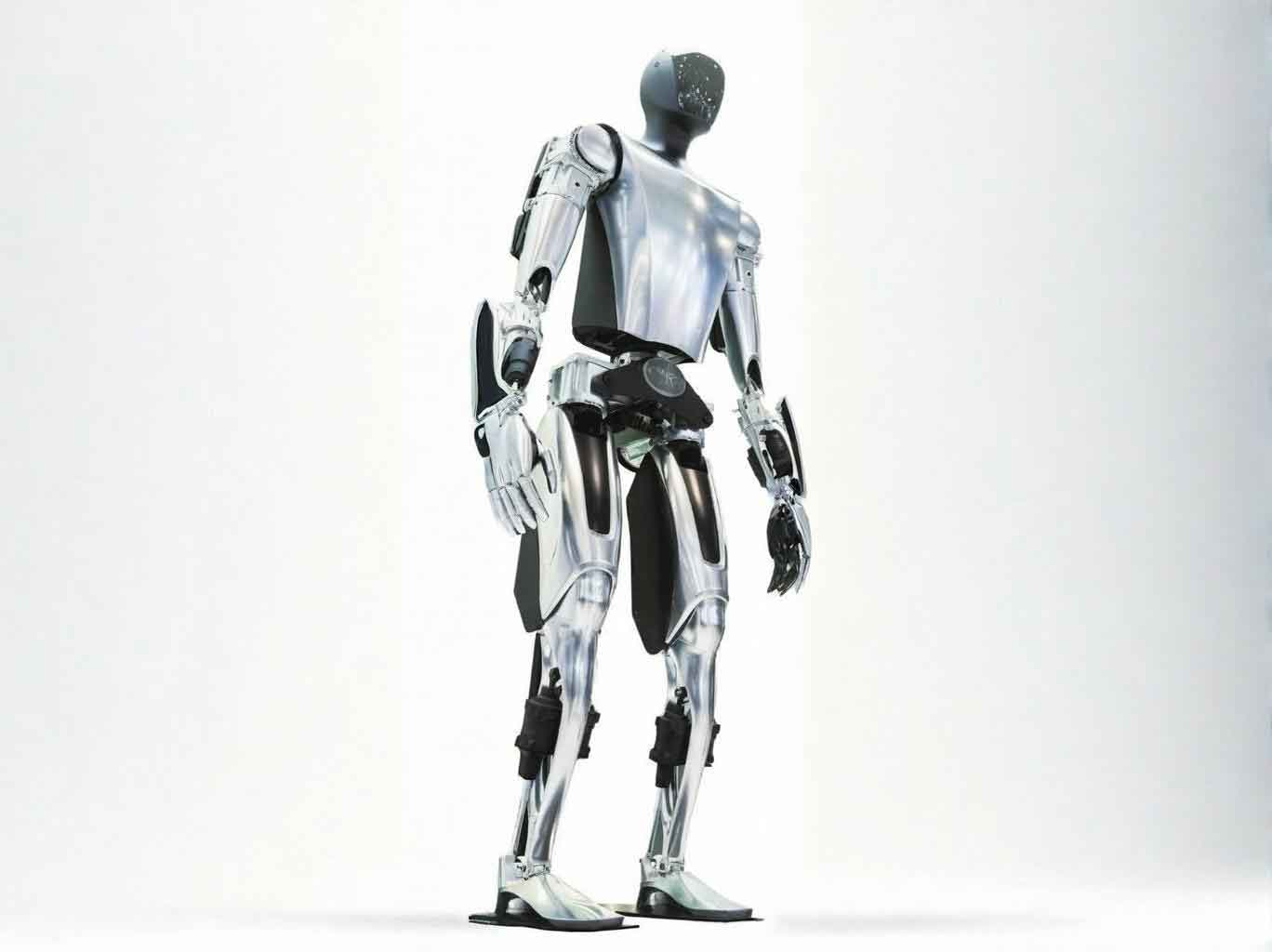
In manufacturing settings, embodied AI robots are already making strides. I observe that companies are deploying them for tasks like picking and placing components, demonstrating their value in structured environments. However, challenges remain in unstructured settings, where robots lack scene recognition and cognitive abilities. This limitation hinders commercialization, but large models can mitigate it by providing the missing cognitive layer. By establishing data transmission channels between models and robots, we can accelerate the adoption of embodied AI robots. In essence, large language models and multi-modal models are prerequisites for embodied intelligence, enabling a shift from program execution to task-oriented behavior.
Looking ahead, the market for embodied AI robots is poised for explosive growth. According to forecasts, the global humanoid robot market could see a compound annual growth rate of over 70% from 2021 to 2030, reaching billions in value. This growth is fueled by factors like aging populations, which increase demand for robotic assistance in caregiving and medicine. Simultaneously, AI large models are penetrating vertical domains, moving into the “deep water” of applications. As these models mature, they will offer more specialized options for embodied AI robots, akin to choosing a “brain” for different tasks. I predict that this synergy will spur innovation in AI chips, as算力 becomes the core battleground for technological supremacy.
The convergence also raises ethical and societal considerations. As embodied AI robots become more integrated into daily life, questions about job displacement, privacy, and autonomy emerge. In my perspective, it’s essential to develop frameworks that ensure safe and equitable deployment. For example, transparency in AI decision-making within robots can build trust. Moreover, continuous learning from physical interactions should be governed by ethical guidelines to prevent misuse. These aspects are integral to the responsible advancement of embodied AI robots.
To quantify the progress, let’s consider a formula for the overall intelligence of an embodied AI robot:
$$ I_{\text{robot}} = \alpha \cdot C_{\text{cognitive}} + \beta \cdot C_{\text{action}} $$
where $I_{\text{robot}}$ is the robot’s intelligence score, $C_{\text{cognitive}}$ represents cognitive capabilities from large models, $C_{\text{action}}$ denotes action intelligence from motion control, and $\alpha$ and $\beta$ are weighting factors based on application. As large models improve, $\alpha$ increases, enhancing the robot’s adaptability.
In conclusion, the marriage of AI large models and embodied AI robots is not just a technological trend but a transformative force. From my standpoint, this convergence will drive the next wave of AI, creating intelligent agents that combine wisdom with行动力. As we advance, we must focus on interdisciplinary collaboration, investing in research that bridges AI software and robotic hardware. The future holds promise for embodied AI robots that can learn, adapt, and coexist with humans, ultimately shaping new productive forces and产业格局. I am optimistic that this journey will lead to smarter, more empathetic machines, redefining what it means to be intelligent in a physical world.
To further illustrate the technical landscape, here’s a table comparing key challenges and solutions for embodied AI robots:
| Challenge | Description | Solution via AI Large Models |
|---|---|---|
| Unstructured Environment Adaptation | Robots struggle with dynamic, unpredictable settings | Multi-modal models provide real-time scene understanding and planning |
| Data Scarcity for Training | Limited real-world data for specific tasks | Embodied AI robots generate proprietary data through physical interaction, enriching model training |
| High Computational Costs | Token processing and simulation require significant算力 | Optimized AI chips and distributed computing systems |
| Human-Robot Communication Gaps | Misinterpretation of commands or emotions | Advanced NLP models enable natural, context-aware dialogue |
In my ongoing exploration, I see embodied AI robots evolving into universal智能终端, capable of handling diverse tasks from household chores to complex industrial operations. The integration with large models will only deepen, facilitated by advancements in algorithms like reinforcement learning and transfer learning. For instance, robots can use models to simulate outcomes before acting, reducing errors. This can be expressed as:
$$ P_{\text{success}} = \int_{0}^{T} M_{\text{model}}(s_t, a_t) \, dt $$
where $P_{\text{success}}$ is the probability of task success, $M_{\text{model}}$ is the large model’s prediction function, $s_t$ is the state at time $t$, and $a_t$ is the action taken. Such formulations highlight the mathematical rigor behind embodied AI robots.
Ultimately, the journey of AI large models and embodied AI robots is one of mutual enrichment. As models gain from real-world data, robots become smarter, creating a virtuous cycle. I envision a future where every embodied AI robot is a unique learner, contributing to a collective intelligence that benefits humanity. This is not mere speculation; it’s a trajectory backed by current trends and innovations. Let’s embrace this convergence with curiosity and responsibility, fostering technologies that enhance our world.