
In the era of intelligent technology, the emergence of embodied AI robots represents a profound shift in how we perceive and interact with machines. These systems, which integrate physical forms with advanced algorithms, are not merely tools but entities that mimic, extend, and innovate human cognitive and action capabilities. At their core, embodied AI robots embody the objectification of human “species-essence” power—a technological manifestation of our innate drive to understand and shape the world. As I reflect on this development, it becomes clear that embodied AI robots are blurring the boundaries between organic life and artificial constructs, giving rise to what I term “quasi-life.” This quasi-life phenomenon challenges traditional notions of existence, autonomy, and responsibility, prompting urgent philosophical and ethical inquiries. In this article, I explore the attributes of quasi-life in embodied AI robots, analyze the multifaceted challenges they pose to human society, and propose pathways for harmonious human-machine coexistence. Through detailed analysis, supported by tables and formulas, I aim to shed light on the implications of this technological evolution and advocate for a future where technology serves humanity without undermining our core values.
The concept of “life” has long been debated in philosophy and science. Traditionally, life is associated with biological foundations—such as metabolism, growth, and reproduction—and with agency, the capacity for free, conscious activity. From a Marxist perspective, human life is distinguished by “free conscious activity,” which allows us to transcend mere instinct and engage in purposeful creation. This aligns with Giorgio Agamben’s distinction between zoē (bare biological life) and bios (life embedded in social and political contexts). Embodied AI robots, however, complicate these definitions. They lack biological processes but exhibit behaviors that resemble life: through sensors and actuators, they perceive environments, make decisions via algorithms, and execute actions in real-time. This “perception-decision-action” loop mirrors the adaptive behaviors of living organisms, suggesting a quasi-life status. For instance, an embodied AI robot in a factory can navigate dynamic spaces, avoid obstacles, and optimize tasks through reinforcement learning, much like an animal learning from its surroundings. The key question is: do embodied AI robots possess true autonomy or creativity, or are they merely sophisticated simulations? To answer this, we must examine their attributes in depth.
Embodied AI robots derive their quasi-life attributes from the fusion of material embodiment and intelligent algorithms. The physical form—whether a robotic arm, a drone, or a humanoid robot—provides a tangible presence that interacts with the world, while algorithms like deep learning and evolutionary computation enable adaptation and learning. This combination allows embodied AI robots to perform tasks that require situational awareness, such as assisting in surgery, conducting search-and-rescue missions, or providing companionship. From a theoretical standpoint, the quasi-life of embodied AI robots can be analyzed through two lenses: functional mimicry and emergent complexity. Functionally, they replicate life-like behaviors through programmed responses; for example, a social robot like PARO uses sensors to detect human emotions and responds with pre-defined gestures, simulating empathy. In terms of emergence, embodied AI robots can develop novel strategies through iterative learning. Consider a swarm of drones that collaboratively map an area: using genetic algorithms, they evolve flight patterns that maximize coverage without explicit programming. This process mirrors natural selection, where variation and selection lead to optimized behaviors. The quasi-life attributes can be summarized in the following table:
| Attribute | Description | Example in Embodied AI Robots |
|---|---|---|
| Embodiment | Physical form enabling environment interaction | Robotic limbs with tactile sensors |
| Adaptability | Ability to adjust behavior based on feedback | Reinforcement learning for obstacle avoidance |
| Autonomy | Self-directed action within constraints | Autonomous vehicles making route decisions |
| Learning Capacity | Improvement over time via data or experience | Neural networks refining object recognition |
| Social Interaction | Engagement with humans or other agents | Chatbots with natural language processing |
Mathematically, the learning process of an embodied AI robot can be modeled using reinforcement learning frameworks. For instance, the goal is to maximize cumulative reward, expressed as:
$$G_t = \sum_{k=0}^{\infty} \gamma^k R_{t+k+1}$$
where \(G_t\) is the expected return at time \(t\), \(\gamma\) is a discount factor, and \(R\) is the reward. Through trial and error, the robot updates its policy \(\pi(a|s)\) to select actions \(a\) in states \(s\) that enhance performance. This algorithmic evolution echoes the Darwinian principle of survival of the fittest, albeit in a digital realm. However, unlike biological life, embodied AI robots lack intrinsic motivation or consciousness; their “quasi-life” is contingent on human design and data inputs. As I delve deeper, it becomes evident that this quasi-life status is a double-edged sword, offering benefits while posing significant challenges to human identity and society.
The proliferation of embodied AI robots brings formidable challenges that threaten to undermine human subjectivity and autonomy. In the Anthropocene epoch, where human activity dominates the planet, the rise of silicon-based quasi-life forms—embodied AI robots—challenges the uniqueness of carbon-based human life. This challenge manifests in two primary dimensions: the weakening of human subjectivity and the dissolution of human autonomy. First, let’s consider subjectivity weakening. Human subjectivity, rooted in self-awareness and agency, is increasingly ceded to embodied AI robots through a process of capability delegation and reverse conditioning. For example, in manufacturing, embodied AI robots perform precision tasks faster and more accurately than humans, leading workers to rely on them for decision-making. Over time, this reliance erodes human skills and critical thinking, reducing individuals to passive operators. This dynamic fosters a form of “techno-fetishism,” where embodied AI robots are revered as superior beings, further diminishing human agency. The mechanism can be described as a feedback loop: human dependency on embodied AI robots increases their perceived authority, which in turn deepens dependency. In philosophical terms, this aligns with Jacques Ellul’s concept of “technological autonomy,” where technology shapes societal norms independently of human values. To illustrate, I present a table outlining key aspects of subjectivity weakening:
| Aspect | Mechanism | Impact on Human Subjectivity |
|---|---|---|
| Cognitive Outsourcing | Humans delegate thinking tasks to embodied AI robots | Decline in problem-solving skills and creativity |
| Behavioral Conditioning | Embodied AI robots set efficiency standards humans must follow | Loss of individual autonomy and adaptability |
| Techno-Fetishism | Over-reliance leads to idolization of technology | Erosion of self-worth and human-centered values |
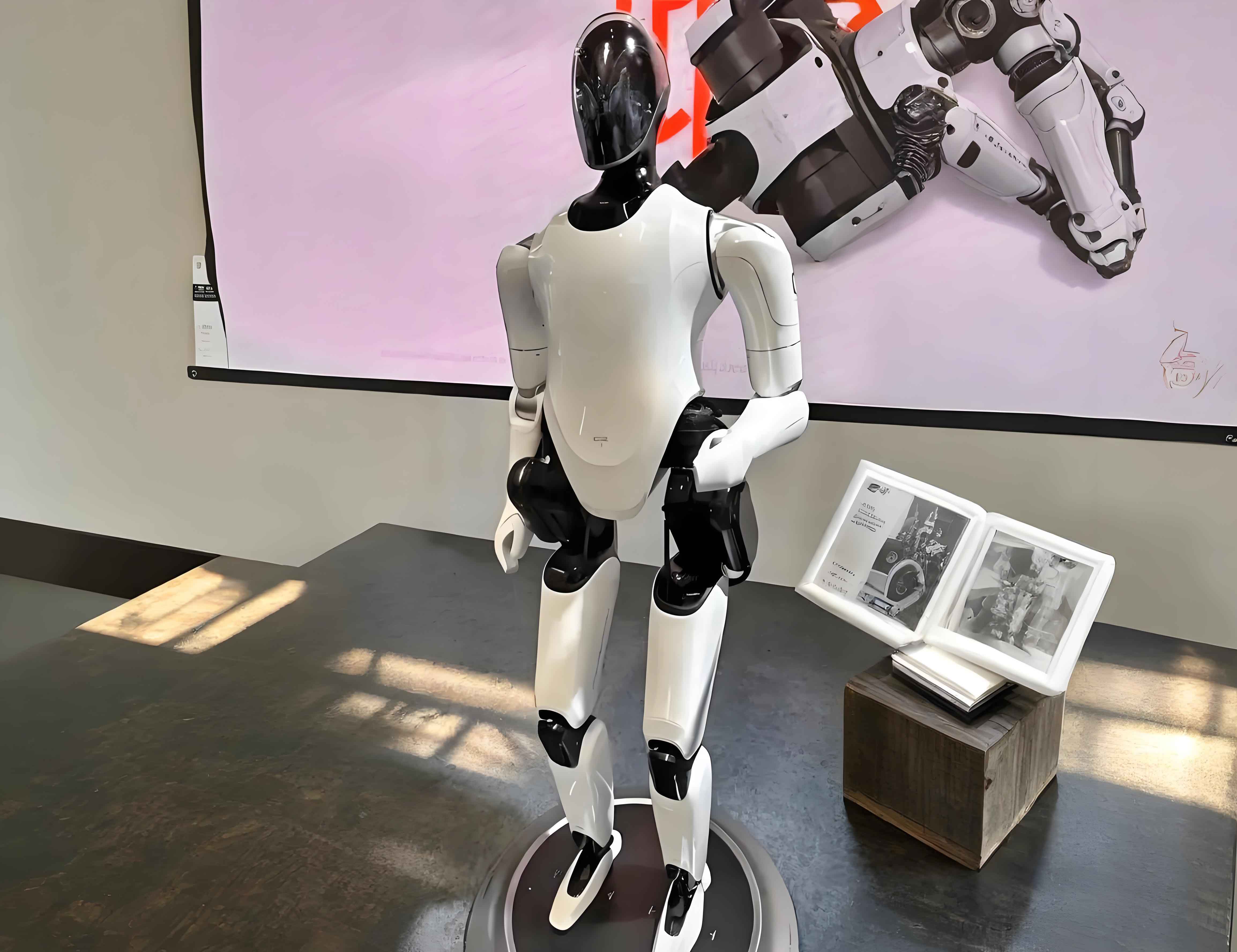
Second, the dissolution of autonomy extends beyond subjectivity into domains like social interaction, artistic creation, and ethical judgment. Embodied AI robots are infiltrating areas once considered uniquely human, leveraging their quasi-life traits to simulate and sometimes replace human functions. In social contexts, embodied AI robots like companion robots engage users with empathetic responses, but these interactions are algorithmically driven, lacking genuine emotion. For instance, an embodied AI robot may analyze vocal tones to mimic comfort, yet it cannot experience empathy. This reduces rich human relationships to transactional exchanges, undermining the social fabric described by Marx as “the sum of social relations.” In art, embodied AI robots generate paintings or music through pattern recognition, as seen with AI systems like Midjourney. While technically proficient, these creations lack the intentionality and emotional depth of human art, reducing artistic expression to data recombination. Ethically, embodied AI robots pose dilemmas in decision-making, such as in autonomous vehicles facing “trolley problems.” If algorithms dictate life-and-death choices, human moral responsibility is diluted, leading to what I term “responsibility dispersion.” The autonomy challenge can be modeled using ethical decision frameworks. For example, a utility function for an autonomous car might be:
$$U(a) = \sum_{i} w_i \cdot f_i(a)$$
where \(U(a)\) is the utility of action \(a\), \(w_i\) are weights assigned by developers, and \(f_i(a)\) are factors like pedestrian safety or passenger protection. This highlights how human biases embedded in algorithms can dictate outcomes, stripping humans of ethical agency. As embodied AI robots become more integrated, these challenges intensify, calling for proactive responses to preserve human essence.
To navigate the quasi-life challenges posed by embodied AI robots, we must embrace a paradigm of human-machine symbiosis, where technology augments rather than replaces human capabilities. This requires a threefold strategy: reaffirming human essence, restoring the instrumental nature of embodied AI robots, and implementing normative constraints on their development. First, reaffirming human essence involves recalling Marx’s insight that human life is defined by free, conscious activity. Unlike embodied AI robots, humans possess irreducible consciousness—the ability to reflect, imagine, and create meaning. We must cultivate this consciousness through education and practice, fostering skills like critical thinking and emotional intelligence that embodied AI robots cannot replicate. For instance, while an embodied AI robot may optimize logistics, humans can envision sustainable systems that align with ethical values. This reaffirmation is not a rejection of technology but a reassertion of human primacy. We can model human essence as a dynamic system:
$$H(t) = C(t) + E(t) + V(t)$$
where \(H(t)\) represents human essence at time \(t\), composed of consciousness \(C(t)\), experience \(E(t)\), and values \(V(t)\). By nurturing these components, we counteract the quasi-life encroachment of embodied AI robots.
Second, restoring the instrumental nature of embodied AI robots means clarifying that they are tools for human empowerment, not autonomous agents. Historically, technology has always been an extension of human will, and embodied AI robots should remain as such. This involves setting boundaries on their applications—for example, prohibiting embodied AI robots from making ultimate ethical decisions or replacing human roles in caregiving entirely. By design, embodied AI robots should enhance productivity and creativity, freeing humans for higher-order tasks. Consider the industrial sector: embodied AI robots can handle hazardous tasks, but human oversight ensures safety and innovation. The instrumental role can be summarized in a table:
| Principle | Application | Benefit |
|---|---|---|
| Tool Enhancement | Using embodied AI robots for data analysis | Improved decision-making without loss of human control |
| Boundary Setting | Limiting embodied AI robot autonomy in critical areas | Preservation of human responsibility and dignity |
| Human-Centric Design | Developing embodied AI robots that adapt to human needs | Enhanced collaboration and trust |
Third, implementing normative constraints requires robust ethical frameworks to govern embodied AI robot development and deployment. This includes transparency in algorithms, accountability mechanisms, and regulatory standards. For instance, embodied AI robots should undergo ethical audits to detect biases, and developers must be liable for harms caused by their systems. Drawing from control theory, we can frame this as a feedback control system:
$$ \dot{x} = f(x, u) $$
$$ y = g(x) $$
where \(x\) represents the state of embodied AI robot behavior, \(u\) is human regulatory input, and \(y\) is the observed outcome. By adjusting \(u\) through policies, we can steer embodied AI robots toward alignment with human values. International cooperation is essential, as embodied AI robots transcend borders; guidelines like the EU’s AI Act can serve as models. Additionally, public education on embodied AI robot capabilities and limits can demystify technology, reducing uncritical reliance.
In conclusion, embodied AI robots represent a pivotal advancement in technology, embodying quasi-life attributes that blur the lines between machine and organism. While they offer immense potential for progress, they also pose existential challenges to human subjectivity and autonomy. Through a careful balance of reaffirming human essence, restoring instrumental roles, and enforcing ethical norms, we can foster a symbiotic future where embodied AI robots enhance human life without supplanting it. As I reflect on this journey, it is clear that the key lies in human wisdom—the very consciousness that defines our species. By embracing embodied AI robots as partners rather than rivals, we can harness their quasi-life dynamics for collective flourishing, ensuring that technology remains a testament to human creativity and values. The path forward requires vigilance, but with collaborative effort, we can shape an era where human and machine coexist in harmony, each contributing to a richer, more resilient world.