
Embodied artificial intelligence, or embodied AI, represents a paradigm where intelligent agents perceive, reason, and act within physical or simulated environments to achieve autonomous learning and decision-making. When these agents can process multiple modalities—such as vision, text, and audio—we refer to it as multimodal embodied AI. This field aims to create systems, like virtual agents or real-world robots, that emulate human-like interaction with the world. Historically, the concept traces back to Alan Turing’s 1950 vision of machines interacting with their surroundings autonomously, which many consider the ultimate form of AI. Traditional robots have been deployed in controlled settings like manufacturing and logistics, but they rely on pre-programmed actions, limiting their adaptability. The advent of machine learning and deep learning reduced the need for precise environmental modeling, yet these methods often lack generalization due to limited model sizes and task-specific training. However, with the rapid development of large models, which acquire universal knowledge from vast internet data and exhibit human-like understanding, generation, and reasoning, a new pathway has emerged. Large models are now empowering embodied AI robots, offering a transformative approach that could redefine robotics and AI. In this article, I delve into the current state, practical applications, and future prospects of multimodal embodied AI, emphasizing how large models serve as the “brain” for these systems, enabling perception-decision-action loops that enhance autonomy.
The integration of large models into embodied AI systems has led to two predominant frameworks: modular systems and end-to-end systems. These frameworks leverage the strengths of large models to handle complex tasks in dynamic environments. Below, I outline their characteristics, supported by tables and formulas to summarize key aspects.
Modular system frameworks decompose the embodied AI process into distinct components, such as perception, planning, and execution, with large models orchestrating high-level reasoning. This approach offers several advantages: it utilizes pre-trained large models for multimodal understanding, facilitates external tool usage, and incorporates memory modules for knowledge retention. The core elements include task planning, memory, and tool use. For task planning, large models employ techniques like Chain of Thought (COT) to break down complex instructions into sub-goals. For example, given a command like “clean the kitchen,” a model might generate a sequence: “1. Locate dishes, 2. Pick up sponge, 3. Wash dishes, 4. Dry them.” This can be expressed as a planning function:
$$ \text{Plan}(I) = \{s_1, s_2, \dots, s_n\} $$
where \( I \) is the input instruction and \( s_i \) are sub-goals. Memory is categorized into short-term (limited by context windows) and long-term (external databases), enhancing reasoning. Tool use allows embodied AI robots to call APIs for tasks beyond their immediate capabilities, such as data retrieval. Planning methods vary: code-based planning offers precision through structured programs, while natural language planning provides flexibility but may require disambiguation. For instance, code might define actions like move_to(x,y), whereas natural language might say “go to the table.” Execution relies on smaller, specialized models (e.g., for motor control) that act as “cerebellum” to the large model’s “brain,” enabling few-shot or zero-shot task handling. A comparison of modular frameworks is shown in Table 1.
| Component | Description | Example Techniques |
|---|---|---|
| Task Planning | Decomposes complex tasks using reasoning | COT, reflection frameworks |
| Memory | Stores short-term and long-term information | Context windows, external databases |
| Tool Use | Integrates external APIs for extended capabilities | Plugin systems, API calls |
| Execution | Implements low-level control actions | Specialized models, reinforcement learning |
End-to-end system frameworks, in contrast, directly map raw sensory inputs to low-level control actions, leveraging large models’ generalization from extensive training data. This approach often involves learning policies that output precise parameters like joint positions or 6-DOF poses. Training techniques include imitation learning and reinforcement learning. In imitation learning, the embodied AI robot learns from expert demonstrations, minimizing a loss function:
$$ \mathcal{L}_{\text{imitation}} = \sum_{t} \| a_t – \hat{a}_t \|^2 $$
where \( a_t \) is the predicted action and \( \hat{a}_t \) is the expert action at time \( t \). However, this can suffer from narrow data distributions. Large models mitigate this by training on massive robotics datasets, improving zero-shot performance. Reinforcement learning formulates the problem as a Markov Decision Process (MDP), where the agent maximizes cumulative reward \( R = \sum_{t} \gamma^t r_t \), with \( \gamma \) as a discount factor. Large models can aid reward shaping or serve as world models. Environment learning is crucial: forward dynamics predict next states \( s_{t+1} = f(s_t, a_t) \), while inverse dynamics recover actions \( a_t = g(s_t, s_{t+1}) \). The latter is more sample-efficient, as it uses future information. Table 2 summarizes end-to-end approaches.
| Method | Description | Key Formulas |
|---|---|---|
| Imitation Learning | Learns from expert demonstrations | $$ \min_{\theta} \mathbb{E}_{(s,a) \sim D} [\| \pi_\theta(s) – a \|] $$ |
| Reinforcement Learning | Maximizes rewards through trial-and-error | $$ \pi^* = \arg\max_\pi \mathbb{E}_{\pi} [\sum_{t} r_t] $$ |
| Forward Dynamics | Predicts next state from current state and action | $$ s_{t+1} = \mathcal{F}(s_t, a_t) $$ |
| Inverse Dynamics | Infers action from state transitions | $$ a_t = \mathcal{G}(s_t, s_{t+1}) $$ |
These frameworks enable embodied AI robots to tackle real-world tasks, with significant applications in manipulation and navigation. I now explore two core tasks: Vision-Language-Action (VLA) and Vision-Language-Navigation (VLN), which highlight the capabilities of multimodal embodied AI.
VLA tasks focus on robot manipulation, where agents generate actions based on visual and linguistic inputs. Recent advances use large models to produce flexible control policies. For example, models like Robotics Transformer (RT-1) and RT-2 leverage transformer architectures trained on extensive robot data to output discrete or continuous actions. RT-1 processes image and language inputs to predict arm and base movements, achieving generalization to novel environments. Its action generation can be modeled as:
$$ \mathbf{a} = \text{Transformer}(\mathbf{I}, \mathbf{L}) $$
where \( \mathbf{I} \) is the visual input and \( \mathbf{L} \) is the language instruction. RT-2 extends this by incorporating web-scale knowledge, enabling complex reasoning chains. Other works, such as PACT and SMART, use self-supervised pre-training on trajectory data to learn general representations for control. In manipulation, combining planning with control has proven effective; for instance, LATTE integrates language instructions with geometric planning for precise trajectory generation. Table 3 lists key VLA methods and their contributions to embodied AI robots.
| Method | Key Feature | Impact on Embodied AI Robots |
|---|---|---|
| RT-1 | Transformer-based policy trained on 130k robot episodes | Enables zero-shot generalization to new tasks |
| RT-2 | Integrates web knowledge for chain-of-thought reasoning | Improves complex instruction following |
| PACT | Perception-action causal transformer for autoregressive pre-training | Enhances sample efficiency in control |
| LATTE | Combines language with trajectory planning | Facilitates accurate and flexible manipulation |
VLN tasks involve navigation based on visual and linguistic cues, such as moving to a described location or finding an object. This is fundamental for embodied AI robots operating in dynamic environments. Early approaches used simulators like Habitat for training, with methods like DDPPO learning from billions of frames. Modular methods, such as Semantic Explorer (SemExp), build semantic maps to guide exploration, while zero-shot methods leverage models like CLIP or BLIP-2 to compute similarity between goals and observations. For example, a zero-shot embodied AI robot might use a vision-language model to score candidate actions:
$$ \text{score} = \text{sim}(\text{CLIP}(\text{image}), \text{CLIP}(\text{text})) $$
Recent trends incorporate large language models (LLMs) for reasoning; for instance, an embodied AI robot might query an LLM to analyze a semantic map and plan a route. Challenges include data scarcity and sim-to-real gaps, but pre-training on diverse datasets (e.g., HM3D, Gibson) has improved performance. Table 4 summarizes VLN approaches, emphasizing how they enhance navigation for embodied AI robots.
| Method | Approach | Advantage for Embodied AI Robots |
|---|---|---|
| DDPPO | Reinforcement learning in simulation | Scalable training for point-goal navigation |
| SemExp | Semantic mapping and exploration | Improves object goal navigation in unseen environments | Zero-shot with CLIP | Similarity-based navigation without training | Enables deployment in novel settings |
| LLM-based planning | Uses large language models for route analysis | Enhances reasoning for complex instructions |
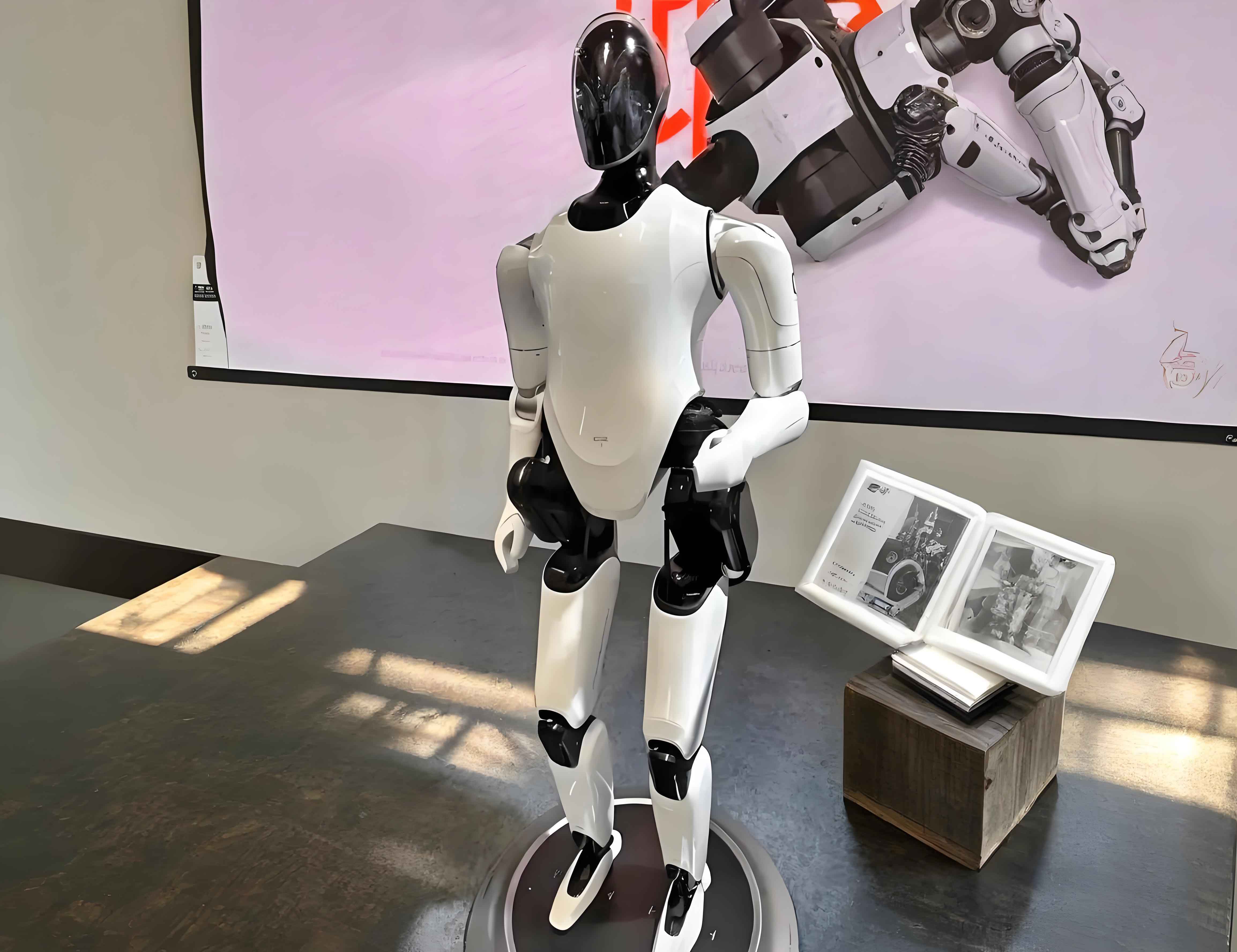
The system architecture of embodied AI robots often mirrors human cognition, with large models as the central processor coordinating perception and action. As research progresses, several trends are shaping the future of multimodal embodied AI. I discuss two key directions: interaction-based enhancement and automated generation of training elements.
Interaction is pivotal for improving embodied AI robots, as it allows continuous learning from humans and environments. Through interaction data learning, embodied AI systems can refine their capabilities. For example, human-robot interaction data can be used to train models, with filtering strategies to select successful demonstrations. This aligns with reinforcement learning from human feedback (RLHF), where reward models are trained on preferences. Mathematically, this can be expressed as optimizing a policy \( \pi \) based on human feedback \( \mathcal{H} \):
$$ \pi_{\text{new}} = \arg\max_{\pi} \mathbb{E}_{(s,a) \sim \pi} [R_{\mathcal{H}}(s,a)] $$
Additionally, adversarial interactions can expose weaknesses, allowing corrective training to reduce harmful outputs. Human-robot collaboration tools can leverage large models to interpret user intentions, making embodied AI robots more responsive. Environment interaction enables embodied AI robots to learn physical laws autonomously, fostering generalization. For instance, by exploring a kitchen, an embodied AI robot might infer that objects fall when dropped, enhancing its planning.
Automated generation of training elements addresses data scarcity, a major bottleneck. Large models can synthesize training data and scenes, acting as teachers for embodied AI systems. In data generation, prompts can guide large models to produce diverse trajectories or instructions, effectively distilling knowledge into embodied AI robots. This process resembles knowledge distillation:
$$ \mathcal{L}_{\text{distill}} = \text{KL}(p_{\text{teacher}}(y|x) \| p_{\text{student}}(y|x)) $$
where the teacher is a large model and the student is the embodied AI robot’s policy. For scene generation, large models can create novel environments from internet knowledge, improving robustness. For example, a text-to-scene model might generate 3D layouts for training navigation agents. Furthermore, multi-agent interactions can be enhanced by large models to simulate natural dialogues, boosting the social skills of embodied AI robots. These methods collectively push toward more adaptive and generalizable systems.
In conclusion, multimodal embodied AI, powered by large models, represents a transformative frontier in artificial intelligence. By serving as the cognitive core for embodied AI robots, large models enable sophisticated perception, reasoning, and action in physical worlds. The modular and end-to-end frameworks provide flexible foundations, while tasks like VLA and VLN demonstrate practical applications. Looking ahead, interaction-based learning and automated generation will drive further advances, making embodied AI robots more autonomous and versatile. As this technology matures, embodied AI robots—particularly humanoid forms—are poised to become ubiquitous, revolutionizing industries from healthcare to domestic services. The journey toward Turing’s vision of machines that interact and learn like humans is accelerating, with embodied AI at its heart.
To quantify progress, we can consider metrics for embodied AI robot performance, such as task success rate \( S \) and generalization score \( G \). These can be modeled as functions of model size \( M \), data diversity \( D \), and interaction time \( T \):
$$ S = f(M, D, T) \approx \alpha \log(M) + \beta \sqrt{D} + \gamma T $$
where \( \alpha, \beta, \gamma \) are coefficients. This illustrates the scaling benefits of large models. Ultimately, the synergy between large models and embodied AI robots promises to unlock new levels of intelligence, blurring the line between digital and physical realms. As researchers, we continue to explore these avenues, driven by the potential to create agents that not only perceive but also act and learn in our world.